

Quick Summary: Yes, it’s completely safe for cats to eat catnip. While sniffing catnip typically produces the euphoric response, ingesting it is harmless and may even have mild sedative effects. Eating large amounts might cause minor digestive upset, but catnip is non-toxic and non-addictive for cats.
Walk into any pet store and catnip products line the shelves—toys, dried leaves, sprays, treats. Cat owners watch their pets roll around in apparent bliss, but what happens when a cat skips the sniffing and just eats it straight?
The short answer? There’s nothing to worry about.
But let’s dig into what catnip actually does, why eating it is perfectly fine, and what science tells us about this fascinating herb.
What Is Catnip and How Does It Work?
Catnip (Nepeta cataria) is a perennial herb from the mint family that originated in Northern Africa and the Mediterranean region. The plant contains a volatile compound called nepetalactone, which triggers behavioral responses in cats.
When cats smell nepetalactone, it binds to receptors in their nasal tissue and activates sensory neurons. According to research published in Science Advances, this compound activates the cat’s opioid system—specifically the mu-opioid receptors that produce feelings of euphoria and pleasure.
Here’s the thing though—ingesting catnip works differently than smelling it.
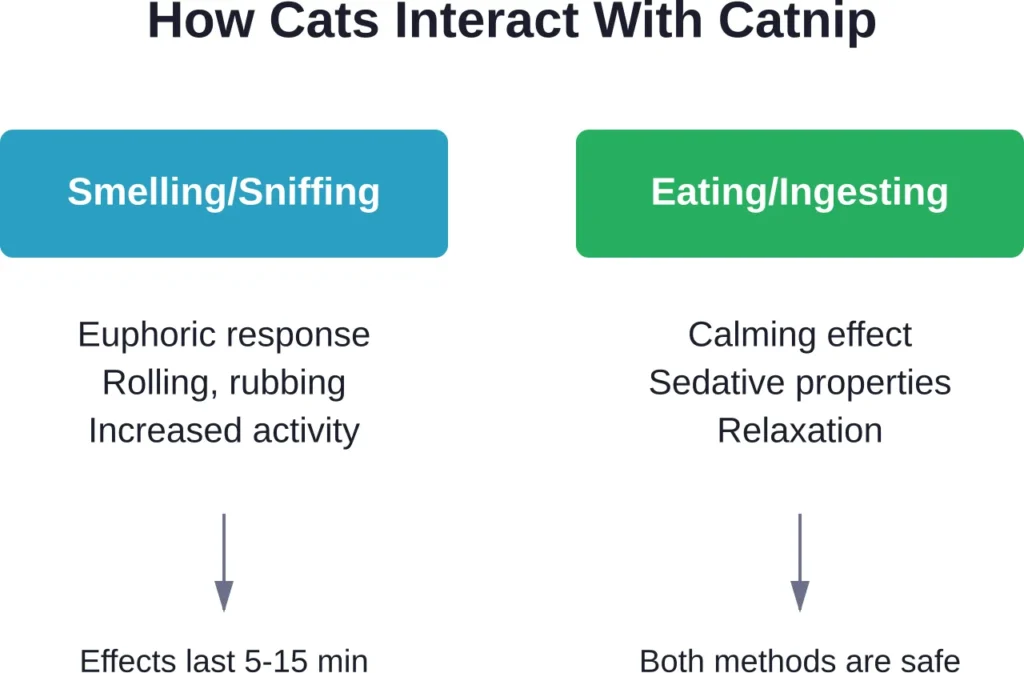
When cats eat catnip instead of sniffing it, the effects tend to be calming rather than stimulating. Think of it like the difference between drinking coffee and rubbing it on your skin. Same substance, different delivery method, different result.
Is Eating Catnip Safe for Cats?
Absolutely. Catnip is non-toxic to cats whether they smell it, rub against it, or eat it.
Research examining cats with exposure to cat-attracting plants studied behavioral responses over extended periods. Blood test data from 13 subject cats showed no adverse health effects from long-term exposure.
If a cat eats a large amount of catnip, the worst outcome is typically mild digestive upset—maybe some vomiting or diarrhea. But this is rare and temporary.
Research found that cats spent substantially less time in contact with catnip extract compared to other behaviors. Cats naturally self-regulate their catnip consumption and won’t typically overdo it.
Why Not All Cats Respond to Catnip
Here’s something that surprises many cat owners: about 1 in 3 cats don’t respond to catnip at all.
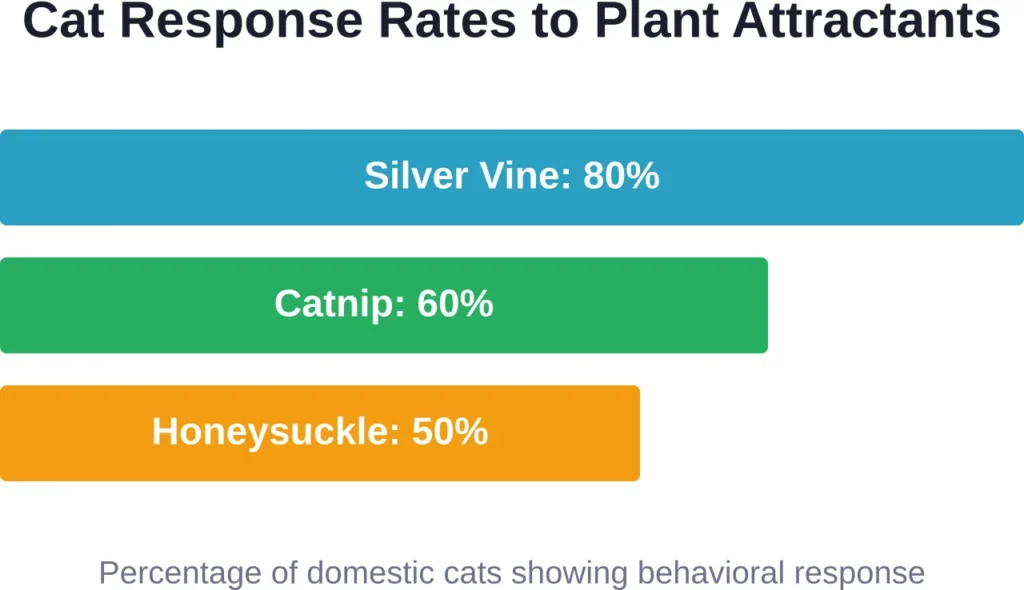
The response to catnip is hereditary. Cats either inherit the gene that makes them sensitive to nepetalactone or they don’t. Research indicates that about 60% of cats will have a behavioral reaction to catnip.
Kittens under three months old typically don’t respond to catnip regardless of genetics. The sensitivity develops as cats sexually mature.
But wait—if your cat ignores catnip, there are alternatives. Research published in BMC Veterinary Research found that almost 80% of domestic cats responded to silver vine, and about 50% responded to Tatarian honeysuckle. Even more interesting? Some cats who do not respond to catnip show responsiveness to silver vine alternatives.
The Effects of Eating Catnip vs. Smelling It
The delivery method matters significantly with catnip.
When cats smell catnip:
- Effects appear within seconds to minutes
- Typical behaviors include rolling, rubbing, vocalization, and increased playfulness
- The response usually lasts 5 to 15 minutes
- After the effect wears off, cats become temporarily immune for about 2 hours
When cats eat catnip:
- Effects are generally calming and sedative
- Cats may become mellow and relaxed
- The duration can be slightly longer than sniffing
- Some cats prefer eating over sniffing
One documented case showed a cat that failed to respond to catnip through sniffing 70% of the days tested but still consumed it regularly. This suggests individual cats develop preferences for how they interact with the herb.
Can Cats Overdose on Catnip?
No, cats cannot overdose on catnip in any dangerous sense.
Catnip is non-addictive and self-limiting. Cats will naturally walk away when they’ve had enough. The compound breaks down quickly in the body, and cats develop temporary immunity after exposure.
The worst-case scenario? A cat eats an unusually large amount and experiences mild gastrointestinal distress—possibly vomiting or loose stools. This resolves on its own without veterinary intervention in virtually all cases.
Research examining response patterns found that response bouts ranged from 1 to 10 among cats, with a median of 3 bouts. Cats spent minimal time actually interacting with catnip—in one study, the total response time to cat-attracting plant materials across all cats was approximately 490 minutes of observation time, while negative controls received just over 6 minutes total.
| Catnip Safety Factor | Details |
|---|---|
| Toxicity Level | Non-toxic to cats |
| Addiction Potential | None—not addictive |
| Maximum Safe Exposure | No upper limit identified |
| Long-term Exposure Studies | Extended periods with no adverse effects |
| Common Side Effects (large amounts) | Mild vomiting or diarrhea (rare, temporary) |
| Dangerous Interactions | None documented |
Benefits of Letting Cats Eat or Use Catnip
Beyond being safe, catnip offers several benefits for cats.
For cats who respond positively, catnip can help reduce anxiety and even relieve pain according to veterinary studies. This makes it useful before stressful events like vet visits or travel.
Catnip provides mental stimulation and environmental enrichment—both crucial for indoor cats. Olfactory enrichment strategies like catnip can improve welfare among animals in captivity, including household cats.
The herb can encourage play and exercise. A cat-attracting spray on a scratching post might redirect destructive scratching away from furniture. Catnip-filled toys can motivate lazy cats to move around.
And for cats who prefer eating catnip? The mild sedative effect might help hyperactive or anxious cats settle down in the evening.
How Much Catnip Should You Give Your Cat?
There’s no strict dosage guideline because catnip is so safe.
Generally speaking, a pinch or small amount is plenty for most cats. A teaspoon of dried catnip or a few fresh leaves is more than sufficient for one session.
For toys, products typically contain small amounts already. Refreshing the catnip every few weeks maintains its potency since the essential oils degrade over time when exposed to air.
Some tips for introducing catnip:
- Start with a small amount to gauge your cat’s response
- Offer catnip no more than once every couple of weeks to prevent habituation
- Store dried catnip in an airtight container in a cool, dark place to preserve potency
- Fresh catnip tends to be more potent than dried
If your cat eats catnip and seems to enjoy it, that’s perfectly fine. Some cats simply prefer consuming it to sniffing it.
What Veterinarians Say About Catnip Safety
Veterinary professionals consistently confirm catnip’s safety profile.
Research has found varying levels of awareness among veterinary professionals regarding cat-attracting plants beyond catnip. All were familiar with catnip and considered it safe for feline use.
The FDA regulates pet food and treats containing catnip like other animal foods, requiring they be safe to eat, produced under sanitary conditions, and truthfully labeled. Catnip treats sold commercially meet these standards.
No veterinary literature documents serious adverse reactions to catnip consumption. The compound has been used for decades without significant safety concerns emerging.
Catnip Alternatives for Non-Responsive Cats
If your cat doesn’t respond to catnip, don’t assume all plant attractants will fail.
Silver vine (Actinidia polygama) shows the highest response rate among cats—nearly 80% according to published research. It produces similar behavioral responses to catnip and is equally safe.
Tatarian honeysuckle (Lonicera tatarica) elicits responses in about 50% of cats. Valerian root (Valeriana officinalis) works for a similar percentage.
Interestingly, cats who don’t respond to catnip often respond to these alternatives. Research shows some cats who do not respond to catnip show responsiveness to silver vine.
| Plant Attractant | Response Rate | Active Compound | Safety Profile |
|---|---|---|---|
| Silver Vine | ~80% | Multiple iridoids | Safe, studied over extended periods |
| Catnip | ~60% | Nepetalactone | Safe, non-toxic |
| Tatarian Honeysuckle | ~50% | Various compounds | Safe in moderation |
| Valerian Root | ~50% | Actinidine | Safe, strong odor |
Common Myths About Cats and Catnip
Myth: Catnip gets cats high or is like a drug.
Real talk: while catnip does activate opioid receptors, calling it a drug misleads people. Cats don’t become intoxicated in any harmful way, and there’s no addiction potential or withdrawal. The effect is temporary and natural.
Myth: Kittens can’t have catnip.
Not exactly. Kittens under three months typically don’t respond to catnip because the sensitivity hasn’t developed yet. But catnip isn’t harmful to kittens—they just won’t show the characteristic response until they’re older.
Myth: Cats shouldn’t eat catnip, only smell it.
This one’s completely false. Eating catnip is just as safe as sniffing it. Some cats prefer eating it, and that’s perfectly fine.
Myth: Too much catnip will hurt your cat.
Cats self-regulate their catnip exposure. Studies examining cats over extended periods with regular access to catnip found no health problems. The worst outcome from eating too much is temporary mild digestive upset.
Frequently Asked Questions
Neither method is better—they’re just different. Smelling catnip typically produces the euphoric, playful response most people associate with catnip. Eating it tends to have calming, mildly sedative effects. Both are completely safe, and some cats develop preferences for one method over the other. Let your cat interact with catnip however they prefer.
Yes, catnip is safe for kittens to eat. However, kittens younger than three months typically won’t show any response to catnip because the sensitivity develops as cats mature sexually. Even though it’s safe, very young kittens usually just ignore it. Once cats reach three to six months old, those with the hereditary sensitivity will begin responding.
Cats naturally self-regulate and rarely overindulge to the point of getting sick. Research found that cats spent substantially less time in contact with catnip extract compared to other behaviors. If a cat somehow eats an unusually large amount, the worst outcome is usually mild vomiting or diarrhea that resolves quickly without treatment.
Cats show individual preferences for how they interact with catnip. Some eat it, some sniff and roll, some do both. Research has documented cats that rarely responded to catnip through sniffing but still consumed it regularly. Eating catnip produces calming effects rather than euphoric ones, so cats seeking relaxation might prefer consumption over sniffing.
Cats become temporarily desensitized to catnip after each exposure, typically for about two hours. This happens whether they smell it or eat it. With repeated frequent exposure over time, some cats might show reduced responses—a phenomenon called habituation. Offering catnip every few weeks rather than daily helps maintain its effectiveness.
For cats who respond positively to catnip, it can help reduce anxiety. The compound activates opioid receptors that produce pleasure and relaxation. Some cats become more playful and active when sniffing catnip, while eating it tends to produce calming effects. This makes consumed catnip potentially useful before stressful events, though responses vary by individual cat.
Catnip is safe for virtually all cats. Very rarely, a cat might have an individual sensitivity that causes digestive upset even from small amounts—similar to how some people have sensitivities to generally safe foods. If your cat shows signs of distress or illness after catnip exposure, discontinue use and consult your veterinarian. But this is extremely uncommon given decades of widespread catnip use without documented serious reactions.
Final Thoughts on Cats Eating Catnip
So, is it okay for cats to eat catnip? Absolutely.
Catnip is non-toxic, non-addictive, and safe whether cats smell it, roll in it, or eat it straight. Research examining cats with exposure to cat-attracting plants studied behavioral responses over extended periods with no adverse health effects. The worst-case scenario is temporary mild digestive upset from eating an excessive amount—and cats naturally self-regulate to avoid this.
About 60% of cats respond to catnip due to hereditary factors, while others remain indifferent. For non-responders, alternatives like silver vine work for nearly 80% of cats.
Whether your cat prefers sniffing catnip for the euphoric response or eating it for calming effects, both methods are perfectly safe. Let your cat enjoy this harmless herb however they prefer—it’s one of the simple pleasures that can enrich their indoor environment and improve their welfare.
If you notice your cat munching on catnip leaves or treats, there’s no cause for concern. Just store catnip products properly to maintain potency and offer them occasionally to prevent habituation.