
Quick Summary: While dogs naturally love chewing sticks, it’s generally not safe. Veterinary studies show wooden sticks are among the common esophageal foreign bodies lodged in dogs, with risks including mouth injuries, intestinal blockages, and dental damage. Safer alternatives like purpose-designed chew toys provide the same satisfaction without the hazards.
Walk through any park and you’ll spot the familiar scene: a happy dog trotting along with a stick clamped between its jaws. The image seems harmless enough. But veterinary emergency rooms tell a different story.
Wooden sticks consistently appear on lists of foreign objects requiring surgical removal from dogs. According to veterinary studies published in 2018, wooden sticks are specifically listed among entrapped esophageal foreign body objects in dogs, alongside bones and toys.
So what’s behind this contradiction between dogs’ natural attraction to sticks and the medical community’s warnings? Here’s what the research shows.
Why Dogs Are Drawn to Sticks
Dogs don’t chew sticks out of defiance or stupidity. The behavior taps into several natural instincts.
Chewing serves multiple purposes for canines. For young dogs, it relieves discomfort from incoming teeth. For older dogs, it’s a way to keep jaws strong and teeth cleaner—though sticks aren’t the right tool for that job.
The texture, shape, and availability of sticks trigger prey-drive responses. A stick mimics bones or captured prey animals. Carrying a stick around satisfies the instinct to transport food or possessions to a safe location.
Boredom plays a role too. Dogs lacking sufficient mental stimulation or physical activity often turn to whatever’s available. In outdoor spaces, sticks are everywhere and free for the taking.
The Real Risks: What the Data Shows
Veterinary research provides clear evidence that stick chewing poses genuine dangers. Here’s what happens when things go wrong.
Esophageal Foreign Bodies and Blockages
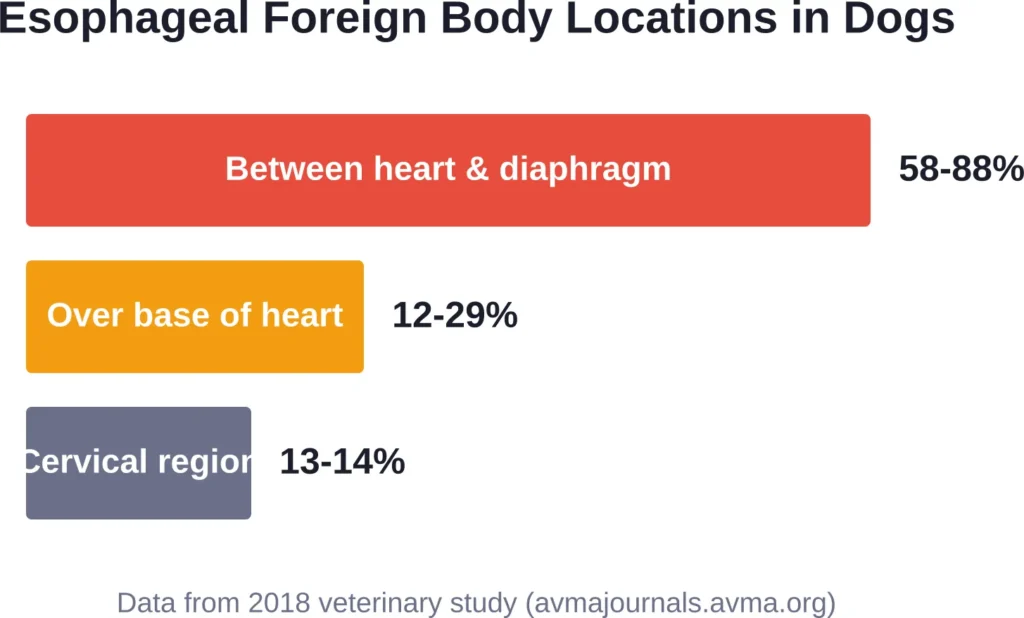
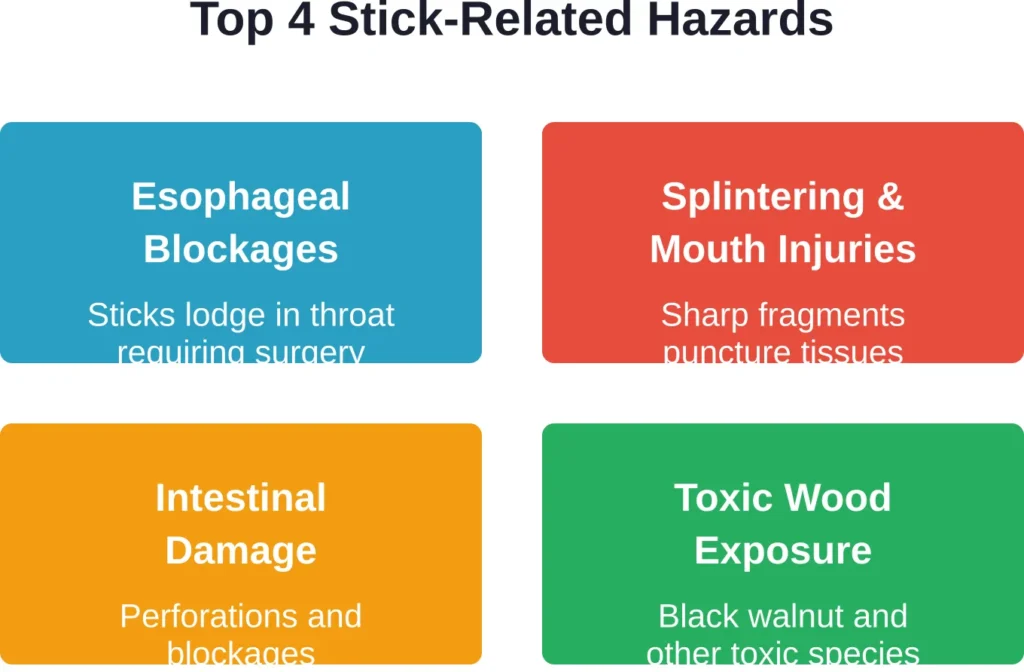
A 2018 study tracking 224 incidents of esophageal foreign bodies in dogs found that wooden sticks were among the common entrapped objects requiring medical intervention. These cases involved objects lodging in the esophagus—the tube connecting the throat to the stomach.
When sticks become stuck, the results can be serious. Most esophageal foreign bodies lodge in the lower esophagus, requiring prompt veterinary intervention. Many of the affected dogs were younger dogs.
Real talk: endoscopic retrieval was successful in 83.6% of cases, but 11.2% resulted in postprocedural esophageal stricture—a narrowing that can cause ongoing problems. The overall mortality rate was 5.4% (12/223 dogs).
Mouth and Throat Injuries
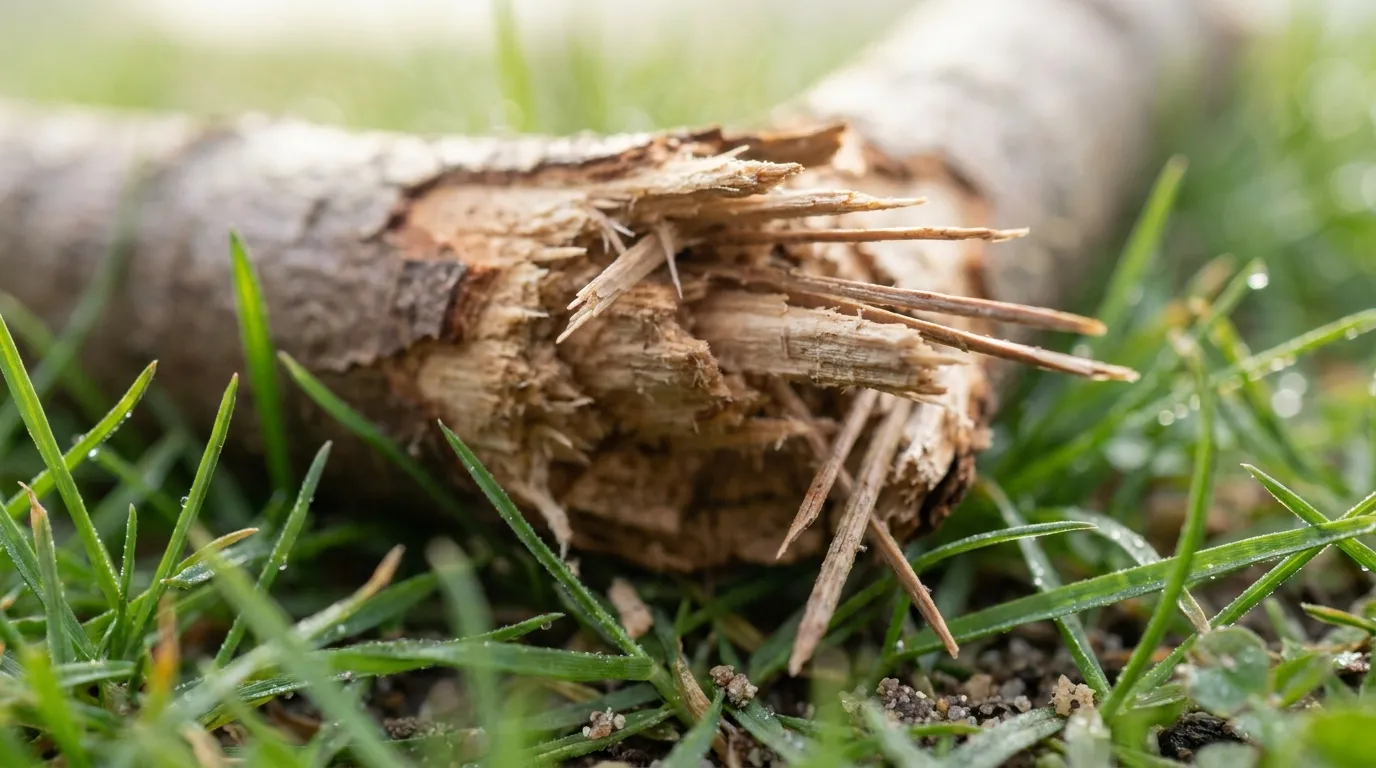
Sticks splinter. That’s the fundamental problem.
When dogs chew on sticks, sharp fragments can puncture the soft tissues of the mouth, tongue, gums, and throat. These injuries aren’t always immediately visible to owners but can lead to infections if wood pieces remain embedded.
Some dogs have experienced sticks becoming wedged across the roof of the mouth between the upper molars—a painful emergency requiring veterinary removal.
Intestinal Damage and Blockages
Swallowed stick fragments don’t always stop at the esophagus. Those that make it to the stomach can cause intestinal blockages or perforations as they move through the digestive tract.
The Cornell University College of Veterinary Medicine notes that gastrointestinal obstruction occurs when a dog swallows a non-digestible object too large to pass through. Wooden pieces with sharp edges pose particular perforation risks.
Dental Problems
Here’s the thing though—while chewing can help reduce bacteria on teeth, sticks do more harm than good for dental health.
Research from Rutgers University found that about 20% of one-year-old dogs and over 80% of three-year-old dogs suffer from periodontal disease. Sticks won’t solve that problem and can actually cause tooth fractures, especially when dogs bite down on hardwood.
Toxic Wood Exposure
Not all wood is created equal. A 2016 study from the American Veterinary Medical Association examined 93 dogs with oral exposure to black walnut tree components over an 11-year period.
The findings were concerning: 30% of dogs had ingested black walnut wood or wood shavings (28/93 dogs), while 70% had ingested the walnuts or hulls (65/93 dogs). Among wood ingestion cases, 93% developed neurologic or musculoskeletal signs (26/28 dogs).
Black walnut isn’t the only concern. Other toxic woods exist, and owners can’t always identify tree species in a park or wooded area.
Safer Alternatives Your Dog Will Love
The good news? Dogs don’t actually need sticks. Plenty of safer options satisfy the same chewing instincts without the risks.
Purpose-Designed Chew Toys
Modern dog chews are engineered to be durable, non-splintering, and digestible (if pieces are swallowed). Look for products made from natural, non-toxic materials that won’t fragment into sharp pieces.
Some options use sustainable, hypoallergenic ingredients designed to provide the satisfying texture dogs seek without the hazards of wood.
Rubber and Nylon Options
Durable rubber toys offer excellent resistance to aggressive chewing. Choose size-appropriate options that can’t be swallowed whole and don’t have small parts that can be torn off.
Nylon chews provide a harder surface for dogs that really need to gnaw. Select products specifically rated for your dog’s size and chewing strength.
Dental Chews and Edible Options
Veterinary dental chews serve double duty: satisfying the urge to chew while actually contributing to oral health. Research shows that proper dental products can significantly reduce bacterial load on teeth.
Natural options like bully sticks (properly sourced and supervised) offer long-lasting entertainment. Studies found these reduced bacteria by 60.2%, compared to 79.0% for raw bones (which carry their own risks) and 70.3% for brushing.
| Chew Type | Safety Level | Durability | Dental Benefit |
|---|---|---|---|
| Wooden Sticks | Low | Poor (splinters) | Minimal (risks outweigh benefits) |
| Purpose-Designed Chews | High | Excellent | Good to Excellent |
| Rubber Toys | High | Excellent | Moderate |
| Dental Chews | High | Moderate | Excellent |
| Bully Sticks | Moderate-High | Good | Good |
What to Do If Your Dog Loves Sticks
Breaking the stick habit takes patience, but it’s worth the effort.
Start by carrying appropriate chew toys on walks. When your dog picks up a stick, trade it for the toy using positive reinforcement. Don’t chase or scold—that often makes the stick more interesting.
Increase mental and physical enrichment to reduce boredom-driven chewing. Interactive toys, training sessions, and adequate exercise address the underlying need.
For persistent stick-seekers, teach a solid “drop it” or “leave it” command. This training can prevent problems even if your dog grabs a stick before you notice.
When to Call the Vet
Sometimes despite best efforts, accidents happen. Watch for these warning signs:
- Drooling, pawing at the mouth, or obvious distress
- Difficulty swallowing or repeated attempts to swallow
- Vomiting or retching
- Loss of appetite
- Lethargy or behavior changes
- Visible wood fragments in the mouth that can’t be easily removed
Any of these symptoms warrant immediate veterinary attention. Don’t wait to see if things improve on their own.
FAQ
No, puppies face even higher risks than adult dogs. Younger dogs tend to experience more serious complications, and veterinary data shows that many dogs experiencing black walnut wood-related toxicity were young, with esophageal foreign body cases frequently involving dogs under 3 years of age. Puppies’ smaller size and inexperience make blockages and injuries more likely.
No wood is truly safe for chewing. While some species are toxic (like black walnut), all wood splinters and creates sharp fragments. The risks of mouth injuries, blockages, and intestinal damage apply to all wood types. Purpose-designed chew products are always the safer choice.
Contact your veterinarian immediately. Don’t wait for symptoms to appear. Depending on the size of the piece and your dog’s size, the vet may recommend monitoring or immediate examination. Never try to induce vomiting without veterinary guidance, as this can cause additional injury.
Even carrying poses risks. Dogs often can’t resist the urge to chew, and a stick can slip and injure the mouth or throat during play. The safest approach is redirecting to appropriate toys that are designed to be carried and won’t splinter or cause injury.
Use positive reinforcement training to redirect the behavior. Bring high-value toys on walks and trade them for sticks using treats and praise. Increase mental stimulation and physical exercise to reduce boredom-driven chewing. Teaching “drop it” and “leave it” commands provides additional control.
The perceived benefits don’t outweigh the risks. While chewing does support jaw strength and can reduce dental bacteria, safer alternatives provide these same benefits without the dangers of splintering, blockages, toxic exposure, and injuries that sticks present.
For power chewers, look for extra-durable rubber toys rated for aggressive chewing, thick nylon bones designed for strong jaws, or supervised natural chews like properly sized bully sticks. Always select products appropriate for your dog’s size and monitor for any pieces breaking off.
The Bottom Line
The answer to “is it OK for dogs to chew on sticks” is a clear no. Veterinary evidence shows wooden sticks consistently cause injuries, blockages, and complications requiring emergency intervention.
Your dog’s attraction to sticks is natural, but natural doesn’t mean safe. Modern alternatives satisfy the same instincts without the risks of splintering, toxic exposure, or life-threatening blockages.
Making the switch protects your dog from preventable emergencies and potentially saves thousands in veterinary bills. Start today by stocking up on safer chew options and teaching your dog that there are better things to carry around than nature’s sharpest hazard.