
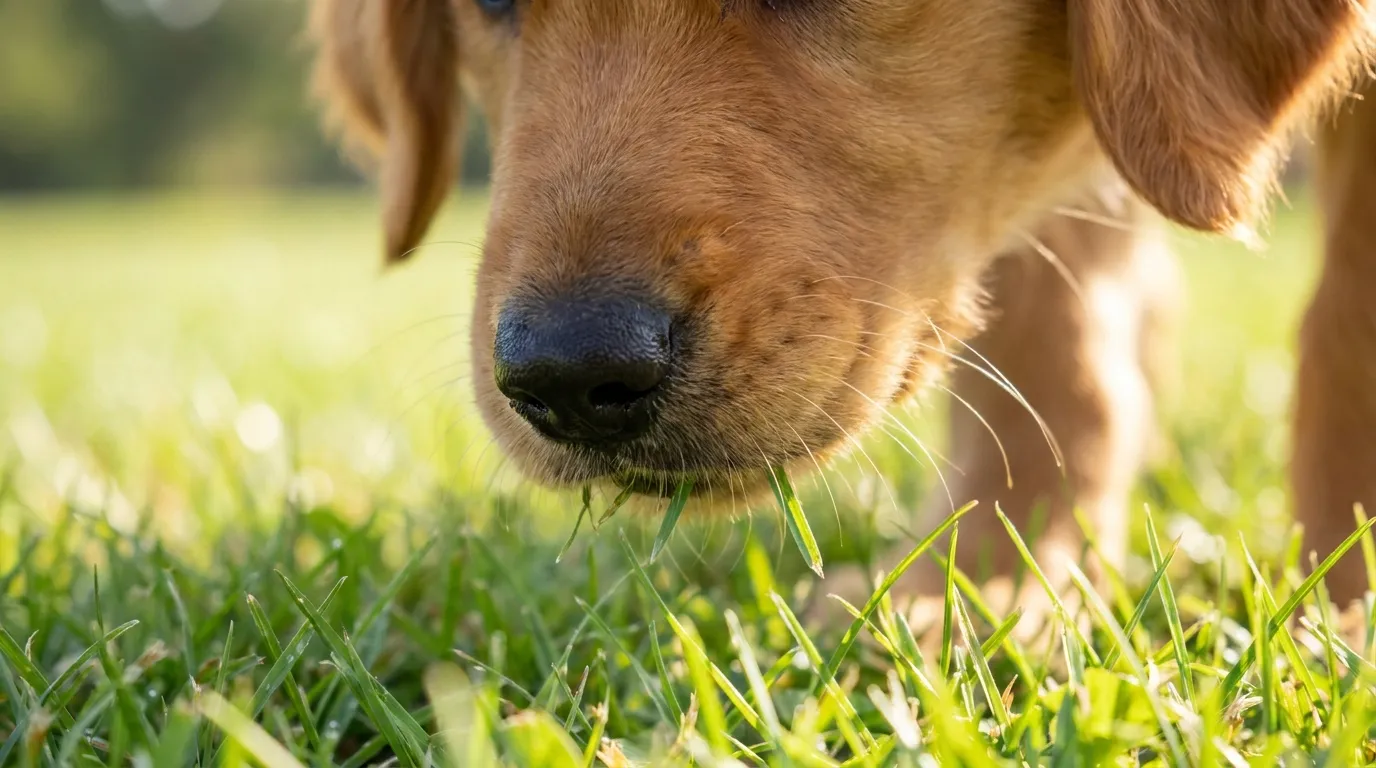
Quick Summary: Yes, it’s generally safe for dogs to eat grass. Most dogs do it instinctively, not because they’re sick—less than 25% vomit afterward. Grass-eating can stem from boredom, dietary fiber needs, or natural foraging behavior inherited from their wolf ancestors, whose stomach contents contain 2-10% plant material.
Walk through any park with a dog, and there’s a good chance you’ll catch them grazing like a miniature cow. It looks odd. It makes no sense. And it leaves most owners wondering: is this normal, or should I be worried?
Here’s the thing—grass-eating is one of the most common dog behaviors that veterinarians get asked about. The short answer? It’s usually fine. But the why behind it is more interesting than you’d think.
Why Do Dogs Eat Grass? The Science Behind the Behavior
Dogs don’t come with instruction manuals, and grass-eating is one of those quirks that has puzzled pet owners for generations. Several theories attempt to explain this habit, and most of them are backed by observation rather than hard science.
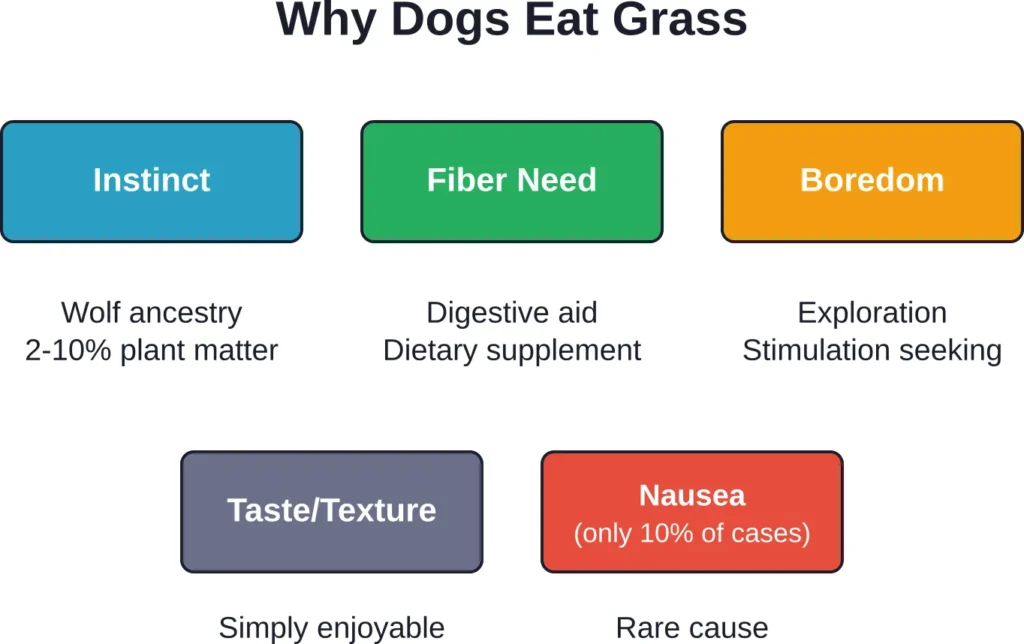
Instinctive Behavior from Wild Ancestors
Some scientists speculate that eating grass is an instinctive behavior dogs inherited from wolves. Research on wild canids shows that 2-10% of their stomach contents may contain plant material. This suggests that consuming vegetation isn’t abnormal—it’s part of their evolutionary diet.
Dogs are scavengers by nature. They’ll try things. Grass is accessible, chewable, and doesn’t run away.
The Self-Medication Myth
One popular theory suggests dogs eat grass to make themselves vomit when they feel nauseous. But here’s where the data gets interesting: studies show that less than 25% of dogs vomit after eating grass. In fact, only 10% of dogs show signs of illness before grazing.
So the idea that grass is nature’s stomach remedy? Probably overblown. Most dogs aren’t sick—they just like grass.
Maria Verbrugge, a clinical instructor at the University of Wisconsin School of Veterinary Medicine, points out that while nauseous animals sometimes eat grass, it’s far from the rule. Dogs are opportunistic eaters, and grass is simply another texture and flavor to explore.
Dietary Fiber and Digestion
Grass contains fiber, which can aid digestion. If a dog’s diet lacks sufficient roughage, grazing might fill that gap. This doesn’t mean commercial dog food is inadequate—most quality brands are nutritionally complete. But some dogs may instinctively seek out additional fiber anyway.
Environmental exposure to diverse conditions during early life may influence immune system development and allergic sensitization risk, according to research on environmental and dietary factors. This hints at the broader role that a dog’s environment, including grass exposure, plays in their overall health and development.
Boredom and Behavioral Grazing
Sometimes, grass-eating is just something to do. A bored dog in the backyard with nothing to chew, chase, or sniff might turn to the lawn for entertainment. This is especially common in younger dogs and puppies, who explore the world mouth-first.
If your dog grazes constantly during outdoor time but shows no other symptoms, boredom is a likely culprit. More mental stimulation—interactive toys, training sessions, or longer walks—can reduce the behavior.
Is Eating Grass Safe for Dogs?
Generally speaking, yes. Grass itself isn’t toxic to dogs. But there are some important caveats.
Pesticides, Herbicides, and Lawn Chemicals
The biggest risk isn’t the grass—it’s what’s on the grass. Lawns treated with pesticides, herbicides, or fertilizers can be dangerous if ingested. Many lawn care products contain chemicals that are toxic to dogs, especially in concentrated amounts.
If your dog is a frequent grazer, either avoid chemical treatments on your lawn or keep your dog away from treated areas for at least 24 hours (or as directed by the product label).
Parasites and Contamination
Grass can harbor parasites like roundworm eggs, especially in areas frequented by other animals. Dogs that graze in public parks or unfamiliar yards may be at higher risk. Regular deworming and fecal exams help mitigate this.
Obstruction Risk
In rare cases, dogs that consume large amounts of grass—especially long, tough blades—can develop gastrointestinal blockages. This is uncommon, but if your dog is eating grass obsessively and showing signs of distress, contact your vet.
When Should You Worry About Grass-Eating?
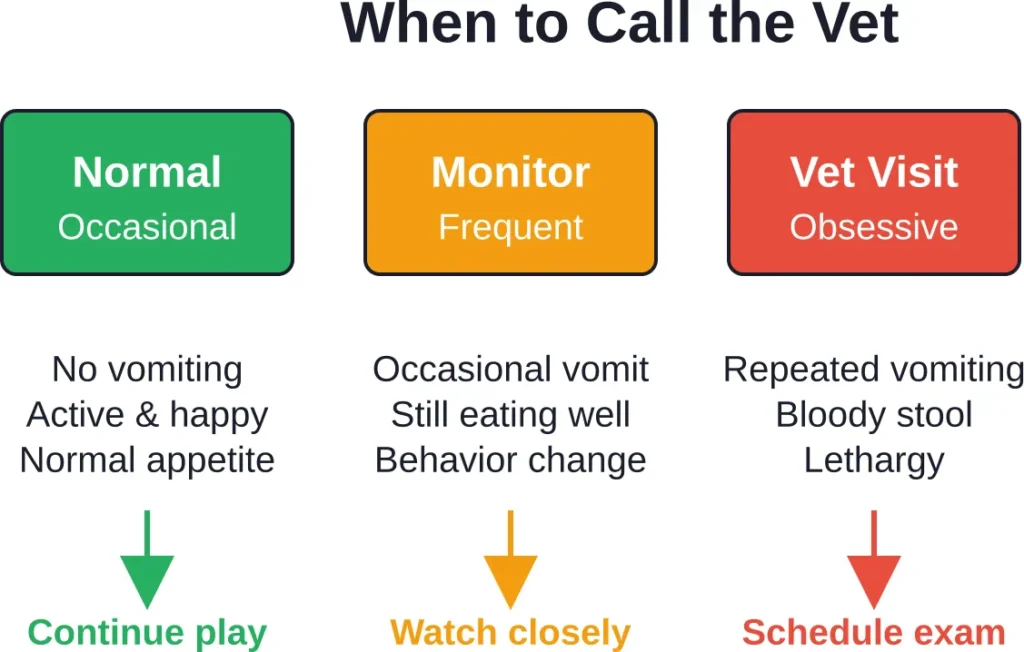
Most grass-eating is harmless. But certain red flags warrant a vet visit:
- Frequent vomiting: If your dog eats grass and vomits multiple times a day, something else might be going on.
- Diarrhea or blood in stool: These symptoms suggest digestive issues beyond normal grazing.
- Lethargy or loss of appetite: Combined with grass-eating, this could indicate illness.
- Obsessive grazing: If your dog ignores everything else to eat grass frantically, it’s worth investigating.
- Weight loss or poor coat condition: These may signal nutritional deficiencies.
When in doubt, consult your veterinarian. A simple exam can rule out underlying health problems.
How to Reduce Grass-Eating (If You Want To)
If your dog’s grazing habit bothers you—or if you’re concerned about lawn chemical exposure—here are some practical ways to manage it.
Increase Dietary Fiber
Adding vegetables like green beans, carrots, or pumpkin to your dog’s diet can satisfy the fiber craving that might drive grass consumption. Always introduce new foods gradually and check with your vet first.
Provide Safe Alternatives
Some owners grow wheatgrass or other pet-safe grasses in pots specifically for their dogs. This gives dogs a safe grazing option free from pesticides and parasites. Some veterinarians and pet owners report that providing safe wheatgrass alternatives can satisfy grazing behavior.
Add Mental and Physical Stimulation
If boredom is the driver, more exercise and enrichment can help. Puzzle toys, scent games, and regular training sessions keep minds busy and mouths occupied with something other than lawn clippings.
Supervise Outdoor Time
If your dog only grazes in certain areas, redirect them when they start. Positive reinforcement for ignoring grass—treats, praise, play—can gradually shift the habit.
What About Puppies?
Puppies eat grass more frequently than adult dogs, largely because they explore everything with their mouths. This behavior usually decreases as they mature.
As long as your puppy isn’t showing signs of illness and the grass is pesticide-free, occasional grazing is nothing to stress over. Just keep an eye on them to make sure they’re not swallowing foreign objects along with the grass.
| Factor | Safe | Risky |
|---|---|---|
| Pesticide-free lawn | Yes | No |
| Occasional grazing | Yes | No |
| Vomiting afterward | Rare, usually OK | Frequent = vet visit |
| Public park grass | Monitor for parasites | Higher contamination risk |
| Obsessive eating | No | Yes, check with vet |
Frequently Asked Questions
Not usually. Less than 25% of dogs vomit after eating grass, and only 10% show signs of illness beforehand. Most dogs simply enjoy the texture or are seeking fiber.
Grass itself isn’t harmful. The real risks come from pesticides, herbicides, and parasites that may be present on the grass. Keep lawns chemical-free if your dog grazes regularly.
Daily grass-eating can indicate boredom, dietary fiber needs, or simply habit. If your dog is otherwise healthy and active, it’s usually not a concern. Consider adding fiber to their diet or providing safe wheatgrass.
Not necessarily. If the grass is safe and your dog is healthy, there’s no harm. If you want to reduce it, increase fiber, provide alternatives, and add more mental stimulation.
Grass itself doesn’t cause worms, but contaminated grass can harbor parasite eggs. Regular deworming and fecal exams minimize this risk, especially for dogs that graze in public areas.
Frantic grass-eating followed by vomiting can signal nausea or gastrointestinal upset. If it happens repeatedly, schedule a vet visit to rule out underlying issues.
Any untreated, pesticide-free grass is safe. Wheatgrass grown indoors is an excellent alternative, offering a clean, controlled option for dogs that love to graze.
Final Thoughts
So, is it OK for dogs to eat grass? Absolutely—most of the time. It’s a natural, instinctive behavior that rarely signals anything serious. The occasional grazing session is just part of being a dog.
But keep an eye on the context. Safe, chemical-free grass? No problem. Obsessive consumption paired with vomiting or lethargy? Time to call the vet.
When in doubt, trust your instincts as a pet owner. Observe your dog’s overall health, behavior, and happiness. If something feels off, professional guidance is always the right move. Otherwise, let them enjoy their salad.