
Quick Summary: Day-old coffee is generally safe to drink for up to 12 hours at room temperature if it’s black, though the taste degrades significantly. Coffee with milk or cream should not sit out longer than 4 hours due to bacterial growth risks. Refrigeration can extend shelf life, but reheating often intensifies bitterness.
We’ve all been there. You brew a fresh pot of morning coffee, get distracted, and hours later find that mug sitting on the counter. The question hits: is it safe to drink day-old coffee, or should it go straight down the drain?
Coffee is one of the most consumed beverages worldwide, yet confusion surrounds how long it remains safe and palatable after brewing. The answer depends on several factors—whether it contains milk, how it’s stored, and how long it’s been sitting out.
Let’s break down what actually happens to coffee over time and when that day-old cup crosses the line from unappetizing to unsafe.
Is Day-Old Coffee Safe to Drink?
The safety of day-old coffee hinges primarily on what’s in it and where it’s been stored.
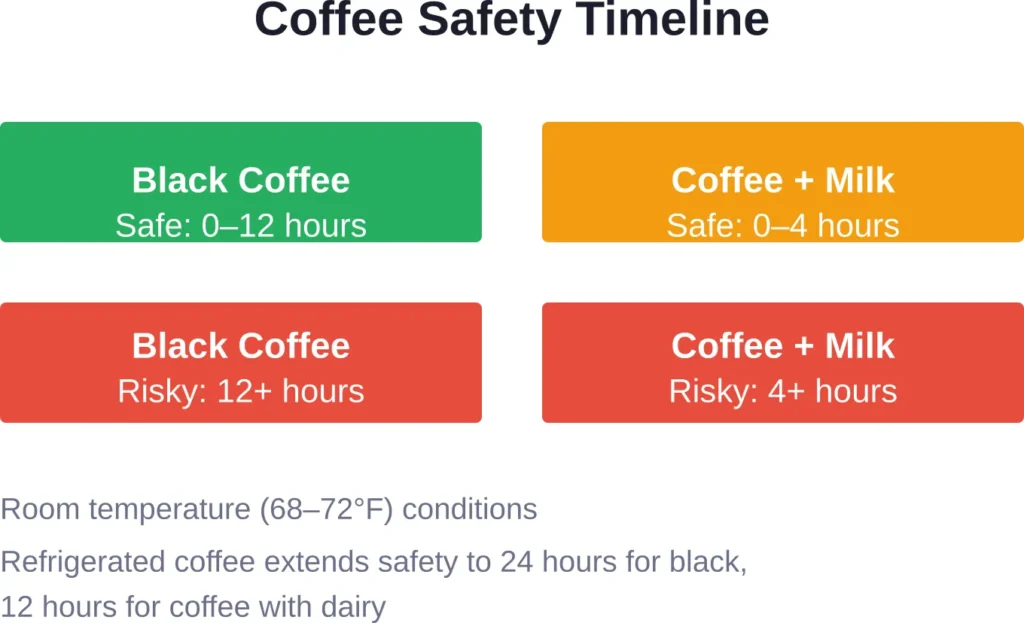
Black coffee—brewed with just water and grounds—is remarkably stable at room temperature for up to 12 hours. The acidity of coffee (typically pH 4.85-5.10) creates an environment that inhibits most harmful bacterial growth.
But here’s the thing: once you add milk, cream, or any dairy product, the safety window shrinks dramatically. According to the USDA, perishable foods should not remain in the temperature danger zone of 40°F to 140°F for longer than 4 hours. In this range, bacteria can double in number every 20 minutes.
Coffee with milk left out overnight? That’s a hard pass. The dairy provides nutrients that bacteria thrive on, and room temperature creates ideal conditions for rapid microbial growth.
Cold Brew vs. Hot Brewed Coffee
Cold brew coffee shows slightly different behavior. Due to its unique brewing process—steeping grounds in cold water for 12-24 hours—cold brew is less prone to oxidation. It can safely sit at room temperature for up to 12 hours, similar to hot brewed black coffee.
Once opened or diluted, though, the same 12-hour guideline applies.
What Happens to Coffee When It Sits Out?
Even when coffee remains technically safe, it undergoes chemical changes that affect flavor and aroma.
Coffee contains over 1,000 aromatic compounds that begin breaking down immediately after brewing. Oxidation—the reaction between coffee compounds and oxygen—accelerates as the beverage sits exposed to air.
Within 30 minutes, volatile aromatics start dissipating. After four hours, the flavor profile shifts noticeably toward flat, stale, and increasingly bitter notes. The oils in coffee turn rancid over time, creating an unpleasant taste that no amount of reheating can fix.
Temperature matters too. Hot coffee left on a burner continues cooking, concentrating bitter compounds and destroying delicate flavors. Coffee sitting at room temperature simply goes stale through oxidation and evaporation.
How Long Can Different Types of Coffee Sit Out?
Not all coffee behaves identically once brewed. Here’s what happens with common variations:
| Coffee Type | Room Temp (Safe) | Room Temp (Quality) | Refrigerated |
|---|---|---|---|
| Black coffee (hot) | Up to 12 hours | Best within 30 min | 24 hours |
| Coffee with milk/cream | Maximum 4 hours | Best within 2 hours | 12 hours |
| Cold brew (undiluted) | Up to 12 hours | 2-3 hours | 7-10 days |
| Iced coffee | 2-4 hours | 1 hour | 12 hours |
| Espresso | Up to 12 hours | Drink immediately | Not recommended |
The 4-Hour Rule for Dairy
Any coffee containing dairy products falls under the CDC’s food safety guidelines for perishable items. Bacteria like Staphylococcus aureus, Salmonella, and E. coli can multiply rapidly in the danger zone between 40°F and 140°F.
After 4 hours at room temperature, perishable foods should be discarded. This includes your latte, cappuccino, or coffee with a splash of milk.
Does Refrigerating Day-Old Coffee Help?
Refrigeration significantly extends the safety window for leftover coffee.
Black coffee stored in a sealed container in the refrigerator remains safe for up to 24 hours. Coffee with milk or cream can last about 12 hours when properly chilled below 40°F. The cold temperature slows bacterial growth and oxidation, though it doesn’t stop these processes entirely.
Here’s the catch: refrigerated coffee develops off-flavors more quickly than room-temperature coffee during the initial hours. The cold amplifies certain bitter compounds and mutes sweetness. Many coffee drinkers find day-old refrigerated coffee less appealing than coffee that’s been sitting at room temperature for a few hours.
Store leftover coffee in an airtight container rather than an open mug. Exposure to air and refrigerator odors degrades quality rapidly.
Can You Reheat Day-Old Coffee?
Yes, you can reheat day-old coffee—but whether you should is another question entirely.
Reheating intensifies the bitter compounds that developed during oxidation. The microwave heats unevenly, creating hot spots that taste burnt while other portions remain lukewarm. Stovetop reheating offers more control but can’t restore lost aromatics or fix rancid oils.
Food safety guidelines recommend reheating leftovers to 165°F to ensure safety if coffee contains dairy. For coffee, this temperature is excessive and damages flavor further. Most coffee drinkers find reheated coffee barely drinkable, even when it was refrigerated promptly.
Better Alternatives to Reheating
If dealing with leftover coffee regularly, consider these options instead of reheating:
- Pour over ice for iced coffee (works best with black coffee)
- Use as a base for coffee cocktails or smoothies
- Freeze in ice cube trays for future iced coffee without dilution
- Brew smaller quantities to match consumption
How to Store Leftover Coffee Properly
When storing brewed coffee, following proper food safety protocols maximizes both safety and quality.
Transfer coffee to an airtight container immediately. Exposure to oxygen accelerates oxidation, so minimizing air contact preserves flavor. Glass containers work better than plastic, which can absorb odors and leach flavors into the coffee.
Refrigerate within 2 hours of brewing (1 hour if room temperature exceeds 90°F). The faster coffee moves from room temperature to below 40°F, the slower bacterial growth becomes.
Label containers with the date and time brewed. This simple step prevents consuming coffee that’s sat too long. Even refrigerated coffee quality degrades after 24 hours.
For coffee with milk or cream, the clock starts ticking faster. Aim to refrigerate within 30 minutes of brewing or adding dairy, and consume within 12 hours maximum.
Signs Your Coffee Has Gone Bad
Sometimes it’s obvious when coffee has crossed the line from stale to spoiled. Look for these warning signs:
Visual changes: Mold growth appears as fuzzy spots on the surface or around container edges. Any visible mold means the entire batch should be discarded.
Smell: Spoiled coffee develops a sour, rancid, or fermented odor distinctly different from normal coffee aroma. Trust your nose—if it smells off, it probably is.
Taste: While stale coffee tastes flat and bitter, spoiled coffee tastes notably sour or has an unpleasant tang. If the first sip makes you recoil, don’t force it.
Texture: Coffee with dairy may develop a slimy texture or visible separation when bacteria multiply. Black coffee typically won’t show texture changes until mold appears.
The Taste Factor: Is Day-Old Coffee Worth Drinking?
Safety aside, the real question for most people is whether day-old coffee actually tastes good enough to drink.
Real talk: most coffee lovers would say no. Fresh coffee tastes dramatically better than coffee that’s been sitting for hours. The aromatics that make coffee appealing dissipate rapidly, leaving behind primarily bitter notes.
Black coffee degrades more gracefully than coffee with additives. A plain black brew from 12 hours ago might be drinkable if stored properly, though it won’t be enjoyable. Coffee with milk, sugar, or flavored syrups fares worse—the dairy goes off, and sugar can promote bacterial growth.
Cold brew holds up better than hot brewed coffee. Its lower acidity and slower oxidation rate mean day-old cold brew tastes closer to fresh than day-old hot coffee.
But here’s the bottom line: even when safe, day-old coffee represents a significant downgrade in drinking experience. Those complex flavor notes, bright acidity, and rich aromatics that make good coffee special? Gone within a few hours.
Best Practices for Coffee Freshness
Rather than managing day-old coffee, focus on preventing excess in the first place:
Brew only what you’ll drink immediately. Modern coffee makers offer programmable options for brewing specific quantities. Use them.
Invest in a thermal carafe. Keeping coffee hot without continued heating preserves flavor better than a traditional warming plate. Coffee stays drinkable for 2-3 hours in a quality thermal container.
Consider single-serve options. Pour-over, French press, or pod systems allow brewing one cup at a time, eliminating waste.
Store beans properly. Fresh-roasted beans stored in an airtight container away from light, heat, and moisture maintain quality for weeks. Fresh beans make dramatically better coffee than properly stored day-old coffee ever will.
Grind immediately before brewing. Pre-ground coffee stales exponentially faster than whole beans. A burr grinder costs less than a week’s worth of coffee shop visits.
What About Instant Coffee?
Instant coffee follows different rules since it’s already been brewed, concentrated, and dehydrated.
Once mixed with hot water, instant coffee behaves like regular brewed coffee. The same 12-hour guideline for black coffee and 4-hour limit for coffee with dairy apply. Instant coffee offers no preservation advantage over traditionally brewed coffee once liquid.
The dry crystals or powder remain shelf-stable for months when stored properly in a sealed container. But once reconstituted? It’s just regular coffee subject to the same spoilage factors.
Frequently Asked Questions
Black coffee that sat out overnight (8-12 hours) is generally safe but will taste stale and bitter. Coffee containing milk or cream should not be consumed after sitting out more than 4 hours due to bacterial growth risks. When in doubt, brew fresh rather than risk foodborne illness.
Check for mold growth, sour or rancid odors, slimy texture, or visible separation in coffee with dairy. Black coffee rarely shows obvious spoilage signs until mold appears. If coffee smells or tastes significantly different from fresh coffee—beyond just being stale—discard it.
Yes, refrigeration extends coffee safety to about 24 hours for black coffee and 12 hours for coffee with milk. Store in an airtight container to prevent absorption of refrigerator odors. However, refrigeration doesn’t prevent flavor degradation—cold coffee still tastes noticeably worse than fresh.
Black coffee that was properly refrigerated can be safely reheated within 24 hours, though the taste will be poor. Coffee with dairy should only be reheated if it was refrigerated within 4 hours of brewing and consumed within 12 hours total. Reheat to at least 165°F if dairy is present.
Reheating intensifies bitter compounds that developed during oxidation and can’t restore lost aromatic compounds. The microwave heats unevenly, creating burnt-tasting hot spots. Additionally, the oils in coffee turn rancid over time, and heating amplifies these unpleasant flavors rather than masking them.
Black coffee rarely causes illness even when stale, due to its acidity. However, coffee with milk left at room temperature beyond 4 hours can harbor bacteria like Salmonella, E. coli, or Staphylococcus aureus that cause food poisoning. Symptoms include nausea, vomiting, diarrhea, and stomach cramps.
Cold brew concentrate stored in the refrigerator lasts 7-10 days when undiluted and properly sealed. Once diluted with water or milk, treat it like regular coffee—consume within 12 hours if left out, or 24 hours if refrigerated. Cold brew’s lower acidity makes it more stable than hot brewed coffee.
The Bottom Line on Day-Old Coffee
So, is it OK to drink day-old coffee? Technically yes, if it’s black and hasn’t exceeded 12 hours at room temperature. Practically speaking, though, it’s rarely worth it.
The safety window for black coffee is generous—up to 12 hours at room temperature or 24 hours refrigerated. But the flavor deteriorates within hours, leaving behind a flat, bitter shadow of what fresh coffee should taste like.
Coffee with milk or cream operates under stricter rules. The 4-hour maximum at room temperature isn’t negotiable. Beyond that timeframe, bacterial growth poses genuine health risks that no amount of reheating eliminates completely.
For the best coffee experience, brew only what’s needed and consume it fresh. When that’s not possible, refrigerate promptly in an airtight container and use within 24 hours. And when faced with questionable day-old coffee? Brewing a fresh cup takes five minutes and tastes infinitely better.
Life’s too short for bad coffee. When in doubt, start fresh.