
Quick Summary: Drinking water before bed can help prevent overnight dehydration and support temperature regulation, but it also increases the likelihood of nocturia (waking to urinate). Recent research shows plain water intake before bedtime may enhance subjective wellbeing and sleep quality, though balancing the benefits against nighttime bathroom trips is essential. For most adults, stopping water intake about 1-2 hours before sleep strikes the best balance.
Water accounts for 50%–70% of human body weight, making hydration critical around the clock. But when nighttime rolls around, the question gets trickier: should that glass of water sit on your nightstand, or stay in the kitchen?
The answer isn’t one-size-fits-all. Recent research published in 2026 sheds new light on how plain water intake before bedtime affects everything from sleep parameters to mood—along with the inevitable trade-off of more bathroom trips.
Here’s what the science actually says about drinking water before bed, when timing matters most, and how to decide what works for your body.
The Science Behind Water and Sleep
Water does more than quench thirst. During sleep, the body continues losing water through breathing, sweating, and other physiological processes. Staying properly hydrated supports cellular repair, nutrient transportation, and the hormonal balance that keeps sleep cycles running smoothly.
Research examining fluid intake and sleep quality found that adequate hydration correlates positively with REM sleep length and total sleep duration. These findings suggest the quantity of water consumed throughout the day—and potentially before bed—may influence how well people sleep.
Interestingly, studies have also shown that inadequate hydration is associated with sleep duration of less than 6 hours in both US and Chinese populations. Research found that 28.7% of participants reported sleeping six hours or less, while 63.7% consumed less than 2 liters of water daily.
What Happens During Sleep
While asleep, the body isn’t just resting—it’s actively repairing cells, consolidating memories, and regulating hormones like melatonin and cortisol. All these processes require proper hydration to function optimally.
Dehydration during sleep can disrupt these vital functions, potentially affecting sleep quality and next-day cognitive performance. Yet drinking too close to bedtime introduces its own complication: nocturia, or waking up to urinate.
Benefits of Drinking Water Before Bed
Recent research from Japan’s National Institute of Advanced Industrial Science and Technology examined 2,000 middle-aged men and found that plain water intake before bedtime offers measurable advantages.
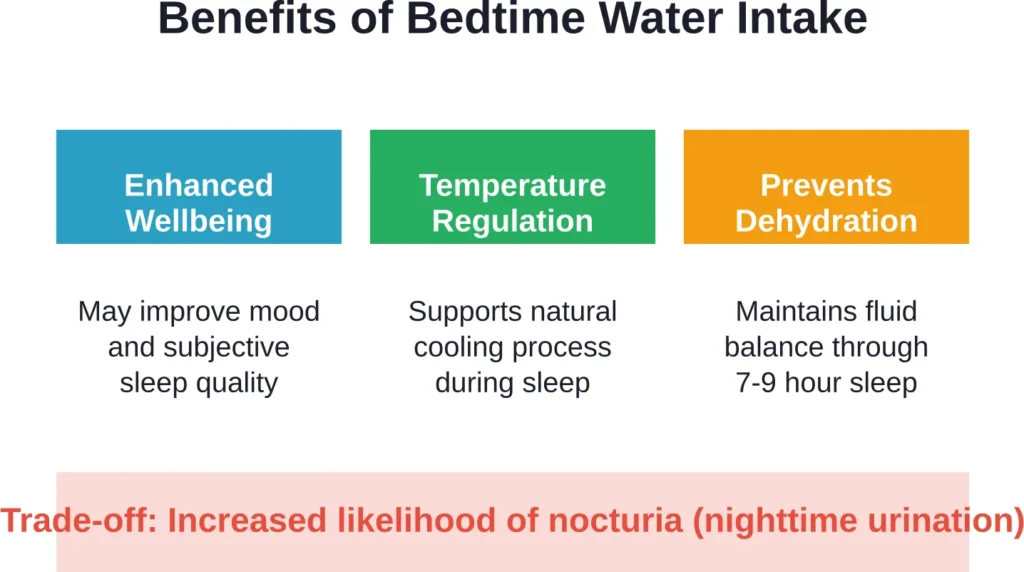
Enhanced Subjective Wellbeing
The 2026 study revealed that water consumption before bed positively influenced depressive mood among participants. Research indicates that between 3% and 7% of the Japanese population experiences depression. The simple practice of drinking water before bed emerged as an accessible intervention that may enhance subjective wellbeing.
Temperature Regulation Support
Water helps regulate body temperature overnight. Core body temperature naturally drops during sleep, and proper hydration supports this process. Interestingly, research from the University of Texas at Austin found that bathing in water between 104°F and 109°F about 1-2 hours before bedtime improved overall sleep quality and hastened sleep onset by an average of 10 minutes.
While that study focused on bathing rather than drinking, it underscores water’s role in the body’s thermal regulation during the transition to sleep.
Prevention of Overnight Dehydration
Going 7-9 hours without fluid intake can leave the body mildly dehydrated by morning. Drinking water before bed helps maintain hydration status throughout the night, potentially preventing that groggy, dry-mouthed feeling upon waking.
The Nocturia Trade-Off
Now for the catch. That same 2026 research that found benefits to bedtime water intake also confirmed what many people already suspect: plain water intake before bed increases the likelihood of nocturia.
Nocturia means waking up one or more times during the night to urinate. While it’s a normal bodily function, frequent nighttime bathroom trips fragment sleep, reducing overall sleep quality and leaving people feeling less rested in the morning.
Balancing Act
Here’s the thing—the decision isn’t purely binary. The researchers emphasized that balancing advantages and disadvantages is essential. For some people, the wellbeing benefits outweigh the inconvenience of one bathroom trip. For others, uninterrupted sleep takes priority.
Factors that influence this balance include age, bladder capacity, overall fluid intake throughout the day, medications, and individual sleep sensitivity.
When Is the Best Time to Drink Water?
Timing matters more than most people realize. Rather than chugging water right before climbing into bed, strategic timing can maximize benefits while minimizing sleep disruption.
The 1-2 Hour Window
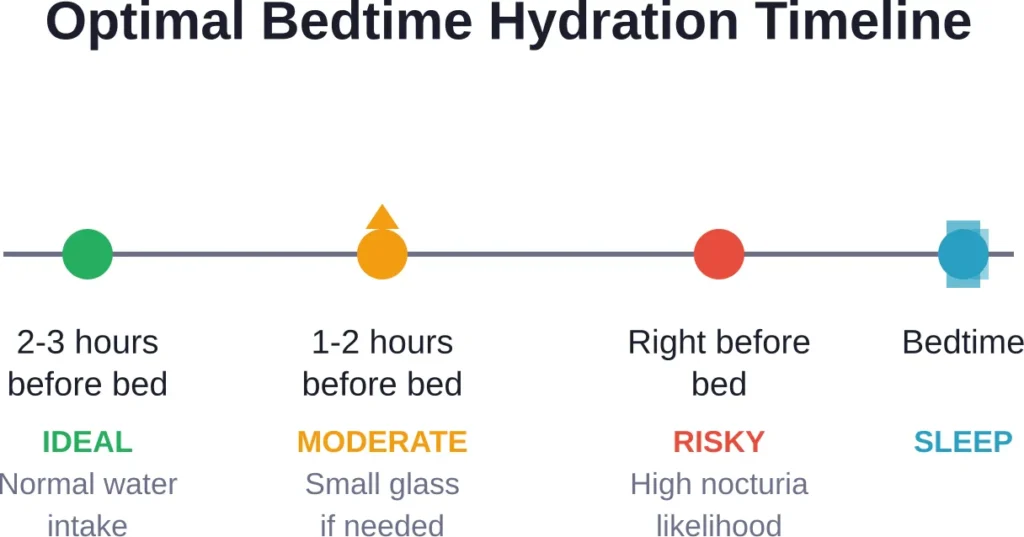
General recommendations suggest stopping water intake about 1-2 hours before bedtime. This window allows the body to process fluids and empty the bladder before sleep begins, reducing nocturia risk.
Research on warm bathing found that the optimal timing for improved sleep quality was 1-2 hours before bed—a timeframe that allows physiological processes to take effect without causing nighttime disruption.
Throughout-the-Day Hydration
The best strategy? Don’t save hydration for bedtime. Consistent water intake throughout waking hours maintains optimal hydration without overloading the bladder at night.
Data shows that most adults consume less than 2 liters of water daily—well below recommended levels. Spreading adequate fluid intake across the day eliminates the need for large quantities before bed.
| Timing | Amount | Impact on Sleep |
|---|---|---|
| 2+ hours before bed | Normal intake | Minimal disruption, maintains hydration |
| 1-2 hours before bed | Small glass (4-8 oz) | Slight nocturia risk, hydration benefit |
| Immediately before bed | Full glass (8+ oz) | High nocturia risk, may fragment sleep |
| After midnight wake | Small sips only | Address thirst without overloading bladder |
Individual Factors That Matter
No single recommendation works for everyone. Several factors influence whether bedtime water intake helps or hinders sleep quality.
Age Considerations
Bladder capacity and kidney function change with age. Older adults often experience nocturia more frequently, making late-evening hydration more disruptive. Younger adults typically tolerate bedtime water intake better.
Overall Daily Hydration
People who stay well-hydrated throughout the day feel less compelled to drink large amounts before bed. Conversely, those who under-hydrate during waking hours may experience intense evening thirst.
Sleep Environment Factors
Temperature plays a surprising role. Research from the American Academy of Sleep Medicine found that sleep declines by 14 minutes on warm nights when the temperature exceeds 86 degrees Fahrenheit. In hot conditions, maintaining hydration becomes more critical, potentially justifying bedtime water intake despite nocturia risk.
Practical Recommendations
So what’s the verdict? For most adults, a moderate approach works best:
Prioritize daytime hydration. Aim for consistent water intake during waking hours rather than compensating at night. This prevents both dehydration and nocturia.
Use the 1-2 hour cutoff. If evening thirst strikes, drink a small glass of water at least 1-2 hours before bed, then use the bathroom before lying down.
Listen to your body. Some people tolerate bedtime water without sleep disruption. Others find even small amounts cause multiple nighttime awakenings. Track patterns and adjust accordingly.
Consider warm water. While research on warm bathing showed sleep benefits at specific temperatures (104-109°F), warm water for drinking may feel more soothing before bed than cold, though specific temperature research for drinking is limited.
Account for other beverages. Remember that caffeine timing affects sleep quality. Stick with plain water, avoiding caffeinated or sugary drinks in the evening.
Frequently Asked Questions
If drinking within 1-2 hours of bed, limit intake to a small glass (4-8 ounces). Larger amounts increase nocturia risk. Better yet, maintain adequate hydration throughout the day to minimize bedtime thirst.
Water itself doesn’t directly cause weight loss, though staying hydrated supports metabolism and may reduce calorie intake if water replaces high-calorie beverages. However, bedtime specifically isn’t superior to other times for weight management.
A small amount 1-2 hours before sleep can help maintain overnight hydration, but consistent daytime intake matters more. The body can typically tolerate 7-9 hours without fluid if properly hydrated beforehand.
Adequate overall hydration supports skin health, but the timing of water intake—before bed versus other times—doesn’t offer unique skin benefits. Focus on total daily water consumption rather than specific timing.
Research on bathing suggests warm water between 104-109°F improves sleep quality when used 1-2 hours before bed. For drinking water, temperature preference is largely individual, though some find warm water more soothing in the evening.
Stop water intake 1-2 hours before bed, empty your bladder before lying down, and ensure adequate daytime hydration. If nocturia persists despite these measures, consult a healthcare provider to rule out underlying conditions.
Yes. Research shows that inadequate hydration correlates with shorter sleep duration (less than 6 hours) and may reduce REM sleep length. However, mild dehydration doesn’t appear to significantly impact sleep measures in healthy adults according to controlled studies.
The Bottom Line
Drinking water before bed isn’t inherently good or bad—it’s about context. The 2026 research makes clear that plain water intake before bedtime can enhance subjective wellbeing and potentially improve mood, but it also increases the likelihood of nocturia that fragments sleep.
For most people, the sweet spot involves maintaining solid hydration throughout the day, tapering off 1-2 hours before sleep, and listening to individual body signals. Some nights might call for that small glass of water; others won’t.
The simple truth? Water is essential for sleep and overall health. The practice of consuming it before bedtime can be effective for wellbeing—as long as the trade-offs work for individual circumstances and sleep patterns.
Track how bedtime water affects sleep for a week or two. Notice patterns. Adjust timing and quantity accordingly. That personalized approach beats any one-size-fits-all recommendation.