

Quick Summary: Yogurt can often be consumed safely 1-2 weeks past its ‘Best if Used By’ date if stored properly at 40°F or below and shows no signs of spoilage like mold, off-smells, or excessive liquid separation. These dates indicate peak quality, not safety, according to the USDA. Always inspect yogurt before eating and discard it if it’s been exposed to temperatures above 40°F for more than 2 hours or shows visible spoilage.
You open the fridge and spot that container of yogurt sitting in the back. The date stamped on top passed two weeks ago. Your first instinct? Probably to toss it.
But here’s the thing—expiration dates don’t always tell the full story. According to the USDA, roughly 30% of the food supply is lost or wasted at retail and consumer levels, and confusion about date labels drives much of that waste.
So is that yogurt actually unsafe? Or are you throwing away perfectly good food?
What Expiration Dates on Yogurt Really Mean
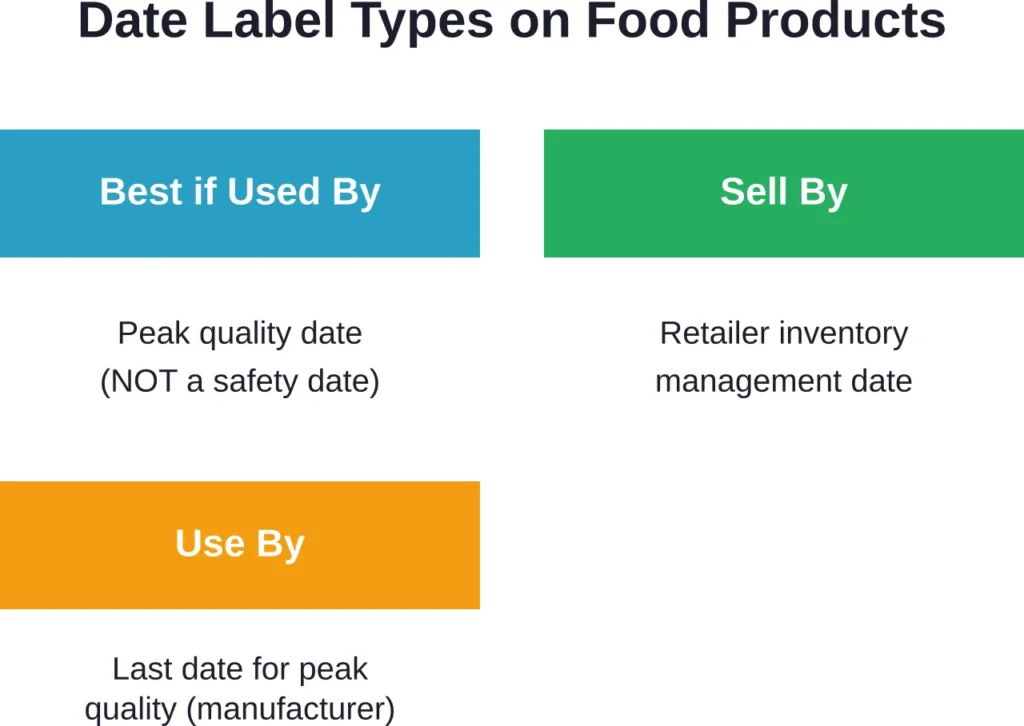
Most yogurt containers display a “Best if Used By” or “Best By” date. This isn’t a safety deadline—it’s a quality marker set by the manufacturer.
The USDA explains that these dates indicate when a product will be at peak flavor and texture. They’re not federally regulated for most foods (infant formula being the exception), and they don’t mean the product becomes unsafe the day after.
Yogurt is made from milk cultured with live bacteria—primarily Streptococcus thermophilus and Lactobacillus bulgaricus. According to Colorado State University research, about 80% of all yogurt manufactured in the U.S. contains an additional culture called Lactobacillus acidophilus.
These beneficial bacteria actually help preserve yogurt by creating an acidic environment. The FDA amended the yogurt standard to require products to have a pH of 4.6 or lower (effective January 1, 2024), which inhibits the growth of many harmful pathogens.
How Long Does Yogurt Last Past Its Date?
The shelf life of yogurt depends heavily on storage conditions and whether the container has been opened.
Unopened yogurt stored continuously at 40°F or below can typically last 1-2 weeks beyond the printed date. Opened yogurt has a shorter window—usually about one week past the date, assuming proper refrigeration.
Temperature control matters enormously. According to the FDA, refrigerators keep food cold for about 4 hours if unopened during a power outage. After that window, perishable dairy products like yogurt should be discarded if exposed to temperatures above 40°F for more than 2 hours.
| Yogurt Condition | Refrigerated (≤40°F) | After Opening |
|---|---|---|
| Unopened, past date | 1-2 weeks typically safe | N/A |
| Opened, past date | Up to 1 week if no spoilage signs | Use within 5-7 days |
| Left at room temp | Discard after 2 hours | Discard after 2 hours |
| Power outage (fridge closed) | Safe up to 4 hours | Same as unopened |
Signs Your Yogurt Has Actually Gone Bad
Dates provide guidance, but your senses offer the final verdict. Here’s what to look for:
Visible Mold Growth
Any mold—green, black, pink, or white fuzzy spots—means immediate disposal. Don’t scrape it off and eat the rest. Mold can send invisible roots deep into the product.
Off Odors
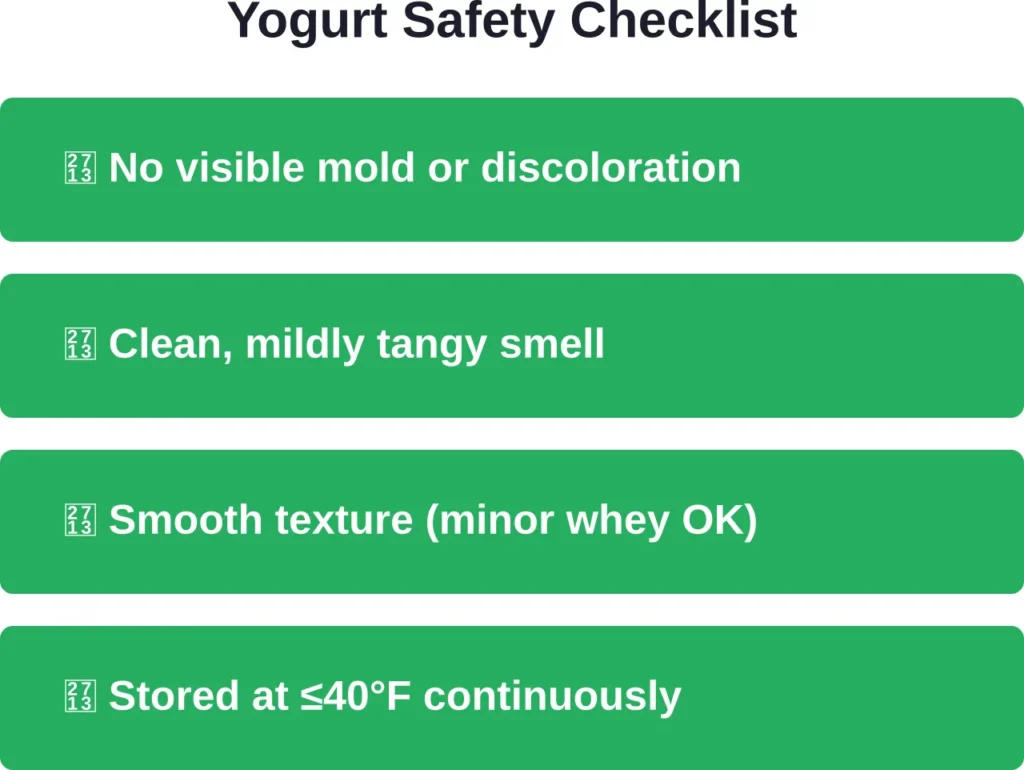
Fresh yogurt has a clean, mildly tangy smell. Spoiled yogurt develops sour, yeasty, or putrid odors that are distinctly unpleasant. Trust your nose.
Excessive Liquid Separation
Some watery liquid (whey) on top is normal and can be stirred back in. But if the yogurt appears curdled, chunky, or has separated into distinct solid and liquid layers that won’t recombine, that’s a red flag.
Texture Changes
Spoiled yogurt may become slimy, lumpy, or develop an unusual consistency. Fresh yogurt should be smooth and creamy (or thick for Greek varieties).
Food Safety Context: What the Data Shows
Dairy products generally have strong safety records when handled properly. Between 2000 and 2020, at least 12 yogurt-associated outbreaks were reported to CDC’s National Outbreak Reporting System (NORS), causing 145 illnesses, 22 hospitalizations, and no deaths.
For broader context, a CDC study on nonpasteurized dairy product outbreaks covered the period 1993–2006 and found associations between nonpasteurized dairy and outbreaks during that timeframe. The vast majority of outbreaks occurred in states where raw dairy sales were permitted.
Commercially produced yogurt undergoes pasteurization and has that protective acidic environment. The risk profile is dramatically different from raw milk products.
Storage Best Practices to Extend Yogurt Life
Proper storage makes all the difference in whether yogurt remains safe past its date:
- Keep yogurt at the back of the refrigerator, not in the door where temperatures fluctuate
- Maintain refrigerator temperature at or below 40°F
- Always use clean utensils when scooping yogurt to prevent bacterial contamination
- Close the container tightly after each use to minimize air exposure
- Never leave yogurt at room temperature for more than 2 hours
- Don’t return unused portions to the container if they’ve been sitting out
The FDA emphasizes that temperature control is critical. A full freezer maintains adequate temperatures for about 48 hours during power outages if the door stays closed, but refrigerators only last about 4 hours under the same conditions.
When You Should Definitely Throw It Out
Some situations call for immediate disposal, regardless of how the yogurt looks or smells:
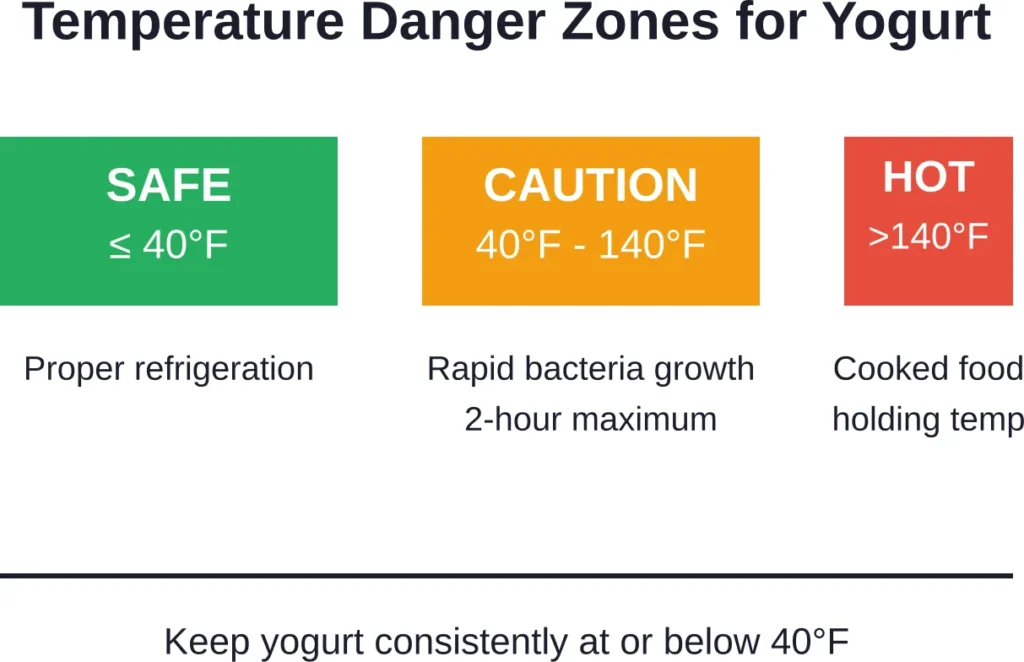
If the yogurt has been at room temperature (above 40°F) for more than 2 hours, toss it. Bacteria multiply rapidly in the temperature “danger zone” between 40°F and 140°F.
If there’s been a power outage lasting more than 4 hours and you can’t verify the refrigerator stayed below 40°F, discard perishable dairy products according to FoodSafety.gov guidance.
If the container is damaged, swollen, or shows signs of compromised packaging, don’t risk it. Seal integrity matters for food safety.
And obviously, if you see mold, smell anything foul, or notice dramatic texture changes, trust your instincts.
The Bottom Line on Expired Yogurt
Can you eat yogurt past its expiration date? Often, yes—if it’s been stored properly and passes the sensory test.
The “Best if Used By” date is about quality, not a magic safety cutoff. Yogurt’s natural acidity and live cultures provide some protection against spoilage.
That said, food safety isn’t a gamble. If you’re uncertain, throw it out. The cost of replacing one container of yogurt is nothing compared to the misery of foodborne illness.
Check for mold, smell for off odors, look for unusual texture or excessive separation, and verify it’s been kept cold. When all those boxes are checked and the date is only 1-2 weeks past, the yogurt is likely fine.
But when in doubt? Just toss it.
Frequently Asked Questions
Two months is pushing it significantly. While unopened yogurt stored at proper temperatures might technically remain safe for 1-2 weeks past the date, two months substantially increases spoilage risk. Even if no visible mold appears, quality degrades and bacterial balance shifts over time. The North Carolina Cooperative Extension notes that quality dates aren’t safety guarantees at extreme intervals. If you’re considering yogurt that old, apply the strictest inspection criteria—and honestly, just replacing it makes more sense.
Greek yogurt often has a slightly longer shelf life due to lower moisture content from the straining process. The FDA requires all yogurt types to contain at least 8.25% milk solids, but Greek yogurt concentrates those solids by removing whey. Less moisture generally means slower microbial growth. That said, storage conditions matter far more than yogurt style. Both types should be kept at 40°F or below and evaluated using the same spoilage criteria.
Not necessarily. That clear liquid is whey, a natural byproduct of yogurt cultures working. It’s packed with protein and completely safe to stir back into the yogurt or pour off based on personal preference. However, if the liquid is discolored, excessive, or the yogurt underneath appears curdled and won’t recombine, that indicates spoilage. Normal whey separation is clear to slightly yellowish and minimal.
Yes, it’s possible if the yogurt is genuinely spoiled or contaminated. Between 2000 and 2020, yogurt was linked to at least 12 reported outbreaks causing 145 illnesses, according to CDC data on yogurt-associated outbreaks. However, commercially pasteurized yogurt stored properly has a strong safety record. The acidic environment (pH 4.6 or lower per FDA standards) inhibits many pathogens. Most risks come from temperature abuse—leaving yogurt out too long or refrigerator failures—rather than simply eating yogurt a week past its date that’s been continuously refrigerated.
Store yogurt at the back of the refrigerator where temperatures stay most consistent, ideally at or below 40°F. Avoid the door shelves where temperatures fluctuate with opening and closing. Always use clean utensils to prevent introducing bacteria. Seal the container tightly after each use to minimize air exposure and moisture loss. Never leave yogurt at room temperature for more than 2 hours. These practices significantly extend safe shelf life beyond the printed date.
Freezing yogurt is safe and can extend its life for 1-2 months, though texture suffers significantly. The live cultures go dormant but don’t die. Upon thawing, yogurt becomes grainy and watery because ice crystals damage the protein structure. According to the FDA, a full freezer maintains adequate temperatures for about 48 hours during power outages. Frozen yogurt works better for cooking, smoothies, or baking rather than eating plain. The cultured bacteria remain beneficial even after freezing.
Not particularly. All commercially sold yogurt must meet the same FDA safety standards, including pasteurization and pH requirements, regardless of organic certification. The USDA notes that 30% of food waste stems from date confusion across all product types. Organic yogurt doesn’t have special preservation properties—it’s subject to the same spoilage mechanisms as conventional yogurt. Storage conditions and signs of spoilage matter far more than organic vs. conventional labeling when assessing safety past the date.