
Quick Summary: Consuming your own semen is generally safe for healthy individuals with no sexually transmitted infections. There are no significant health benefits or risks associated with this practice. The desire to do so falls within normal sexual behavior and curiosity, though it’s not commonly discussed.
Let’s address the elephant in the room. Many people wonder about this but few talk about it openly. The question of whether it’s safe or normal to consume your own semen comes up more often than you’d think in sexual health discussions.
This isn’t about judgment. It’s about facts.
The short answer? For most healthy individuals, there’s nothing medically unsafe about it. But like any health topic, the details matter. Let’s break down what the science actually says, what health authorities recommend, and what factors you should consider.
Is Consuming Your Own Semen Safe?
From a medical standpoint, swallowing your own semen poses minimal health risks for individuals who don’t have sexually transmitted infections. Here’s the thing—semen is a bodily fluid your body already produces. It’s not inherently toxic or harmful.
According to the CDC, certain body fluids including semen can transmit infections like HIV, hepatitis B, and other pathogens, but the risk dynamics change significantly when we’re talking about your own fluids versus someone else’s.
When you consume your own semen, you’re not introducing new pathogens to your system. Any bacteria or viruses present are already in your body. This differs fundamentally from consuming someone else’s bodily fluids, where transmission of STIs becomes a legitimate concern.
That said, there are a few scenarios where caution makes sense:
- If you have an active infection in your urogenital tract
- If you have open sores or wounds in your mouth
- If you’re experiencing symptoms of illness
- If you have a compromised immune system
Real talk: your body already reabsorbs sperm that isn’t ejaculated. This happens constantly through a process where unused sperm cells break down and get recycled by the body. Consuming ejaculated semen isn’t fundamentally different from a physiological perspective.
Understanding What Semen Contains
Before we go further, let’s talk composition. Knowing what’s actually in semen helps contextualize the safety discussion.
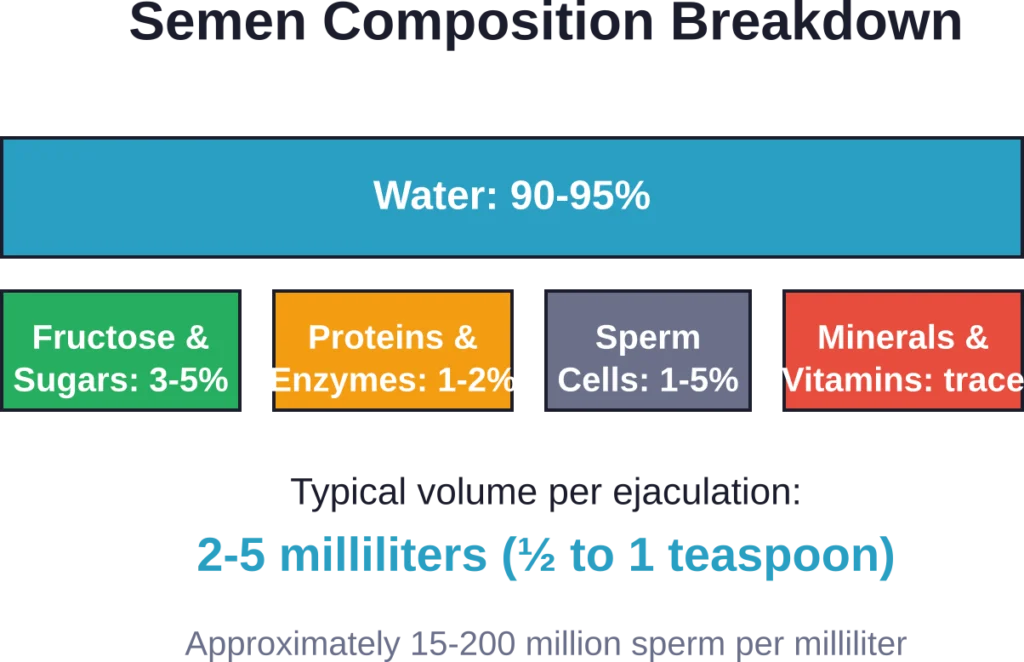
Semen consists primarily of:
- Water (approximately 90-95%)
- Proteins and enzymes
- Fructose (sugar that provides energy for sperm)
- Minerals including zinc, calcium, and magnesium
- Vitamin C and other trace nutrients
- Prostaglandins (hormone-like substances)
- Sperm cells (only 1-5% of total volume)
The amounts are small. A typical ejaculation contains approximately 2-5 milliliters of fluid—about a teaspoon. The nutritional content is minimal. While semen does contain trace amounts of vitamins and minerals, the quantities are far too small to provide meaningful nutritional benefit.
Are There Health Benefits to Eating Your Own Semen?
Here’s where we need to separate fact from internet myths.
Despite claims you might encounter online, there are no significant documented health benefits to consuming your own semen. Some sources suggest potential mood effects or nutritional advantages, but these claims lack robust scientific support.
The nutritional content is negligible. While semen does contain protein, zinc, and other nutrients, the quantities in a typical ejaculation are too small to meaningfully contribute to dietary needs. You’d get exponentially more nutrients from eating an almond.
Some research has examined potential effects of semen exposure, though findings remain limited and controversial. This research looked at effects during intercourse rather than oral consumption, and the findings are not widely replicated.
Bottom line: don’t consume semen expecting health benefits. They don’t exist in any meaningful, scientifically validated way.
What About STI Risk?
This matters. According to the CDC, sexually transmitted infections spread through contact with infected bodily fluids, including semen. STIs like HIV, hepatitis B, herpes, gonorrhea, chlamydia, and syphilis can all transmit through semen.
But wait—there’s an important distinction here.
These transmission risks apply when you’re exposed to someone else’s semen. When we’re talking about your own bodily fluids, the equation changes completely.
If you already have an STI, it’s already in your system. Consuming your own semen won’t give you an infection you already have. However, if you have active oral lesions or sores (from herpes, for example), there’s a theoretical possibility of spreading the infection to a different site in your body.
The CDC notes that certain viruses can persist in semen longer than in blood. For example, according to CDC data on Zika virus, the estimated mean time to clearance of Zika virus RNA from semen was 54 days. In the largest cohort study to date, Zika virus RNA shedding declined during the 3 months after symptom onset, and at greater than 90 days after illness onset, less than 7% of participants had detectable Zika virus RNA in semen.
But again—if we’re talking about autologous consumption (your own fluids), you’re not introducing new pathogens.
Is This Desire Normal?
Look, sexual curiosity comes in many forms. Sexual health discussions indicate that curiosity about tasting one’s own semen is not uncommon.
Sexual health professionals generally consider this curiosity within the spectrum of normal sexual behavior. The World Health Organization defines sexual health as requiring “a positive and respectful approach to sexuality and sexual relationships, as well as the possibility of having pleasurable and safe sexual experiences, free of coercion, discrimination and violence.”
This encompasses a wide range of behaviors and interests, as long as they’re safe and consensual (which doesn’t apply when we’re talking about yourself, obviously).
Some people report curiosity about taste. Others mention the arousal of the moment leading to interest that fades post-orgasm. Discussions frequently describe this pattern—strong desire before or during climax, followed by complete loss of interest afterward.
That’s actually a well-documented phenomenon related to the refractory period and hormonal changes after ejaculation. It doesn’t make the interest abnormal; it just reflects how arousal affects decision-making and desire.
Why Does Taste Vary?
If you’ve noticed your semen tastes different at different times, you’re not imagining things. Diet significantly affects the taste and smell of semen.
Generally speaking, these factors influence taste:
| Factor | Effect on Taste | Examples |
|---|---|---|
| Fruits (especially citrus, pineapple) | Sweeter, less bitter | Pineapple, oranges, melons |
| Vegetables (especially sulfurous) | Stronger, more pungent | Asparagus, cabbage, broccoli |
| Red meat and dairy | Saltier, more intense | Beef, cheese, milk |
| Alcohol and tobacco | Bitter, harsh | Beer, cigarettes, coffee |
| Hydration | Less concentrated taste | Water intake |
| Cinnamon, peppermint | Milder taste | Herbs and spices |
The “chemical” taste some people describe often relates to diet, hydration status, or medications. Certain supplements, especially zinc and some vitamins, can also affect taste.
Semen naturally has a slightly alkaline pH (between 7.2 and 8.0), which contributes to its characteristic taste. The fructose content provides a subtle sweetness, while various proteins and minerals create complexity.
Practical Considerations and Hygiene
If you’re going to do this, basic hygiene matters. Not because semen itself is dirty, but because the genital area harbors bacteria that are fine where they are but less ideal for oral consumption in large quantities.
Regular washing with mild soap and water keeps bacterial counts reasonable. Pay attention to the entire genital area, including under the foreskin if uncircumcised.
Timing also makes a difference. Immediately after urination, trace amounts of urine might be present, which affects taste. Waiting a few minutes and perhaps rinsing can improve the experience if taste is a concern.
Some sources discussing related topics like anal play mention proper cleaning protocols. While that’s a different scenario, the underlying principle applies: basic hygiene enhances safety and comfort for any sexual practice.
The Psychological Dimension
Now, this is where it gets interesting. The desire to taste or consume your own semen can stem from various psychological factors, and none of them indicate anything wrong with you.
Common motivations include:
- Curiosity: Simple wondering about what your body produces
- Arousal patterns: Some people find the idea sexually exciting
- Submission dynamics: In BDSM contexts, cum eating instructions (CEI) involve this as a dominance/submission element
- Convenience: Easy cleanup after masturbation
- Empathy: Understanding what partners might experience
- Body acceptance: Embracing all aspects of one’s sexuality
The post-orgasm loss of interest mentioned earlier relates to prolactin release and dopamine decrease after ejaculation. These hormonal shifts naturally reduce sexual arousal and can completely change how appealing sexual acts seem.
This creates the common experience where the idea seems intensely appealing during arousal but totally unappealing immediately after climax. Understanding this pattern helps contextualize the desire without judgment.

What Medical Professionals Say
Sexual health educators and medical professionals who address this question typically emphasize a few key points:
First, it’s not a medical concern for healthy individuals. Sexual health encompasses a broad range of behaviors, and this falls well within normal variation.
Second, the risks that do exist relate primarily to STI status. If you have any concerns about possible infections, getting tested makes sense—not specifically because of this practice, but for overall sexual health.
Third, the decision is entirely personal. There’s no medical reason you should or shouldn’t do this. It’s a matter of individual preference, comfort, and curiosity.
According to the WHO’s definition of sexual and reproductive health, individuals should have “complete physical, mental and social well-being in all matters relating to their reproductive system.” This framework emphasizes autonomy, safety, and making informed decisions about one’s own body.
That principle applies here. As long as you’re informed about basic safety considerations (mainly STI status and hygiene), the decision rests entirely with you.
Addressing Common Concerns
Let’s tackle some specific worries people express:
“Will it make me sick?”
Not if you’re healthy and free from infections. Your immune system is already familiar with everything in your semen.
“Is it unhygienic?”
Semen itself is sterile when produced. Bacteria can be present from skin contact, but in amounts that don’t typically cause problems for healthy individuals.
“Does it mean something about my sexuality?”
No. This interest or behavior doesn’t correlate with sexual orientation. Straight, gay, bisexual, and people of all orientations may be curious about this.
“Will I get addicted or develop a compulsion?”
There’s no evidence that this behavior is addictive. Like most sexual behaviors, it can be part of a healthy sexual repertoire without becoming compulsive.
“What if the taste is really bad?”
Taste varies significantly based on diet and hydration. If you find it unpleasant, you can simply choose not to continue. Diet modification can affect taste if you want to experiment.
When to Consult a Healthcare Provider
Most of the time, this topic doesn’t require medical consultation. But certain situations warrant talking to a healthcare professional:
- If you notice unusual changes in semen appearance, smell, or consistency
- If you experience pain during ejaculation
- If you have concerns about possible STI exposure
- If you notice blood in your semen
- If sexual behaviors feel compulsive or distressing
Changes in semen characteristics can sometimes indicate health issues like infections, prostate problems, or other urological conditions. These warrant professional evaluation regardless of whether you’re consuming your semen.
According to NIH resources on male reproductive health, infertility affects about 15% of couples in the United States. Male infertility is solely responsible in about 20% of cases and is a contributing factor in another 30% to 40% of all infertility cases. While that’s not directly related to consumption, it highlights that semen quality and reproductive health matter. Paying attention to changes can help catch problems early.
The Bottom Line on Safety and Normalcy
So, is it OK to eat your own cum? Yes, with some basic caveats.
From a safety perspective, healthy individuals without STIs face minimal to no risk from consuming their own semen. It contains nothing your body hasn’t already produced, and you’re not exposing yourself to new pathogens.
From a normalcy perspective, sexual curiosity encompasses a wide range of interests and behaviors. This particular interest is common enough that it appears frequently in sexual health discussions, even if people don’t often talk about it openly.
There are no significant health benefits, but there are also no significant risks for healthy people. It’s a neutral act from a medical standpoint—neither beneficial nor harmful.
The decision comes down to personal comfort, curiosity, and preference. No one else needs to understand or approve of your private sexual behaviors as long as they’re safe and consensual (which doesn’t apply when we’re talking about solo activities).
If you’re curious, you can try it. If you try it and don’t like it, you can stop. If you never try it, that’s equally fine. Sexual health means having the information to make informed decisions about your own body and behaviors.
Frequently Asked Questions
For healthy individuals, swallowing semen typically doesn’t cause digestive issues. The small volume (2-5 milliliters) and composition (mostly water, proteins, and simple sugars) are easily processed by the digestive system. Some people might experience mild nausea if they find the taste unpleasant, but this is psychological rather than a direct physical reaction. If you have a semen allergy (which is rare but real), you could experience allergic symptoms, but this would also manifest during external contact with semen.
This is extremely common and relates to the hormonal changes that occur during and after orgasm. During arousal, dopamine levels are high, which increases motivation and can make many sexual acts seem appealing. After orgasm, prolactin increases and dopamine drops sharply, creating the refractory period. This hormonal shift naturally reduces sexual interest and can make acts that seemed exciting moments earlier suddenly seem unappealing. This pattern is completely normal and doesn’t indicate anything unusual about the interest itself.
Yes, diet significantly affects semen taste. Foods high in natural sugars like fruits (especially pineapple and citrus) can create a sweeter, less bitter taste. Meanwhile, foods like red meat, dairy, asparagus, and cabbage can make taste more pungent or salty. Alcohol, tobacco, and coffee tend to create more bitter flavors. Hydration also matters—better hydration typically produces less concentrated, milder-tasting semen. Changes from dietary modifications typically take a few days to become noticeable since it takes time for dietary changes to affect bodily fluids.
You cannot give yourself an STI you don’t already have. If you’re free from sexually transmitted infections, your semen won’t magically develop them. However, if you do have an infection like herpes, and you have active lesions in your mouth, there’s a theoretical possibility of spreading the infection to another location on your body. This is called autoinoculation and is relatively rare. If you have concerns about STI status, getting tested provides peace of mind and is good practice for overall sexual health regardless of this particular behavior.
While semen does contain trace amounts of protein, zinc, calcium, vitamin C, and other nutrients, the quantities are far too small to provide meaningful nutritional benefit. A typical ejaculation contains approximately 2-5 milliliters of fluid. You would get exponentially more nutrition from eating a single serving of almost any food. Claims about significant nutritional or health benefits from consuming semen are not supported by scientific evidence. The practice is safe for most people, but it’s not a health supplement or meaningful nutritional source.
A chemical or unusual taste can result from several factors. Medications and supplements (particularly zinc, some antibiotics, and vitamins) can significantly affect taste. Dehydration concentrates the various components of semen, making taste more intense. Certain medical conditions affecting metabolism might also influence taste. If the taste seems particularly unusual or if it’s accompanied by other changes (discoloration, pain, unusual smell), it’s worth mentioning to a healthcare provider as it could indicate a urinary or prostatic infection. Otherwise, adjusting hydration and diet typically improves taste within a few days.
This depends entirely on your relationship dynamic and comfort level. If this is something you do privately during masturbation, there’s no obligation to discuss it unless you want to. If you’re interested in incorporating it into partnered sexual activity, communication becomes important. Many couples discuss preferences, fantasies, and interests as part of healthy sexual communication. How and whether to share this particular interest is a personal decision based on trust, communication style, and the nature of your relationship. There’s no universal rule—it’s about what feels right for your situation.
Conclusion: Your Body, Your Choice
The question of whether it’s OK to eat your own cum comes down to this: for healthy individuals without infections, it’s medically safe, falls within the range of normal sexual behavior, and is entirely a personal choice.
There are no significant health benefits, but there are also no substantial risks for most people. The decision rests on personal comfort, curiosity, and preference—not medical necessity or concern.
Sexual health includes understanding your body, making informed decisions, and feeling comfortable with your choices. If you’re curious, you now have the factual information to make that decision. If you’re not interested, that’s equally valid.
What matters most is that you’re informed about the basic safety considerations—primarily STI status and general hygiene—and that you’re making decisions that feel right for you without shame or judgment.
If you have specific health concerns or notice unusual changes in your semen, consult a healthcare provider. Otherwise, this aspect of your private sexual behavior is yours to explore or not explore as you choose.