

Quick Summary: Doctors strongly recommend avoiding sex during a UTI. Sexual activity can worsen symptoms, delay healing, and push more bacteria into the urethra. Most healthcare providers advise waiting until symptoms clear and antibiotic treatment is complete—typically 3-7 days—before resuming sexual activity.
Urinary tract infections are incredibly common—and incredibly frustrating. According to research published by the National Institutes of Health, 40% of US women develop a UTI during their lifetime, and the annual estimated incidence of UTI in premenopausal women in the U.S. is 0.5–0.7 per person per year.
When you’re dealing with the burning, urgency, and discomfort of a UTI, sex is probably the last thing on your mind. But what if your partner is in the mood? Or what if your symptoms are mild?
Here’s the truth: medical professionals consistently advise against sexual activity until a UTI has completely cleared up.
Why Doctors Say You Should Wait
The urinary tract includes the bladder, urethra, and kidneys. According to the CDC, UTIs happen when bacteria—often from the skin or rectum—enter the urethra and infect the urinary tract.
Sexual activity creates the perfect storm for making a UTI worse. The mechanical friction can irritate already-inflamed tissues in the urethra and bladder. That irritation intensifies pain and burning sensations that are already present.
But that’s not the only problem.
The Bacteria Problem
During sex, physical contact can push bacteria deeper into the urethra. When you already have an infection, introducing more bacteria—or forcing existing bacteria further into the urinary tract—can worsen the infection or even spread it to the kidneys.
The National Institute of Diabetes and Digestive and Kidney Diseases notes that untreated or worsening bladder infections can develop into kidney infections, which are far more serious and may require hospitalization.
Pain and Discomfort
Real talk: sex with a UTI hurts. The pressure on the bladder and urethra during intercourse amplifies the symptoms you’re already experiencing. Many people report sharp pain, increased burning, and even bleeding.
Community discussions reveal that attempting sex during a UTI often leads to such severe discomfort that partners stop immediately. The experience can be distressing for both people involved.
How Long Should You Wait?
The timeline depends on your treatment and symptom resolution.
If you have a UTI caused by bacteria, your healthcare provider will prescribe antibiotics, according to the National Institute of Diabetes and Digestive and Kidney Diseases. Drinking more liquids helps flush bacteria from your system and can speed recovery.
Most uncomplicated UTIs improve within 2-3 days of starting antibiotics. However, symptoms don’t always disappear immediately even as the infection clears.
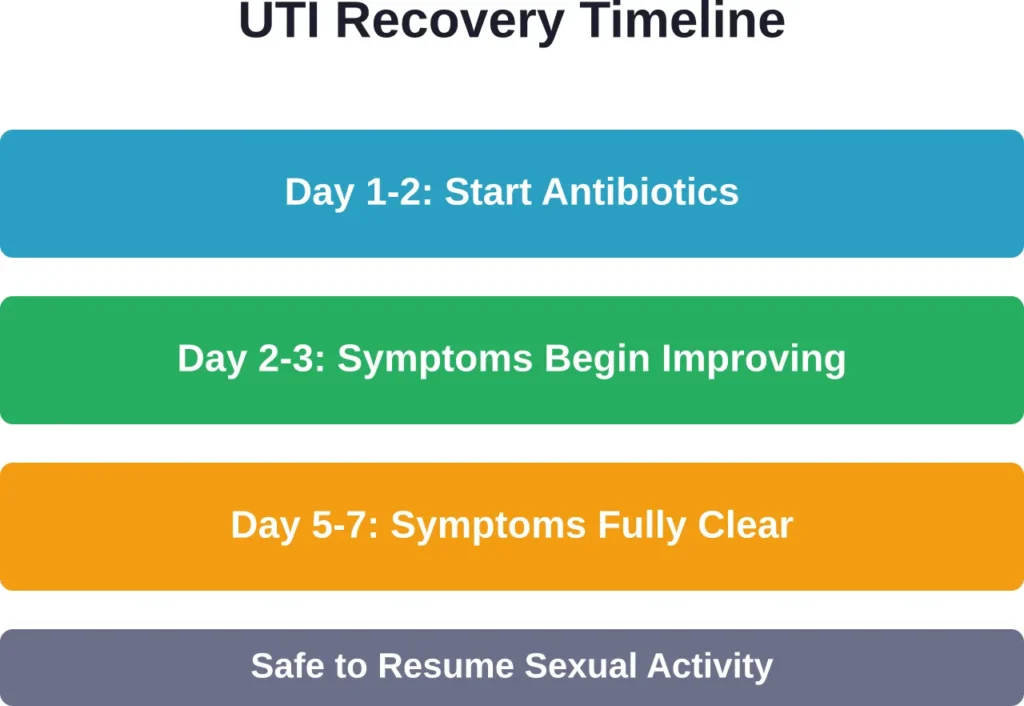
Healthcare providers generally recommend waiting until:
- All symptoms have completely resolved for at least 24-48 hours
- You’ve completed the full course of antibiotics (even if you feel better earlier)
- You’ve had a follow-up urine test confirming the infection is gone (if your doctor recommends one)
For most people, this means waiting 5-7 days from starting treatment. Some may need longer depending on infection severity.
What Happens If You Have Sex Anyway?
Look, life doesn’t always follow medical recommendations perfectly. But understanding the risks helps you make informed decisions.
Having sex with an active UTI can:
- Intensify pain and burning during and after intercourse
- Cause bleeding from irritated urinary tract tissues
- Prolong the infection by introducing new bacteria
- Spread the infection upward to the kidneys
- Lead to recurrent UTIs (some women experience recurrent UTIs within a year of an initial infection)
The physical discomfort aside, there’s also a psychological component. Painful sexual experiences can create anxiety around intimacy that persists even after the infection clears.
Can Your Partner Get a UTI From You?
Here’s something important: UTIs are not sexually transmitted infections.
According to the CDC, STIs are caused by specific viruses, bacteria, fungi, or parasites transmitted through sexual contact. UTIs, however, are typically caused by bacteria from your own body—usually E. coli from the digestive tract.
Your partner cannot “catch” your UTI. The bacteria causing your infection aren’t contagious in that sense.
However—and this is where it gets nuanced—sexual activity itself is a risk factor for developing UTIs, particularly in women. The American Urological Association notes that UTIs occur 4 times more frequently in females than males across all ages.
The Sex-UTI Connection Explained
While you can’t transmit a UTI to your partner, sexual activity does increase UTI risk through mechanical means.
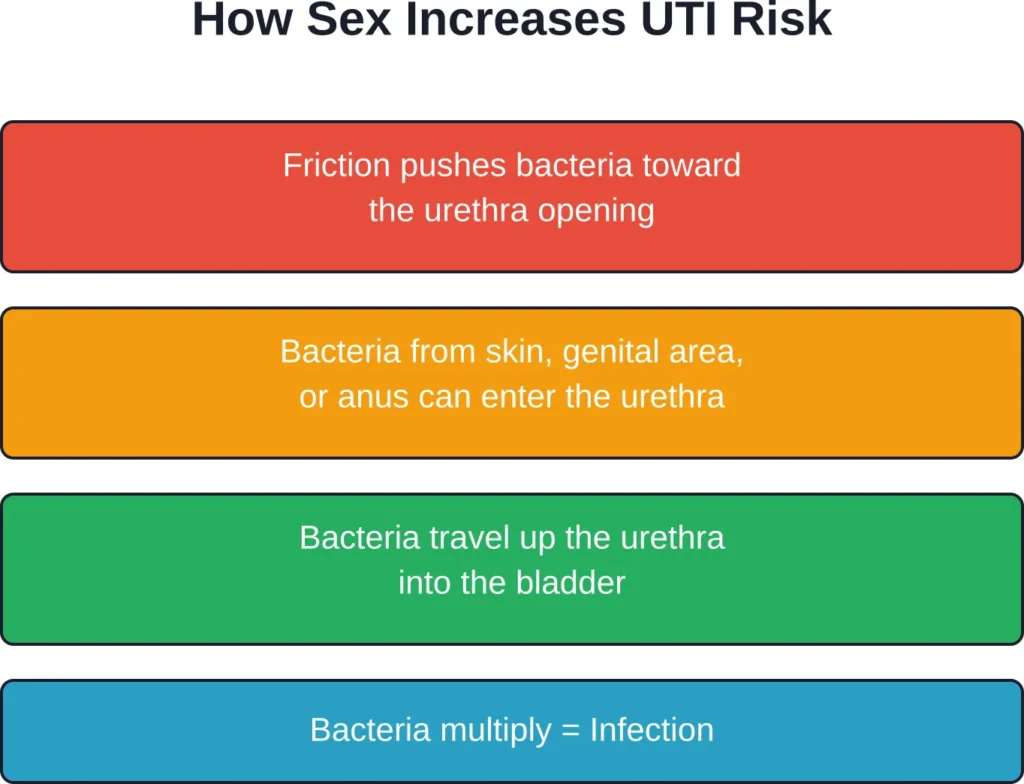
Urination after sex helps flush out bacteria that may have been pushed toward or into the urethra. This simple habit significantly reduces UTI risk for sexually active people.
Prevention Strategies That Actually Work
research indicates that recurrent uncomplicated UTIs affect a significant portion of women after an initial infection. Prevention becomes crucial if you’re prone to UTIs.
Before and After Sex
- Urinate before sexual activity to empty the bladder
- Urinate within 30 minutes after sex (this is the most effective preventive measure)
- Drink a full glass of water after sex to increase urine production
- Clean the genital area gently before and after intercourse
General Lifestyle Factors
According to the National Institute of Diabetes and Digestive and Kidney Diseases, drinking enough liquids—especially water—may help prevent bladder infections. Staying well-hydrated dilutes urine and ensures you urinate more frequently, flushing bacteria from the urinary tract.
Other prevention strategies include:
- Wiping front to back after using the bathroom
- Avoiding potentially irritating feminine products (douches, powders, deodorant sprays)
- Changing underwear daily and choosing breathable cotton fabrics
- Avoiding tight-fitting pants that trap moisture
What About Cranberry Products?
The National Institute of Diabetes and Digestive and Kidney Diseases states clearly: cranberry products—including juice, extract, or pills—do not treat existing bladder infections. Some research suggests cranberry products may help prevent future infections, but the evidence is mixed and they should never replace medical treatment.
When Symptoms Become Serious
Most UTIs are uncomplicated and respond well to antibiotics. But some situations require immediate medical attention.
Seek urgent care if you experience:
- Fever above 101°F (38.3°C)
- Severe pain in your back or side (possible kidney infection)
- Nausea and vomiting
- Blood in urine (more than light pink tinge)
- Symptoms that don’t improve after 2-3 days of antibiotics
- Symptoms that return shortly after treatment ends
according to ACOG, UTIs affect approximately 8% of pregnancies. Pregnant individuals should contact their healthcare provider immediately if they suspect a UTI, as these infections carry additional risks during pregnancy.
Recurrent UTIs and Sexual Activity
If you experience frequent UTIs related to sexual activity, talk to your healthcare provider about preventive antibiotics.
Some doctors prescribe low-dose antibiotics to take after sexual intercourse specifically for people with recurrent UTIs. This approach, called post-coital prophylaxis, can significantly reduce infection frequency.
Guidelines from medical organizations suggest that recurrent UTIs are defined as 2 or more episodes within 6 months or at least 3 episodes within a year, according to the American Urological Association.
| Prevention Method | Effectiveness | When to Use |
|---|---|---|
| Urinating after sex | High—most recommended | Within 30 minutes of intercourse |
| Increased hydration | Moderate to high | Daily (8+ glasses water) |
| Prophylactic antibiotics | High for recurrent UTIs | After sex (if prescribed) |
| Cranberry products | Low to moderate | Daily (prevention only, not treatment) |
| Proper hygiene | Moderate | Before and after sex |
Different Types of Sexual Activity
The recommendation to avoid sex during a UTI applies to all forms of sexual activity, not just vaginal intercourse.
Oral sex can still introduce bacteria to the genital area. Anal sex carries an even higher risk of introducing bacteria from the rectal area, which is where E. coli—the bacteria responsible for the majority of UTIs—naturally lives.
Any activity that involves contact with or pressure on the genital and urinary area should be postponed until the infection clears completely.
Frequently Asked Questions
Wait until all symptoms have been gone for at least 24-48 hours and you’ve completed your full course of antibiotics. For most people, this means waiting 5-7 days from starting treatment. Don’t stop antibiotics early even if you feel better—incomplete treatment can lead to antibiotic-resistant bacteria and recurrent infections.
Yes. Sexual activity is one of the most common risk factors for UTIs, particularly in women. The anatomy of the female urethra—it’s shorter and located close to the anus—makes it easier for bacteria to enter the urinary tract during intercourse. Urinating after sex is the single most effective preventive measure.
It’s possible. Sexual activity during an active UTI can push bacteria deeper into the urinary tract, potentially allowing the infection to spread from the bladder to the kidneys. Kidney infections are serious and may require hospitalization. Symptoms include high fever, severe back pain, nausea, and vomiting—seek immediate medical care if these develop.
UTIs don’t have noticeable external symptoms that a partner would detect during sexual activity. However, you will likely experience significant pain and discomfort that will be obvious. Many people report that pain during sex with a UTI is severe enough to stop immediately. Communication with your partner about your health is always important.
Yes, you should. While UTIs aren’t contagious or sexually transmitted, your partner should know you’re dealing with an infection that makes sex inadvisable. Open communication about sexual health benefits both partners and helps prevent uncomfortable situations. Your partner will likely appreciate understanding why intimacy needs to wait.
Condoms don’t directly prevent UTIs since the bacteria usually come from your own body, not your partner. However, some people find that certain lubricants or spermicides can irritate the urethra and increase UTI risk. If you’re prone to UTIs, try water-based lubricants without added chemicals. The most effective prevention remains urinating after sex and staying well-hydrated.
Frequent UTIs after sexual activity aren’t normal and indicate you should see a healthcare provider. This pattern suggests you may benefit from preventive strategies like post-coital antibiotics, changes to hygiene practices, or evaluation for underlying anatomical factors. Nearly 50% of women experience a second UTI within a year—breaking this cycle requires medical guidance.
The Bottom Line
Sexual activity during a UTI isn’t recommended by medical professionals for good reasons. The risks—worsening infection, severe pain, potential kidney complications—far outweigh any benefits.
The urinary tract needs time to heal. Antibiotics work effectively when given the right conditions, which includes avoiding activities that introduce new bacteria or irritate inflamed tissues.
Waiting 5-7 days for complete symptom resolution protects both your immediate comfort and your long-term urinary health. recurrent UTIs are a significant concern for many women following an initial infection—proper treatment and recovery time reduce this risk.
If you’re experiencing recurrent UTIs, sexual activity may be a contributing factor. Work with your healthcare provider to develop a prevention plan that fits your life. According to the American Urological Association, preventive strategies can significantly reduce infection frequency.
Remember: UTIs are incredibly common, affecting a substantial portion of women during their lifetime. Having one doesn’t mean anything is wrong with you or your sexual health. It just means you need to give your body time to heal before resuming normal activities—including sex.
Need help managing recurrent UTIs? Schedule an appointment with your healthcare provider to discuss prevention strategies tailored to your situation. Your sexual health and urinary health both matter—and with the right approach, you can protect both.