
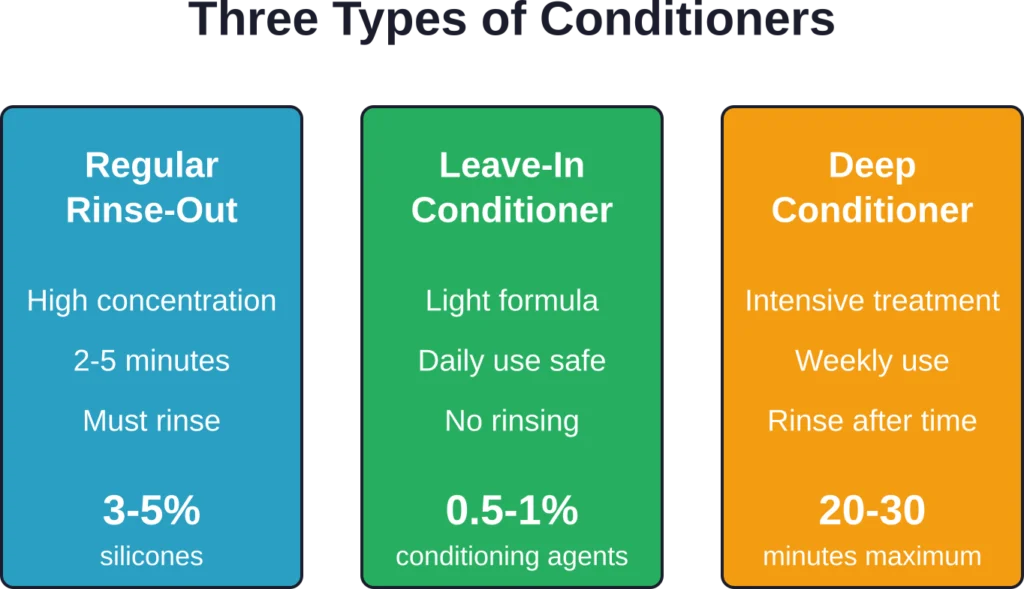
Quick Summary: Leaving regular rinse-out conditioner in your hair is generally not recommended and can lead to buildup, greasy appearance, and scalp irritation. However, leave-in conditioners are specifically formulated to remain in hair without rinsing. The key difference lies in the concentration of conditioning agents—regular conditioners contain higher concentrations meant to be washed out after 2-5 minutes, while leave-in formulas are lighter and designed for extended wear.
The question of whether it’s okay to leave conditioner in hair comes up constantly in community discussions and salon chairs alike. The answer isn’t as simple as yes or no—it depends entirely on what type of conditioner sits in your shower.
Here’s the thing though: not all conditioners are created equal.
Understanding the Chemistry Behind Hair Conditioners
Hair conditioners work by depositing cationic (positively charged) surfactants onto the negatively charged surface of damaged hair. This creates a protective film that smooths the cuticle, reduces friction, and makes hair more manageable.
Regular rinse-out conditioners contain higher concentrations of these conditioning agents—typically including silicones like dimethicone, dimethiconol, and amodimethicone. According to research published in medical dermatology journals, Asian countries have used higher concentrations of silicone (3-5%) compared to Caucasian hair formulations (0.5%), reflecting differences in hair diameter.
But wait. These concentrated formulas are designed with rinsing in mind.
What Happens When You Leave Regular Conditioner in Your Hair
Leaving rinse-out conditioner in hair creates several problems. The concentrated conditioning agents don’t simply vanish—they accumulate.
First, buildup occurs. The silicones and cationic surfactants form layers on the hair shaft, creating a heavy, greasy appearance. Over time, this buildup prevents moisture from penetrating the hair and blocks subsequent products from working effectively.
Second, scalp irritation becomes likely. Studies examining sensitive scalp conditions found a possible association with hair conditioner use. Research involving 133 subjects showed that 5% reported very sensitive scalps, 25% had sensitive scalps, and 38% had slightly sensitive scalps—with conditioner application being a triggering factor for many.
The Buildup Timeline
What actually happens hour by hour when conditioner stays in hair?
0-2 hours: Hair feels soft and moisturized. Everything seems fine.
3-8 hours: Hair begins to feel heavier. Roots may start to look slightly oily.
12-24 hours: Obvious greasiness appears. Hair loses volume and looks limp.
Beyond 24 hours: Significant buildup creates a waxy coating. Scalp irritation may develop.
Sound familiar? Many people accidentally discover this timeline after falling asleep with conditioner in their hair.
When Leaving Conditioner In Is Actually Recommended
Now, this is where it gets interesting. Leave-in conditioners flip the script entirely.
According to dermatologists at the American Academy of Dermatology, leave-in conditioners are specifically formulated with lower concentrations of conditioning agents designed for extended wear. These products provide benefits regular conditioners can’t match when rinsed out.
The benefits include continuous moisture protection, heat damage prevention, frizz control throughout the day, and enhanced manageability for styling.
Board-certified dermatologists note that results appear immediately—less frizz and softer texture become noticeable right after application.
Deep Conditioners: A Special Category
Deep conditioning treatments occupy middle ground. These intensive formulas contain higher concentrations than leave-in products but are designed for temporary extended contact.
The recommended application time for deep conditioners ranges from 10-30 minutes depending on hair condition and product instructions. For extremely dry or damaged hair, authoritative medical sources cite 20-30 minutes as the appropriate duration.
Leaving deep conditioner in beyond the recommended time doesn’t provide extra benefits—it just increases the risk of buildup and greasiness.
| Conditioner Type | Recommended Time | Can Leave In? | Best For |
|---|---|---|---|
| Regular Rinse-Out | 2-5 minutes | No | Daily conditioning after shampooing |
| Leave-In | Until next wash | Yes | Detangling, heat protection, frizz control |
| Deep Conditioner | 10-30 minutes | No | Weekly intensive moisture treatment |
| Co-Wash | 3-5 minutes | No | Cleansing without harsh sulfates |
Choosing the Right Product for Your Hair Type
Hair type dramatically affects which conditioners work best and whether leave-in formulas make sense.
Fine or straight hair typically needs lightweight, volumizing formulas. Heavy leave-in products can weigh down fine hair, making it appear flat and greasy. For these hair types, rinse-out conditioners work better, with leave-in products applied sparingly only to ends.
Thick or coarse hair benefits from deeply moisturizing and nourishing formulas. These hair types can handle—and often require—richer leave-in conditioners to maintain manageability and prevent frizz.
Curly or wavy hair thrives with moisturizing and detangling formulas. Leave-in conditioners are particularly beneficial for curly hair patterns, which tend toward dryness due to the shape of the hair shaft preventing natural oils from traveling down the strand.
Dry or damaged hair needs bond-repairing and intensive moisturizing treatments. Combining weekly deep conditioning (rinsed out after 20-30 minutes) with daily leave-in products often provides the best results.
The pH Factor You’re Probably Ignoring
Here’s something most people overlook: pH matters tremendously.
Research analyzing 123 international shampoo brands found that only 38.21% had pH levels at or below 5.5, while 61.78% exceeded that threshold.
Why does this matter? Medical research indicates that pH levels above 5.5 may contribute to scalp irritation. When conditioner remains on the scalp for extended periods, pH becomes even more critical.
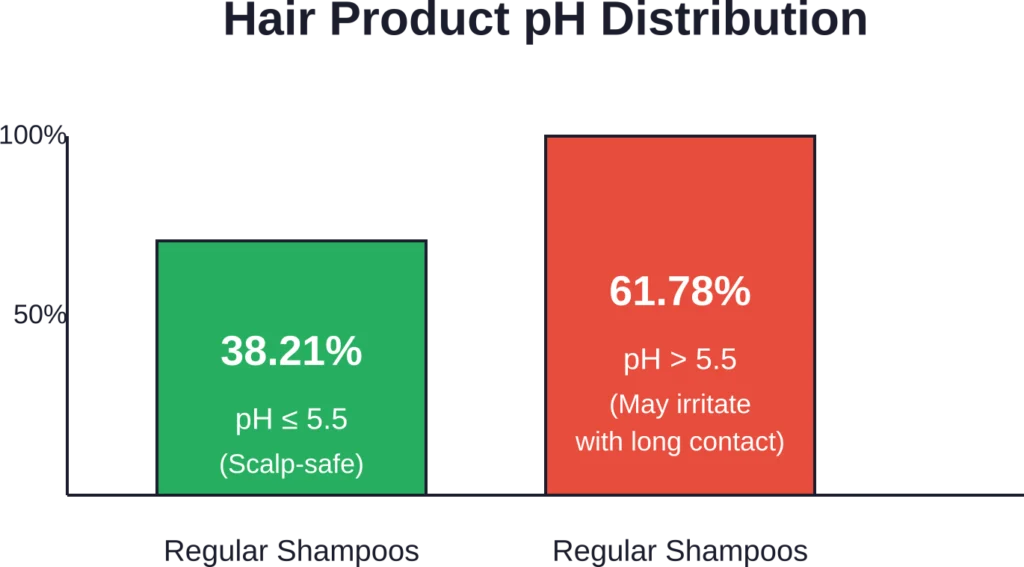
The takeaway? Products with higher pH levels pose greater risk when left on the scalp for extended periods.
Can You Sleep With Conditioner in Your Hair?
Real talk: sleeping with regular conditioner in hair is a bad idea.
The extended contact time (6-8 hours typically) amplifies all the problems mentioned earlier. Buildup accelerates, scalp irritation becomes more likely, and pillowcases absorb some of the product while pressing the rest deeper into hair and scalp.
Community discussions reveal that many people have tried this—usually by accident—and regretted it. The common report includes greasy, heavy hair that requires multiple shampoos to feel clean again.
Better alternatives for overnight hair care include genuine leave-in conditioners applied according to product directions, hair oils applied to ends only (avoiding the scalp), or silk/satin pillowcases to reduce friction and breakage.
Signs You’re Over-Conditioning Your Hair
How do you know if you’ve crossed the line into too much conditioning?
Watch for these indicators:
- Hair feels limp and lacks volume at the roots
- Greasy appearance even shortly after washing
- Products don’t seem to work as well as they used to
- Hair feels slippery or coated rather than soft
- Scalp itching or irritation develops
- Hair tangles more easily despite conditioning
That last one surprises people. Over-conditioned hair can actually tangle more because the excess buildup creates uneven texture along the hair shaft.
The Fix for Product Buildup
When buildup occurs, clarifying shampoo becomes necessary. These formulas contain stronger cleansing agents designed to strip away accumulated products.
Use clarifying shampoo once every 2-4 weeks, or as needed when hair feels heavy. Follow with a proper rinse-out conditioner (left on for 2-5 minutes only) to restore moisture balance.
What If You Accidentally Used Regular Conditioner as Leave-In?
Mistakes happen. Someone grabs the wrong bottle, or misreads instructions, or follows bad advice from the internet.
The short answer? Hair won’t suffer permanent damage from a single incident.
If this happens, rinse the conditioner out as soon as possible. If rinsing immediately isn’t an option, expect greasy, heavy hair until the next wash. Plan to shampoo thoroughly—potentially twice—to remove all residue.
Some people report their hair feeling dry after aggressive cleansing to remove conditioner buildup. In this case, follow up with a proper deep conditioning treatment (rinsed out after 20-30 minutes) to restore moisture.
Application Technique Matters More Than You Think
Even with the right product type, application technique determines results.
For rinse-out conditioners, apply only from mid-length to ends. Keep conditioner away from the scalp and roots unless hair is extremely dry. Leave on for 2-5 minutes, then rinse thoroughly with cool water to seal the cuticle.
For leave-in conditioners, apply to damp (not soaking wet) hair after towel-drying. Use a small amount—usually a dime to quarter-sized amount depending on hair length and thickness. Distribute evenly through mid-lengths and ends, avoiding roots and scalp. Don’t rinse.
For deep conditioners, apply generously to clean, damp hair from roots to ends. Cover with a shower cap if desired to trap heat and enhance penetration. Leave for 20-30 minutes maximum, then rinse thoroughly.
| Hair Length | Rinse-Out Amount | Leave-In Amount | Deep Conditioner Amount |
|---|---|---|---|
| Short (above shoulders) | Nickel-sized | Dime-sized | Quarter-sized |
| Medium (shoulder to mid-back) | Quarter-sized | Nickel-sized | Half-dollar-sized |
| Long (below mid-back) | Half-dollar-sized | Quarter-sized | 2-3 half-dollar amounts |
| Very thick/curly (any length) | Add 50% more | Add 50% more | Add 50% more |
Understanding Hair Porosity Changes Everything
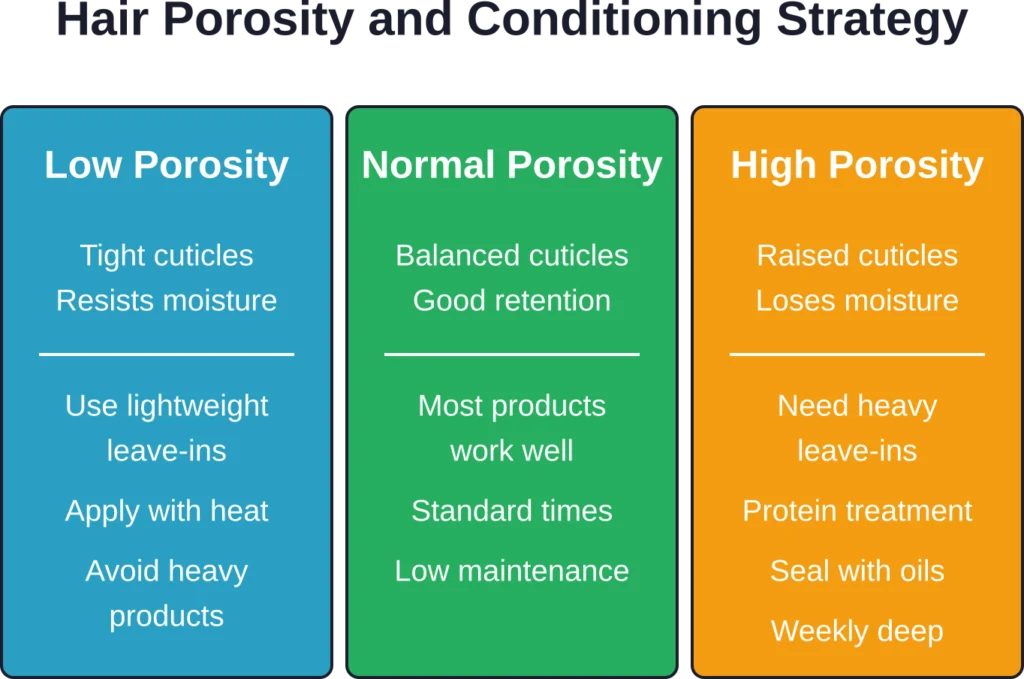
Hair porosity—how readily hair absorbs and retains moisture—determines how conditioner interacts with your hair.
Low porosity hair has tightly closed cuticles that resist moisture absorption. Products tend to sit on the surface rather than penetrating. For low porosity hair, lightweight leave-in conditioners work better than heavy creams, and heat (from a blow dryer on low) can help products penetrate during deep conditioning.
High porosity hair has raised or damaged cuticles that absorb moisture quickly but release it just as fast. This hair type benefits from heavier, protein-rich conditioners and regular deep conditioning treatments. Leave-in products are essential for high porosity hair to maintain moisture throughout the day.
Normal porosity hair falls between these extremes and generally tolerates most conditioner types well with standard application times.
Frequently Asked Questions
Regular rinse-out conditioner should remain in hair for 2-5 minutes maximum before thorough rinsing. Leaving it longer doesn’t provide additional benefits and increases the risk of buildup, greasiness, and potential scalp irritation. Deep conditioners can stay for 10-30 minutes depending on the product, but must still be rinsed out completely.
Leave-in conditioners contain significantly lower concentrations of conditioning agents (typically 0.5-1% compared to 3-5% in regular formulas) and are specifically formulated to remain in hair without causing buildup or greasiness. Regular conditioners have higher concentrations designed to work quickly and be rinsed away. Using regular conditioner as a leave-in product will result in heavy, greasy hair.
Leaving regular conditioner in hair doesn’t directly cause hair follicles to stop producing hair, but the resulting scalp irritation and buildup can create conditions that contribute to hair problems. Scalp irritation may lead to scratching and inflammation, while product buildup can clog follicles and create an unhealthy scalp environment. Studies show a possible association between sensitive scalp conditions and conditioner use.
Sleeping with genuine leave-in conditioner in hair is safe and often beneficial, as these products are specifically designed for extended wear. However, sleeping with regular rinse-out conditioner creates significant buildup, makes hair greasy, and can irritate the scalp due to the 6-8 hours of contact time. Always check product labels to confirm whether a conditioner is formulated as a leave-in product.
Use a clarifying shampoo to remove conditioner buildup. Apply the clarifying formula to wet hair, massage thoroughly into the scalp and through all hair, and leave on for 2-3 minutes before rinsing completely. You may need to shampoo twice for heavy buildup. Follow with a proper rinse-out conditioner (applied for 2-5 minutes then rinsed) to restore moisture balance, as clarifying shampoos can be drying.
Leaving deep conditioner beyond the recommended 20-30 minutes doesn’t enhance benefits—the hair has already absorbed the maximum amount of conditioning agents it can hold. Extended application time just increases the likelihood of buildup on the hair surface and scalp, leading to greasy, heavy hair that may require clarifying treatment to correct. Some people report their hair feeling coated or waxy after leaving deep conditioner in for several hours.
Regular conditioner should generally be applied from mid-length to ends only, avoiding the scalp unless hair is extremely dry. The scalp produces natural oils and doesn’t typically need the heavy conditioning that hair lengths require. Applying conditioner to the scalp—especially when left on for any length of time—increases the risk of greasiness, clogged follicles, and scalp irritation, particularly for those with sensitive scalps.
The Bottom Line on Leaving Conditioner in Your Hair
So is it okay to leave conditioner in your hair? The answer depends entirely on which type sits in your bathroom.
Regular rinse-out conditioners are formulated to be washed away after 2-5 minutes. Leaving them in creates buildup, greasiness, and potential scalp problems. Deep conditioners can stay for 10-30 minutes but must still be thoroughly rinsed.
Leave-in conditioners are the only type genuinely designed to remain in hair without rinsing, offering continuous protection, moisture, and frizz control throughout the day.
The key is reading labels, understanding your hair type and porosity, and using each product exactly as formulated. When in doubt, rinse it out—proper technique with rinse-out conditioners delivers better results than misusing the wrong product type.
Take a look at your current routine. Are you using the right conditioner type for your hair goals? Making this single change might be the solution to persistent hair problems you’ve been troubleshooting for months.