
Quick Summary: Mowing wet grass is technically possible but not recommended. Wet conditions lead to uneven cuts, increased disease risk, mower damage, safety hazards, and soil compaction. For best results, wait until grass blades dry—typically 2-5 hours after rain or morning dew—before mowing.
Rain doesn’t respect lawn care schedules. Maybe the forecast showed clear skies when you planned to mow, or perhaps weeks of wet weather left the grass overgrown and the weekend finally arrived. Either way, staring at a soggy lawn raises one practical question: is it actually OK to mow wet grass?
The short answer? Not really—but sometimes circumstances force the issue.
Cutting wet grass creates problems ranging from minor annoyances to serious lawn damage. Wet blades don’t cut cleanly, moisture promotes disease, mowers struggle with clumped clippings, and slippery conditions turn routine maintenance into a safety hazard. That said, professionals sometimes mow damp turf when schedules demand it, using specific techniques to minimize damage.
Here’s what happens when grass gets cut while wet, why waiting usually makes sense, and how to handle those situations when postponing just isn’t an option.
Why Mowing Wet Grass Creates Problems
Moisture fundamentally changes how grass responds to mower blades. Understanding these mechanics explains why most lawn care experts recommend patience.
Uneven Cuts and Tearing
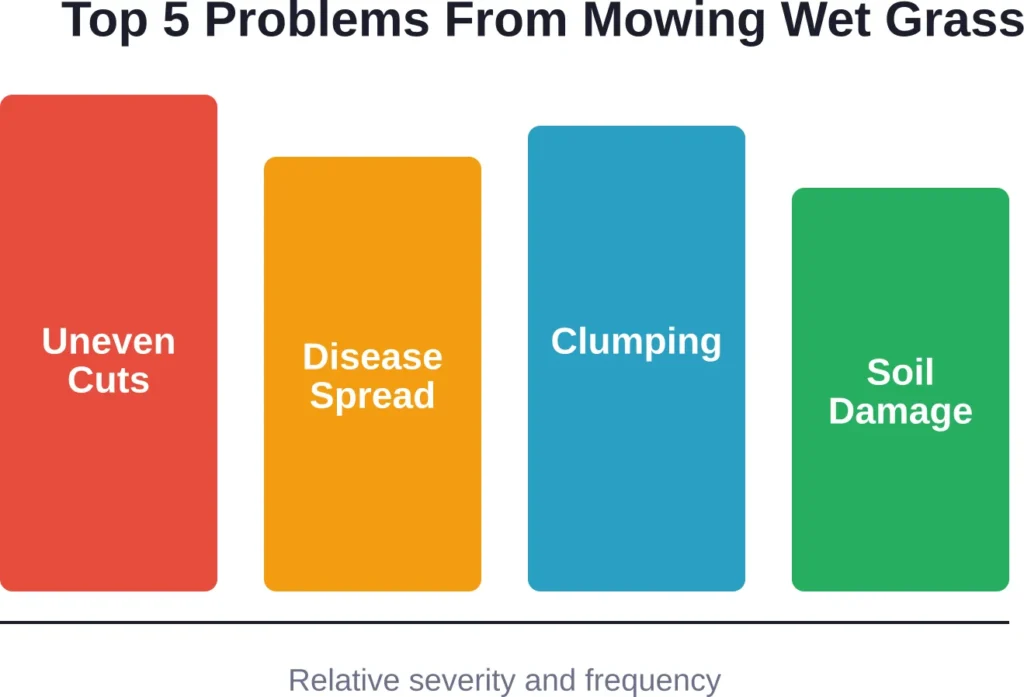
Dry grass stands upright, allowing mower blades to slice cleanly through stems. Wet grass behaves differently—water weighs down blades, causing them to clump together and lie flat against the soil.
When the mower passes over, wet blades often bend away from the cutting deck rather than standing firm. Some get missed entirely. Others tear instead of cutting cleanly, leaving ragged edges that turn brown within days. The result? A lawn that looks uneven and shaggy even immediately after mowing.
According to Ask Extension, research found that removing more than 40% of leaf tissue stunted root growth temporarily, which led to the simplified “one-third rule” for practical communication—never remove more than one-third of grass height in a single mowing. Uneven wet cuts often violate this principle, scalping some areas while barely touching others.
Disease Spread Accelerates
Lawn diseases thrive in moist conditions. Most fungal pathogens require water to germinate and spread between grass plants. Mowing when grass is wet provides ideal conditions for disease transmission.
Mower blades, wheels, and undercarriage pick up moisture, clippings, and fungal spores as they move across the lawn. Each pass effectively inoculates healthy grass with pathogens from infected areas. Common lawn diseases that spread through wet mowing include red thread (which causes reddish pink patches), dollar spot (creating small bleached circles), and rust disease (producing orange or yellowish discoloration).
Once established, these diseases require fungicide treatment and weeks of recovery time. Prevention through dry mowing costs nothing.
Clumping and Thatch Buildup
Grass clippings contain at least 75 to 85% water according to K-State research, with some sources indicating moisture levels approaching 90%. Wet clippings stick together, forming dense clumps that smother the grass beneath them.
These clumps block sunlight and trap moisture against the soil surface, creating dead patches where grass suffocates. Clumps also decompose more slowly than dispersed clippings because air circulation is restricted.
Here’s the thing though—grass clippings themselves don’t cause thatch. Properly dispersed clippings break down quickly because they contain little lignin (the waxy substance that decomposes slowly). But wet clumps behave differently, creating temporary barriers that stress turf even if they eventually decompose.
Soil Compaction and Rutting
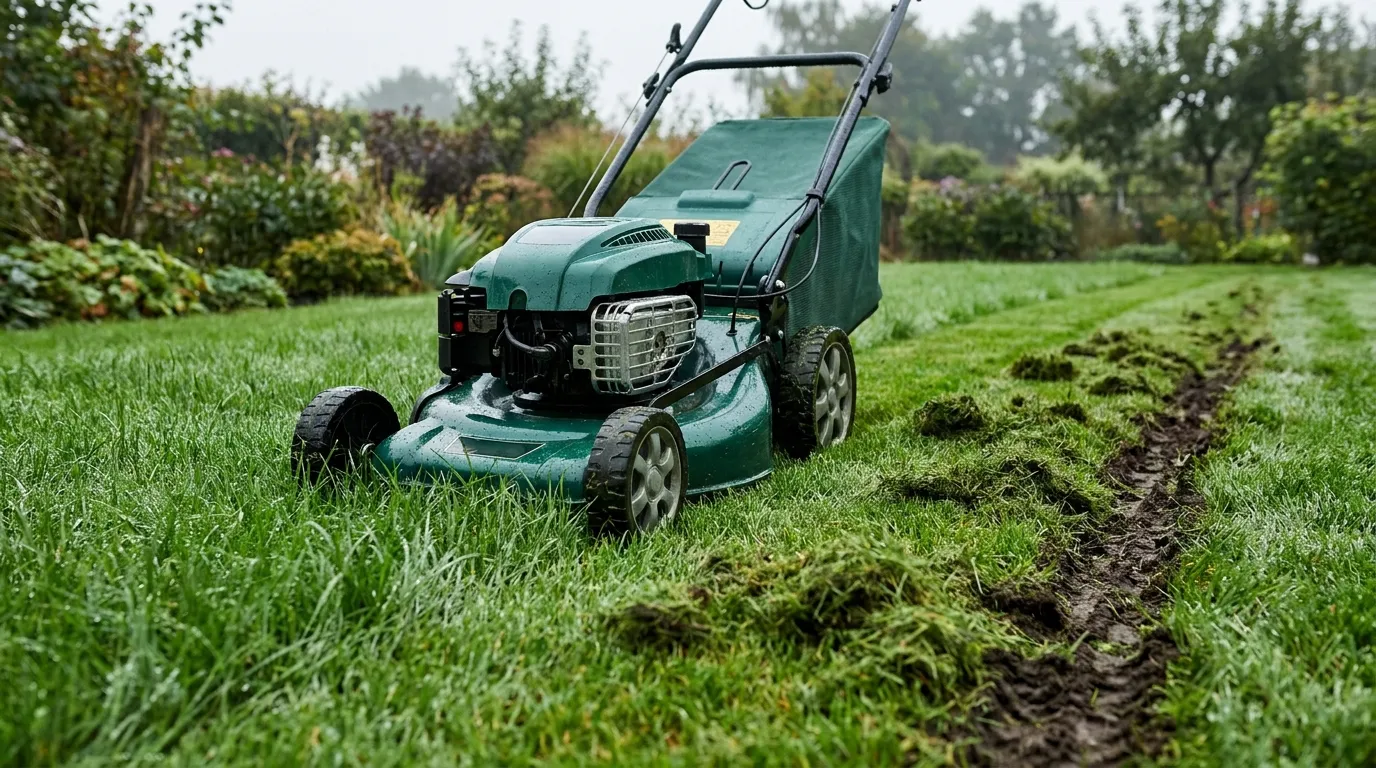
Wet soil loses structural integrity. Water fills air pockets between soil particles, making the ground soft and vulnerable to compression. Mower wheels—especially on heavier riding models—press down with significant force, compacting soil layers and potentially leaving visible ruts in saturated areas.
Compacted soil restricts root growth, reduces water infiltration, and creates drainage problems that persist long after the surface dries. Severe rutting requires aeration and overseeding to repair, turning a simple mowing mistake into a recovery project.
Safety Concerns Nobody Mentions
Beyond lawn health, wet mowing introduces genuine safety risks that often get overlooked in discussions about grass care.
Wet grass is slippery. Period. Walking behind a push mower or operating a riding mower on slopes becomes hazardous when traction disappears. Slips can cause falls onto rotating blades or result in losing control of the mower entirely on inclines.
Electric mowers add another dimension of risk. While modern electric models include safety features and weather-resistant components, moisture and electricity remain a dangerous combination. Extension cords on wet ground, damp electrical connections, and water ingress into motor housings all create potential shock hazards.
Even gas mowers face mechanical issues. Wet clippings clog discharge chutes more readily, forcing operators to reach underneath the deck to clear blockages—a task that should never happen with the engine running but often does anyway. Clippings also stick to hot engine components, creating smoke and potential fire hazards as organic material dries on exhaust surfaces.
How Long to Wait After Rain
So how much drying time is enough? The answer depends on several factors: rainfall amount, temperature, humidity, sun exposure, and grass type.
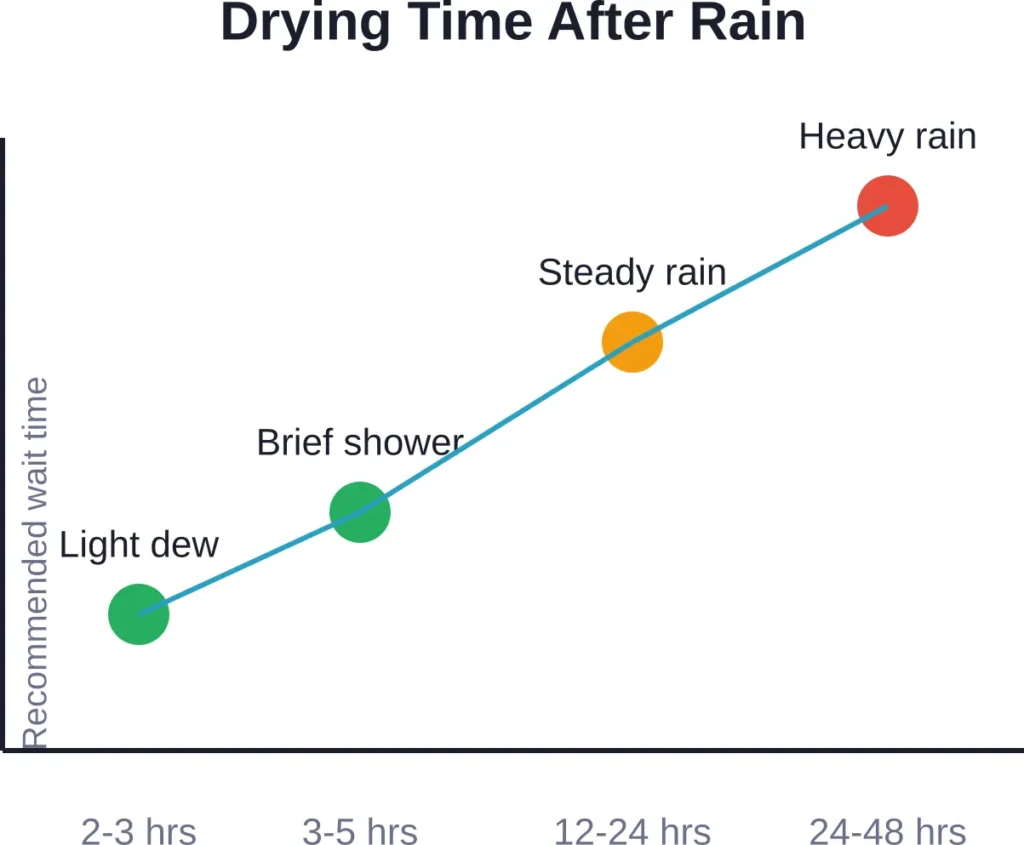
Light morning dew typically evaporates within 2-3 hours of sunrise on clear days. A brief afternoon shower might dry in 2-4 hours with good sun and breeze. Heavy rainfall saturating the soil requires longer—often 24-48 hours for the top inch of soil to drain sufficiently, even if grass blades appear dry on the surface.
Here’s a simple field test: walk across the lawn in regular shoes. If moisture immediately soaks through to your socks or visible footprints remain compressed in the turf, conditions are still too wet. If the grass feels slightly damp but springs back and doesn’t leave footprints, mowing becomes reasonably safe.
Temperature and airflow matter enormously. Grass dries faster on warm, breezy days than during cool, humid, or overcast conditions. Shaded areas under trees may remain wet hours after sunny sections have dried completely.
When Mowing Can’t Wait: Damage Control Strategies
Real talk: sometimes waiting isn’t practical. Commercial landscapers face contract obligations. Homeowners deal with overgrown lawns before vacations or events. Grass keeps growing during extended rainy periods.
If mowing wet grass becomes necessary, these techniques minimize damage:
Raise the Cutting Height
Set mower blades higher than usual—at least half an inch above normal cutting height. Taller cuts reduce stress on grass plants and lessen the chance of scalping when wet blades lay flat. Most cool-season grasses like Kentucky bluegrass, perennial ryegrass, and fescues perform best maintained at 2½–3½ inches; raise cutting height by at least half an inch above normal (to approximately 3-4 inches) for wet conditions.
Higher cuts also reduce the total volume of clippings produced, lessening clumping problems.
Sharpen Blades Beforehand
Sharp blades cut cleanly even when grass is less than ideal. Dull blades tear dry grass; they absolutely shred wet grass, leaving ragged wounds that invite disease.
Inspect and sharpen mower blades before tackling wet conditions. The difference between a clean cut and a mangled stem often determines whether grass recovers quickly or struggles for weeks.
Mow More Frequently
Removing less material per mowing session reduces stress. Instead of waiting until grass reaches 4 inches and cutting back to 2.5 inches (removing 1.5 inches), mow at 3 inches and remove only 0.5 inches.
This approach adheres more closely to the one-third rule derived from research showing that removing more than 40% of leaf tissue impairs root development. Lighter, more frequent mowing works better during wet periods when grass can’t recover as quickly from aggressive cutting.
Avoid Grass Collection
Bagging wet clippings creates heavy, messy loads that strain collection systems and fill bags rapidly. Wet clippings also pack densely in bags, making disposal difficult.
If possible, mulch clippings instead. While wet clippings mulch poorly compared to dry material, modern mulching mowers can handle light loads reasonably well when blade height is raised. Make multiple passes if necessary, spreading clippings more evenly.
That said, if clumping becomes severe, raking or blowing clumps off the lawn prevents smothering.
Slow Down and Overlap Less
Reduce mowing speed to give the deck time to process wet grass. Fast passes overwhelm the cutting chamber, causing clippings to clump and discharge poorly.
Similarly, reduce overlap between passes. Overlapping too much forces the mower to re-cut previously discharged clippings, compounding clumping problems.
| Mower Type | Wet Grass Performance | Best Use Case |
|---|---|---|
| Push Reel Mower | Poor – blades push down wet grass | Dry lawns only |
| Rotary Push Mower | Fair – requires slow speed, frequent cleaning | Small areas, light moisture |
| Self-Propelled Rotary | Moderate – better traction, more power | Typical residential wet mowing |
| Zero-Turn Rider | Poor – heavy, ruts easily, slips on slopes | Avoid wet conditions |
| Robotic Mower | Good – frequent light cuts, minimal compaction | Continuous wet-season maintenance |
Mower Maintenance After Wet Cutting
Wet grass wreaks havoc on mower components. Moisture accelerates rust formation on metal surfaces. Clippings stick to everything—undercarriage, blade spindles, wheels, discharge chute, engine fins. Clumped material hardens as it dries, forming stubborn deposits that block airflow and reduce cutting efficiency in subsequent mowings.
After mowing wet grass, immediate cleaning becomes essential. Scrape clippings from the underside of the deck using a putty knife or deck scraper. Spray remaining residue with a hose (gas mowers only, and avoid direct spray on electrical components). Wipe down the blade, spindle, and belt areas.
Check the air filter—wet conditions can introduce moisture into the intake system. Inspect the oil dipstick for milky discoloration indicating water contamination. Clean or replace spark plugs if performance seems off.
Allowing wet clippings to sit on mower components overnight practically guarantees rust and corrosion, especially on budget models with lower-grade steel components.
The Overgrown Grass Dilemma
What about situations where grass has grown excessively tall during extended wet weather? Letting turf grow significantly beyond recommended heights creates problems: smothered lower growth, pest habitat, and neighborhood complaints.
Cutting overgrown grass wet violates every guideline simultaneously—massive leaf tissue removal, heavy clipping loads, and stressed plants trying to recover in saturated soil. But sometimes it’s the least-bad option.
In these scenarios, adopt a staged approach. Make the first pass at maximum cutting height, removing just the top portion. Wait a day or two (hopefully for some drying), then make a second pass at a lower height. This two-step method stresses grass less than a single severe cutting.
Alternatively, if only portions of the lawn are wet, mow dry areas first while waiting for shaded or low-lying wet sections to dry further.
Grass Type Considerations
Not all grass species respond identically to wet mowing. Cool-season grasses—Kentucky bluegrass, perennial ryegrass, tall fescue, and fine fescues—typically maintain cutting heights of 2½–3½ inches according to university turf research. These species grow actively during spring and fall when rainfall is common, making wet-mowing decisions more frequent.
Warm-season varieties like zoysiagrass or bermudagrass (typically maintained at lower heights than cool-season species) tolerate lower cutting heights but grow primarily during hot summer months when moisture is less often an issue in many regions.
Grass density matters too. Thick, well-established turf handles wet mowing stress better than thin, struggling lawns. Newly seeded areas or recently sodded sections should never be mowed wet—those fragile root systems can’t withstand compaction or tearing.
FAQ About Mowing Wet Grass
Not usually from a single session, but repeated wet mowing accelerates wear. Wet clippings cause rust, corrode electrical connections, strain motors and belts, and dull blades faster. Over time this shortens mower lifespan unless aggressive maintenance follows each wet mowing.
Light dew typically evaporates within 2-3 hours after sunrise on clear days. If grass feels slightly damp but isn’t dripping and soil underneath is firm, the risk is minimal. Heavy dew that soaks through shoes or leaves footprints means waiting longer is wise.
Grass clippings themselves don’t create thatch regardless of moisture content—they’re over 75% water and contain minimal lignin, so they decompose quickly. However, wet clippings clump and smother turf, creating dead patches. The issue isn’t thatch but rather suffocation and disease from poor dispersion.
Modern cordless electric mowers include weather-resistant components and safety features, but moisture and electricity remain a risky combination. Wet extension cords, damp connections, and water ingress create shock hazards. If using an electric mower on damp grass, ensure all connections are rated for outdoor use and inspect cords for damage first.
Self-propelled rotary mowers with mulching capability handle occasional wet mowing better than other types. They provide sufficient power without the weight and rutting risk of riders. Robotic mowers excel in persistently wet climates because they mow frequently at very light heights, removing minimal growth per session.
For soil compaction and rutting, core aeration relieves compression and improves drainage. Fill deep ruts with topsoil and overseed. Rake up clumped clippings smothering grass underneath. For disease spread, identify the specific pathogen and treat with appropriate fungicide if necessary. Most damage from isolated wet-mowing incidents resolves naturally within 2-4 weeks as grass regrows.
Somewhat. Dense, established cool-season turf like Kentucky bluegrass tolerates occasional wet mowing better than thin, weak lawns. Warm-season grasses mowed at lower heights show damage more readily. Newly seeded or sodded areas should never be mowed wet due to fragile, shallow root systems vulnerable to tearing and compaction.
The Bottom Line on Wet Grass Mowing
So, is it OK to mow wet grass? Technically possible, yes. Recommended? Almost never.
Wet mowing compromises cut quality, increases disease risk, damages equipment, threatens operator safety, and compacts soil. The recovery time grass needs after wet cutting often exceeds the time saved by not waiting for drying.
When schedules absolutely demand wet mowing, raise blade height significantly, sharpen blades beforehand, slow down, and clean equipment immediately after. Accept that results won’t match dry-condition mowing and that recovery may take weeks.
But whenever possible? Wait. Check the weather forecast. Mow before predicted rain rather than after. Schedule lawn care during historically drier periods. Test soil moisture with the footprint method before starting.
Patience rewards lawn health far more than hurried mowing ever will. Grass that looks uneven today will still be there tomorrow—likely drier, easier to cut, and far less likely to require weeks of recovery from avoidable stress.
Plan lawn maintenance around weather patterns rather than forcing maintenance to happen regardless of conditions. The lawn will thank you with healthier growth, better appearance, and fewer disease problems throughout the season.