
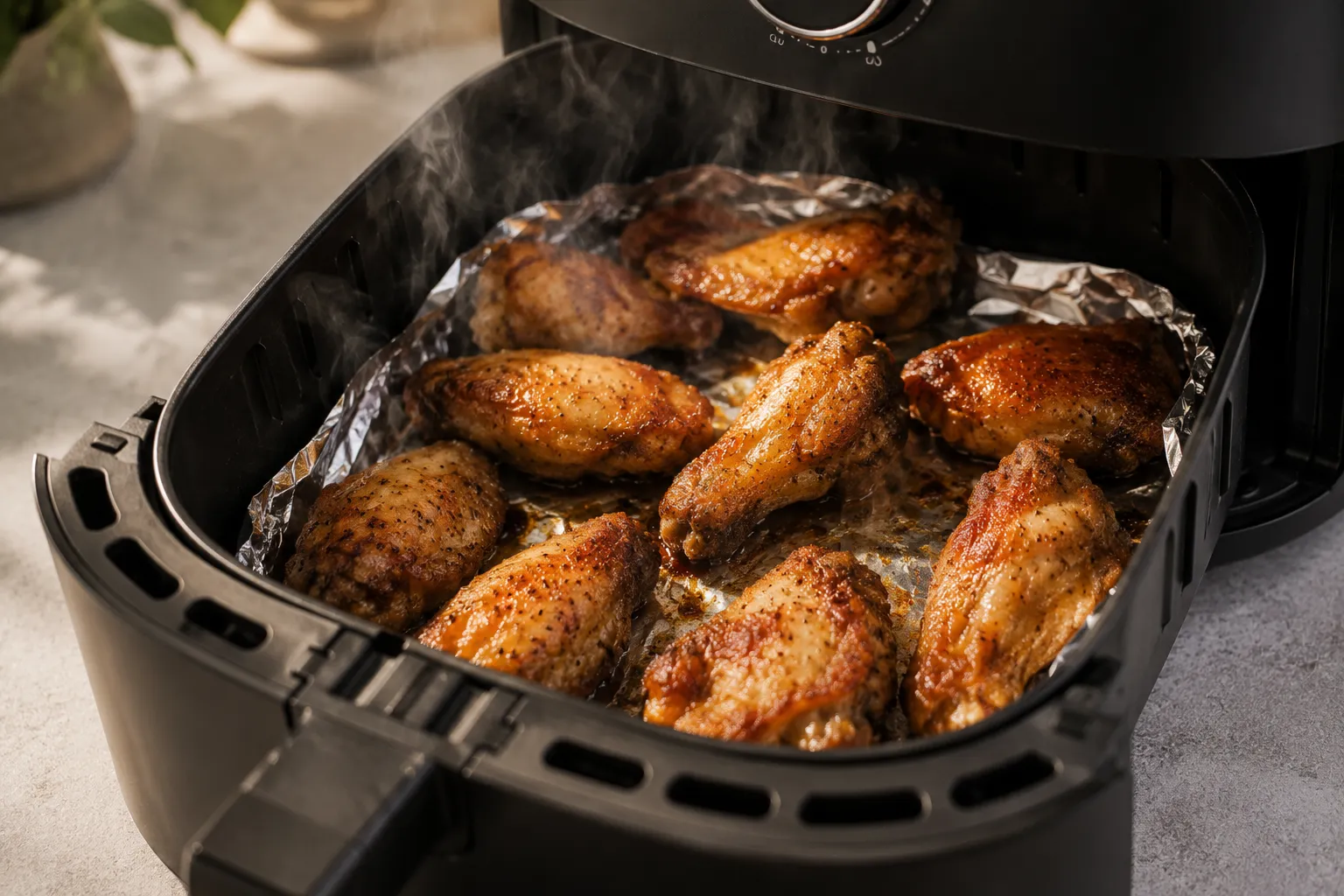
Quick Summary: Yes, aluminum foil is safe to use in an air fryer when used correctly. The foil must stay in the basket, never touch the heating element, and should be weighed down by food to prevent flying up into the fan. Avoid using foil with acidic foods like tomatoes or citrus, as the acid can react with the aluminum.
Air fryers have transformed how people cook at home. They deliver crispy results without deep frying, and cleanup is usually straightforward. But when things get messy, the question comes up: can you line the basket with aluminum foil?
The short answer? Yes, but with important caveats.
Think of your air fryer as a miniature convection oven. Hot air circulates rapidly around the food, creating that crispy exterior everyone loves. Foil won’t damage the appliance itself, but improper use can block airflow, create safety hazards, or even ruin your meal.
Here’s everything you need to know about using aluminum foil in an air fryer safely and effectively.
How Air Fryers Work and Why It Matters
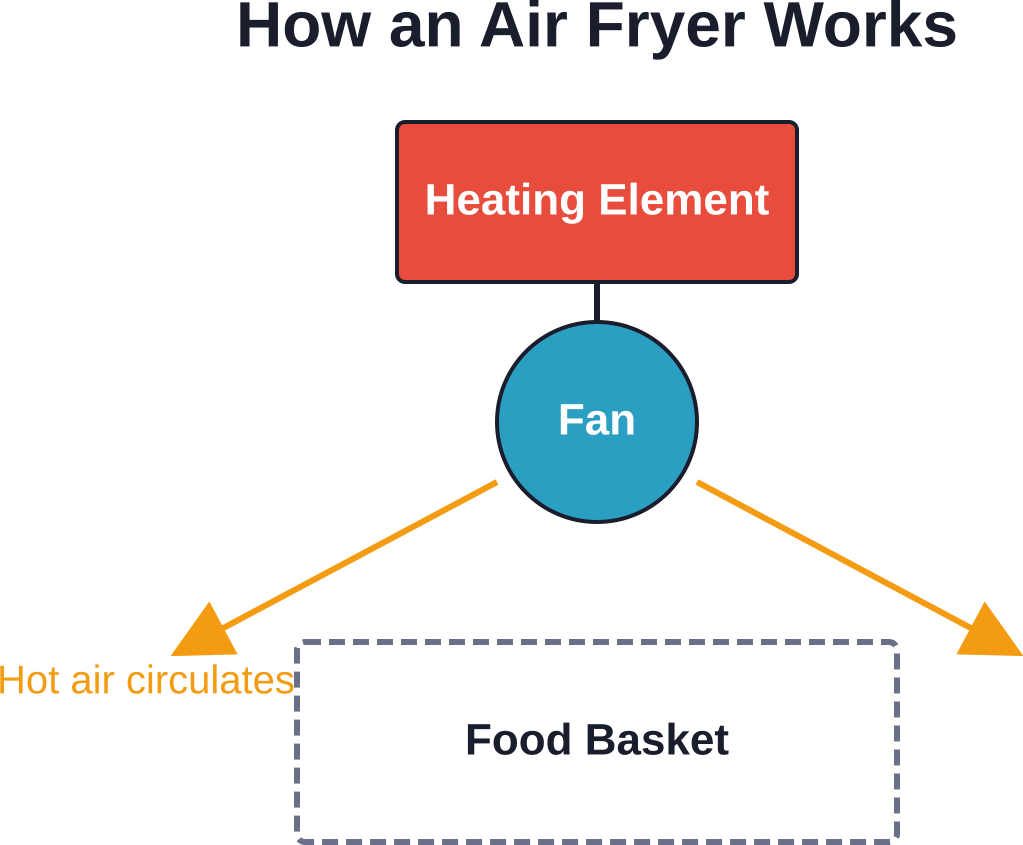
Air fryers cook food using rapid air circulation. A heating element at the top generates heat, and a powerful fan pushes hot air down and around the food at high speed. This creates the Maillard reaction—the chemical process that makes food crispy and golden.
Airflow is everything. Block it, and you’ll end up with unevenly cooked food. The fan needs space to push air through the basket, around the food, and back out.
That’s where foil becomes tricky. If it flies up into the fan or covers ventilation holes, it disrupts the entire cooking process. Worse, loose foil can touch the heating element and potentially catch fire.
When It’s Safe to Use Aluminum Foil in an Air Fryer
Using foil in an air fryer is perfectly fine when you follow a few basic rules. These aren’t suggestions—they’re requirements for safe operation.
Always Weigh Down the Foil
Never put empty foil in the basket. The fan will blow it around, potentially into the heating element. Always place food on top of the foil to keep it anchored.
Wait until you’re ready to add ingredients before lining the basket. This prevents loose foil from flying up during preheating.
Keep Foil in the Basket
Line only the bottom of the basket, not the entire interior. The foil should never extend up the sides or cover air vents. Most air fryer baskets have perforations—those holes are essential for airflow.
Leave at least an inch of clearance around all edges. This ensures hot air can still circulate properly.
Never Let Foil Touch the Heating Element
The heating element sits at the top of most air fryers. Keep foil flat in the basket, well away from the top of the cooking chamber. If foil touches the element, it can overheat or even ignite.
Some countertop oven models with air fry settings have different configurations, but the principle remains the same: foil must stay away from heating elements.
When NOT to Use Aluminum Foil in Your Air Fryer
Some situations call for skipping the foil entirely. Here’s when it causes more problems than it solves.
Acidic Foods Create Chemical Reactions
Tomatoes, citrus, vinegar, and other acidic ingredients react with aluminum. This breaks down the foil and can leach aluminum into your food, creating an unpleasant metallic taste.
Skip the foil when air frying marinaded chicken with lemon, roasted tomatoes, or anything with vinegar-based sauces. Use parchment paper instead, or cook directly in the basket.
Recipes That Need Maximum Airflow
Foods that rely on crispiness benefit from direct contact with the perforated basket. French fries, breaded items, and vegetables get crispier when air circulates underneath them.
Foil blocks that bottom airflow. The result? Soggy undersides and uneven cooking. For these recipes, bare basket or parchment paper with holes works better.
Lightweight or Small Food Items
Small pieces—like individual shrimp or bite-sized vegetables—might not weigh down foil adequately, especially in smaller batches. If there’s any chance the foil could lift, don’t use it.

Why Use Foil in an Air Fryer at All?
If foil has so many restrictions, why bother? Because it solves specific problems when used correctly.
Easier cleanup: Sticky sauces, marinades, and cheese can cement themselves to the basket. A foil lining catches drips and prevents scrubbing.
Protects delicate foods: Fish fillets and other fragile items sometimes stick to the basket. Foil provides a nonstick surface that makes removal easier.
Contains small ingredients: Foods that might fall through basket holes—like diced vegetables—stay contained on a foil sheet.
But here’s the thing: parchment paper often does these jobs better.
Parchment Paper: The Better Alternative
Perforated parchment paper designed for air fryers solves most foil-related issues. The holes maintain airflow while still protecting the basket. It’s naturally nonstick, works with acidic foods, and won’t conduct heat like metal.
Parchment paper can handle temperatures up to 400-450°F depending on the brand, which covers most air fryer cooking. Like foil, it should be weighted down and never used during preheating.
Some cooks prefer reusable silicone liners with perforations. These wash easily and eliminate waste, though they cost more upfront.
| Material | Best For | Avoid With | Reusable |
|---|---|---|---|
| Aluminum Foil | Sticky sauces, heavy meats | Acidic foods, crispy items | No |
| Parchment Paper | Most recipes, acidic foods | Temperatures above 450°F | No |
| Silicone Liner | Frequent cooking, delicate items | Very high temperatures (check rating) | Yes |
| Bare Basket | Maximum crispiness, vegetables | Very sticky sauces | Yes (built-in) |
Step-by-Step: How to Use Foil in an Air Fryer Safely
Ready to try it? Follow this process exactly.
Step 1: Cut a piece of foil slightly smaller than your basket bottom. It should fit comfortably with at least an inch of clearance on all sides.
Step 2: Poke several holes in the foil using a fork or skewer. This maintains some airflow while still protecting the basket.
Step 3: Place the foil in the basket only after the air fryer is loaded. Never preheat with foil inside unless it’s weighted by food.
Step 4: Add your food directly onto the foil, ensuring it’s heavy enough to keep the foil flat. Distribute weight evenly.
Step 5: Check that no foil edges are curling up or extending beyond the basket. Press them down if needed.
Step 6: Cook as normal. Monitor the first time you use this method to ensure everything stays in place.
What Manufacturers Say
Most air fryer manufacturers acknowledge that foil can be used safely with proper precautions. Instruction manuals typically include warnings about keeping foil away from heating elements and ensuring adequate airflow.
Some brands specifically recommend parchment paper over foil for foods that need maximum crispiness. Others suggest foil only for recipes where you’re catching drips or protecting delicate items.
When in doubt, check your specific model’s manual. Some compact models have less clearance between the basket and heating element, making foil riskier.
Common Mistakes That Ruin Results
Even when following the rules, these errors crop up frequently.
Using too much foil: Covering the entire basket blocks airflow from below. Keep foil to the center area only.
Crimping edges too high: Folded-up edges can catch air currents and flutter. Keep foil as flat as possible.
Forgetting about vents: Some air fryer baskets have ventilation slots on the sides. Make sure foil doesn’t block these.
Preheating with empty foil: This is the most common safety issue. Always add food first, or skip the preheat entirely when using foil.
Frequently Asked Questions
Most air fryer models—both basket-style and countertop oven versions—can accommodate aluminum foil safely when used correctly. Basket models require extra caution because the heating element is closer to the food. Always consult your specific model’s manual for manufacturer recommendations.
Parchment paper is generally the better choice for air fryers. It’s naturally nonstick, safe with acidic foods, and won’t conduct heat like aluminum. Perforated parchment designed for air fryers maintains airflow better than foil while still catching drips. Use foil only when you need its specific properties, like forming a makeshift tray for liquids.
Aluminum foil can ignite if it touches the heating element or if lightweight foil gets blown into it by the fan. This is why foil must always be weighted down by food and kept in the basket with adequate clearance. When used properly—flat in the basket, secured by food—the risk is minimal.
Yes, solid sheets of foil block airflow from below, which can make food less crispy on the bottom. To minimize this, use a smaller piece that doesn’t cover the entire basket, and poke holes in the foil with a fork. For recipes that need maximum airflow, skip the foil entirely or use perforated parchment.
Yes, but the frozen food must be heavy enough to keep the foil secured. Loose lightweight frozen items might not provide enough weight, especially as they thaw and release moisture. For best results with frozen foods, use perforated parchment or cook directly on the basket for optimal crispiness.
Acidic ingredients cause a chemical reaction that breaks down aluminum, creating aluminum salts that can leach into food. This creates a metallic taste and discoloration. Tomatoes, citrus, vinegar, and wine are particularly reactive. Always use parchment paper or cook directly in the basket when working with acidic recipes.
The drawer that sits below the basket can be lined with foil to catch drips, but it’s usually unnecessary. Most air fryer drawers are nonstick and dishwasher-safe. If you do line it, make sure the foil doesn’t interfere with how the basket seats in the drawer or block any ventilation holes in the drawer itself.
The Bottom Line on Foil and Air Fryers
Aluminum foil works in air fryers when you respect how the appliance operates. Keep it flat, keep it weighted, keep it away from heating elements, and skip it with acidic foods. Those four rules prevent 99% of problems.
But ask yourself whether foil is really the best tool for each job. Parchment paper handles most tasks better, and cooking directly on the basket often delivers superior results.
Save foil for recipes where you truly need it: sticky sauces that would cement to the basket, delicate fish that might fall apart, or when you’re making a DIY tray for small items. For everything else, there’s probably a better option.
Master these guidelines, and you’ll get all the convenience of easier cleanup without sacrificing the crispy results that make air fryers worth using in the first place.