

Quick Summary: Sleeping on the right side is generally safe for most people and offers benefits like reduced acid reflux and improved breathing. However, heart failure patients may experience more discomfort in this position compared to the left side. For most sleepers, the right side is perfectly acceptable and can be the most comfortable option.
You spend roughly a third of your life sleeping. That’s a lot of time in one position, and it turns out that how you lie matters more than most people realize.
More than 60% of adults sleep on their side, making it the most common sleeping position. But when it comes to choosing between the right and left side, questions start piling up. Will sleeping on your right side harm your heart? Does it help with digestion? And what about those mornings when you wake up with a numb arm?
Here’s the thing though—the answer isn’t always straightforward. Your ideal sleeping position depends on your individual health conditions, comfort preferences, and even what you ate for dinner.
Why Sleep Position Actually Matters
Sleep position influences more than just comfort. The way you lie affects your breathing, spinal alignment, circulation, and even organ function during the night.
Research shows that body position changes hemodynamic parameters—essentially how blood flows through your body. Studies examining patients with heart failure found that different lying positions alter left and right ventricular function, which helps explain why some people naturally prefer certain positions.
And it’s not just about blood flow. Your sleeping position can trigger or prevent snoring, worsen or relieve acid reflux, and either support or strain your spine. For most healthy adults, any side works fine. But if you have specific health conditions, one side might offer clear advantages over the other.
The Right Side: Benefits and Drawbacks
So what happens when you consistently sleep on your right side?
Potential Benefits of Right-Side Sleeping
Sleeping on the right side offers several advantages, particularly for people dealing with specific health issues.
Reduced heartburn and acid reflux. Right-side sleeping can help reduce symptoms of gastroesophageal reflux disease (GERD) in some people. The position keeps stomach acid lower in the digestive tract compared to back sleeping, though the left side typically performs even better for this purpose.
Improved lymphatic drainage. Some health practitioners suggest that right-side sleeping supports the body’s natural lymphatic system, though research on this remains limited.
Comfort for pregnant women. According to the National Institute of Child Health and Human Development (NICHD), sleeping on either the back or side through the 30th week of pregnancy does not appear to increase the risk of stillbirth, reduced size at birth, or high blood pressure disorders of pregnancy. Both sides are considered safe during early to mid-pregnancy.
Potential Drawbacks
Right-side sleeping isn’t perfect for everyone. Some conditions make this position less ideal.
Heart failure considerations. Research involving 17 patients with heart failure found that body position affects cardiac function. While patients could adopt the right lateral decubitus position, those with heart failure may experience more discomfort compared to other positions. The study population had a mean age of 68 ± 10.2 years, and findings suggested these hemodynamic changes may explain position preferences.
Shoulder and arm pressure. Like any side-sleeping position, lying on the right side puts pressure on that shoulder and arm. This can lead to numbness, tingling, or pain, especially if your mattress doesn’t provide adequate pressure relief.
Facial wrinkles. Pressing your face into a pillow night after night can contribute to sleep lines and wrinkles over time. This applies to both sides equally.
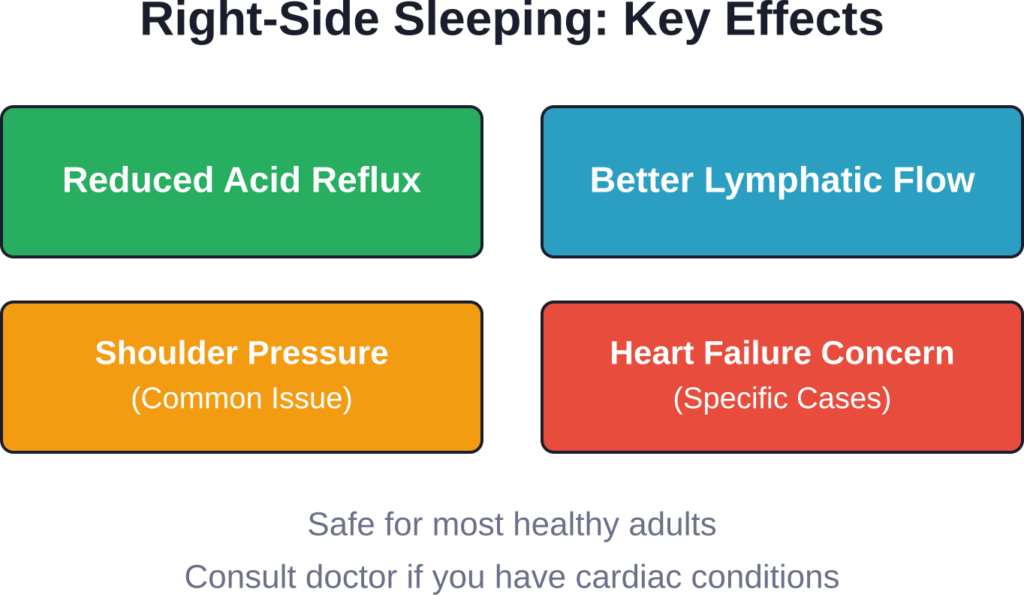
Right-side sleeping offers benefits for digestion and lymphatic drainage but may pose concerns for people with certain heart conditions.
Left Side vs. Right Side: What’s the Difference?
Now, this is where it gets interesting. The differences between sleeping on your right versus left side are subtle for most people but can be significant if you have certain conditions.
Acid Reflux and Digestion
For acid reflux sufferers, the left side typically wins. The anatomy of your stomach and esophagus makes left-side sleeping more effective at keeping stomach acid down. When you lie on your left side, the stomach opening sits higher than the esophagus, creating a natural barrier against reflux.
Right-side sleeping can still help compared to back sleeping, but left generally provides better relief.
Heart Health Considerations
Real talk: if you have heart failure or significant cardiovascular disease, talk to your doctor about sleep position. Research shows that lying position affects P-wave dispersion and other cardiac parameters in patients with heart failure.
According to the American Heart Association, sleep apnea affects approximately 34% of middle-aged men and 17% of middle-aged women. Left-side sleeping may help reduce sleep apnea symptoms by keeping airways more open, though individual variation exists.
An analysis of data from a long-running study of more than 11,000 adults found that adults who had high blood pressure while both seated upright and lying supine faced elevated risks. Participants were followed for an average of 25 to 28 years.
These individuals faced higher risk of heart disease, stroke, and heart failure compared to those without elevated readings in either position.
| Health Condition | Best Side | Why It Matters |
|---|---|---|
| Acid Reflux/GERD | Left | Stomach anatomy keeps acid lower |
| Heart Failure | Varies (consult doctor) | Affects cardiac hemodynamics |
| Sleep Apnea | Left or Right | Both better than back sleeping |
| Pregnancy (after 20 weeks) | Left preferred | Improves blood flow to placenta |
| Healthy Adults | Either | Personal comfort matters most |
When Right-Side Sleeping Works Best
Despite the hype around left-side sleeping, plenty of situations make right-side sleeping the better choice.
If you wake up with left shoulder pain or have an injury on that side, sleeping on your right protects the injured area. If your partner preeps on the left side of the bed and you naturally face them while sleeping, right-side sleeping might just be more practical.
Some people with certain types of heart conditions actually feel more comfortable on the right side. And if you’ve tried left-side sleeping but wake up constantly to shift positions, your body might be telling you something.
Tips for Better Side Sleeping (Either Side)
Regardless of which side you choose, proper support makes the difference between waking up refreshed or in pain.
Pillow Positioning
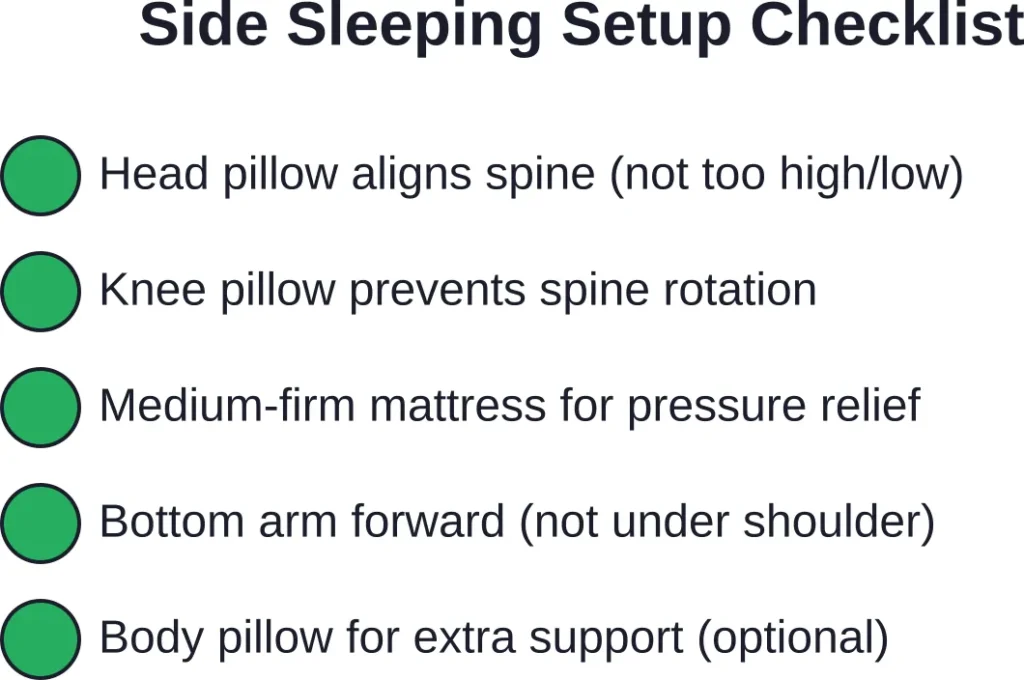
Your pillow should keep your head aligned with your spine—not tilted up or down. Too high and you strain your neck; too low and your head sags.
Place a pillow between your knees. This single adjustment prevents your top leg from pulling your spine out of alignment. The pillow keeps your hips, pelvis, and spine in a neutral position throughout the night.
Mattress Support
Side sleepers need a mattress that cushions pressure points (shoulders and hips) while supporting the waist. Too firm and your shoulder gets crushed. Too soft and your spine sags.
Medium to medium-firm mattresses typically work best, though body weight plays a role. Heavier side sleepers often need slightly firmer support, while lighter sleepers do better with softer surfaces.
Arm Placement
That numb arm problem? It’s usually from sleeping with your arm under your pillow or head. Instead, try these positions:
- Arm extended straight down along your body
- Both arms resting on a body pillow in front of you
- Bottom arm slightly forward, not directly under your shoulder
What About Other Sleeping Positions?
Side sleeping isn’t the only option, though it’s the most popular. Back sleeping comes in second and offers its own set of advantages and disadvantages.
Back Sleeping
Sleeping on your back keeps your spine in neutral alignment and distributes weight evenly. But it’s terrible for snoring and sleep apnea—both conditions worsen significantly when lying supine.
Back sleeping isn’t recommended during pregnancy after the first trimester. The position can cause problems with backaches, breathing, digestion, hemorrhoids, low blood pressure, and decreased circulation to both mother and baby.
Stomach Sleeping
Most experts agree: stomach sleeping is the least healthy position. It forces your neck into rotation for hours, strains your lower back, and offers few redeeming qualities. If you’re a dedicated stomach sleeper, switching to side sleeping could dramatically improve your sleep quality.
Special Considerations for Different Groups
Certain groups need to pay extra attention to sleep position.
Pregnant Women
After the first trimester, left-side sleeping becomes increasingly important. This position optimizes blood flow to the placenta and helps kidneys efficiently eliminate waste products. Right-side sleeping remains safe early in pregnancy, but most healthcare providers recommend transitioning to the left side as pregnancy progresses.
People with Sleep Apnea
Sleep apnea affects a significant portion of middle-aged adults and has been linked to higher rates of hypertension, stroke, and coronary artery disease. Any side-sleeping position beats back sleeping for reducing apnea episodes. The choice between right and left matters less than simply avoiding the supine position.
Heart Failure Patients
If you have diagnosed heart failure, your preferred sleeping position likely already reflects what’s most comfortable. Studies show that heart failure patients willingly adopt certain positions due to hemodynamic changes. Work with your cardiologist to determine the best position for your specific condition.
| Sleep Position | % of Adults | Best For | Worst For |
|---|---|---|---|
| Side (right or left) | ~60% | Snoring, sleep apnea, general comfort | Shoulder pain, facial wrinkles |
| Back | ~30% | Spine alignment, reducing facial wrinkles | Snoring, sleep apnea, pregnancy |
| Stomach | ~10% | Reducing snoring (slight benefit) | Neck pain, lower back strain |
Making the Switch: How to Change Sleep Positions
Changing a lifelong sleep habit isn’t easy, but it’s possible with the right approach.
Start by using pillows as barriers. If you’re trying to avoid rolling onto your back, place a pillow behind you. If you want to stay on one side, use body pillows both in front and behind to create boundaries.
The tennis ball trick works too. Sew a tennis ball into the back of your pajama shirt to make back sleeping uncomfortable. Old-school? Sure. Effective? Absolutely.
Give yourself at least two weeks. Your body needs time to adapt. The first few nights might involve frustration and frequent waking, but most people adjust within 10-14 days.
Signs Your Sleep Position Isn’t Working
How do you know if your current sleep position causes problems? Watch for these red flags:
- Waking with neck or shoulder pain regularly
- Numbness or tingling in your arms or hands
- Morning headaches
- Increased snoring or gasping during sleep
- Worsening acid reflux or heartburn at night
- Feeling unrested despite adequate sleep hours
If you experience any of these consistently, experimenting with a different position might help. And if problems persist, consult a healthcare provider to rule out underlying conditions.
The Bottom Line on Right-Side Sleeping
So, is it OK to sleep on your right side? For most healthy adults, absolutely.
The right side offers genuine benefits for certain conditions and works perfectly well for people without specific health concerns. Left-side sleeping gets more press for good reasons—it helps with acid reflux and may benefit heart health—but that doesn’t make right-side sleeping wrong or unhealthy.
The best sleeping position is the one that lets you sleep soundly through the night without pain or disruption. If that’s your right side, stick with it. If you have heart failure, severe acid reflux, or you’re in the later stages of pregnancy, talk to your doctor about whether switching sides might help.
But wait. Don’t overthink this. Sleep position matters, but it’s not the only factor determining sleep quality. Your mattress, pillow, bedroom environment, sleep schedule, and stress levels all play equally important roles.
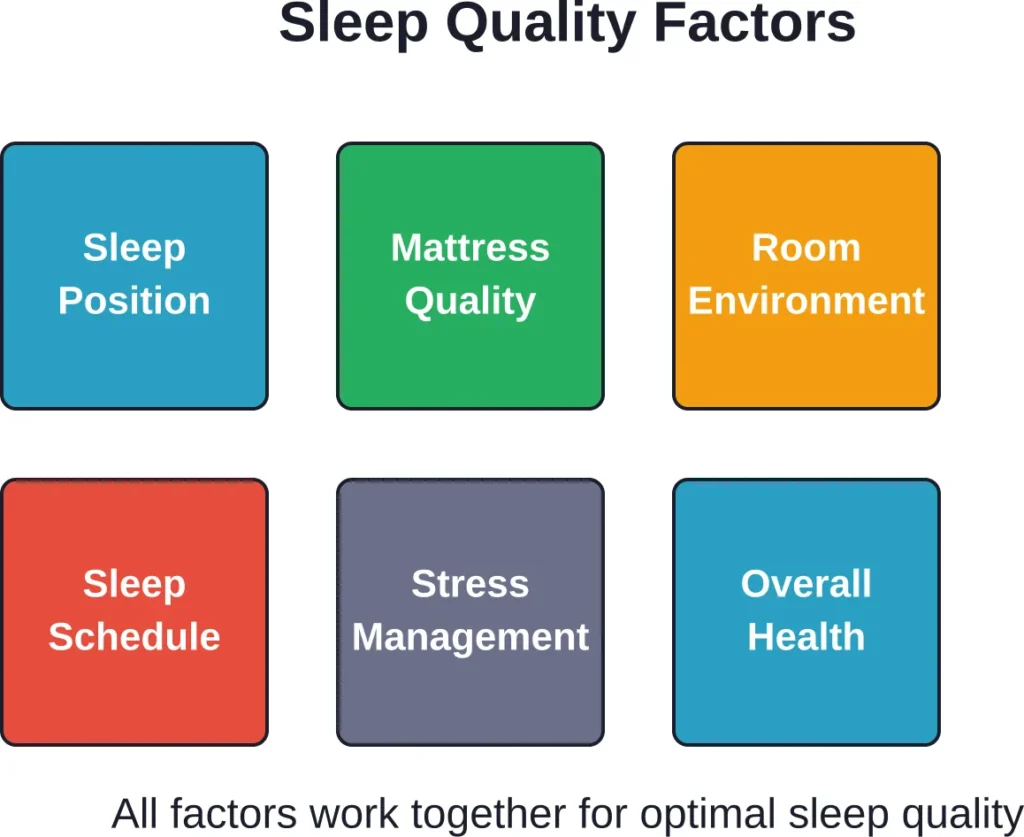
Focus on the complete picture. Find a position that works for your body, support it with the right equipment, and create an environment that promotes deep, restorative sleep.
Frequently Asked Questions
No, sleeping on the right side every night isn’t bad for most healthy adults. This position supports breathing, reduces sleep apnea symptoms compared to back sleeping, and can help with certain digestive issues. However, people with heart failure or late-stage pregnancy may benefit from left-side sleeping instead. If right-side sleeping causes shoulder pain or numbness, adjust your pillow support or try alternating sides.
For most people, both sides are healthy options. Left-side sleeping typically provides better relief for acid reflux and may support cardiovascular health due to anatomical positioning of the heart and major blood vessels. Right-side sleeping works well for general comfort and still offers many side-sleeping benefits. The healthiest side depends on individual health conditions—pregnant women and those with heart conditions may benefit from left-side sleeping, while others can choose based on comfort.
Sleeping on the right side doesn’t cause heart problems in healthy individuals. Research shows that lying position affects cardiac hemodynamics, but this is most relevant for people with existing heart failure. Studies involving heart failure patients found that different positions alter ventricular function, which may explain why some patients prefer certain positions. If you have diagnosed heart disease, discuss sleep position with your cardiologist, but healthy adults don’t need to worry about right-side sleeping harming their hearts.
Arm numbness during side sleeping usually results from poor positioning or inadequate support. Try these solutions: avoid tucking your bottom arm under your pillow or head, position the bottom arm slightly forward rather than directly under your shoulder, hug a body pillow to keep arms in a neutral position, and ensure your mattress provides adequate pressure relief for your shoulder. If numbness persists despite these adjustments, it could indicate nerve compression issues requiring medical evaluation.
Yes, side sleeping significantly reduces snoring and sleep apnea symptoms compared to back sleeping. When lying on the back, gravity pulls soft tissues in the throat downward, partially blocking airways. Side sleeping keeps airways more open. According to the American Heart Association, sleep apnea affects approximately 34% of middle-aged men and 17% of middle-aged women. Both right and left side sleeping help with sleep apnea—the specific side matters less than avoiding the supine position.
Early to mid-pregnancy doesn’t require avoiding the right side. The National Institute of Child Health and Human Development found that sleeping on either the back or side through the 30th week does not appear to increase the risk of stillbirth, reduced size at birth, or high blood pressure disorders of pregnancy. However, as pregnancy progresses, left-side sleeping becomes preferred because it optimizes blood flow to the placenta and helps kidneys eliminate waste products. Most healthcare providers recommend transitioning to primarily left-side sleeping in the third trimester.
Transitioning between sleep positions takes patience and strategic pillow placement. Start by placing a firm pillow behind your back to discourage rolling onto it during sleep. Use a body pillow in front to hug, which encourages side positioning. Place a pillow between your knees for comfort and proper spinal alignment. Some people find the “tennis ball trick” effective—sew a tennis ball into the back of pajamas to make back sleeping uncomfortable. Expect an adjustment period of 10-14 days before the new position feels natural.
Take Control of Your Sleep Quality Tonight
Sleep position matters, but it’s just one piece of the puzzle. Whether you sleep on your right side, left side, or switch between them, what matters most is creating conditions that support deep, uninterrupted rest.
Start by evaluating your current setup. Does your pillow keep your spine aligned? Does your mattress support pressure points without sagging? Are you waking up in pain or feeling refreshed?
If right-side sleeping works for your body and doesn’t cause pain or health issues, there’s absolutely no reason to change it. But if you’re dealing with acid reflux, pregnancy, or cardiac concerns, a conversation with your healthcare provider about sleep position could lead to better nights and more energetic days.
The perfect sleeping position is the one that lets you wake up rested, pain-free, and ready for the day ahead. Find yours, support it properly, and protect those precious hours of rest.