
Quick Summary: Sleeping without a pillow can benefit stomach sleepers by reducing neck strain, but it may worsen alignment for back and side sleepers. Research shows that pillow height significantly affects cervical spine pressure and alignment, with no pillow reducing cervical pressure by 65% compared to high pillows. The right choice depends on your preferred sleep position and existing neck or back conditions.
Most people consider pillows an essential part of their sleep setup. But a growing number of sleepers are ditching their pillows entirely—and reporting better mornings as a result.
So what’s the truth? Is sleeping without a pillow actually beneficial, or is it a risky experiment that could damage your spine?
The answer isn’t one-size-fits-all. Research on pillow height and cervical spine biomechanics reveals some fascinating insights that challenge conventional wisdom about pillow use.
The Science Behind Pillows and Spine Alignment
Pillows serve one primary function: maintaining the natural alignment of your head, neck, and spine during sleep. When alignment is off, muscles strain to compensate, leading to pain and stiffness.
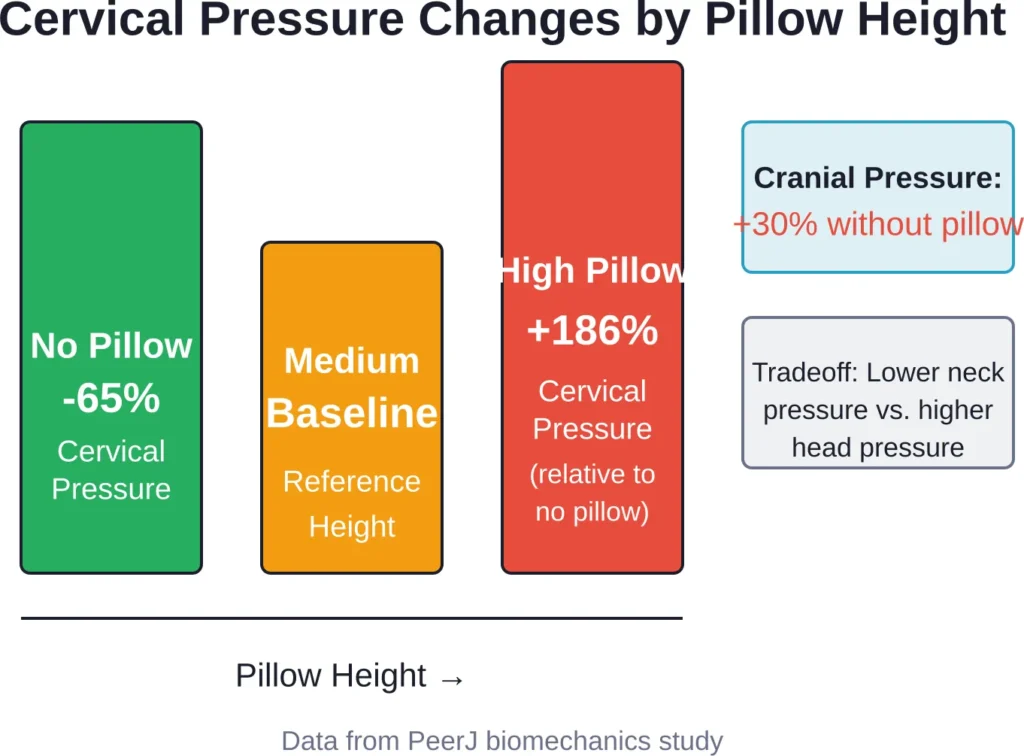
According to research published in PeerJ, pillow height dramatically affects the biomechanics of the head-neck complex. The study found that cervical pressure was reduced by approximately 65% at no pillow height compared to the highest pillow setting tested (H0 vs H3).
But here’s where it gets interesting. That same research showed cranial pressure increased by roughly 30% without a pillow. So while your neck might experience less pressure, your head takes on more.
The cervical spine also changes position based on pillow height. Research on pillow height shows cervical spine alignment parameters change significantly with pillow height, affecting cervical angle, lordosis distance, and kyphosis distance.
What does all this mean? Your spine doesn’t maintain one static “ideal” position—it shifts based on support. The question becomes which position works best for your body and sleep habits.
Who Benefits From Sleeping Without a Pillow?
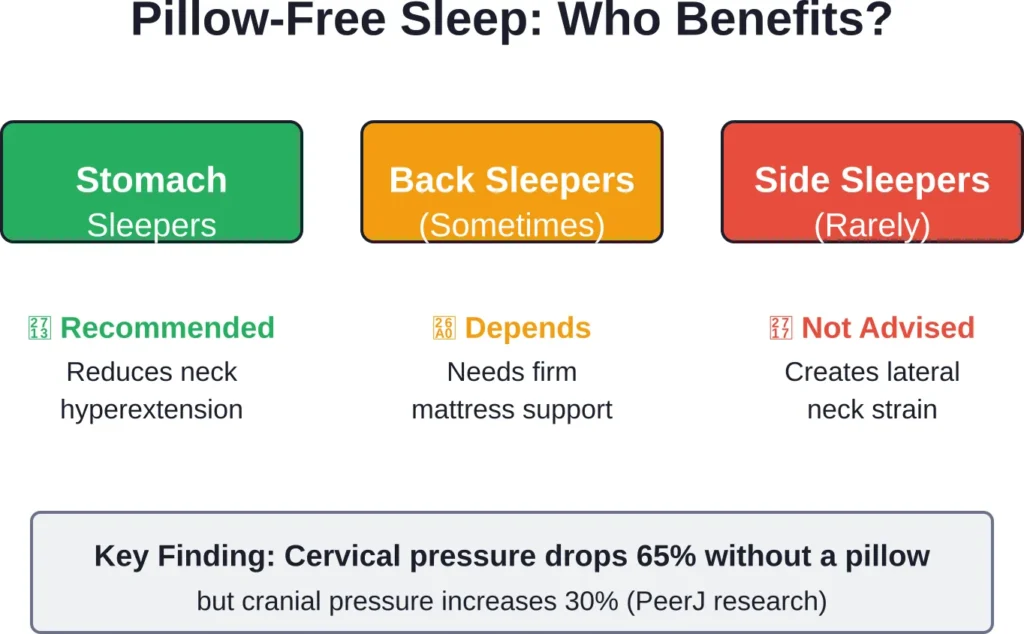
Not everyone should toss their pillow. The benefits depend heavily on sleep position.
Stomach Sleepers: The Primary Beneficiaries
Stomach sleeping naturally extends the neck backward. Adding a pillow amplifies this extension, forcing the neck into an uncomfortable angle for hours.
Sleeping face-down without a pillow allows the spine to maintain a more neutral position. The head rests closer to the mattress level, reducing the degree of neck rotation and extension.
Many stomach sleepers who eliminate their pillow report waking with less neck stiffness and fewer headaches. The reduction in cervical pressure—that 65% decrease mentioned earlier—matters most for this group.
Some Back Sleepers (With Caveats)
Back sleepers sit in a gray area. A flat surface can work if the mattress provides adequate support and the natural cervical curve is maintained.
However, most back sleepers benefit from at least a thin pillow to support the neck’s natural lordosis. Without any support, the head may tilt too far backward, flattening the cervical curve.
If considering pillow-free back sleeping, the mattress firmness becomes critical. A too-soft mattress allows the hips to sink, throwing off spinal alignment regardless of pillow use.
When Side Sleeping Without a Pillow Fails
Side sleepers almost universally need pillows. The gap between the mattress and head is substantial in this position—typically several inches.
Without a pillow, the head drops toward the mattress, bending the neck sideways and compressing the lower shoulder. This misalignment stresses the cervical vertebrae and surrounding muscles.
Research on sleep posture and neck muscle activity confirms that proper support in side-lying positions is essential for reducing muscle strain during sleep.
Potential Benefits of Going Pillow-Free
For those whose sleep position aligns with pillow-free sleeping, several advantages emerge.
Reduced Neck and Upper Back Tension
Pillows that are too high force the neck into flexion, straining posterior neck muscles. Over an eight-hour sleep period, this sustained position can trigger muscle fatigue and morning stiffness.
Eliminating the pillow removes this forced flexion for stomach sleepers, allowing neck muscles to relax more completely.
Potentially Fewer Wrinkles
Pressing the face into a pillow for hours creates compression and friction. Some dermatologists suggest this contributes to sleep lines that, over time, become permanent wrinkles.
Sleeping without a pillow—particularly in a supine position—reduces facial contact with bedding. Whether this significantly impacts wrinkle formation remains debated, but the mechanical logic holds.
Improved Facial Circulation
Related to the wrinkle concern, reduced facial compression may improve overnight blood flow to facial tissues. Pillows can create pressure points on the cheeks, jaw, and forehead.
Community discussions frequently mention waking with less facial puffiness after transitioning away from pillows.
Cooler Sleep Surface
Pillows trap heat. Even cooling gel pillows eventually absorb and retain body warmth. Sleeping pillow-free exposes the head to better air circulation.
For hot sleepers, this temperature difference can meaningfully improve comfort.
Simplified Sleep Setup
One less item to maintain, wash, replace, and pack when traveling. For minimalists, the appeal is straightforward.
The Risks and Downsides
Now the flip side. Pillow-free sleeping isn’t universally beneficial—and for some people, it creates more problems than it solves.
Worsened Spinal Alignment for Most
Back and side sleepers typically experience poor cervical alignment without pillow support. The neck either hyperextends backward or bends sideways, depending on position.
This misalignment doesn’t just cause discomfort—it can contribute to chronic issues over time. Sustained poor posture during sleep affects the same structures that daytime posture affects.
Increased Pain for Existing Neck Conditions
Anyone with cervical spondylosis, herniated discs, or chronic neck pain should approach pillow elimination cautiously. Research on ergonomic latex pillows shows that proper cervical support significantly reduces pain in patients with neck conditions.
Removing support entirely may exacerbate symptoms rather than relieve them.
Disrupted Sleep Quality
Discomfort interrupts sleep cycles. If pillow-free sleeping feels awkward or painful, sleep quality suffers regardless of theoretical benefits.
According to research published in healthcare journals, insomnia incidence in some populations reaches approximately 38%. Sleep disruption from poor positioning doesn’t help those statistics.
Difficulty for Combination Sleepers
Many people shift positions throughout the night. A pillow-free setup that works for stomach sleeping fails when rolling to the side.
Combination sleepers face a tradeoff: optimize for one position or find a compromise that works adequately for multiple positions.
How to Transition to Pillow-Free Sleeping
Interested in trying it? Don’t go cold turkey. Sudden changes to sleep posture can cause temporary discomfort as your body adjusts.
Start Gradually
Begin with a thinner pillow rather than eliminating it entirely. Each week, reduce pillow height slightly—fold a towel pillow in half, or swap to a flatter option.
This progressive approach allows muscles and ligaments to adapt to the changing support structure.
Assess Your Mattress
Pillow-free sleeping demands more from the mattress. A surface that’s too soft allows the body to sink unevenly, throwing off alignment regardless of pillow choice.
Research indicates that firmer mattresses are often recommended for people with back pain. That firmness becomes even more critical without a pillow.
Try It During Naps First
Test pillow-free sleeping during a daytime nap. This lower-stakes trial reveals how your body responds without committing to a full night.
If you wake from a nap with neck stiffness, nighttime pillow-free sleeping probably won’t work either.
Pay Attention to Morning Feedback
Your body provides clear signals. Morning neck pain, stiffness, or headaches indicate poor alignment during sleep.
Give the adjustment a week or two—some initial discomfort is normal. But persistent pain suggests this sleeping style doesn’t suit your anatomy or preferred position.
Consider Partial Solutions
Not every choice is binary. A very thin pillow, a folded towel, or even a small cushion positioned to support just the neck curve can bridge the gap between full pillow and nothing.
Some stomach sleepers find success with a pillow under the pelvis rather than the head, which helps maintain spinal alignment without forcing neck extension.
Choosing the Right Pillow (If You Keep One)
Most people will conclude that some pillow remains necessary. The question then becomes: which one?
Match Pillow Loft to Sleep Position
Side sleepers need substantial loft—typically 4 to 6 inches—to fill the shoulder-to-head gap. Back sleepers generally do best with medium loft around 3 to 4 inches. Stomach sleepers who use pillows should choose the thinnest options available, often under 3 inches.
Ergonomic considerations in pillow height have been extensively researched, confirming that optimal height varies significantly by sleep position and individual anatomy.
Prioritize Cervical Support
Studies on neck support pillows demonstrate that designs maintaining cervical lordosis reduce pain better than flat pillows. Look for contoured shapes or adjustable fills that support the neck curve.
The goal is supporting the natural C-shape of the cervical spine, not forcing it flat or exaggerating the curve.
Material Matters for Some
Research on pillow types has examined their effects on neck pain and sleep quality in patients with chronic neck issues. Memory foam, latex, and adjustable fills each offer different support profiles.
However, material preference often comes down to personal comfort and temperature regulation rather than clinical superiority.
Replace Pillows Regularly
Pillows lose support over time. The National Sleep Foundation recommends considering mattress replacement every 6 to 8 years; pillow replacement frequency varies by material and use.
A worn-out pillow provides inconsistent support, potentially negating the benefits of having chosen the right pillow initially.
| Sleep Position | Pillow Recommendation | Key Consideration |
|---|---|---|
| Stomach | Very thin or none | Minimize neck extension |
| Back | Medium loft, contoured | Support cervical curve |
| Side | High loft, firm | Fill shoulder-head gap |
| Combination | Adjustable fill | Adapts to position changes |
Special Cases: When to Definitely Use a Pillow
Certain conditions make pillow use non-negotiable.
Chronic Neck Pain or Cervical Disorders
Cervical spondylosis, herniated discs, arthritis, or prior neck injuries typically require ongoing support. Research on patients with these conditions shows that appropriate pillow use reduces pain and improves function.
Consult with a healthcare provider before eliminating cervical support if diagnosed with neck pathology.
Acid Reflux or GERD
Elevating the head reduces nighttime reflux. Sleeping flat—whether pillow-free or on a thin pillow—allows stomach acid to move more easily into the esophagus.
People with GERD often need wedge pillows or multiple stacked pillows to maintain sufficient elevation.
Sleep Apnea
Positional therapy for sleep apnea sometimes involves specific pillow configurations that promote side sleeping or maintain airway openness. Removing pillows entirely can worsen apnea in some cases.
Anyone using a CPAP machine should follow their sleep specialist’s guidance on sleep positioning.
Pregnancy
Pregnant sleepers—especially in the second and third trimesters—benefit from pillows supporting the belly, placed between knees, and under the head. The changing body mechanics of pregnancy demand additional support, not less.
The Mattress Connection
Pillow choices don’t exist in isolation. The mattress plays an equally important role in spinal alignment.
A too-soft mattress allows the hips and shoulders to sink, creating a hammock effect regardless of pillow height. Conversely, an overly firm surface creates pressure points and doesn’t accommodate the body’s natural curves.
People considering pillow-free sleeping should simultaneously evaluate mattress support. The two elements work as a system—optimizing one without addressing the other rarely produces good results.
Research on sleeping on the floor—an extreme form of firm surface sleeping—shows mixed results, with very little scientific investigation completed despite anecdotal claims. The takeaway? Surface firmness matters, but individual response varies dramatically.
Common Myths About Pillow-Free Sleeping
Let’s clear up some misconceptions.
Myth: Sleeping Without a Pillow Fixes Posture Problems
Sleep posture and daytime posture are related but not identical. Poor daytime posture results from muscle imbalances, habits, and work setups—not from pillow use at night.
Sleeping pillow-free won’t magically correct forward head posture developed from eight hours daily hunched over a computer.
Myth: Everyone Slept Without Pillows Historically
Historical pillow use varied widely by culture and era. Some societies used wooden headrests, others used filled fabric cushions, and some indeed used minimal head support.
But historical prevalence doesn’t determine modern best practice. Humans historically did many things that aren’t optimal by current standards.
Myth: Chiropractors Universally Recommend No Pillow
Chiropractic and physical therapy approaches to pillow use vary. Some practitioners recommend pillow-free sleeping for specific patients; most emphasize proper pillow selection matched to individual needs.
There’s no unified professional stance that pillows should be eliminated.
Real Talk: Experimentation Is Key
Here’s what often gets lost in articles about sleep optimization: individual variation is massive.
Two people with identical sleep positions and similar body types may respond completely differently to pillow-free sleeping. Spinal anatomy, muscle tone, previous injuries, and even psychological comfort preferences all influence outcomes.
The scientific research provides guidelines and averages. But whether pillow-free sleeping works for a specific person requires personal testing.
That testing should be methodical—change one variable at a time, give adjustments adequate time to take effect, and pay attention to objective feedback like pain levels and sleep quality rather than just theoretical benefits.
Frequently Asked Questions
It depends on sleep position and pain cause. Stomach sleepers with neck pain from hyperextension may find relief without a pillow. However, back and side sleepers typically experience worsened pain when removing cervical support. Research shows appropriate pillow use reduces neck pain in most cases, particularly for people with chronic cervical conditions.
Most people need 1 to 2 weeks to adapt if pillow-free sleeping suits their body. Initial discomfort during this period is normal as muscles adjust. However, persistent pain beyond two weeks suggests this sleeping style doesn’t match your anatomy or position. Gradual transitions—progressively reducing pillow height—typically work better than abrupt changes.
For stomach sleepers, both options can work, though no pillow often proves more comfortable by eliminating neck extension entirely. For back sleepers, a thin pillow usually beats no pillow by supporting the cervical curve without excessive flexion. Side sleepers need substantial pillow height and should avoid both thin and no-pillow options.
Actually, the opposite concern is more valid. Sleeping with a pillow creates facial compression and friction that some dermatologists link to sleep lines and eventual wrinkles. Sleeping without a pillow—especially on the back—reduces face-to-fabric contact. However, whether this meaningfully impacts long-term wrinkle formation remains debated.
Back pain location matters. Lower back pain relates more to mattress firmness and hip alignment than pillow choice. Sleeping with a pillow under the knees often helps lower back pain more than changing head pillows. Upper back and shoulder pain may improve with proper pillow support that maintains cervical alignment—removing the pillow could worsen these issues.
Firmer mattresses generally work better for pillow-free sleeping because they prevent excessive sinking that misaligns the spine. Research indicates that about 75% of orthopedic surgeons recommend firmer mattresses for back pain. However, individual preferences vary—some people need moderate firmness with strategic cushioning. The mattress and pillow work as a system.
Yes, in most cases. Side sleeping creates a substantial gap between the mattress and head—typically several inches. Without a pillow filling this space, the head drops toward the mattress, bending the neck sideways and compressing the lower shoulder. This misalignment stresses cervical vertebrae and muscles throughout the night, typically causing pain and stiffness.
The Bottom Line
So is it okay to sleep without a pillow? The honest answer is: maybe.
For stomach sleepers, eliminating the pillow often improves comfort and reduces neck strain. Research confirms that lower pillow heights reduce cervical pressure—beneficial for this position.
For back sleepers, the decision depends on mattress support and individual spinal anatomy. Some people maintain adequate alignment without a pillow, but most benefit from at least minimal cervical support.
For side sleepers, pillow-free sleeping rarely works. The biomechanics simply don’t favor it—the head needs substantial support to maintain neutral alignment.
The broader lesson? Sleep optimization isn’t about following universal rules. It’s about understanding the principles—spinal alignment, pressure distribution, muscle relaxation—and then experimenting to find what works for your body and preferences.
If waking with neck pain or stiffness, pillow height deserves evaluation. But whether the solution is no pillow, a different pillow, or addressing mattress and position issues requires individual testing.
Ready to optimize your sleep setup? Start by honestly assessing your primary sleep position, current pillow height, and morning feedback from your body. Make one change at a time and give each adjustment at least a week before drawing conclusions. Quality sleep is worth the experimentation.