

Quick Summary: Taking DayQuil at night is generally not recommended because its decongestant (phenylephrine) can interfere with sleep, though the effect varies by individual. If necessary, wait at least 4 hours before bed and consider using NyQuil or decongestant-free alternatives designed for nighttime use. The FDA proposed removing oral phenylephrine in 2024 due to effectiveness concerns, which may affect formulations available in 2026.
It’s 10 PM. Your head feels stuffed with cotton, your throat hurts, and the only cold medicine in the cabinet is DayQuil. You know it’s labeled for daytime use, but desperate times call for desperate measures.
Before you pour that dose, here’s what actually happens when you take DayQuil at night—and whether the risks outweigh the relief.
What’s Actually in DayQuil (And Why It Matters After Dark)
DayQuil Cold & Flu contains three active ingredients working together to tackle cold symptoms without the sedation found in nighttime formulas.
According to the FDA and manufacturer labeling, the standard formulation includes acetaminophen (325 mg for pain and fever), dextromethorphan (10 mg as a cough suppressant), and phenylephrine (5 mg as a nasal decongestant). That last ingredient is the troublemaker when bedtime rolls around.
Phenylephrine is a sympathomimetic drug that constricts blood vessels in the nasal passages to reduce swelling. But it doesn’t limit its stimulating effects to just your nose—it can raise alertness and interfere with your ability to fall asleep.
Here’s something important: in November 2024, the FDA proposed removing oral phenylephrine from over-the-counter cold medications after determining it’s not effective for nasal congestion. Many manufacturers may have already reformulated products by 2026, so check the label on your current bottle. If phenylephrine is still listed, the sleep concerns below apply. If it’s been removed, DayQuil becomes much more night-friendly.
The Honest Answer: Can You Take DayQuil at Night?
Real talk: you can take DayQuil at night, but whether you should depends on timing, your body’s sensitivity, and what you’re trying to accomplish.
The manufacturer doesn’t explicitly forbid nighttime use—the dosing instructions specify every 4 hours as needed for regular formulations, with no more than 4 doses in 24 hours. For 12-hour extended-release tablets, the limit is 2 doses in 24 hours. The 24-hour formulation is taken once a day.
That said, DayQuil is deliberately formulated to be non-drowsy. It lacks the antihistamines (like doxylamine or diphenhydramine) that NyQuil uses to promote sleep.
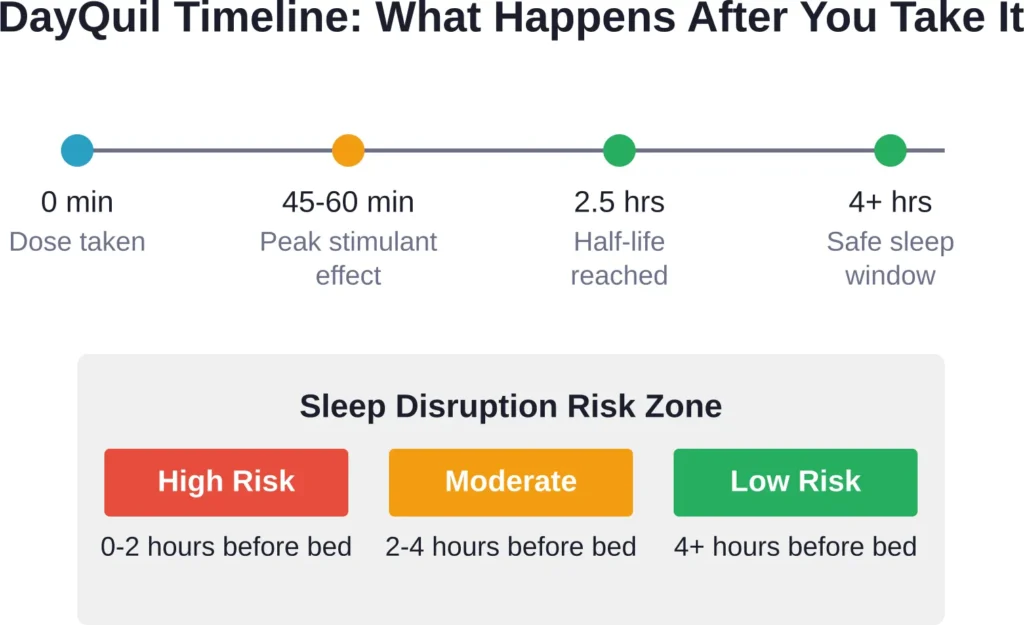
If you take DayQuil right before bed, the phenylephrine peaks in your bloodstream within 45 to 60 minutes, with a half-life around 2.5 hours. That means the stimulant effect will be strongest just when you’re trying to fall asleep.
The 4-Hour Rule
Community discussions and healthcare guidance suggest a practical compromise: if you need to take DayQuil and plan to sleep later, maintain at least 4 hours between your dose and bedtime.
Four hours gives your body time to metabolize most of the phenylephrine dose, reducing its impact on sleep onset. This isn’t a guarantee—individual responses vary—but it’s a sensible buffer based on the drug’s pharmacokinetics.
What Happens When You Take DayQuil Before Bed
For most people, taking DayQuil close to bedtime produces one of three outcomes: no noticeable effect, mild restlessness, or significant sleep disruption.
The phenylephrine can create a feeling of being “wired but tired”—your body is exhausted from fighting a cold, but your brain won’t settle into sleep mode. Some users report lying awake staring at the ceiling, mind racing despite physical fatigue.
The acetaminophen component might actually help sleep indirectly by reducing fever and body aches that keep you awake. Dextromethorphan, the cough suppressant, generally doesn’t affect alertness at therapeutic doses, though rare paradoxical reactions have been documented in medical literature.
According to research published in the International Journal of Molecular Sciences, pseudoephedrine (a more potent decongestant often compared to phenylephrine) causes an average heart rate increase of 3 beats per minute and raises systolic blood pressure by about 1 mm Hg. While phenylephrine’s oral effectiveness is disputed, when it does work, similar mild stimulant effects can occur.
Side Effects and Safety Concerns
Beyond sleep interference, DayQuil carries the standard risks associated with its ingredients, amplified slightly by nighttime use patterns.
Common Side Effects
The most frequently reported reactions include nervousness, dizziness, nausea, and mild stomach upset. According to a Cochrane review of oral antihistamine-decongestant-analgesic combinations, combination cold medicines show clinical effectiveness in reducing cold symptoms.
Restlessness and difficulty sleeping are explicitly noted side effects of phenylephrine-containing products. Some individuals also experience headaches or increased heart rate.
Who Should Avoid DayQuil at Night
Certain groups face elevated risks and should exercise extra caution or avoid nighttime DayQuil entirely:
- People with heart conditions or high blood pressure – Decongestants can raise blood pressure and heart rate, though decongestants can raise blood pressure and heart rate in some users
- Those taking MAO inhibitors – Combining these antidepressants with DayQuil can cause dangerous interactions; the FDA mandates warnings about drugs like isocarboxazid, phenelzine, selegiline, and tranylcypromine
- Heavy alcohol users – Consuming more than three alcoholic drinks per day while taking acetaminophen increases liver damage risk significantly
- Individuals with existing sleep disorders – Adding a mild stimulant to existing insomnia or sleep apnea creates compounding problems
- Children under 4 – The FDA removed infant formulations in 2008 due to safety concerns, and caution is advised for children under 4 with any cough and cold products
Pregnant and breastfeeding women should consult healthcare providers before use. Research indicates approximately 0.5% of pseudoephedrine passes into breast milk, and a single 60 mg dose can reduce milk production by 24%.
DayQuil vs. NyQuil: The Key Differences
Understanding what separates these sibling products clarifies why one suits daytime and the other nighttime.
| Component | DayQuil | NyQuil | Purpose |
|---|---|---|---|
| Acetaminophen | 325 mg | 325 mg | Pain/fever relief (both) |
| Dextromethorphan | 10 mg | 10 mg | Cough suppression (both) |
| Phenylephrine | 5 mg | 5 mg | Nasal decongestant (both) |
| Doxylamine | None | 6.25 mg | Antihistamine/sleep aid (NyQuil only) |
| Alcohol | None | 10% | Solvent/minor sedative (NyQuil only) |
NyQuil adds doxylamine succinate, a sedating antihistamine that promotes drowsiness and helps with runny nose. Some formulations also contain 10% alcohol, which contributes mild sedation.
That’s the fundamental difference: DayQuil keeps you functional during waking hours, while NyQuil actively promotes sleep alongside symptom relief.
If you’re asking whether to take DayQuil at night, the logical follow-up is: why not just use NyQuil? In most cases, switching to the nighttime formula makes more sense than fighting the formulation.
Better Alternatives for Nighttime Cold Relief
When cold symptoms strike at night, several options work better than forcing a daytime formula into nighttime duty.
Switch to NyQuil or Similar Nighttime Formulas
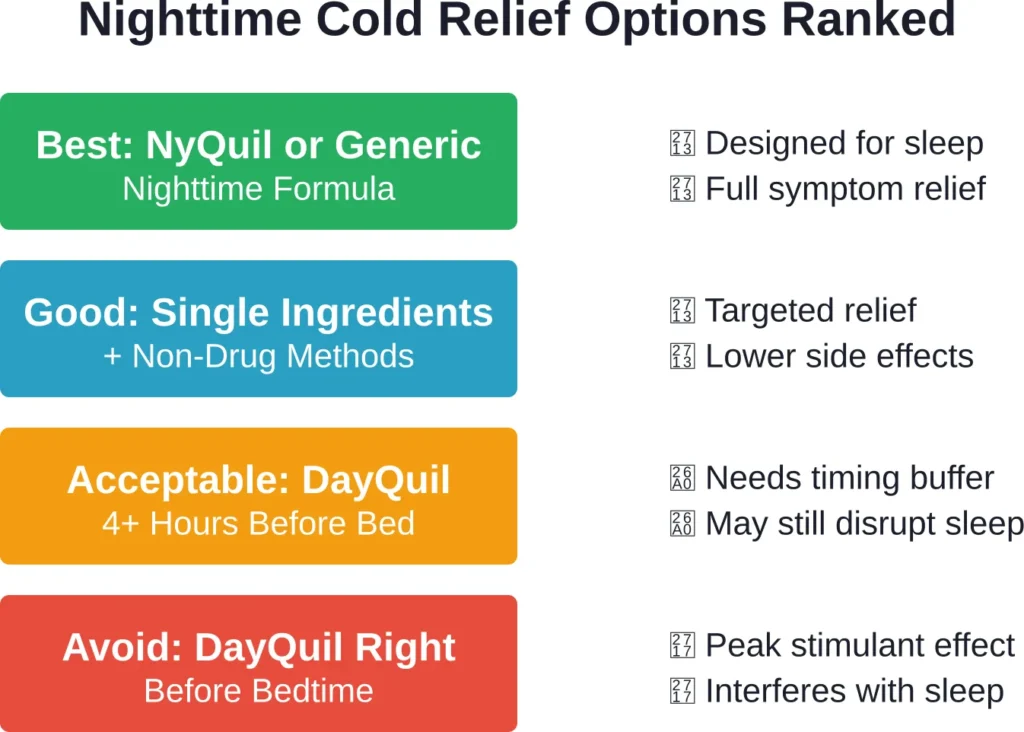
The most straightforward solution is using a product designed for nighttime use. NyQuil and its generics combine symptom relief with sleep support, addressing the core problem: you need rest to recover, but symptoms keep you awake.
Generic doxylamine-containing nighttime cold formulas work identically to brand-name products at lower cost.
Use Single-Ingredient Medications
Targeted relief sometimes works better than combination products. If your primary problem is nasal congestion, consider:
- Nasal saline sprays – Non-medicated, safe any time, and effective for mild congestion
- Oxymetazoline nasal spray (Afrin) – Fast-acting topical decongestant with less systemic stimulant effect than oral pills; typical use is limited to 3-5 days to avoid rebound congestion
- Acetaminophen or ibuprofen alone – For pain and fever without the stimulant decongestant
- Guaifenesin – An expectorant that thins mucus without affecting sleep
For cough specifically, dextromethorphan is available as a standalone product and generally doesn’t interfere with sleep.
Try Non-Medication Approaches
Sometimes the best nighttime remedy involves no drugs at all:
- Elevate your head with extra pillows to improve drainage and reduce postnasal drip
- Use a humidifier to add moisture to dry indoor air, which helps nasal passages
- Drink warm fluids like herbal tea or broth before bed to soothe throat irritation
- Apply mentholated rub to chest for a cooling sensation that may ease breathing perception
According to MedlinePlus resources on stuffy nose management, staying hydrated and using humidity are foundational non-drug interventions.
How to Take DayQuil Safely If You Must Use It at Night
Sometimes circumstances force your hand—you only have DayQuil available, or you need the specific symptom coverage it provides. Here’s how to minimize sleep disruption.
Timing is everything. Take your dose at least 4 hours before your planned bedtime. If you typically sleep at 11 PM, take DayQuil no later than 7 PM.
Consider a half dose. This isn’t officially recommended, but some healthcare providers suggest it as a harm-reduction strategy when patients insist on nighttime use. Cutting the dose reduces the stimulant load while maintaining some symptom relief. Always consult a healthcare provider before modifying dosing.
Stick to dosing limits. Regular DayQuil formulations max out at every 4 hours, no more than 4 doses daily. Extended-release 12-hour tablets limit you to maximum 2 doses in 24 hours. The 24-hour formulation is once a day only.
Avoid combining with other stimulants. Skip the evening coffee, energy drinks, or other medications that might compound alertness effects.
Create optimal sleep conditions. Even with the 4-hour buffer, your sleep might be lighter than usual. Compensate by making your bedroom cooler, darker, and quieter than normal. Consider white noise or earplugs if environmental sounds typically don’t bother you.
Don’t mix with alcohol. Beyond the liver damage risk from combining alcohol and acetaminophen, alcohol disrupts sleep architecture. Adding a stimulant decongestant creates a push-pull effect that leaves you feeling worse.
When to See a Healthcare Provider
Over-the-counter cold relief works for typical viral upper respiratory infections that resolve within 7-10 days. Certain warning signs indicate professional evaluation is needed:
- Symptoms lasting beyond 10 days without improvement
- High fever (above 103°F/39.4°C) or fever that returns after breaking
- Severe headache, facial pain, or ear pain suggesting sinus infection or complications
- Difficulty breathing, wheezing, or chest tightness
- Symptoms that improve then suddenly worsen
- Thick, discolored nasal discharge accompanied by facial pressure for several days
These symptoms may indicate bacterial sinusitis, bronchitis, pneumonia, or other conditions requiring prescription treatment rather than OTC management.
Additionally, if you find yourself regularly taking cold medications for extended periods, underlying issues like allergies or chronic sinusitis might be at play. A healthcare provider can identify root causes rather than just managing symptoms.
The Bottom Line on DayQuil and Sleep
So is it OK to take DayQuil at night? The nuanced answer: it’s not ideal, but it’s not dangerous if you’re careful about timing.
The phenylephrine decongestant creates a mild stimulant effect that peaks within an hour and lingers for several hours—exactly when you’re trying to fall asleep. Most people tolerate it fine with a 4-hour buffer, but individual responses vary.
Better options exist. NyQuil and other nighttime formulas add a sedating antihistamine while delivering the same symptom relief, making them the logical choice when the clock strikes evening. Single-ingredient medications let you target specific symptoms without unnecessary ingredients.
Non-medication approaches—elevation, humidity, warm fluids, saline rinses—work surprisingly well and carry zero drug-interaction risks.
But if DayQuil is all you’ve got and symptoms are making sleep impossible anyway, taking it with proper timing is a reasonable compromise. Just remember that the “non-drowsy” label is a feature during the day and a potential bug at night.
Check your current DayQuil formulation, too. If manufacturers have removed phenylephrine following the FDA’s 2024 proposal, the nighttime concerns largely evaporate. Without the stimulating decongestant, DayQuil becomes much more sleep-neutral.
The key insight: cold medicine timing matters as much as dosing. Plan your symptom relief around your sleep schedule, not just your symptom intensity.
Frequently Asked Questions
No, DayQuil does not contain caffeine. The “non-drowsy” label refers to the absence of sedating antihistamines, not the presence of stimulants like caffeine. The alertness effects some people notice come from phenylephrine, the nasal decongestant, which has mild stimulating properties but works differently than caffeine.
Yes, but with caution. Both contain acetaminophen, dextromethorphan, and phenylephrine in identical doses, so you must account for all doses when calculating your 24-hour limits. The standard limit is 4 doses total in 24 hours for regular formulations. Space them at least 4 hours apart, and ensure you don’t exceed maximum daily acetaminophen (4,000 mg for adults, though many providers recommend staying under 3,000 mg).
The half-life of phenylephrine is approximately 2.5 hours, meaning half the dose is metabolized in that time. Most of the drug clears within 8-12 hours. Acetaminophen has a half-life of 1-4 hours, while dextromethorphan ranges from 2-4 hours for most people. Practically speaking, effects diminish significantly within 4-6 hours for regular formulations.
Standard DayQuil formulations are unlikely to cause false positives on drug tests. Dextromethorphan is structurally similar to opioids, but research published in PubMed indicates that a single normal dose does not typically produce false-positive results on standard opioid screening tests. However, extremely high doses or extended use might theoretically cause issues. Always inform testing administrators of OTC medications taken.
DayQuil already contains acetaminophen, so avoid taking additional acetaminophen products (Tylenol) to prevent exceeding safe daily limits. Ibuprofen (Advil, Motrin) or naproxen (Aleve) work through different mechanisms and can generally be combined with DayQuil safely, but consult a healthcare provider or pharmacist first, especially if you have kidney issues, stomach problems, or take blood thinners.
Pregnant women should consult healthcare providers before using DayQuil or any cold medication. Acetaminophen is generally considered the safest pain reliever during pregnancy, but dextromethorphan and phenylephrine require individual risk-benefit assessment. The FDA advises caution with all cough and cold products during pregnancy, particularly in the first trimester.
Acetaminophen overdose is serious and can cause liver damage. If you’ve exceeded the recommended dose significantly (more than 4,000 mg acetaminophen in 24 hours for adults), contact poison control immediately at 1-800-222-1222 or seek emergency medical attention. Even if you feel fine initially, acetaminophen toxicity may not show symptoms for hours while liver damage progresses.