
Quick Summary: Taking expired medicine carries varying degrees of risk depending on the medication type. While many medications retain effectiveness well past their expiration dates—research shows 90% of more than 100 drugs remained effective 15 years after expiring—certain medications like insulin, liquid antibiotics, and nitroglycerin can become dangerous. The expiration date indicates guaranteed potency, not necessarily the point at which a drug becomes harmful, though reduced effectiveness and potential degradation are legitimate concerns.
Everyone’s done it. You’ve got a splitting headache, reach for the pain reliever in the back of the medicine cabinet, and notice the expiration date passed six months ago. Do you take it anyway or toss it out?
The answer isn’t as straightforward as the date stamped on the bottle might suggest. Since 1979, the FDA has required expiration dates on prescription and over-the-counter medicines, but what that date actually means—and whether crossing it makes a medication dangerous—has been debated for decades.
What Expiration Dates Actually Mean
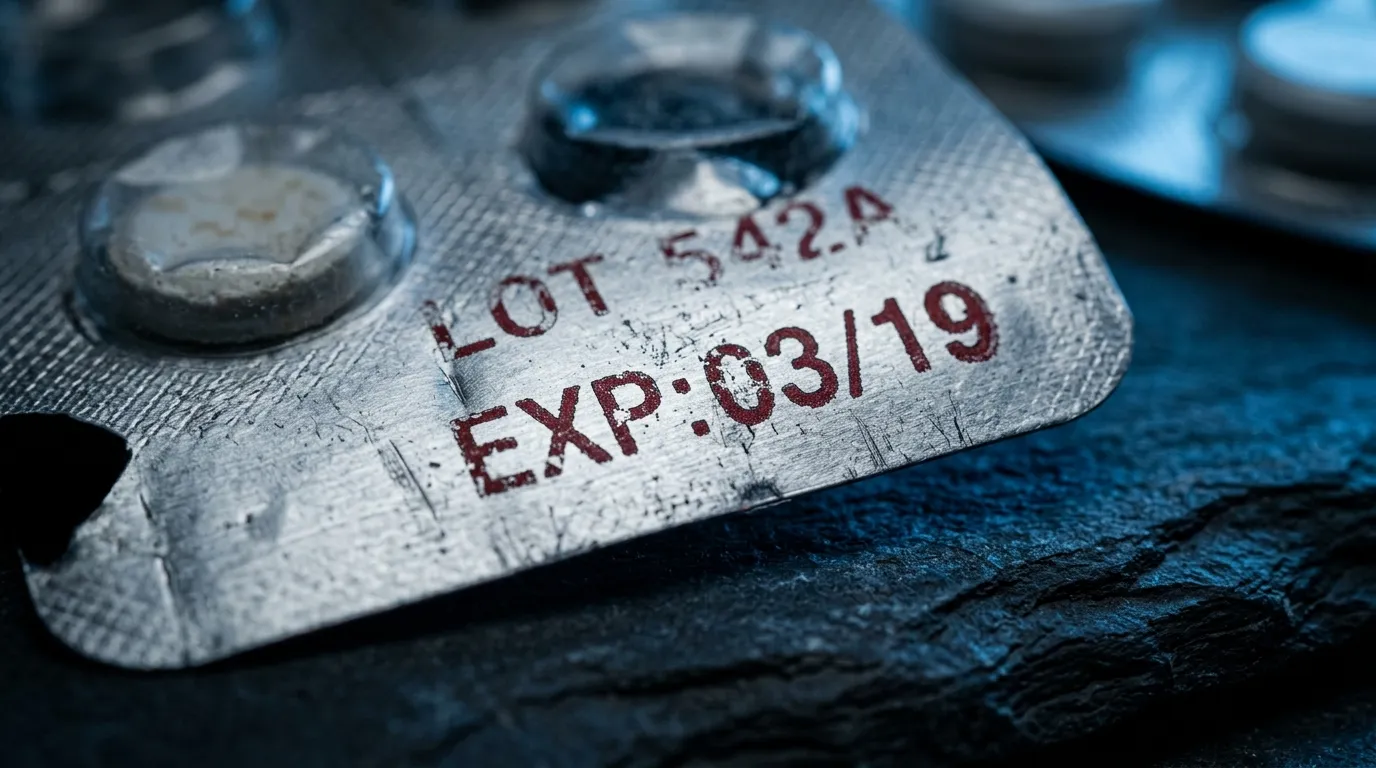
The expiration date doesn’t mark the moment a drug transforms from safe to toxic. Instead, it represents the manufacturer’s guarantee that the medication will maintain full potency and safety until that date—when stored under proper conditions.
Pharmaceutical companies determine these dates through stability testing. To establish shelf life, manufacturers conduct accelerated stability studies at 40°C and 75% humidity for 6 months, alongside real-time (long-term) studies at normal conditions for a minimum of 24 months. These rigorous tests analyze any changes in the medication’s quality over time.
Most pharmaceutical products receive expiration dates ranging from 1 to 5 years from manufacture. But here’s the thing—these dates are often conservative estimates designed to protect manufacturers from liability and ensure consistent product performance.
The Military Study That Changed Everything
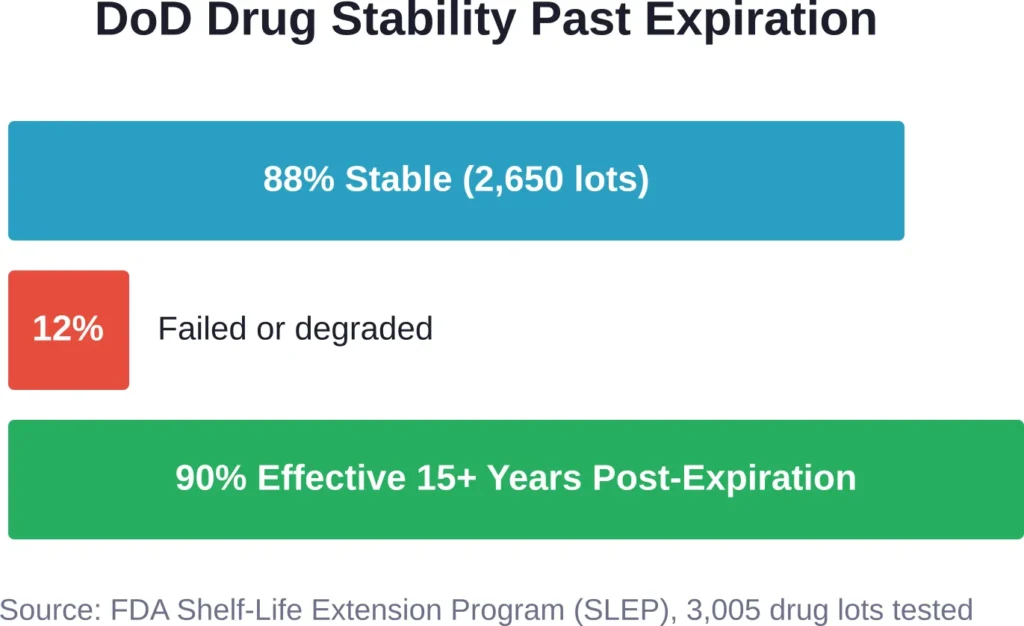
The most compelling evidence about expired medication comes from the Department of Defense’s Shelf-Life Extension Program, established in 1986. Faced with the astronomical cost of replacing massive stockpiles of drugs every few years, the military partnered with the FDA to test whether medications truly became ineffective or dangerous after their stamped dates.
The results were eye-opening. Research found that 90% of more than 100 drugs, both prescription and over-the-counter, remained perfectly effective even 15 years after the expiration date. The program tested 122 different products, and of the 3,005 lots examined, 88% remained stable past expiration when stored in unopened containers.
When Expired Medications Become Dangerous
Real talk: not all medications are created equal when it comes to post-expiration safety. Some drugs genuinely become less effective or potentially harmful after expiring.
Insulin, liquid antibiotics, and nitroglycerin are widely recognized as unsafe after expiry. These medications deserve special caution:
| Medication Type | Risk After Expiration | Why It Matters |
|---|---|---|
| Insulin | High | Loses potency rapidly; ineffective diabetes control can be life-threatening |
| Liquid antibiotics | High | Degrades quickly; may not treat infections effectively |
| Nitroglycerin | High | Becomes ineffective for angina/heart emergencies |
| EpiPens | Moderate to High | Reduced effectiveness during allergic emergencies |
| Tetracycline | Moderate | Can form toxic degradation products |
| Eye drops | Moderate | Sterility concerns; risk of eye infections |
Liquid formulations, biologics, and medications requiring refrigeration generally have shorter effective lifespans than solid tablets or capsules. The chemical structure matters too—some compounds naturally degrade faster than others.
Storage Conditions Make or Break Shelf Life
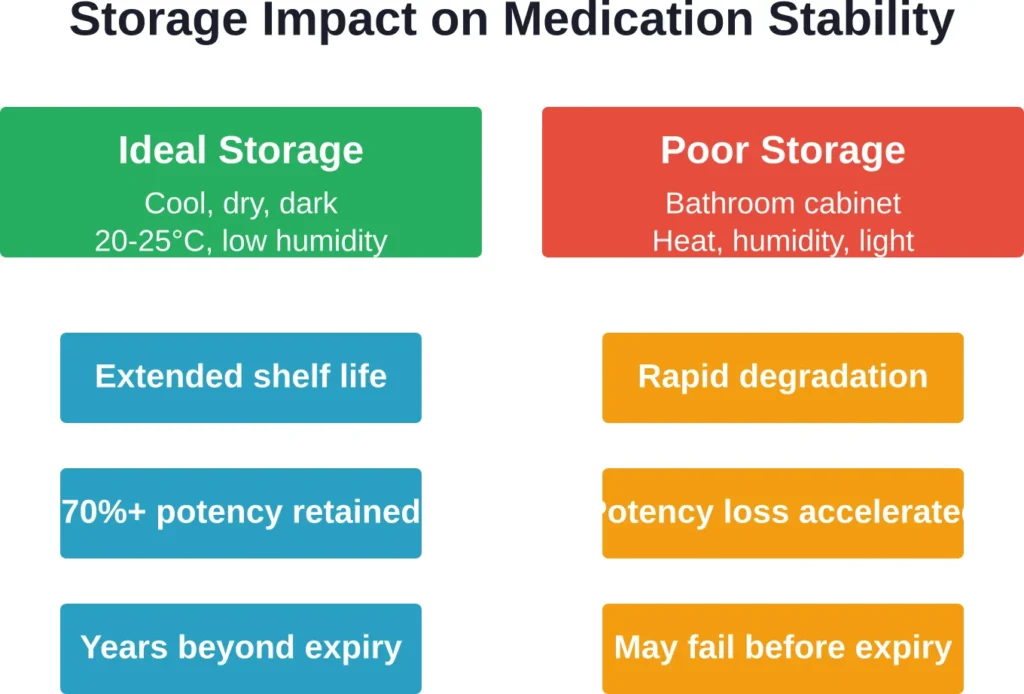
That expiration date assumes you’ve stored the medication properly. Heat, humidity, and light accelerate degradation significantly.
The bathroom medicine cabinet—where most people store medications—is actually one of the worst places. Shower steam and temperature fluctuations create the exact conditions that break down drugs faster. Controlled storage conditions of 20-25°C with 35-65% relative humidity are ideal for maintaining medication stability.
Medications stored in unopened, original containers in cool, dry, dark places retain potency far longer than those exposed to harsh conditions. Even a few months of improper storage can compromise a medication more than years of proper storage.
The Science on Actual Potency Loss
When medications do degrade, they typically lose potency gradually rather than suddenly becoming toxic. Many properly stored medicines retain 70% or more of their potency for years beyond expiration.
Space station research provides fascinating insights. Testing medications stored aboard the International Space Station found that four of nine (44% of those tested) medications tested met USP requirements 8 months post expiration. Interestingly, another three medications (33%) met USP guidelines 2–3 months before expiration.
A study on analgesic agents found that these drugs retained chemical potency, physical stability, and efficacy up to two years after expiry when properly stored. The research concluded that expiration dates, as currently estimated, don’t accurately reflect actual shelf life.
The Financial Angle Nobody Talks About
There’s an economic dimension to expiration dating that deserves acknowledgment. Shorter expiration periods drive replacement cycles, benefiting pharmaceutical manufacturers. The DoD’s program exists partly because postponing the replacement of expired drugs might save about $200,000 per
That said, manufacturers have legitimate liability concerns. Guaranteeing potency indefinitely would expose companies to risks when medications are stored improperly or degraded.
Making Smart Decisions About Expired Meds
So what should be done when facing an expired medication?
For minor ailments—a headache, occasional heartburn, seasonal allergies—the risk of taking a recently expired over-the-counter medication is minimal. The worst-case scenario is typically reduced effectiveness, not harm.
But for serious conditions, the calculation changes. Don’t gamble with:
- Life-saving medications (insulin, EpiPens, nitroglycerin)
- Antibiotics needed to treat active infections
- Medications with narrow therapeutic windows
- Any medication more than a year past expiration
- Medications showing visible changes in color, texture, or smell
The FDA’s official position remains clear: don’t use expired medicines. The expiration date represents guaranteed safety and efficacy. Once that date passes, uncertainty increases.
Proper Disposal Matters
When deciding to discard expired medications, disposal method matters for environmental and safety reasons. The FDA recommends drug take-back programs as the best option—many pharmacies and law enforcement agencies offer these services.
If take-back programs aren’t available, mix medications with undesirable substances like dirt or cat litter, seal in a container, and dispose in household trash. Remove personal information from prescription bottles. Only certain medications on the FDA’s flush list should go down the drain, as most can contaminate water supplies.
Frequently Asked Questions
Research shows many medications remain effective 1-5 years past expiration when properly stored, with some retaining potency for 15+ years. However, the FDA only guarantees safety and full effectiveness until the printed date. Storage conditions, medication type, and formulation significantly impact actual longevity.
Most expired medications become less effective rather than dangerous. Exceptions include insulin, liquid antibiotics, nitroglycerin, and tetracycline, which can become ineffective or form harmful degradation products. Expired medications showing discoloration, unusual odor, or texture changes should never be consumed.
Never take expired insulin, liquid antibiotics, nitroglycerin, EpiPens, or tetracycline. These medications either lose critical effectiveness for serious conditions or may develop toxic properties. Biologics, refrigerated medications, and liquid formulations generally have shorter safe lifespans than solid tablets.
No. The expiration date indicates when the manufacturer can guarantee full potency and safety, not when the medication becomes harmful. Most drugs gradually lose effectiveness after expiration rather than becoming toxic, though specific medications like tetracycline are exceptions.
Store medications in cool, dry, dark locations at 20-25°C with 35-65% relative humidity. Keep them in original containers away from bathrooms (humidity damages medications), direct sunlight, and heat sources. Proper storage can extend effectiveness years beyond expiration dates.
Not necessarily. Both prescription and over-the-counter medications can retain effectiveness or degrade after expiration. The military study tested both categories and found 90% remained effective. Safety depends more on medication type, storage conditions, and formulation than prescription status.
Use drug take-back programs at pharmacies or law enforcement facilities. If unavailable, mix medications with undesirable substances like coffee grounds, seal in a container, and dispose in household trash. Only flush medications appearing on the FDA’s specific flush list to avoid environmental contamination.
The Bottom Line
The science reveals a nuanced reality. While many medications retain effectiveness well beyond their expiration dates—particularly solid formulations stored properly—the expiration date represents the only period manufacturers guarantee full potency and safety.
For non-critical situations with recently expired over-the-counter medications, the risks are minimal. But for serious conditions or medications known to degrade dangerously, respecting expiration dates protects your health.
Check the medicine cabinet today. Dispose of expired medications properly, note what is being stored, and create better storage conditions for medications used regularly. When in doubt about an expired medication’s safety, consult a pharmacist or physician rather than guessing.