
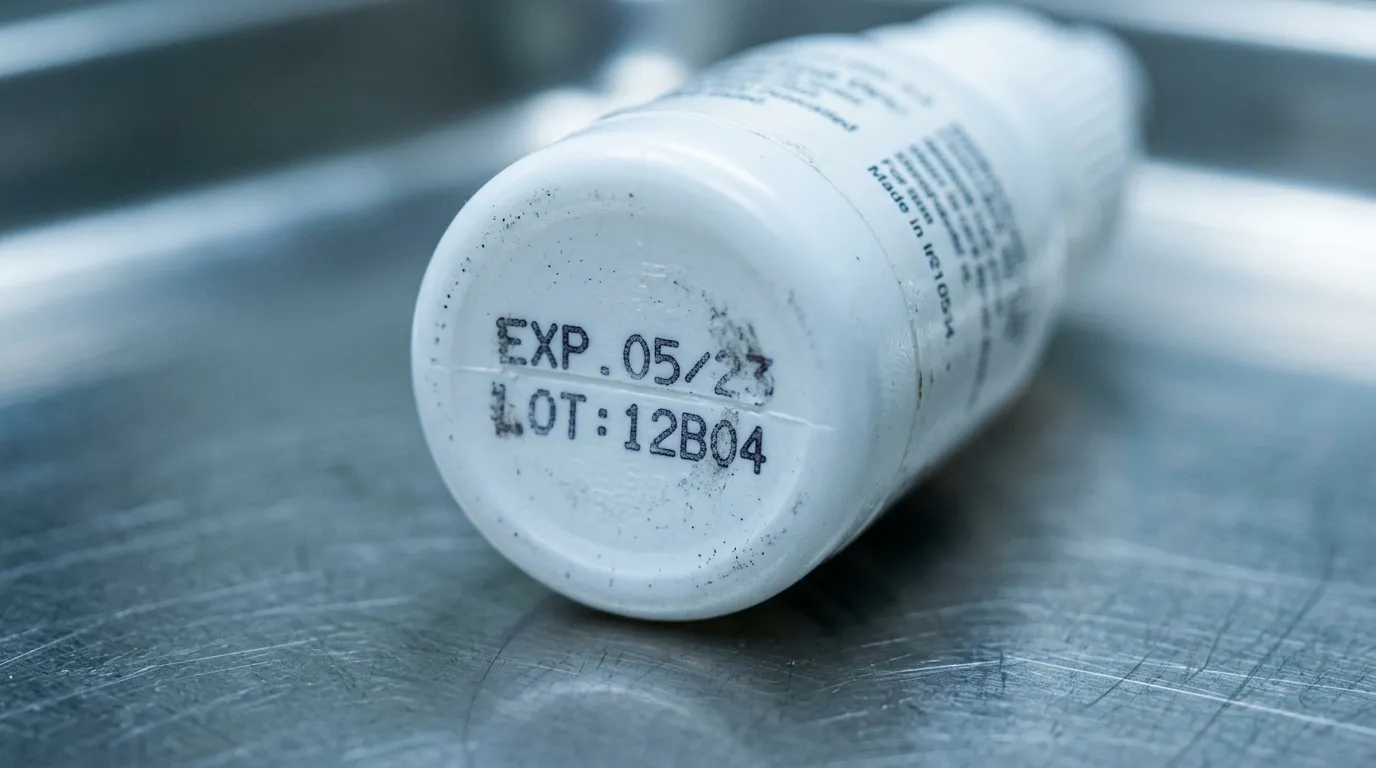
Quick Summary: Using expired eye drops is not recommended. After the expiration date, eye drops can lose effectiveness, break down chemically, and become contaminated with bacteria or fungi. For prescription drops, most should be discarded 14-28 days after opening, regardless of the printed expiration date.
That bottle of eye drops sitting in the medicine cabinet looks fine. The liquid is clear, the bottle feels full, and the expiration date printed on the label hasn’t arrived yet.
So what’s the harm in using it?
Here’s the thing though—expiration dates on eye drops matter more than most people realize. The risks go beyond reduced effectiveness. Contamination, bacterial growth, and chemical breakdown can turn a helpful product into a genuine health hazard.
Why Eye Drops Actually Expire
Eye drops don’t last forever, even when stored properly. The active ingredients degrade over time, preservatives break down, and the sterile environment inside the bottle becomes compromised.
According to FDA guidance on product shelf life, multiple factors affect how long eye drops remain safe and effective. Temperature fluctuations, exposure to light, and the introduction of contaminants during use all accelerate deterioration.
But wait. There’s a difference between the manufacturer’s expiration date and the date a bottle should be discarded after opening.
Recent data from the American Academy of Ophthalmology shows that clinical practices often discard eye drop bottles just 14 or 28 days after opening—creating a mean difference of 16 months between manufacturer and clinic-based expiration dates. On average, nearly 72% of medication remained in discarded bottles, with the mean time between self-imposed use-cessation dates and FDA-regulated expiration dates exceeding 16 months.
That’s significant waste. But the conservative approach exists for good reasons.
Two Critical Dates Every User Should Know
Understanding expiration dates requires knowing that two separate timelines apply to eye drops.
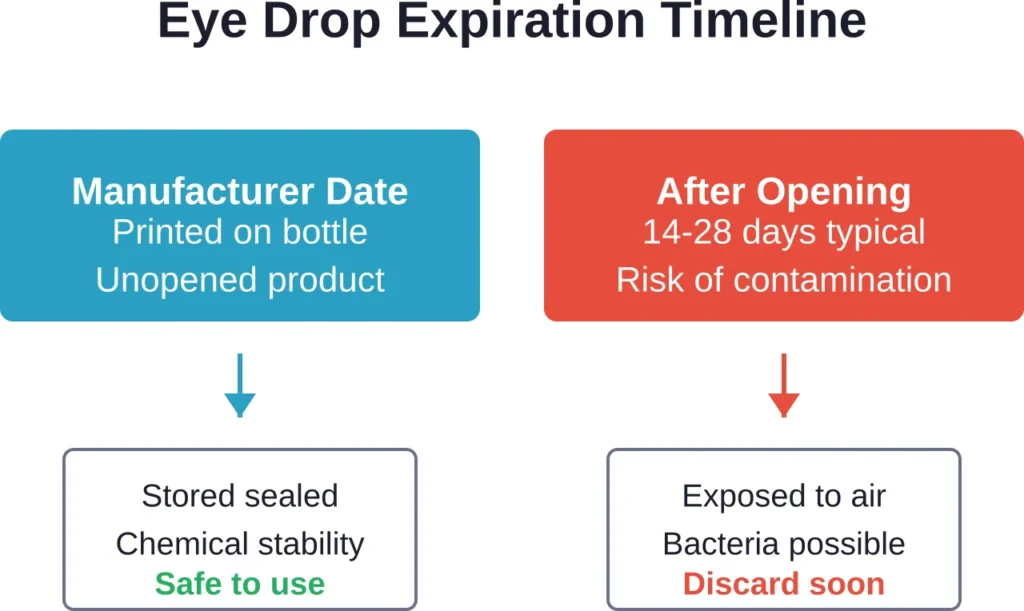
The manufacturer expiration date applies to unopened bottles stored properly. This date reflects how long the active ingredients remain potent and the preservative system stays effective.
The post-opening timeline is different. Once the seal breaks, exposure to air, fingers near the tip, and environmental bacteria create contamination risks that accumulate with each use.
What Actually Happens When Eye Drops Expire
Chemical breakdown occurs first. Active pharmaceutical ingredients lose potency, meaning the drops become less effective at treating the condition they’re designed for.
Preservative degradation follows. Many multi-use eye drop bottles contain preservatives such as benzalkonium chloride (BAK) or polyquaternium-1 to prevent microbial growth. These preservatives break down over time, especially after opening.
Contamination risk increases dramatically. Research on eye drop contamination has been published in medical databases, though contamination risk varies based on storage conditions and handling practices. But home use presents different challenges.
The short answer? Each time someone uses eye drops, the tip can contact eyelashes, skin, or fingers. Bacteria transfer into the bottle. Without functioning preservatives, those microorganisms multiply.
Real Risks of Using Expired Eye Drops
Eye infections from contaminated drops range from mild irritation to serious vision-threatening conditions. Bacterial keratitis, fungal infections, and corneal ulcers can develop when contaminated solution contacts the eye surface.
On December 21, 2024, Alcon Laboratories voluntarily recalled one lot of Systane Lubricant Eye Drops Ultra PF due to fungal contamination—a stark reminder that even sealed products can harbor dangerous microorganisms if manufacturing processes fail.
| Risk Category | Unopened Past Date | Opened Past 28 Days |
|---|---|---|
| Reduced Effectiveness | Moderate | High |
| Bacterial Contamination | Low | High |
| Chemical Breakdown | Moderate | High |
| Eye Irritation | Low to Moderate | Moderate to High |
| Serious Infection | Very Low | Moderate |
Reduced effectiveness might seem like a minor concern, but for prescription drops treating glaucoma or infections, inadequate medication can lead to disease progression and permanent vision loss.
Irritation from degraded ingredients or preservatives causes redness, burning, and discomfort. What starts as minor symptoms can escalate if bacteria from contaminated drops establish an infection.
The 14-28 Day Rule and Why It Exists
Clinical practices and hospitals typically follow strict protocols: discard multi-use eye drop bottles 14 or 28 days after opening, regardless of the manufacturer expiration date.
Research from a health system found that following self-imposed use dates rather than manufacturer expiration dates resulted in unnecessary waste; one study estimated potential annual savings of $80,997 per year at three clinic sites if manufacturer expiration dates were followed.
Real talk: the conservative timeline prioritizes patient safety over cost. Clinical settings serve vulnerable populations, including post-surgical patients and those with compromised immune systems, where infection consequences are severe.
Research examining office-opened drops found low contamination rates even beyond 28 days, but contamination risk isn’t zero. One contaminated bottle in a clinical setting could affect multiple patients.
Preservative-Free Formulations Change Everything
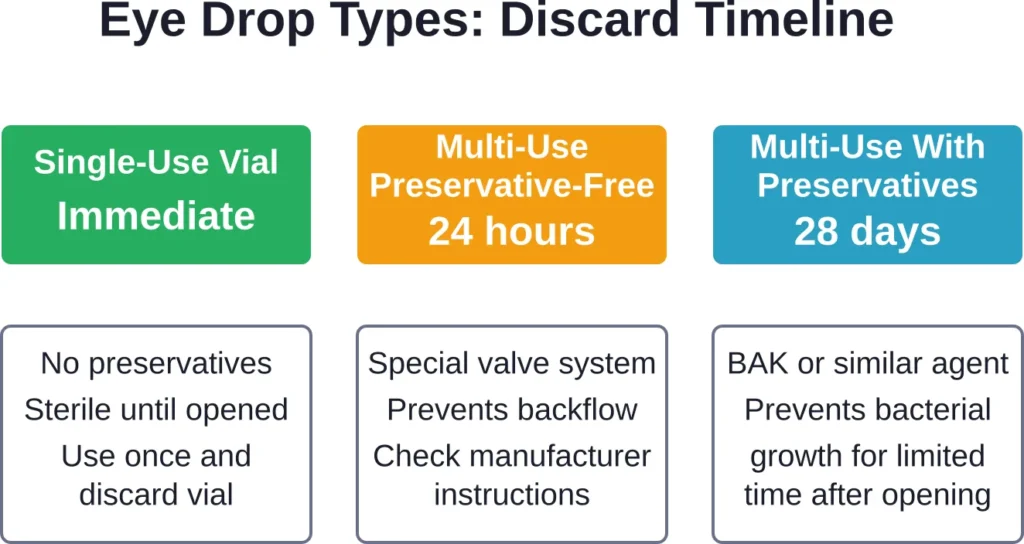
Preservative-free eye drops come in single-use vials. These eliminate preservatives that some patients find irritating, but the trade-off is immediate contamination risk after opening.
Single-use vials should be discarded immediately after one application. No exceptions.
Some multi-dose preservative-free bottles use specialized dispensing systems that prevent backflow contamination. These carry specific manufacturer instructions that differ from traditional bottles.
How to Maximize Eye Drop Safety and Lifespan
Proper storage extends eye drop effectiveness and reduces contamination risk. Store bottles at room temperature unless the label specifies refrigeration. Avoid bathrooms where humidity and temperature fluctuations accelerate degradation.
Keep the cap tightly closed when not in use. Exposure to air oxidizes ingredients and allows moisture to enter.
Never touch the dropper tip to any surface, including the eye, eyelid, or fingers. Even brief contact transfers bacteria into the bottle.
Write the opening date on the bottle with a permanent marker. Memory fails, especially when juggling multiple medications.
Check for visible changes before each use. Discoloration, cloudiness, particles floating in the solution, or changes in consistency signal that the drops should be discarded immediately, even if the expiration date hasn’t arrived.
| Warning Sign | What It Means | Action Required |
|---|---|---|
| Cloudy appearance | Possible bacterial growth or chemical breakdown | Discard immediately |
| Color change | Ingredient degradation or contamination | Discard immediately |
| Visible particles | Contamination or precipitation | Discard immediately |
| Strange odor | Chemical breakdown or bacterial growth | Discard immediately |
| Increased irritation | Preservative breakdown or contamination | Stop use, consult provider |
When Professional Guidance Becomes Essential
Prescription eye drops treating serious conditions require strict adherence to usage and expiration guidelines. Glaucoma medications, antibiotic drops, and anti-inflammatory prescriptions lose effectiveness when expired, potentially allowing disease progression.
If symptoms worsen or new symptoms develop after using eye drops—even within the expiration window—contact an eye care provider immediately. Increased redness, pain, light sensitivity, vision changes, or discharge can indicate infection or adverse reaction.
If prescribed eye drops and eye ointment, patients should instil the eye drops first and wait 5–10 minutes before instilling the eye ointment to ensure proper absorption.
The Bottom Line on Expired Eye Drops
Using expired eye drops carries avoidable risks. Chemical breakdown reduces effectiveness. Preservative failure allows bacterial contamination. The consequences range from treatment failure to serious infection.
Sound familiar? That old bottle in the cabinet suddenly seems less appealing.
The conservative approach—discarding multi-use bottles 28 days after opening and respecting manufacturer expiration dates for unopened products—protects eye health with minimal inconvenience. Research confirms that clinical practices discard medication with an average of 72% remaining, but that waste reflects a calculated decision prioritizing patient safety.
For over-the-counter lubricating drops treating mild dry eyes, the stakes are lower but the principles remain. Contaminated drops can cause problems even when the active ingredients are simply saline or lubricants.
Store properly, mark opening dates, watch for warning signs, and discard expired or questionable bottles. When in doubt, throw it out. Eyes are irreplaceable, but eye drops are not.
Schedule a comprehensive eye examination with a qualified optometrist or ophthalmologist to address ongoing symptoms that require eye drops. Professional diagnosis ensures appropriate treatment and proper medication management.
Frequently Asked Questions
Appearance alone doesn’t confirm safety. Chemical breakdown and preservative failure occur before visible changes appear. Expired drops may look clear but harbor bacteria or lack therapeutic potency. Respect expiration dates even when drops appear unchanged.
Multi-use bottles with preservatives should be discarded 28 days after opening, according to standard clinical guidelines. Some formulations may specify different timelines on the label. Single-use preservative-free vials must be discarded immediately after one application. Always check manufacturer instructions.
Monitor for symptoms including increased redness, pain, discharge, or vision changes over the next 24-48 hours. Most expired drops cause no immediate harm, but contaminated drops can trigger infection. Contact an eye care provider if symptoms develop or worsen.
Preservative-free formulations reduce irritation for sensitive individuals but offer no contamination protection after opening. They’re safer for frequent long-term use when properly handled as single-use vials. Multi-use bottles with preservatives are safer against bacterial contamination during the labeled use period.
Refrigeration doesn’t significantly extend shelf life beyond manufacturer specifications unless the label specifically requires it. Some drops must be refrigerated, while others degrade faster in cold temperatures. Follow storage instructions on the label and respect expiration dates regardless of storage method.
The manufacturer expiration applies to sealed bottles with intact sterile environments. Opening the bottle introduces contamination risk from air, bacteria, and handling. The 28-day timeline reflects how long preservatives effectively prevent bacterial growth under typical use conditions.
According to FDA disposal guidance, most eye drops can be placed in household trash after mixing with undesirable substances like coffee grounds or cat litter in a sealed container. Do not flush eye drops down the toilet unless the label specifically instructs disposal via flushing. Check for community drug take-back programs as the preferred disposal method.