

Quick Summary: Yes, it is possible to be allergic to chicken, though chicken allergies are rare. When someone has a chicken allergy, their immune system mistakenly identifies proteins in chicken meat or feathers as dangerous substances and produces immunoglobulin E (IgE) antibodies to attack them. Symptoms can range from mild reactions like hives and digestive issues to severe anaphylaxis requiring immediate medical attention.
Low-fat, high-protein chicken is a dietary staple for millions of people worldwide. But what happens when this seemingly healthy food triggers an allergic reaction?
While chicken allergies aren’t common, they’re absolutely real. And they can cause symptoms ranging from uncomfortable to life-threatening.
Let’s explore what chicken allergies are, how they develop, and what you need to know if you suspect you might be allergic to poultry.
Understanding Chicken Allergy Basics
Poultry meat allergy is a distinct food allergy where the body triggers an immune reaction after consuming or coming into contact with chicken. The immune system becomes overloaded with immunoglobulin E (IgE) antibodies that target specific proteins found in chicken.
According to medical research, allergy to poultry meat is rare and affects both children and adults. The prevalence of poultry meat allergy is unknown, but researchers believe it’s similar to that of red meat allergy.
Here’s the thing though—chicken allergy is fundamentally different from other meat allergies. There’s no close relationship between allergy to poultry meat and allergy to red meat. These are separate conditions with different allergens.
How Chicken Allergies Develop
When someone has a chicken allergy, their immune system mistakenly identifies chicken proteins as dangerous invaders. The body then creates IgE antibodies to attack these proteins.
The next time the person eats chicken or comes into contact with chicken products, these antibodies recognize the proteins and signal the immune system to release histamine and other chemicals into the bloodstream. This cascade of chemicals causes allergy symptoms.
Interestingly, people can develop chicken allergies at any age. Some individuals eat chicken for years without issue before suddenly developing an allergic reaction.
Common Symptoms of Chicken Allergy
Chicken allergy symptoms can vary widely from person to person. Most people with a chicken allergy experience mild symptoms, though severe reactions are possible.
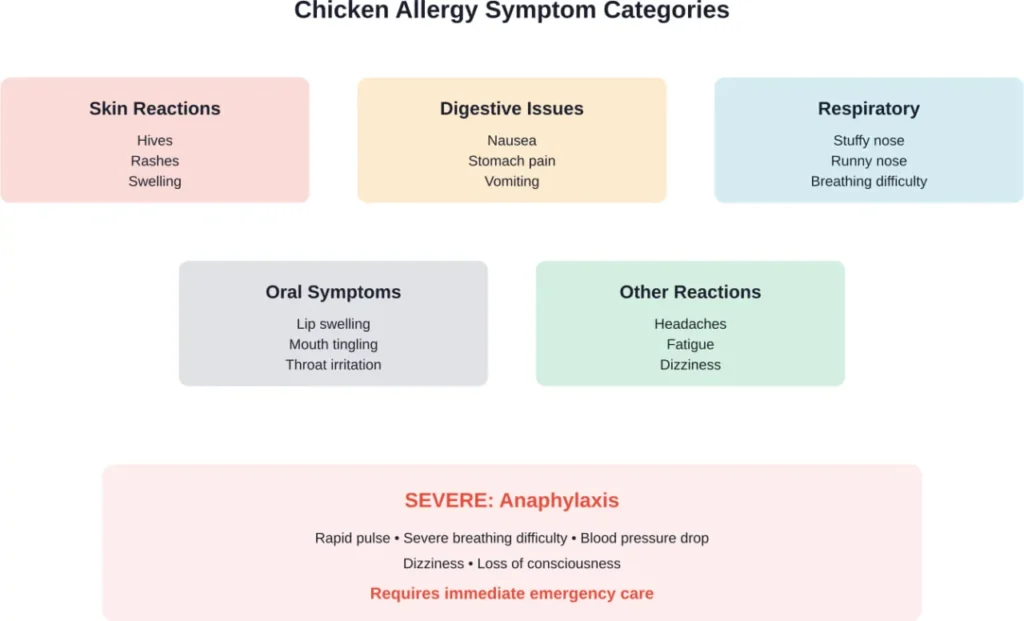
The most common symptoms include:
- Skin reactions like hives, rashes, or eczema
- Digestive problems including nausea, stomach pain, vomiting, or diarrhea
- Respiratory issues such as stuffy or runny nose, sneezing, or difficulty breathing
- Oral allergy symptoms like swelling of the lips, tongue, or throat
- General symptoms such as headaches or fatigue
In rare cases, chicken allergy can trigger anaphylaxis—a severe, potentially life-threatening allergic reaction that requires immediate medical attention. Anaphylaxis symptoms include rapid pulse, severe drop in blood pressure, dizziness, and loss of consciousness.
Chicken Allergy vs. Egg Allergy: What’s the Connection?
Many people assume chicken allergy and egg allergy go hand-in-hand. But here’s what the research shows: there’s no close relationship between the two.
Food allergy research demonstrates that patients with poultry meat allergy are often able to tolerate eggs and egg products without issue. The allergens in chicken meat are different from those in eggs.
That said, some individuals do experience what’s called bird-egg syndrome. This condition involves allergic reactions to both poultry meat and eggs, often linked to exposure to bird feathers or working closely with birds.
According to medical research, patients with poultry meat allergy unexpectedly often show sensitivity to fish and shrimp as well. Studies found that approximately 60% of poultry-allergic patients had serum-specific IgE against fish, and 40% showed reactivity to shrimp, suggesting cross-reactive allergens in these foods.
Risk Factors and Causes
Several factors may increase the likelihood of developing a chicken allergy:
| Risk Factor | Description |
|---|---|
| Family History | Having relatives with food allergies or other allergic conditions increases risk |
| Other Allergies | People with existing food allergies are more likely to develop additional ones |
| Bird Exposure | Regular contact with live birds or bird feathers may sensitize the immune system |
| Age | Can develop at any age, though patterns differ between children and adults |
| Atopic Conditions | Asthma, eczema, or allergic rhinitis may increase susceptibility |
Chicken allergy can occur after eating chicken meat or sometimes from skin contact with chicken feathers. People who keep backyard chickens or work with poultry may develop sensitivities through repeated exposure to bird proteins.
How Chicken Allergy Is Diagnosed
If you suspect a chicken allergy, allergists have specialized testing methods to confirm the diagnosis.
Medical History and Physical Examination
Diagnosis begins with a detailed patient history. Allergists will ask about:
- What foods were consumed and in what quantities
- How long after eating symptoms appeared
- What symptoms occurred and how long they lasted
- Whether reactions happen consistently with chicken
- Other potential allergen exposures
Diagnostic Testing
Skin prick tests are commonly used and provide results within 15-30 minutes. A nurse or allergist administers these tests on the patient’s arm or back by placing small amounts of chicken protein extract on the skin and pricking the surface.
Blood testing looks for immunoglobulin-E antibodies specific to chicken allergens. According to medical research, the main diagnostic approach involves blood tests detecting IgE antibodies.
Immunoblotting can identify the specific allergens responsible for reactions. Research has identified Gal d 7 as a major allergen in chicken meat allergy, and recombinant Gal d 7 can be used for diagnosis of genuine poultry meat sensitization.
In some cases, allergists may recommend an oral food challenge under medical supervision to confirm the diagnosis.
Managing Chicken Allergy
Currently, there’s no cure for chicken allergy. Management focuses on avoiding chicken and being prepared for accidental exposure.
Strict Avoidance
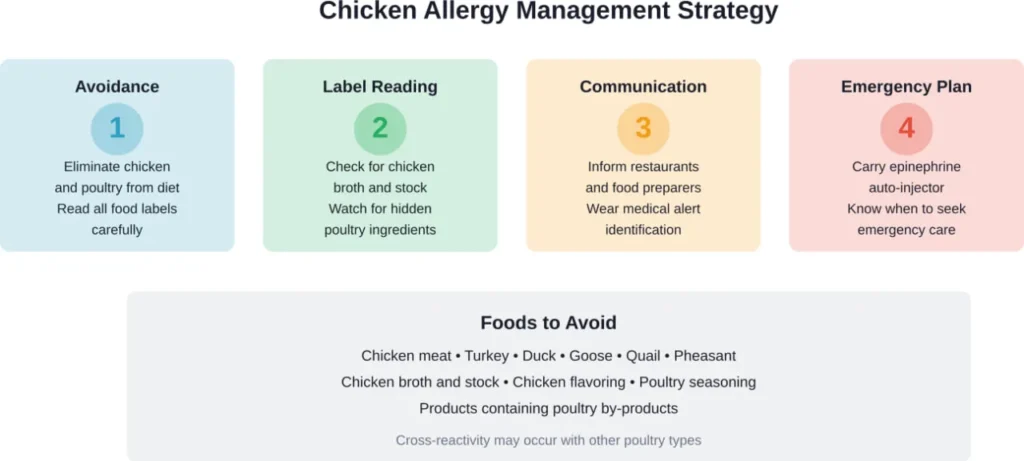
People with chicken allergies need to eliminate all forms of chicken and often other poultry from their diet. This includes:
- Chicken meat in all forms (breast, thigh, wings, ground chicken)
- Turkey, duck, goose, and other poultry (due to potential cross-reactivity)
- Chicken broth, stock, and bouillon
- Foods containing chicken flavoring or chicken fat
- Processed foods with poultry ingredients
Research shows food allergy with monovalent sensitivity to poultry meat is a distinct disorder with cross-reactivity among chicken, turkey, and other poultries.
Emergency Preparedness
For those at risk of severe reactions, carrying an epinephrine auto-injector is essential. This medication can reverse the symptoms of anaphylaxis and save lives during severe allergic reactions.
Wearing medical alert identification helps ensure proper treatment during emergencies when the affected person may not be able to communicate.
Food Substitutes and Alternatives
Fortunately, numerous protein alternatives can replace chicken in the diet:
| Food Category | Safe Alternatives |
|---|---|
| Red Meat | Beef, pork, lamb (if not allergic to red meat) |
| Seafood | Fish varieties, though watch for cross-reactivity |
| Plant Proteins | Beans, lentils, tofu, tempeh, seitan |
| Other Options | Eggs (if tolerated), dairy products, nuts and seeds |
However, be aware that some individuals with chicken allergy also react to fish and shellfish. Always work with an allergist to determine which foods are safe.
When to See a Doctor
Seek medical attention if you experience symptoms after eating chicken or coming into contact with poultry products. An allergist can perform proper diagnostic testing to confirm whether chicken is the culprit.
Seek immediate emergency care if experiencing severe allergic reaction symptoms such as:
- Difficulty breathing or wheezing
- Swelling of the throat or tongue
- Rapid pulse
- Severe drop in blood pressure
- Dizziness or loss of consciousness
These symptoms may indicate anaphylaxis, which requires immediate treatment with epinephrine.
The Connection to Alpha-Gal Syndrome
It’s worth noting that some meat allergies stem from entirely different causes. According to the CDC, alpha-gal syndrome is a serious, potentially life-threatening allergy that can develop after certain tick bites.
Alpha-gal syndrome primarily affects red meat consumption (beef, pork, lamb) rather than poultry. Between 2010 and 2022, there were more than 110,000 suspected cases of alpha-gal syndrome identified, though it is estimated that as many as 450,000 people might have been affected by AGS in the United States.
Unlike chicken allergy, alpha-gal syndrome symptoms usually appear 2-6 hours after exposure to products containing alpha-gal. This delayed reaction pattern differs from typical chicken allergy responses.
Frequently Asked Questions
Yes, absolutely. Food allergies can develop at any age, even after years of eating chicken without problems. Some adults develop chicken allergies after decades of consuming poultry without issue. If you notice new symptoms after eating chicken, consult an allergist for proper testing.
No, chicken allergy and egg allergy are separate conditions. Research shows there’s no close relationship between poultry meat allergy and egg allergy. Many people allergic to chicken can eat eggs without problems, and vice versa. The proteins responsible for each allergy are different.
Cross-reactivity is common among different poultry types. Research indicates that chicken allergy often involves cross-reactivity with turkey, duck, goose, and other poultry. However, each person’s reaction pattern can differ, so work with an allergist to determine which foods are safe.
Diagnosis involves a detailed patient history, physical examination, and specific testing. Allergists typically use skin prick tests that provide results within 15-30 minutes, and blood tests looking for IgE antibodies specific to chicken proteins. In some cases, oral food challenges under medical supervision may be recommended.
Most chicken allergy reactions occur relatively quickly, typically within minutes to a few hours after eating chicken or touching chicken products. This differs from alpha-gal syndrome (a red meat allergy from tick bites) which causes delayed reactions 2-6 hours after eating. If reactions seem inconsistent or delayed, discuss the pattern with an allergist.
Currently, there’s no cure for chicken allergy. Management focuses on strict avoidance of chicken and other potentially cross-reactive poultry. Oral immunotherapy has shown promise for some food allergies, with desensitization rates of approximately 60 to 80% for peanut, egg, and milk allergies, but it’s not a standard treatment for chicken allergy at this time.
While possible, it’s uncommon. The proteins in different poultry types are similar enough that cross-reactivity typically occurs. That said, individual responses vary. Some people may react more strongly to chicken than to other poultry, or vice versa. Proper allergy testing can determine your specific sensitivities.
Conclusion
So, is it possible to be allergic to chicken? Absolutely yes—though it remains a relatively rare food allergy.
Chicken allergy involves a genuine immune system response where the body produces IgE antibodies against chicken proteins. Symptoms range from mild skin reactions and digestive issues to severe, life-threatening anaphylaxis.
The good news? With proper diagnosis, strict avoidance, and emergency preparedness, people with chicken allergies can live healthy, fulfilling lives. Numerous protein alternatives exist, and allergists can provide personalized guidance for managing this condition.
If you suspect you have a chicken allergy, don’t guess—get tested. An allergist can provide accurate diagnosis and create a management plan tailored to your specific situation. Your health and safety are worth the investment in proper medical care.