

Quick Summary: Catching up on sleep is possible to some degree, but weekend recovery sleep can’t fully repay accumulated sleep debt or prevent all the negative health effects of chronic sleep deprivation. According to the CDC and NIH, consistent sleep schedules are far more effective than sporadic catch-up attempts. While extra sleep can temporarily relieve symptoms, research shows it won’t completely reverse metabolic, cardiovascular, and immune system disruptions caused by repeated sleep loss.
We’ve all been there. The alarm screams at 6 AM after another late night, and the only thought keeping you going is: “I’ll catch up on the weekend.”
But does that actually work? Can you really recover those lost hours by sleeping in on Saturday and Sunday?
The answer is more complicated than a simple yes or no. According to the National Heart, Lung, and Blood Institute (NHLBI), sleep debt accumulates when you consistently get less sleep than your body needs. Miss two hours each night for a week, and you’ve racked up a 14-hour deficit.
Here’s the thing though—your body doesn’t operate like a simple bank account where deposits equal withdrawals.
What Is Sleep Debt and How Does It Work?
Sleep debt, also called sleep deficit, represents the cumulative difference between the sleep you need and the sleep you actually get. Most adults require at least seven hours of sleep per night, according to the CDC.
The NHLBI explains that this deficit builds over time. Going to bed 30 or 60 minutes later than usual for several nights creates an accumulating shortfall that affects your body and brain.
Think of it as borrowing against your physical and mental resources. At first, the effects seem manageable—a little extra caffeine here, powering through grogginess there. But the debt keeps compounding.
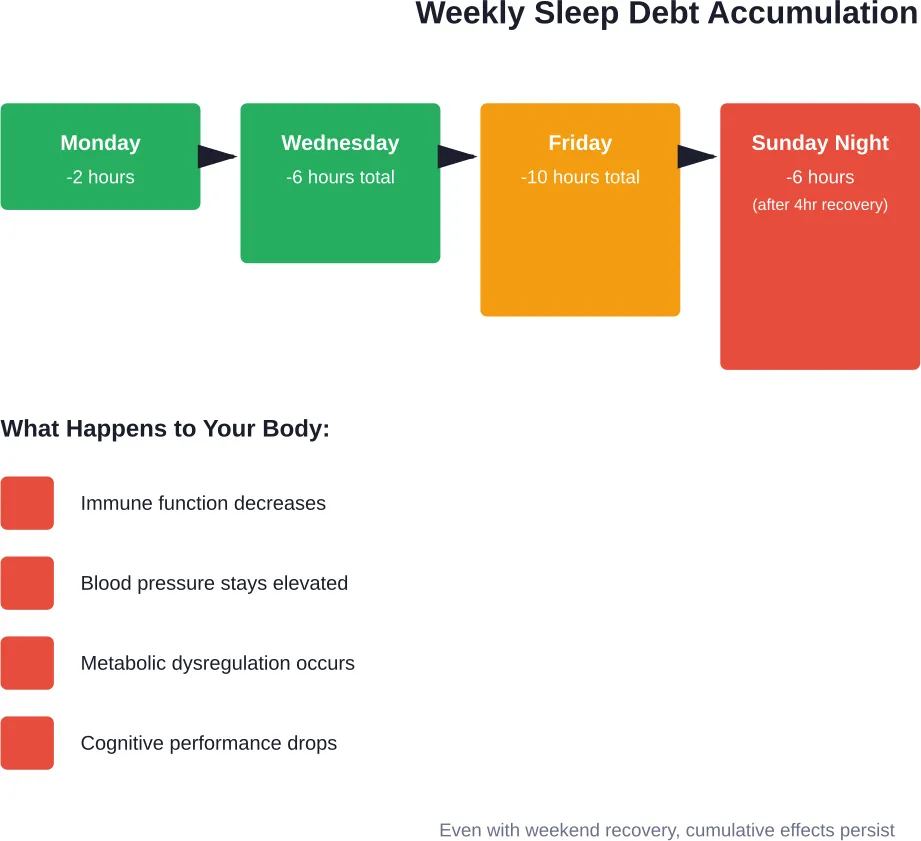
According to CDC research on sleep pressure and homeostatic sleep drive, someone needing eight hours but getting only six accumulates a two-hour debt daily. Over five days, that’s a ten-hour deficit.
The uncomfortable truth? This debt doesn’t just make you tired. Research shows sleep loss affects immune functioning, with studies demonstrating that even modest sleep restriction can reduce natural killer cell activity and alter immune responses.
The Weekend Catch-Up Sleep Myth
So you’ve got a 10-15 hour sleep debt by Friday night. Can’t you just sleep until noon on the weekend and call it even?
Not quite.
Research on PubMed titled ‘Ad libitum Weekend Recovery Sleep Fails to Prevent Metabolic…’ examined whether weekend recovery sleep prevents metabolic dysregulation caused by insufficient sleep during the workweek. The findings weren’t encouraging for weekend warriors.
The study found that ad libitum weekend recovery sleep—meaning sleeping as much as you want—fails to prevent metabolic problems caused by recurrent insufficient sleep. Participants showed persistent issues with weight gain, energy expenditure, and increased evening calorie intake despite sleeping longer on weekends.
Another study on weekend catch-up sleep and short weekday sleep found that while weekend recovery offers transient relief, it shouldn’t be considered a sustainable strategy for sleep debt repayment.
Harvard Health notes that trying to make up for weekday sleep loss by sleeping longer on weekends has been found to have negative effects. The pattern creates a sort of social jet lag, where your body’s internal clock constantly shifts between weekday and weekend schedules.
Why Weekend Recovery Falls Short
The math alone presents a problem. If you accumulate five to 15 hours of debt during the week but only “catch up” on four hours over the weekend, you’re still operating at a significant deficit.
But it’s deeper than simple arithmetic.
Research on repetitive exposure to shortened sleep shows that repeated cycles of sleep deprivation blunt the body’s normal responses, even with intermittent catch-up sleep. Specifically, sleep-associated blood pressure dipping becomes impaired, potentially increasing hypertension risk.
The CDC reports that nearly half of American adults have high blood pressure, and sleep problems contribute by keeping blood pressure elevated for longer periods.
Can You Ever Catch Up on Lost Sleep?
Now for a slightly better news. The answer isn’t a complete “no.”
Research suggests that some recovery is possible, but it requires more than just two mornings of sleeping in.
Short-term sleep debt from one or two nights of poor sleep can be recovered relatively quickly. If you pulled an all-nighter or had a rough night, getting extra sleep over the next few days can help restore functioning.
But chronic, accumulated sleep debt? That’s a different story.
Studies indicate that recovering from substantial sleep debt takes consistent effort over weeks, not days. Research indicates that while people may experience temporary symptom relief from weekend catch-up sleep, this does not fully restore physiological functioning.
What Actually Helps
According to the NHLBI, naps can provide a short-term boost in alertness and performance. Strategic napping of 15-30 minutes during the day may help manage immediate sleepiness without interfering with nighttime sleep.
Going to bed 30 minutes to an hour earlier each night represents a more sustainable approach than dramatic weekend shifts. This gradual method allows the body to adjust without creating the jet-lag effect.
Harvard Health emphasizes keeping bedtime and wake time fairly stable across the weekend. This consistency helps maintain circadian rhythm alignment rather than forcing constant readjustment.
The Real Cost of Sleep Debt
Why does this matter so much? Because the effects extend far beyond feeling tired.
Around 90% of sleep apnea cases remain undiagnosed, according to NHLBI research. When you add related health problems, lost productivity, and accidents from all sleep disorders and deprivation, the costs multiply.
The CDC reports that getting enough good quality sleep is essential for both physical and mental health. Sleep helps the body repair itself and affects virtually every system.
Impact on Physical Health
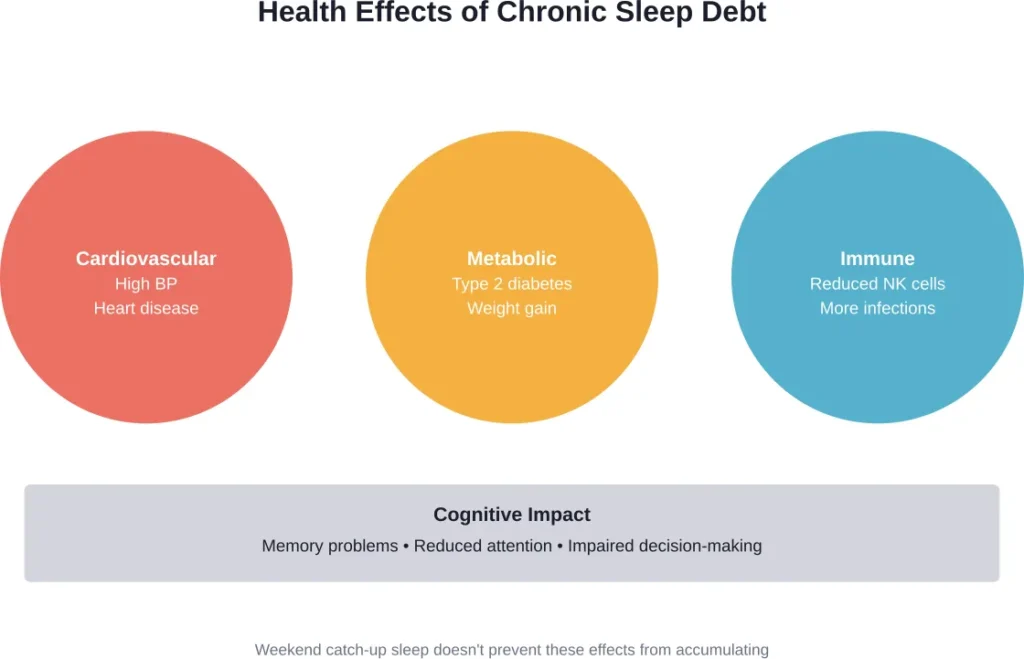
Sleep deprivation links to numerous health problems. The CDC notes that insufficient sleep increases risk for type 2 diabetes, with diabetes causing sugar to build up in the blood instead of entering cells for energy.
Heart health takes a significant hit. Sleep problems mean blood pressure stays elevated longer, and high blood pressure ranks among the leading risks for heart disease and stroke.
The immune system also suffers. CDC research shows that sleep loss affects different parts of immune functioning, potentially leading to various disorders. Even modest sleep restriction—four hours for one night—reduces natural killer cells, the body’s first defense against pathogens.
Weight regulation becomes more difficult. Studies found that insufficient sleep combined with attempted weekend recovery still resulted in weight gain and increased calorie intake, particularly during evening hours.
Cognitive and Mental Effects
Sleep debt doesn’t just affect the body. Cognitive functions take a measurable hit.
Research demonstrates that prolonged sleep deprivation affects memory and cognitive functions. Attention spans shorten, learning becomes more difficult, and decision-making suffers.
Going 24 hours without sleep produces impairment equivalent to a blood-alcohol level of 0.10%.
Mental health and emotional well-being deteriorate with chronic sleep loss. The relationship runs both ways, with sleep problems contributing to mental health issues and mental health conditions disrupting sleep.
Strategies to Actually Recover From Sleep Debt
Okay, so weekend catch-up sleep isn’t the magic bullet. What actually works?
The most effective approach combines immediate relief tactics with long-term habit changes.
Short-Term Recovery Tactics
For acute sleep debt from recent poor nights, these strategies can help:
Strategic napping: The NHLBI confirms that short naps of 15-20 minutes can boost alertness and performance without interfering with nighttime sleep. Keep them brief and schedule them before mid-afternoon.
Gradual sleep extension: Instead of sleeping until noon on Saturday, go to bed 30-60 minutes earlier each night. This gentle approach allows the body to adjust without disrupting circadian rhythms.
Temporary schedule adjustment: If possible, allow for slightly more sleep over several days rather than dramatic single-night catch-ups. Think nine hours for three nights instead of twelve hours one morning.
Long-Term Solutions
Real recovery from chronic sleep debt requires addressing the root causes:
Maintain consistent sleep-wake times: Harvard Health emphasizes stability across all seven days. The CDC recommends keeping bedtime and wake time regular, even on weekends, to maintain proper circadian alignment.
Prioritize sleep duration: Most adults need at least seven hours per night. Calculate backwards from your required wake time to determine an appropriate bedtime.
Optimize sleep environment: The CDC recommends keeping bedrooms quiet, relaxing, and cool. Turn off electronic devices at least 30 minutes before bedtime, and avoid large meals and alcohol before sleep.
Address sleep disorders: According to the NHLBI, around 90% of sleep apnea cases remain undiagnosed. Persistent sleep problems despite adequate time in bed warrant medical evaluation.
| Strategy | Effectiveness | Timeframe | Best For |
|---|---|---|---|
| Weekend sleeping in | Limited | 2 days | Temporary symptom relief only |
| Strategic napping | Moderate | Same day | Acute alertness boost |
| Gradual sleep extension | Good | 1-2 weeks | Recent accumulated debt |
| Consistent schedule | Excellent | Ongoing | Prevention and long-term health |
| Medical intervention | Excellent | Varies | Sleep disorders |
How to Avoid Building Sleep Debt
Prevention beats recovery every time. Here’s how to avoid accumulating sleep debt in the first place.
Set Sleep as a Priority
Sounds obvious, but many people treat sleep as the flexible variable in their schedule. Work runs late? Cut sleep. Social event? Cut sleep. New show dropped? Cut sleep.
The NHLBI emphasizes that sleep needs aren’t negotiable. Bodies require specific amounts to function properly, and those needs don’t disappear because of a busy schedule.
Research suggests that scheduling sleep as a priority, similar to other important commitments, supports healthy sleep habits.
Create a Consistent Routine
The CDC’s sleep recommendations emphasize routine. Going to bed and waking up at the same time daily helps regulate the body’s internal clock.
This includes weekends. Yes, it’s tempting to stay up late Friday and sleep until noon Saturday, but that pattern creates the jet-lag effect that makes Monday mornings even harder.
Track Your Sleep
Research on sleep tracking and wearable devices shows promise for individualized sleep optimization. Keeping a sleep log helps identify patterns and problems.
Record bedtime, wake time, sleep quality, and daytime alertness. This data reveals whether current habits meet actual needs or whether adjustments are necessary.
Address Sleep Stealers
Common culprits that rob sleep include:
- Blue light from screens before bedtime
- Caffeine consumption within six hours of sleep
- Irregular meal timing, especially late heavy meals
- Bedroom temperature too warm
- Stress and anxiety without coping mechanisms
The CDC recommends turning off electronic devices at least 30 minutes before bedtime and keeping bedrooms cool.
Special Considerations for Different Groups
Sleep debt doesn’t affect everyone identically, and recovery strategies may need adjustment for specific populations.
Shift Workers
People working non-traditional hours face unique challenges. The CDC’s training materials for nurses on shift work acknowledge that fighting against natural circadian rhythms makes sleep debt accumulation more likely.
Strategies include creating a dark, quiet sleep environment during daytime hours, maintaining consistency in sleep timing even on off days, and strategic napping before shifts.
Athletes and Active Individuals
Research on youth soccer players examined weekend catch-up sleep in relation to performance. The findings showed that athletes with greater sleep debt attempted more weekend recovery, but this pattern still correlated with impaired performance.
Active individuals need more recovery time, making consistent adequate sleep even more critical. The weekly recovery approach doesn’t align with daily training demands.
Age-Related Differences
The CDC provides age-specific sleep recommendations. Newborns need 14-17 hours, infants need 12-16 hours including naps, and adults need at least seven hours.
Older adults often experience changes in sleep architecture and may need different strategies to maintain quality rest. Sleep debt in elderly populations carries additional risks given existing health vulnerabilities.

Frequently Asked Questions
No, one night of extended sleep cannot eliminate accumulated sleep debt, especially if it’s built up over multiple days or weeks. While a good night’s rest can provide temporary relief from acute sleepiness, research shows that the metabolic, cardiovascular, and immune system effects of chronic sleep deprivation persist even after occasional recovery nights. Consistent adequate sleep over one to three weeks is needed for meaningful recovery.
Maintaining a consistent sleep schedule throughout the week, including weekends, is significantly more effective than sleeping in. According to Harvard Health and the CDC, keeping bedtime and wake time stable prevents the jet-lag effect and maintains proper circadian rhythm alignment. While sleeping in provides temporary symptom relief, it doesn’t prevent the negative health effects of weekday sleep deprivation and can make Monday mornings more difficult.
Recovery time depends on the severity and duration of sleep debt. Short-term debt from a few nights of poor sleep can be resolved in several days with proper rest. Chronic sleep debt accumulated over weeks or months requires consistent adequate sleep for approximately two to three weeks to achieve meaningful recovery. However, some research suggests certain metabolic and immune system disruptions may take even longer to fully normalize.
Short naps of 15-20 minutes can provide temporary relief by boosting alertness and performance, according to the NHLBI. However, naps don’t truly repay sleep debt—they offer a short-term cognitive boost rather than addressing the underlying deficit. Strategic napping works best as a supplement to adequate nighttime sleep, not as a replacement for it. Naps longer than 30 minutes or taken late in the day can interfere with nighttime sleep.
Yes, sleep debt significantly impacts metabolism and weight regulation. Research shows that insufficient sleep combined with weekend recovery attempts still resulted in weight gain, reduced energy expenditure, and increased calorie intake particularly during evening hours. The CDC notes that sleep deprivation increases the risk for type 2 diabetes and metabolic dysregulation. These effects persist even when people attempt weekend catch-up sleep.
While acute sleep deprivation alone is rarely directly fatal, chronic sleep debt significantly increases risk for life-threatening conditions. The CDC and NHLBI report that persistent sleep deficiency raises risks for heart disease, stroke, high blood pressure, diabetes, and impaired immune function. Sleep deprivation also increases accident risk—going 24 hours without sleep impairs functioning equivalent to a 0.10 blood-alcohol level. The cumulative health impacts of chronic sleep debt can ultimately contribute to premature mortality.
Common signs include needing an alarm clock to wake up, hitting snooze repeatedly, feeling groggy in the morning, experiencing afternoon energy crashes, relying heavily on caffeine, falling asleep quickly (under five minutes), sleeping significantly longer on weekends, having difficulty concentrating, and experiencing mood changes. If you consistently feel unrefreshed despite spending adequate time in bed, consult a healthcare provider as this may indicate a sleep disorder rather than simple sleep debt.
The Bottom Line on Catching Up on Sleep
So, can you catch up on sleep? Sort of, but not really in the way most people hope.
Weekend recovery sleep provides temporary symptom relief—you’ll feel somewhat better after sleeping in Saturday morning. But research from the NHLBI, CDC, and multiple studies confirms it doesn’t prevent the metabolic, cardiovascular, cognitive, and immune system consequences of chronic sleep deprivation.
The uncomfortable truth is that sleep debt operates differently than financial debt. The body doesn’t simply accept payment whenever convenient and restore all functions to normal. Persistent insufficient sleep creates physiological changes that weekend catch-up can’t fully reverse.
What actually works? Consistency beats catch-up every time.
Maintaining regular sleep-wake times across all seven days, prioritizing the seven to nine hours most adults need, optimizing the sleep environment, and addressing underlying sleep disorders represents the evidence-based approach.
Think of sleep as non-negotiable maintenance for your body and brain rather than a flexible commodity to borrow against. The interest rate on sleep debt is steep, paid in decreased performance, increased health risks, and reduced quality of life.
If you’re currently operating with significant sleep debt, implement gradual changes. Go to bed 15-30 minutes earlier starting tonight. Maintain consistent timing through the weekend. Give your body the two to three weeks of adequate sleep it needs to recover.
The goal isn’t perfection—occasional late nights happen. But shifting from a pattern of chronic deprivation with weekend recovery attempts to a consistent adequate sleep schedule will yield dramatically better results for health, performance, and well-being.
Ready to take control of your sleep health? Start by calculating your personal sleep needs, establishing a consistent schedule, and tracking your progress. Your body will thank you with improved energy, sharper thinking, and better long-term health outcomes.