
Quick Summary: While eye color can naturally change during infancy and due to certain medical conditions, cosmetic procedures to permanently alter eye color exist but carry significant risks. The American Academy of Ophthalmology warns against surgeries like iris implants and laser procedures, as well as unregulated eye drops claiming to change color, due to serious complications including vision loss and blindness.
The question of whether it’s possible to change eye color has fascinated people for generations. With social media showcasing dramatic before-and-after transformations, interest in cosmetic eye color changes has surged.
But here’s the thing—separating fact from fiction matters. A lot.
Some eye color changes happen naturally throughout life. Others require medical interventions that carry serious risks. Understanding the difference could literally save your vision.
What Determines Your Eye Color
Eye color depends primarily on melanin concentration in the iris. More melanin produces brown eyes, while less melanin results in blue, green, or hazel variations.
Genetics play the dominant role. The amount and distribution of melanin pigment in your iris is determined by multiple genes inherited from both parents.
The iris itself contains two layers that affect color perception. The stromal layer and the pigmented epithelial layer work together to create the eye colors we see. Light scattering through these layers contributes to the appearance of blue and green eyes.
Natural Eye Color Changes That Actually Happen
Real talk: eyes can change color naturally without any intervention.
Infancy and Early Childhood
Babies are often born with blue or gray eyes that darken over time. This happens because melanin production in the iris increases during the first year or two of life. Many children who appear to have blue eyes at birth develop brown or hazel eyes by age three.
Lighting and Environmental Factors
Eye color can appear to shift based on lighting conditions, clothing colors, and makeup. These are optical illusions rather than actual pigment changes. The iris hasn’t changed—but reflected light and surrounding colors affect how your eyes look to others.
Medical Conditions
Certain health conditions can cause genuine changes in eye color. Injury to the eye can damage the iris and alter its pigmentation. Some medications used to treat glaucoma can gradually darken eye color over months or years of use.
Conditions like Horner’s syndrome can cause one eye to appear lighter than the other. Inflammation inside the eye from conditions like iritis or uveitis may also change iris color.
Any sudden or unexplained change in eye color warrants an immediate visit to an ophthalmologist. It could signal a serious underlying condition requiring treatment.
Cosmetic Eye Color Change Procedures
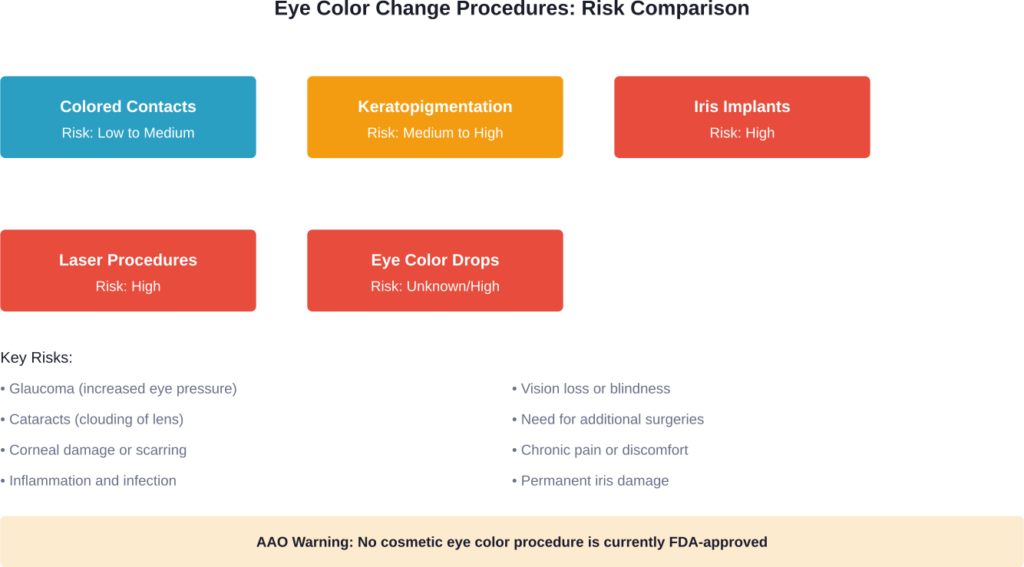
Several cosmetic procedures claim to permanently alter eye color. None are without significant risks.
Keratopigmentation
Keratopigmentation involves injecting pigment into the cornea to change its apparent color. The procedure places colored pigment in a corneal tunnel created by laser.
Some clinics market this as a safer alternative to other methods. However, the long-term safety data remains limited. Potential complications include infection, corneal scarring, and vision impairment.
Iris Implant Surgery
Iris implant surgery places a silicone-based artificial iris over the natural iris. Originally designed to treat medical conditions like aniridia or heterochromia resulting from injury, some surgeons began offering it cosmetically.
The American Academy of Ophthalmology has issued strong warnings against cosmetic iris implants. According to their 2024 statements, these implants can cause serious complications including glaucoma, cataracts, corneal damage, and inflammation that may lead to blindness.
The procedure isn’t approved by the FDA for cosmetic purposes. Multiple patients have required implant removal and additional surgeries to address complications.
Laser Depigmentation
Laser procedures claim to remove melanin from brown eyes to reveal blue eyes underneath. The concept involves using laser energy to break down pigment in the iris stromal layer.
Sound too good to be true? It probably is.
The American Academy of Ophthalmology has warned that these laser procedures lack adequate safety testing. The released pigment could clog drainage channels in the eye, potentially causing glaucoma and vision loss.
Long-term effects remain unknown because the technology hasn’t undergone rigorous clinical trials for safety.
The Danger of Eye Color-Changing Drops
Over-the-counter eye drops marketed as color-changing solutions have flooded social media. These products claim to lighten eye color gradually through regular application.
The American Academy of Ophthalmology issued warnings in 2024 about these drops. They’re not FDA-approved for changing eye color. The ingredients and their effects on eye health remain largely unstudied.
What’s actually in these drops? Often the formulations aren’t clearly disclosed. Some may contain prostaglandin analogs similar to glaucoma medications—but without proper medical supervision, dosing, or quality control.
Using unregulated products on your eyes carries enormous risk. Potential complications include allergic reactions, inflammation, infection, and unpredictable chemical damage to delicate eye structures.
Colored Contact Lenses: The Safer Temporary Option
For those wanting to experiment with different eye colors without permanent changes, colored contact lenses offer a reversible solution.
But even contacts require caution.
The American Academy of Ophthalmology emphasizes that all contact lenses, including colored ones, are medical devices requiring a proper prescription. Non-prescription colored contacts sold at costume shops, online retailers, or beauty stores pose serious risks.
According to the American Academy of Ophthalmology, improperly fitted colored contacts can cause corneal scratches, infections, and vision loss. The AAO has documented cases of patients experiencing permanent eye damage requiring surgery after wearing non-prescription lenses.
Safe use of colored contacts requires an eye exam, proper fitting by an eye care professional, and following hygiene guidelines for lens wear and care.
| Method | Permanence | FDA Status | Safety Profile |
|---|---|---|---|
| Prescription Colored Contacts | Temporary/Reversible | Approved as medical device | Safe when properly fitted and used |
| Non-Prescription Contacts | Temporary | Illegal without prescription | High risk of infection and injury |
| Keratopigmentation | Permanent | Not approved for cosmetic use | Limited long-term safety data |
| Iris Implant Surgery | Permanent | Not approved for cosmetic use | High complication rate |
| Laser Depigmentation | Permanent | Not approved | Untested for long-term safety |
| Eye Color Drops | Claims to be permanent | Not approved | Unknown risks, no regulation |
Real Medical Reasons for Eye Color Change Procedures
Not all eye color procedures are purely cosmetic. Some were originally developed for legitimate medical purposes.
Iris implants were initially created to treat aniridia—a condition where people are born without an iris. They also help patients who’ve suffered iris damage from injury or surgery.
In these medical contexts, the risk-benefit calculation differs significantly. Patients with severely damaged or absent irises may benefit from implants to reduce light sensitivity and improve vision quality.
The key difference? Medical necessity changes the equation. When a procedure addresses a genuine health problem, the risks may be justified. For purely cosmetic purposes, those same risks become much harder to justify.
When Should You See an Ophthalmologist
Certain eye color changes signal potential medical emergencies.
Seek immediate evaluation if you notice sudden eye color changes, particularly if accompanied by pain, vision changes, or light sensitivity. Gradual darkening or lightening of one eye compared to the other also warrants examination.
New spots or areas of color appearing on the iris should be evaluated. These could indicate conditions ranging from benign nevi to more serious concerns requiring treatment.
After any eye injury, changes in color or appearance of the affected eye need prompt assessment. Trauma can cause bleeding, inflammation, or structural damage that alters iris appearance.
Frequently Asked Questions
Minor variations in eye color appearance can occur due to lighting, clothing, and pupil size changes. However, significant natural color changes in healthy adults are rare. Any noticeable change should be evaluated by an ophthalmologist to rule out medical conditions.
Prescription colored contacts fitted properly by an eye care professional are generally safe when used according to care instructions. Non-prescription colored contacts pose serious risks including corneal scratches, infections, and vision loss. The American Academy of Ophthalmology reports cases of teenagers and young adults suffering permanent eye damage from non-prescription costume lenses.
Keratopigmentation carries risks including infection, corneal scarring, vision impairment, and potential need for corrective surgery. Long-term safety data remains limited. The procedure isn’t FDA-approved for cosmetic eye color change. Anyone considering it should understand these risks and seek evaluation from multiple ophthalmologists.
Cosmetic iris implants aren’t FDA-approved because they pose significant risks without medical benefit. Documented complications include glaucoma, cataracts, corneal damage, inflammation, and vision loss. Many patients have required implant removal and additional surgeries. The American Academy of Ophthalmology strongly advises against cosmetic iris implant surgery.
Eye drops marketed for color change aren’t FDA-approved and lack safety testing. The American Academy of Ophthalmology issued warnings about these products in 2024, noting unknown risks and potential for serious eye damage. No over-the-counter drops should be used to attempt eye color change.
Cosmetic eye color procedures are not covered by insurance. Specific pricing should be verified with providers, as costs vary significantly by procedure type and location.
Currently, no cosmetic eye color change procedure is both FDA-approved and proven safe for long-term use. All permanent methods carry significant risks of complications including vision loss. Prescription colored contact lenses remain the safest option for those wanting to change their eye color temporarily.
Making an Informed Decision
The desire to change eye color is understandable. Social media showcases dramatic transformations that can seem appealing.
But your vision is irreplaceable.
Every permanent cosmetic eye procedure carries risks that ophthalmology experts consider too significant for purely aesthetic purposes. The American Academy of Ophthalmology’s repeated warnings reflect genuine concern from medical professionals who’ve treated complications.
Before considering any eye color change procedure, consult with multiple board-certified ophthalmologists. Ask specifically about complication rates, long-term outcomes, and what happens if problems develop. Research the surgeon’s qualifications and whether they’re performing FDA-approved procedures.
Consider whether the potential results justify risking your vision. Complications from cosmetic eye procedures have left patients with permanent vision impairment, chronic pain, and the need for multiple corrective surgeries.
For those who want to experiment with different eye colors, prescription colored contacts fitted by an eye care professional offer a much safer alternative. They’re temporary, reversible, and when used properly, carry significantly lower risk than surgical interventions.
Conclusion
Eye color can change naturally due to age, lighting, and certain medical conditions. But cosmetic procedures marketed to permanently alter eye color carry serious risks that medical experts consistently warn against.
The American Academy of Ophthalmology has issued multiple warnings about iris implant surgery, laser procedures, and unregulated eye drops—all trending on social media despite lacking FDA approval and proven safety.
Vision is precious. No cosmetic change is worth risking it.
If your eye color concerns you or you’ve noticed changes, schedule an examination with a board-certified ophthalmologist. They can assess your eye health, explain safe options, and help you understand the real risks of cosmetic procedures. Protect your vision by making informed decisions based on medical evidence rather than social media trends.