

Quick Summary: Most healthy people can safely consume high amounts of protein without serious health issues, though the average American already consumes 49-52% more than the recommended dietary allowance. While excessive protein intake can potentially strain kidneys in those with existing kidney disease, cause digestive discomfort, crowd out other essential nutrients, and increase kidney stone risk, these effects are generally manageable for people without pre-existing conditions when protein comes from varied sources.
Walk into any grocery store and the message is clear: protein sells. From protein-packed yogurt to enhanced cereals, from gym-goers chugging shakes to social media influencers tracking their macros, protein has become the star nutrient of modern diets.
But here’s the thing—Americans are already consuming way more protein than their bodies actually need. According to research from The Food Surveys Research Group covering 2017 to March 2022, average protein consumption in America exceeds recommended values by a significant margin. Men consume dietary proteins at approximately twice the recommended dietary allowance (RDA).
So what happens when that extra scoop of powder or third chicken breast pushes intake even higher? Can the body handle unlimited protein, or are there real consequences to overdoing it?
What Does Science Say About Protein Limits?
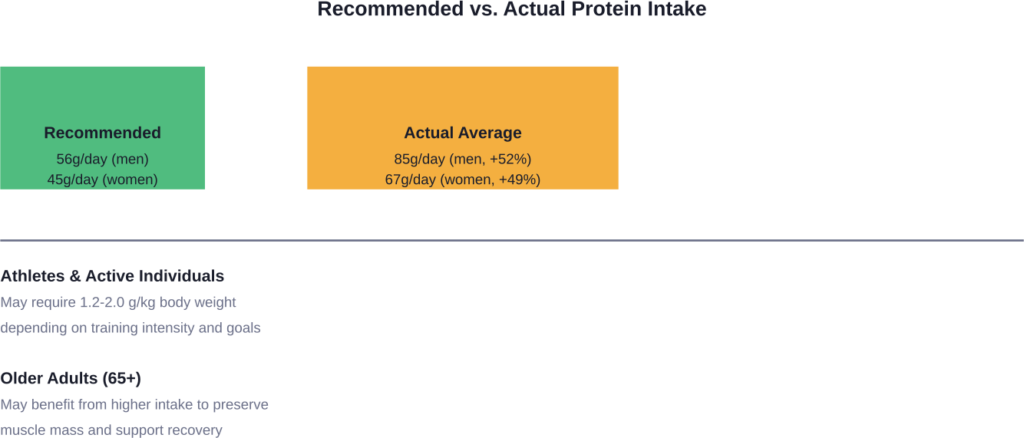
The recommended dietary allowance for protein sits at roughly 0.8 grams per kilogram of body weight. That works out to about 56 grams daily for a 75-kilogram man and 45 grams for a 60-kilogram woman—roughly two palm-sized portions of meat, fish, tofu, nuts, or pulses per day.
Real-world intake tells a different story. Data shows that average intake in some populations reaches 85 grams per day for men (approximately 52% above recommended levels) and 67 grams per day for women (about 49% above recommended levels). American consumption patterns follow similar trends.
Does this mean everyone’s walking around with protein poisoning? Not exactly.
For healthy individuals without kidney disease or metabolic conditions, the body can typically handle higher protein loads without major issues. The kidneys filter excess nitrogen from protein metabolism, and what the body can’t use gets converted or excreted.
That said, “safe” doesn’t automatically mean “optimal” or “without consequences.”
The Real Risks of Excessive Protein Intake
When protein consumption climbs significantly above needs—especially from predominantly animal sources—several potential issues emerge. Not all of them are deal-breakers, but they’re worth understanding.
1. Kidney Strain (Particularly for Those With Existing Issues)
The kidneys handle the byproducts of protein metabolism, filtering out nitrogen waste products like urea. For people with healthy kidneys, this process works smoothly even with higher protein loads.
But for individuals with chronic kidney disease or reduced kidney function, excess protein can accelerate decline. The kidneys have to work harder to process and eliminate waste, which can worsen existing damage.
Here’s what matters: if kidneys are already compromised, high-protein diets can exacerbate the problem. For healthy kidneys, current evidence doesn’t show that high protein intake causes kidney disease in the first place.
2. Digestive Discomfort and Constipation
High-protein diets—particularly those heavy in meat—often crowd out fiber-rich foods like fruits, vegetables, and whole grains. The result? Digestive issues ranging from constipation to general gastrointestinal discomfort.
Protein itself doesn’t cause constipation, but the dietary pattern that comes with excessive protein intake often does. When meals consist primarily of chicken, steak, and protein shakes with minimal plant foods, the gut doesn’t get the fiber it needs to function properly.
3. Nutrient Displacement
Every meal has finite space. When protein dominates the plate, other essential nutrients get pushed out.
Carbohydrates provide energy for intense physical activity and fuel brain function. Healthy fats support hormone production, vitamin absorption, and cellular health. Micronutrients from fruits and vegetables protect against chronic disease.
A diet fixated on maximizing protein can become nutritionally lopsided, even if total calories are adequate. Balance matters.
4. Increased Kidney Stone Risk
Research links high meat consumption to elevated kidney stone risk. According to research from kidney dietitian Melanie Betz, meat-heavy diets can lower urine pH, reduce citrate levels, and increase urine calcium—all factors that raise the likelihood of stone formation.
A meta-analysis found that people who ate the most meat had about a 20% higher risk of kidney stones compared to those with lower meat intake.
Animal protein produces more acid during metabolism than plant protein, which changes urine chemistry in ways that favor stone development.
5. Cardiovascular Concerns With Certain Protein Sources
Not all protein sources affect heart health equally. Diets high in red and processed meats have been associated with increased cardiovascular disease risk, largely due to saturated fat content and other compounds formed during cooking and processing.
Plant-based proteins and lean animal proteins like fish and poultry generally show neutral or beneficial effects on heart health markers.
The issue isn’t protein itself—it’s what comes packaged with it.
6. The Protein Supplement Trap
Protein bars and powders seem like convenient solutions, but they can backfire. Many contain added sugars, artificial ingredients, and calories that add up quickly without providing the satiety of whole food protein sources.
Whole foods deliver protein alongside vitamins, minerals, and other beneficial compounds. A chicken breast provides protein plus B vitamins, selenium, and phosphorus. Lentils offer protein with fiber, iron, and folate. A protein shake? Mostly just protein and whatever’s been added for flavor.
Supplements have their place, but they shouldn’t replace actual food as the primary protein source.

Who Should Be More Careful With Protein Intake?
Not everyone processes protein the same way. Certain groups need to pay closer attention to their intake:
| Population Group | Recommended Approach | Key Considerations |
|---|---|---|
| People with chronic kidney disease | Moderate protein intake under medical supervision | Excess protein accelerates kidney function decline; individualized limits needed |
| Individuals prone to kidney stones | Balance protein sources, prioritize plant proteins | High animal protein increases stone risk by ~20%; adequate hydration essential |
| Those with liver disease | Monitor protein quality and quantity | Impaired ability to process protein byproducts; medical guidance required |
| Pregnant women | Increase protein moderately | Need rises to support fetal development, but extreme amounts unnecessary |
| Older adults | Consider higher protein needs | Protein helps preserve muscle mass; 1.0-1.2 g/kg may be beneficial |
The Plant vs. Animal Protein Debate
Source matters as much as quantity. Animal and plant proteins affect the body differently beyond just their amino acid profiles.
Animal proteins are complete proteins containing all essential amino acids in optimal ratios. They’re also highly bioavailable, meaning the body absorbs and uses them efficiently. But they often come packaged with saturated fat and cholesterol, particularly in red and processed meats.
Plant proteins typically require combining different sources to get all essential amino acids, though this happens naturally over the course of a day with varied eating. They bring fiber, antioxidants, and phytonutrients that animal proteins lack.
Research increasingly shows that replacing some animal protein with plant protein improves several health markers, including cholesterol levels and inflammatory markers.
The sweet spot? A mix of both. Lean animal proteins like fish and poultry alongside beans, lentils, nuts, and whole grains provide protein diversity without the drawbacks of excessive meat consumption.
Debunking Common Protein Myths
The fitness world has spread several protein myths that deserve correction:
Myth: You need 1 gram of protein per pound of body weight to build muscle. This has become gospel in gym culture, but research doesn’t support it. Studies show that muscle protein synthesis maxes out at much lower intakes—typically 0.7-1.0 grams per pound is more than sufficient for even serious athletes. For a 180-pound person, that’s 126-180 grams, not 180 grams as the minimum.
Myth: Your body can only absorb 30 grams of protein per meal. This oversimplification misunderstands protein metabolism. The body can digest and absorb much more than 30 grams at once. What changes is the rate of muscle protein synthesis, which plateaus after a certain amount of protein in a single meal. But that protein still gets used for other bodily functions.
Myth: More protein always means more muscle. Muscle growth requires adequate protein, yes, but it also requires progressive resistance training, sufficient calories, proper recovery, and time. Doubling protein intake won’t double muscle gains if training and other factors aren’t optimized.
Myth: Plant proteins are inferior. While plant proteins were once considered “incomplete,” eating a variety of plant proteins throughout the day easily provides all essential amino acids. Athletes have successfully built impressive physiques on plant-based diets.
How Much Is Actually Safe?
For healthy individuals without kidney disease or metabolic conditions, protein intakes up to 2.0 grams per kilogram of body weight appear safe according to available research. Some studies have examined intakes as high as 3.0 g/kg in athletes without identifying serious adverse effects in the short term.
That doesn’t mean everyone should eat that much. Needs vary based on activity level, age, body composition goals, and overall health status.
A practical framework:
- Sedentary adults: 0.8-1.0 g/kg body weight
- Recreationally active individuals: 1.0-1.4 g/kg body weight
- Athletes and serious gym-goers: 1.4-2.0 g/kg body weight
- Older adults preserving muscle mass: 1.0-1.2 g/kg body weight
For a 70-kilogram (154-pound) person, this translates to roughly 56-140 grams per day depending on activity level and goals.

Practical Tips for Balanced Protein Intake
Getting enough protein without overdoing it comes down to practical habits:
Prioritize whole food sources. Build meals around chicken, fish, eggs, Greek yogurt, beans, lentils, and tofu rather than relying heavily on powders and bars.
Distribute protein throughout the day. Aim for 20-40 grams per meal rather than loading up at dinner. This optimizes muscle protein synthesis and improves satiety.
Don’t neglect other macronutrients. Make sure plates include vegetables, fruits, whole grains, and healthy fats alongside protein.
Vary your protein sources. Rotate between animal and plant proteins to get different amino acid profiles and nutrient packages.
Match intake to activity. Rest days don’t require the same protein as heavy training days. Adjust accordingly.
Stay hydrated. Higher protein intake increases fluid needs as kidneys process nitrogen waste. Drink water consistently throughout the day.
Listen to your body. Digestive discomfort, persistent constipation, or unusual fatigue might signal imbalanced macronutrient intake.
Special Considerations for Aging
Protein needs actually increase with age, not decrease. Research shows that 30% of men and 50% of women over age 71 consume inadequate dietary protein, contributing to muscle loss, frailty, and impaired recovery from illness.
Older adults face a phenomenon called “anabolic resistance”—their muscles become less responsive to protein, requiring higher amounts to stimulate the same muscle protein synthesis as younger people.
Current evidence suggests older adults benefit from protein intakes of 1.0-1.2 grams per kilogram body weight, distributed across meals. This helps preserve muscle mass, maintain bone density, support immune function, and improve wound healing.
The caveat? Older adults are also more likely to have reduced kidney function. Anyone over 65 should discuss optimal protein intake with their healthcare provider, especially if kidney disease or other conditions are present.
What About Athletic Performance?
Athletes do need more protein than sedentary individuals, but the amounts often cited in fitness culture exceed what research supports.
Studies on strength athletes consistently show that protein intakes above 1.6-1.7 grams per kilogram body weight don’t provide additional muscle-building benefits. Endurance athletes need somewhat less, typically 1.2-1.4 g/kg.
The timing window immediately post-workout is less critical than once believed. Total daily protein intake matters more than precise timing, though distributing protein across meals helps optimize muscle protein synthesis throughout the day.
For athletes, getting adequate calories overall is often more important than obsessing over protein. Undereating while maintaining high protein creates its own set of problems.
Frequently Asked Questions
Current research doesn’t show that high protein intake causes kidney disease in people with healthy kidneys. The kidneys of healthy individuals can handle higher protein loads without damage. However, people with existing kidney disease should limit protein intake under medical supervision, as excess protein can accelerate kidney function decline in those with compromised kidneys.
For healthy individuals, protein intakes up to 2.0 grams per kilogram of body weight appear safe based on available research. For a 70-kilogram person, that’s roughly 140 grams daily. Some studies have examined higher intakes in athletes without identifying serious short-term adverse effects. Most people don’t approach these levels—the average person consumes 50-85 grams daily, which is already above minimum requirements but typically safe.
An all-protein diet would cause serious health problems. The body needs carbohydrates for energy and brain function, plus fats for hormone production, vitamin absorption, and cellular health. Extreme protein-only eating can lead to “rabbit starvation” or protein poisoning, where excess protein metabolism overwhelms the liver’s ability to convert nitrogen to urea, potentially causing nausea, diarrhea, and metabolic issues. Balanced macronutrient intake is essential.
No. Protein powder is a convenient supplement, but it’s not necessary for muscle building. Whole food protein sources like chicken, fish, eggs, dairy, beans, and lentils provide everything needed for muscle growth along with additional nutrients that powders lack. Supplements can help people who struggle to meet protein needs through food alone, but they shouldn’t replace whole foods as the primary protein source.
Plant proteins can absolutely support muscle building when consumed in adequate amounts with variety. While individual plant proteins may lack certain essential amino acids, eating diverse plant protein sources throughout the day provides all necessary amino acids. Some plant proteins like soy are complete proteins on their own. Athletes have successfully built muscle on plant-based diets, though they may need slightly higher total protein intake to account for differences in digestibility.
Yes, if excess protein pushes total calorie intake above what the body burns. Protein contains 4 calories per gram, and any surplus calories—whether from protein, carbs, or fat—will be stored. Protein is the most satiating macronutrient and has the highest thermic effect (the body burns more calories digesting it), which can help with weight management. But eating huge amounts of protein while already consuming adequate calories will lead to weight gain.
Yes, older adults generally benefit from higher protein intake than younger adults. Research suggests 1.0-1.2 grams per kilogram body weight helps preserve muscle mass, support bone health, and improve recovery from illness. This is higher than the 0.8 g/kg recommended for younger sedentary adults. However, older adults should consult healthcare providers about optimal intake, especially if kidney function has declined.
The Bottom Line
Can you eat too much protein? Technically yes, but most people aren’t in danger of protein toxicity. The real risks of excessive protein intake are more nuanced: potential kidney strain for those with existing disease, digestive issues when fiber gets crowded out, nutrient imbalances from overly restrictive eating patterns, and increased kidney stone risk from diets dominated by animal proteins.
For healthy individuals, protein intakes up to 2.0 grams per kilogram of body weight appear safe. That’s substantially higher than what most people actually eat, despite the average American already consuming 49-52% more than minimum requirements.
The key is balance. Protein is essential and beneficial, but it doesn’t need to dominate every meal and snack. A varied diet with protein from multiple sources—both plant and animal—alongside adequate fruits, vegetables, whole grains, and healthy fats will serve most people better than any extreme high-protein approach.
If you have kidney disease, liver disease, are pregnant, or have other health conditions, talk with a healthcare provider or registered dietitian about your specific protein needs. Context matters, and individualized guidance beats generic internet advice every time.
Focus on eating real, whole foods; distribute protein across meals; vary your sources; and pay attention to how your body responds. That approach will get you 90% of the way there without needing to obsess over hitting arbitrary protein targets.