

Quick Summary: Love at first sight is a real psychological phenomenon characterized by intense attraction and emotional response within seconds of meeting someone. While the initial spark involves brain chemistry—particularly dopamine, oxytocin, and adrenaline—neuroscience research suggests it’s more accurately described as strong physical attraction rather than true love, which develops over time through trust, shared experiences, and deeper connection.
The phrase “love at first sight” conjures images of locked eyes across a crowded room, racing hearts, and an inexplicable certainty that this person is special. But is this romanticized notion grounded in reality, or is it simply a narrative we’ve absorbed from countless novels and films?
According to research cited in competitor content, about 60% of individuals report experiencing love at first sight at some point in their lives. The phenomenon has captivated poets, philosophers, and now neuroscientists who are uncovering what actually happens in those first critical seconds when sparks fly.
The short answer? What people experience as love at first sight is real—but it might not be love in the truest sense. Here’s what science reveals.
What Actually Happens in Your Brain During Love at First Sight
When attraction strikes, it’s not magic—it’s neurochemistry working at lightning speed.
According to research published by the National Institutes of Health, love is a complex neurobiological phenomenon relying on trust, belief, pleasure, and reward activities within the brain. These processes critically involve oxytocin, vasopressin, dopamine, and serotonergic signaling, along with endorphin and endogenous morphinergic mechanisms.
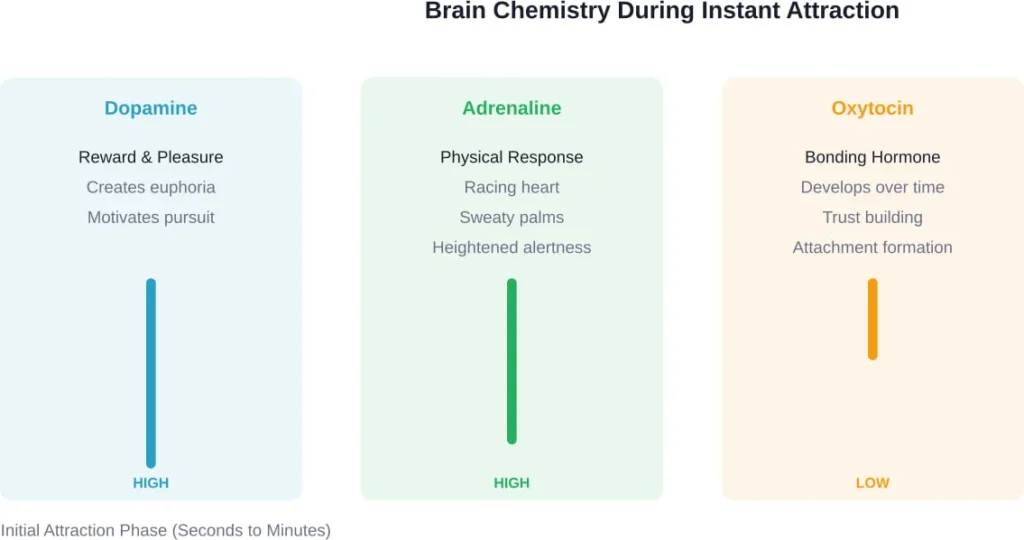
During those first moments of intense attraction, the brain’s limbic system—the emotional control center—goes into overdrive. The hypothalamus triggers adrenaline release, causing that telltale racing heart and sweaty palms. Simultaneously, dopamine floods the reward pathways, creating feelings of pleasure and motivation to pursue this new person.
But here’s the thing: this immediate response is more accurately described as intense physical attraction or infatuation rather than the deep, multifaceted experience we call love.
The Difference Between Attraction and Love
This distinction matters more than semantics suggest.
Physical attraction can happen instantaneously. The brain makes snap judgments about facial symmetry, body language, pheromones, and countless other factors within milliseconds. This rapid assessment served evolutionary purposes—our ancestors needed quick decision-making for mate selection.
True love, however, according to NIH research, is linked to attachment systems that develop over time. Romantic and maternal love are both highly rewarding experiences linked to species perpetuation, involving deeper brain structures and requiring sustained interaction to develop fully.
Think of it this way: love at first sight is the opening chapter. It might be compelling enough to make someone keep reading, but it’s not the whole story.
Why Do Some People Experience It More Than Others?
Not everyone reports feeling love at first sight. So what accounts for the variation?
Several factors influence susceptibility to instant attraction:
- Psychological readiness: People actively seeking relationships or feeling lonely may be more prone to intense initial reactions
- Personal attachment styles: Those with anxious attachment patterns might experience more frequent “instant connections”
- Romantic beliefs: Individuals who believe in soulmates and destiny are more likely to interpret strong attraction as love
- Previous experiences: Community discussions reveal that some people experience this feeling repeatedly with different partners, suggesting it’s more about individual response patterns than finding “the one”
Research from Boston University found that people who believe they have a core essence driving their likes and dislikes are more drawn to those with similar interests in politics, music, and books. This self-concept affects how attraction forms and how quickly it intensifies.
Can Instant Attraction Become Lasting Love?
Here’s where things get interesting.
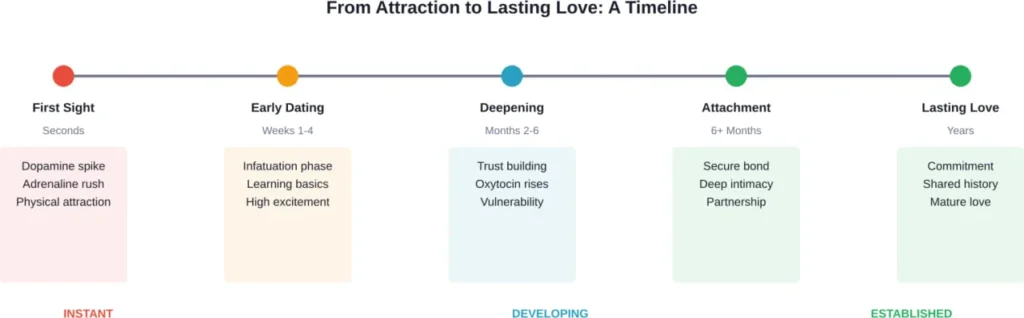
While the initial spark might not be “true love,” it can certainly develop into it. The key question isn’t whether love at first sight exists, but whether that intense initial attraction can transition into a healthy, lasting relationship.
The answer depends on what happens next. Relationships that begin with strong physical attraction succeed when both people invest in building the deeper components of love: trust, intimacy, compatibility, shared values, and commitment.
| Relationship Element | At First Sight | Develops Over Time |
|---|---|---|
| Physical Attraction | High | May fluctuate |
| Emotional Intimacy | Low | Grows with vulnerability |
| Trust | Absent | Built through consistency |
| Compatibility Knowledge | Minimal | Revealed through experience |
| Commitment | Premature | Earned gradually |
The neurobiological research is clear: attachment and bonding systems require time to activate fully. Oxytocin and vasopressin—the hormones associated with long-term bonding—increase through repeated positive interactions, physical touch, and shared experiences.
When That Initial Spark Happens: What Next?
Experiencing intense attraction doesn’t come with an instruction manual. But understanding the phenomenon helps navigate it more effectively.
First, enjoy the feeling. That rush of attraction is one of life’s more exhilarating experiences. The dopamine surge feels incredible for a reason—it’s designed to motivate connection and bonding behavior.
But temper the euphoria with realistic expectations. Strong initial attraction is a starting point, not a destination. It creates opportunity but doesn’t guarantee compatibility.
Take time to actually get to know the person. Ask questions. Observe how they treat others. Notice whether your values align. Pay attention to how conflicts get resolved. These factors matter far more for long-term success than that initial electric connection.
The Role of Physical Attraction in Long-Term Relationships
Physical attraction matters—but not in the way popular culture suggests.
While that initial spark can provide momentum, research shows physical attraction often increases as emotional intimacy deepens. People in long-term relationships frequently report finding their partners more attractive over time as they associate their appearance with positive experiences, emotional safety, and shared memories.
Conversely, relationships built solely on physical attraction without developing other dimensions tend to fade once the dopamine rush subsides—usually around the three to six month mark.
Common Myths About Love at First Sight
Several misconceptions persist about instant attraction. Let’s address them directly.
Myth: It only happens once with your soulmate. Many people report experiencing love at first sight multiple times with different partners. This suggests the phenomenon relates more to individual psychological patterns than finding a singular perfect match.
Myth: If it’s not instant, it’s not real love. Some of the strongest, most enduring relationships develop from friendships or grow slowly over time. Instant attraction is one possible starting point, not the only valid one.
Myth: You should immediately commit based on the feeling. Strong attraction can cloud judgment. The brain’s reward systems are essentially hijacked during intense infatuation, making objective assessment difficult. This is precisely when caution and pacing matter most.
FAQs About Love at First Sight
Research indicates approximately 60% of people report experiencing what they describe as love at first sight at some point in their lives. However, the interpretation of these experiences varies widely based on personal beliefs about romance and relationships.
The brain makes initial attraction assessments within milliseconds to a few seconds of seeing someone. Research indicates the hypothalamus triggers physical responses like increased heart rate within the first seconds of attraction.
Neuroscience suggests what people experience as love at first sight is primarily intense physical and emotional attraction involving dopamine and adrenaline. The deeper attachment components of love—involving oxytocin and vasopressin—develop over time through repeated positive interactions.
Yes, but the initial attraction must transition into deeper connection. Lasting relationships require trust, compatibility, shared values, and commitment—elements that develop gradually. The initial spark creates opportunity but doesn’t guarantee long-term success.
Enjoy the feeling but maintain realistic expectations. Take time to genuinely know the person beyond initial attraction. Assess compatibility, observe how they handle conflict, and notice whether core values align before making serious commitments.
No. Individual differences in attachment style, romantic beliefs, psychological readiness, and brain chemistry affect susceptibility to intense instant attraction. People who don’t experience it can still develop deep, lasting love.
From a neuroscience perspective, they’re essentially the same phenomenon—an intense dopamine-driven attraction response. What people call “love at first sight” is more accurately described as powerful infatuation that may develop into love if nurtured properly over time.
Moving Forward With Eyes Wide Open
Love at first sight exists as a genuine neurological and emotional experience. The cascade of brain chemicals, the racing heart, the magnetic pull toward another person—these are real, measurable phenomena.
But framing it as “love” might be premature. What happens in those first electric moments is better understood as powerful attraction with potential. The potential matters. That spark can ignite something meaningful.
The difference between a fleeting infatuation and lasting love lies in what comes after the initial fireworks. Real love requires vulnerability, consistency, patience, and the willingness to see someone fully—flaws included—and choose them anyway.
So if that lightning bolt strikes? Pay attention. Explore the connection. But remember that the most profound love stories aren’t written in a single moment—they’re built over countless moments that follow. The first sight might capture attention, but it’s the second, third, and thousandth sights that capture hearts.
Whether your relationship begins with a thunderbolt or a slow burn, the real question isn’t how it started. It’s whether both people are willing to invest in building something that lasts.