

Quick Summary: Yes, it is physically possible to fast for 40 days under proper medical supervision, as documented in biblical accounts and modern medical research. Studies show that medically supervised water-only fasts lasting 5-20 days produce moderate weight loss and increased ketone production, with some individuals safely completing longer fasts. However, extended fasting carries significant health risks and should never be attempted without medical oversight and appropriate pre-existing body fat stores.
The question of whether someone can survive without eating for 40 days has fascinated people for centuries. From biblical accounts of Moses, Elijah, and Jesus fasting in the wilderness to modern-day individuals attempting extended fasts for spiritual or health reasons, the 40-day fast holds a unique place in both religious tradition and medical curiosity.
But what does science actually say? Can the human body endure such an extended period without food?
The short answer is yes—but with significant caveats. Medical research has documented cases of prolonged water-only fasting, and the results reveal both the remarkable resilience of human metabolism and the serious risks involved.
What Medical Research Reveals About Extended Fasting
According to research published by the National Institutes of Health, prolonged fasting is characterized by consciously eating little to no food or caloric beverages for several days to weeks. Studies examining fasts lasting 5-20 days have documented specific physiological changes that occur during extended periods without food.
Research shows that prolonged fasting for 5-20 days produces mild to moderate weight loss of 2-10%, with approximately two-thirds being lean mass and one-third fat mass. These findings come from medically supervised studies where participants underwent water-only fasting in controlled clinical environments.
The body undergoes distinct metabolic shifts during extended fasting. When glucose from food becomes unavailable, the body transitions to burning stored fat for energy, producing ketone bodies that fuel the brain and other organs. This metabolic state, known as ketosis, typically begins within 2-3 days of fasting.
Documented Cases of 40-Day Fasts
Medical literature includes documented cases of individuals completing 40-day water-only fasts under clinical supervision. A study published in medical journals examined 48 overweight and obese participants who voluntarily underwent elective, medically supervised, water-only fasting at a residential fasting center in Santa Rosa, California.
These participants were monitored throughout their fasts, with researchers tracking markers of cardiometabolic health including blood pressure, insulin resistance, and inflammation markers. The research demonstrates that with proper medical oversight, extended fasting can be completed safely by individuals with adequate body fat stores.

The Biblical Context of 40-Day Fasting
The concept of fasting for 40 days has deep roots in biblical tradition. Three significant figures in scripture completed 40-day fasts: Moses on Mount Sinai, Elijah on his journey to Horeb, and Jesus in the wilderness following his baptism.
These accounts have inspired spiritual seekers throughout history to attempt similar extended fasts for religious purposes. The number 40 appears repeatedly in biblical narratives, often representing periods of testing, trial, or transformation.
Community discussions on platforms like Reddit show that some individuals attempt 40-day fasts primarily for spiritual reasons, seeking to deepen their faith through the discipline and focus that extended fasting requires. These personal accounts describe the experience as both physically challenging and spiritually rewarding.
Modern Spiritual Fasting Practices
Today, people from various faith traditions still practice extended fasting. Water-only fasts remain the most common approach, though some individuals modify their fasts to include minimal calories or specific restrictions rather than complete abstinence from food.
Some individuals who complete 40-day fasts for spiritual purposes report heightened clarity, deeper prayer experiences, and a sense of breakthrough in their spiritual lives. However, spiritual motivations don’t eliminate the physical risks involved.
Health Effects and Physiological Changes
Research examining prolonged water-only fasting and refeeding has identified several significant health effects. Studies on markers of cardiometabolic risk found that extended fasting influences blood pressure, cholesterol levels, insulin sensitivity, and inflammatory markers.
Generally speaking, the body becomes increasingly efficient at utilizing fat stores during extended fasting periods. This metabolic adaptation allows individuals with sufficient body fat to survive much longer without food than might initially seem possible.
| Time Period | Metabolic State | Primary Fuel Source | Common Experiences |
|---|---|---|---|
| Days 1-2 | Glycogen Depletion | Stored glucose | Hunger, fatigue, irritability |
| Days 3-5 | Transitional Ketosis | Fat and ketones | Reduced hunger, mental fog |
| Days 6-20 | Deep Ketosis | Ketones | Stable energy, clarity |
| Days 21-40 | Extended Fasting State | Ketones and protein | Variable, requires monitoring |
Weight Loss and Body Composition
According to NIH research, prolonged fasting for 5-20 days produces mild to moderate weight loss of 2-10%, with approximately two-thirds being lean mass and one-third fat mass. Extrapolating to longer periods, individuals completing 40-day fasts typically lose significantly more weight, though exact amounts vary based on starting body composition and activity levels.
The weight loss during extended fasting comes from multiple sources: water weight, glycogen stores, fat tissue, and unfortunately, some muscle mass. The body attempts to preserve lean tissue, but some protein breakdown is inevitable during very long fasts.
Cardiovascular and Metabolic Effects
Studies on therapeutic water-only fasting have examined effects on cardiometabolic diseases including insulin resistance, hyperlipidemia, and hypertension. Research indicates that extended fasting can improve certain health markers in the short term.
But here’s the catch: some research has noted that acute inflammatory responses during prolonged fasting may serve as transient adaptive mechanisms, raising concerns about potential cardiometabolic effects that could persist after refeeding. This complexity underscores why medical supervision matters.
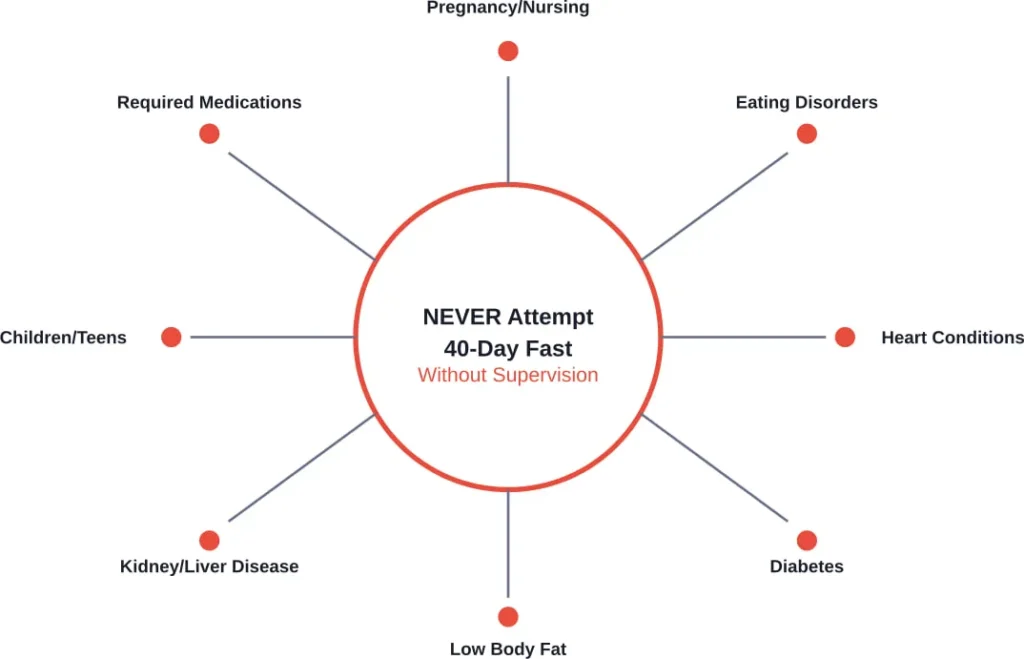
Who Should Never Attempt a 40-Day Fast
Despite the documented cases of successful extended fasts, many individuals should absolutely never attempt a 40-day fast. The risks far outweigh any potential benefits for certain populations.
Individuals who should avoid extended fasting include:
- Pregnant or breastfeeding women
- Children and adolescents
- People with eating disorders or a history of disordered eating
- Individuals with diabetes (especially Type 1)
- Those with heart conditions or arrhythmias
- People with kidney or liver disease
- Individuals with low body fat percentage
- Anyone taking medications that require food intake
- People with compromised immune systems
Even for healthy individuals, attempting a 40-day fast without medical supervision is extremely dangerous and potentially life-threatening.
The Critical Importance of Medical Supervision
Every documented case of successful 40-day fasting in medical literature involved comprehensive medical supervision. This isn’t optional—it’s essential for survival.
Medical supervision during extended fasting includes regular monitoring of vital signs, electrolyte levels, heart rhythm, blood glucose, kidney function, and other critical health markers. Physicians can identify dangerous complications before they become life-threatening.
What Medical Supervision Entails
Research published in medical journals describes the protocols used at residential fasting centers. Participants undergo thorough medical evaluations before beginning their fasts, including comprehensive blood work, physical examinations, and health history assessments.
During the fast, daily monitoring includes:
- Blood pressure and heart rate checks
- Body weight measurements
- Electrolyte panel testing
- Physical assessments for signs of distress
- Mental status evaluations
- Access to immediate medical intervention if needed
This level of oversight simply cannot be replicated at home, which is why attempting a 40-day fast independently is extraordinarily dangerous.
The Refeeding Phase: Often More Dangerous Than Fasting
Here’s what many people don’t realize: the refeeding period after a 40-day fast can actually be more dangerous than the fast itself. Refeeding syndrome—a potentially fatal condition involving severe electrolyte shifts—poses significant risks when food is reintroduced after extended fasting.
Research on prolonged water-only fasting and refeeding emphasizes the critical importance of gradually reintroducing food under medical guidance. The body’s systems have adapted to the fasted state, and sudden food intake can cause dangerous shifts in potassium, phosphate, and magnesium levels.
Medical protocols for refeeding after extended fasts typically involve starting with small amounts of easily digestible foods like diluted fruit juices, gradually progressing to whole fruits, then vegetables, and eventually more complex foods over a period of days to weeks.
| Refeeding Stage | Duration | Recommended Foods | Key Precautions |
|---|---|---|---|
| Initial Phase | Days 1-3 | Diluted juices, broth | Monitor electrolytes closely |
| Early Solid Foods | Days 4-7 | Fruits, steamed vegetables | Small portions, watch for distress |
| Progressive Expansion | Days 8-14 | Whole grains, legumes | Continue gradual increases |
| Full Diet Restoration | Days 15-30 | Complete balanced diet | Maintain nutritional quality |
Practical Considerations and Realistic Expectations
So what should someone actually expect if they’re considering a 40-day fast? Real talk: it’s going to be one of the most physically and mentally challenging experiences imaginable.
User experiences from community discussions reveal common patterns. The first 2-4 days are typically the hardest, with intense hunger, headaches, fatigue, and irritability. Many people report that hunger actually decreases after the initial transition period as ketosis deepens.
Energy levels fluctuate dramatically throughout an extended fast. Some periods bring surprising clarity and focus, while other days involve significant weakness and fatigue. Physical activity must be drastically reduced, and even basic daily tasks can become exhausting.
Mental and Emotional Challenges
The psychological aspects of 40-day fasting often prove more difficult than the physical ones. Food is deeply intertwined with social connection, daily routines, and emotional regulation. Removing it completely for more than a month requires extraordinary mental discipline.
Many people report that boredom becomes a significant issue during extended fasts. Without meals to structure the day and provide breaks from monotony, time can feel like it’s moving very slowly.
Alternatives to 40-Day Fasting
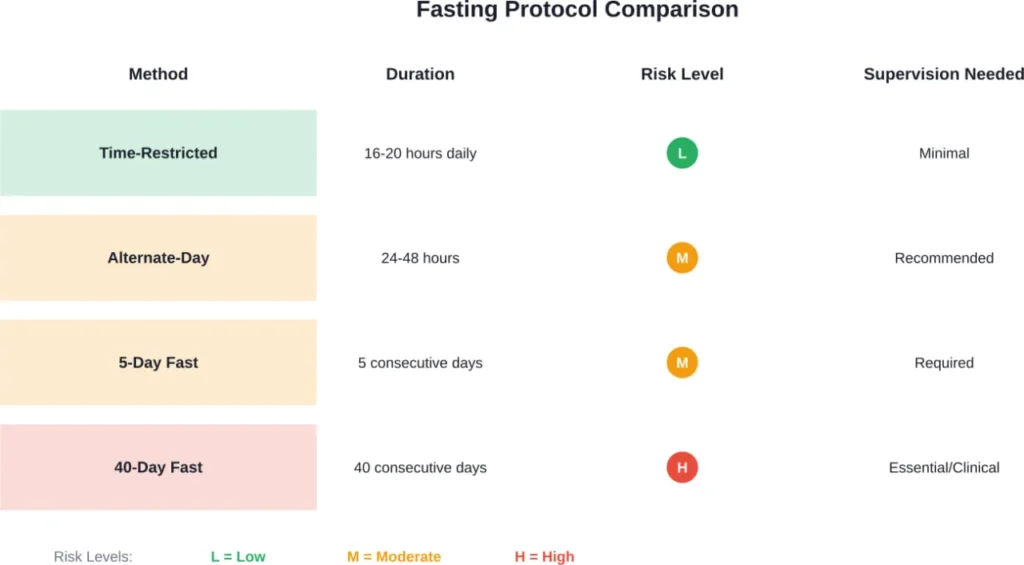
Given the significant risks and challenges of 40-day fasting, many health practitioners recommend alternative approaches that provide some benefits of extended fasting with substantially lower risk.
Research on various fasting protocols shows that intermittent fasting approaches—including time-restricted feeding and alternate-day fasting—can produce meaningful health benefits. Time-restricted feeding involves limiting daily eating to a specific window (such as 8 hours), while alternate-day fasting alternates between regular eating days and days with approximately 25% of normal caloric intake.
These modified approaches allow individuals to experience some metabolic benefits of fasting without the extreme risks associated with 40-day complete abstinence from food.
Frequently Asked Questions
Yes, humans can survive 40 days without food if they have adequate body fat stores and access to water. Medical research has documented numerous cases of medically supervised 40-day water fasts completed safely. However, survival depends critically on proper hydration, sufficient pre-existing body fat, absence of contraindicated medical conditions, and comprehensive medical supervision throughout the fast and refeeding period.
During a 40-day fast, the body transitions through multiple metabolic phases. Initial glycogen stores deplete within 1-2 days, triggering ketosis where fat becomes the primary fuel source. Research shows that prolonged fasting produces potent increases in circulating ketones and weight loss of approximately 2-10% for shorter fasts, with greater losses over 40 days. The body also adapts by slowing metabolic rate to conserve energy.
A 40-day fast is not safe for most people and should never be attempted without comprehensive medical supervision in a clinical setting. Even for healthy individuals with adequate body fat, extended fasting carries significant risks including electrolyte imbalances, cardiac arrhythmias, muscle loss, and refeeding syndrome. Certain populations including pregnant women, children, diabetics, and those with heart conditions should never attempt extended fasts.
Weight loss during a 40-day water fast varies considerably based on starting body composition, activity level, and individual metabolism. Based on research showing 2-10% weight loss during 5-20 day fasts, individuals completing 40-day fasts typically lose significantly more, though exact amounts are highly individual. The weight loss includes water, glycogen, fat, and some muscle tissue.
Refeeding after a 40-day fast must be done gradually under medical supervision to prevent refeeding syndrome. Medical protocols typically begin with diluted fruit juices or vegetable broth in small quantities, progressing slowly over days to whole fruits and steamed vegetables, then eventually to complete meals. The refeeding period should last approximately one-third to one-half the duration of the fast itself.
Biblical accounts describe Jesus fasting for 40 days in the wilderness, and similar fasts are attributed to Moses and Elijah. From a physiological perspective, a 40-day water-only fast is possible for someone with adequate body fat stores. However, the biblical accounts describe spiritual purposes rather than providing medical documentation, and some theological scholars debate whether these fasts involved only food or both food and water.
Physical activity must be dramatically reduced during a 40-day fast. The body operates in an energy-conservation mode, and attempting normal work duties or exercise routines can be dangerous. Medical research on prolonged fasting typically recommends only light activity such as gentle walking. Most people completing extended fasts do so in residential settings where they can rest extensively and are not required to maintain normal work schedules.
The Bottom Line on 40-Day Fasting
So is it possible to fast for 40 days? The answer is yes—but with critical qualifications that cannot be overstated.
Medical research confirms that humans can survive extended fasts of 40 days when they have adequate body fat stores, maintain proper hydration, and receive comprehensive medical supervision. Studies published by the NIH and other authoritative medical sources document cases of successful prolonged fasting with measurable effects on metabolism, weight, and health markers.
But possibility doesn’t equal advisability. The risks associated with 40-day fasting are substantial and potentially life-threatening. Without proper medical oversight, attempting such an extended fast can result in severe complications including cardiac arrhythmias, organ damage, and death—particularly during the dangerous refeeding phase.
For those motivated by spiritual goals, the discipline and dedication required for a 40-day fast are admirable. For those seeking health benefits, alternative approaches like intermittent fasting or shorter medically supervised fasts may provide meaningful benefits with far less risk.
Anyone seriously considering a 40-day fast should consult extensively with qualified healthcare providers, undergo thorough medical evaluation, and only proceed in a clinical setting with continuous medical supervision. The biblical accounts that inspire many to attempt such fasts involved extraordinary circumstances—and attempting to replicate them without proper precautions is simply not worth the risk to life and health.