

Quick Summary: Yes, it’s possible to get pregnant while using birth control, though the risk is relatively low when used correctly. According to CDC data, approximately 91% of combination pill users avoid pregnancy with typical use, meaning about 9% experience contraceptive failure within a year. The likelihood depends heavily on the method chosen and consistent, correct usage.
When using birth control, pregnancy feels like the last thing anyone expects. But the reality? No contraceptive method—short of abstinence—offers 100% protection.
That doesn’t mean birth control fails constantly. Most methods work remarkably well. But understanding when and why pregnancies occur despite contraceptive use matters for making informed decisions about reproductive health.
Understanding Birth Control Effectiveness Rates
Contraceptive effectiveness gets measured two ways: perfect use and typical use. Perfect use assumes flawless adherence—never missing a pill, always applying patches on schedule, following every instruction precisely. Typical use reflects real-world scenarios where people forget doses, apply methods incorrectly, or face unexpected circumstances.
The gap between these two measures reveals something important: human error plays a massive role in contraceptive failure.
Perfect Use vs. Typical Use
According to research published by the CDC, approximately 85% of women using no contraception become pregnant within one year. Birth control dramatically reduces that risk, but effectiveness varies significantly by method and adherence.
For combination birth control pills, perfect use results in fewer than 1% of users becoming pregnant annually. But with typical use—accounting for missed pills and inconsistent timing—that figure jumps to about 9%.
The distinction matters because most people fall into the typical use category. Real life involves alarm clocks that don’t go off, lost pill packs, and hectic schedules that disrupt routines.
| Birth Control Method | Typical Use Effectiveness | Perfect Use Effectiveness |
|---|---|---|
| Birth control pills | ~91% | ~99% |
| Birth control patch | ~91% | ~99% |
| Vaginal ring | ~91% | ~99% |
| IUD (hormonal) | >99% | >99% |
| IUD (copper) | >99% | >99% |
| Contraceptive implant | >99% | >99% |
| Male condom | ~87% | ~98% |
Long-acting reversible contraceptives (LARCs)—like IUDs and implants—show virtually identical perfect and typical use rates. Why? They remove user error from the equation. Once inserted, they work continuously without daily attention.
Common Reasons Birth Control Fails
Contraceptive failure rarely happens randomly. Specific factors significantly increase pregnancy risk, even when using birth control consistently.
Missed or Late Pills
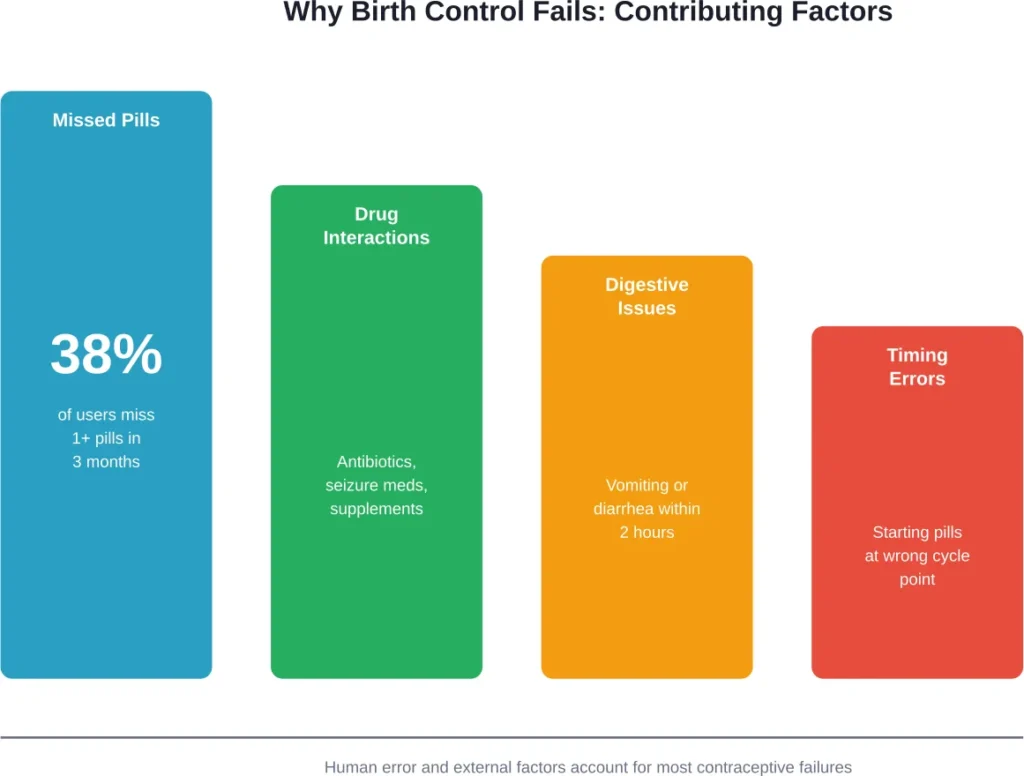
The primary culprit behind pill failure? Inconsistent timing or forgotten doses. Birth control pills maintain steady hormone levels that prevent ovulation. Missing even one pill disrupts that balance.
Studies examining contraceptive use patterns found that 38% of women using oral contraceptives missed one or more pills during a three-month period. Each missed pill creates a window where pregnancy becomes possible.
Combination pills typically require backup contraception for seven days if a dose gets missed by more than 12 hours. Progestin-only pills have an even tighter window—just three hours late can reduce effectiveness.
Medication Interactions
Certain medications interfere with birth control efficacy. The antibiotic rifampin stands out as a well-documented interaction, reducing hormone levels and increasing pregnancy risk.
Other medications that may lower effectiveness include:
- Some anti-seizure medications
- Certain HIV medications
- St. John’s Wort supplements
- Some antifungal medications
Healthcare providers should review all medications and supplements when prescribing birth control. But that conversation doesn’t always happen, leaving people unaware of potential interactions.
Digestive Issues
Vomiting or severe diarrhea within two hours of taking a pill can prevent proper absorption. If the body expels the pill before absorbing the hormones, it’s essentially a missed dose.
Extended digestive illness lasting more than 48 hours may compromise pill effectiveness, requiring backup contraception until normal absorption resumes.
Starting Pills at the Wrong Time
When beginning birth control pills matters significantly. Combination pills typically provide immediate protection if started within the first five days of menstruation. Starting at other points in the cycle requires seven days of consistent use before full protection kicks in.
Progestin-only pills need 48 hours of consistent use before becoming fully effective, regardless of when started in the cycle.
How Different Birth Control Methods Compare
Not all contraceptive methods carry the same pregnancy risk. Some require more active participation, while others work passively in the background.
Hormonal Methods
Hormonal contraceptives prevent pregnancy primarily by stopping ovulation. Pills, patches, rings, and injections all deliver hormones that keep ovaries from releasing eggs.
The pill remains the most commonly used reversible contraceptive in the United States, according to CDC data on contraceptive status. But it also requires the most consistent daily action, making it more vulnerable to user error than other hormonal options.
The contraceptive patch and vaginal ring offer similar effectiveness to pills but require less frequent attention—weekly for patches, monthly for most rings. That reduced frequency may improve typical use rates for some people.
Long-Acting Reversible Contraceptives
LARCs include hormonal IUDs, copper IUDs, and contraceptive implants. These methods rank among the most effective contraceptives available, with failure rates below 1% for both typical and perfect use.
Once inserted by a healthcare provider, LARCs work continuously for years—three to ten years depending on the specific device. They require no daily attention, eliminating the primary failure mode of short-acting methods.
Research from the CDC indicates that approximately 10.3% of women using contraception choose LARCs. Adolescent health guidelines from ACOG specifically recommend LARCs as appropriate first-line contraceptive options due to their high effectiveness and low maintenance requirements.
Barrier Methods
Condoms represent the most common barrier method. With perfect use, male condoms achieve approximately 98% effectiveness. But typical use drops that figure to around 87%.
Community discussions frequently mention condom breakage or slippage as pregnancy risks. Research on contraceptive use found that 61% of women relying on partner condom use said that condoms were not used at each act of intercourse or were put on late at least once during a three-month period, highlighting the gap between intended and actual protection.
Barrier methods offer a crucial advantage that hormonal contraceptives don’t: protection against sexually transmitted infections. For people at STI risk, combining barrier methods with other contraceptives provides both pregnancy prevention and infection protection.
Recognizing Pregnancy Signs While Using Birth Control
Birth control—particularly hormonal methods—can mask or mimic early pregnancy symptoms, making detection tricky.
Common Early Pregnancy Indicators
Traditional pregnancy signs include missed periods, breast tenderness, nausea, fatigue, and frequent urination. But hormonal birth control affects many of these same bodily functions.
Some people on birth control experience lighter periods or no periods at all—a normal side effect of hormonal contraceptives. That makes missed periods less reliable as pregnancy indicators for contraceptive users.
Other signs deserve attention:
- Unusual spotting or bleeding patterns that differ from typical breakthrough bleeding
- Persistent nausea, especially if it appears suddenly
- Breast changes that feel different from normal hormonal fluctuations
- Severe or persistent cramping
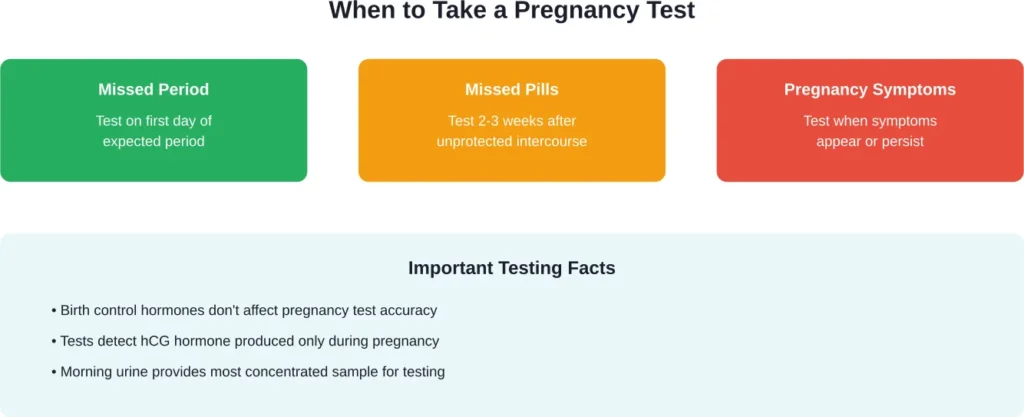
When in doubt, testing resolves uncertainty. Home pregnancy tests detect pregnancy hormones as early as the first day of a missed period, and sometimes earlier.
Testing While on Birth Control
Birth control hormones don’t interfere with pregnancy test accuracy. Tests detect hCG (human chorionic gonadotropin), a hormone produced during pregnancy but not present in contraceptives.
Healthcare providers recommend testing if pregnancy is suspected, regardless of contraceptive use. Early detection allows for timely decisions about pregnancy management.
What to Do If You Suspect Pregnancy
Discovering pregnancy while using birth control can feel disorienting. But immediate steps matter for health and decision-making.
First, confirm pregnancy through testing. Home tests work reliably, but healthcare providers can perform blood tests that detect pregnancy earlier and more definitively than urine tests.
Second, schedule an appointment with a healthcare provider. They’ll confirm pregnancy, estimate gestational age, and discuss options—continuing the pregnancy, adoption, or termination, depending on personal circumstances and preferences.
Third, stop taking birth control once pregnancy is confirmed, though early exposure to birth control hormones doesn’t typically harm developing pregnancies.
Emergency Contraception Options
If unprotected intercourse occurs—whether from missed pills, condom failure, or other contraceptive problems—emergency contraception can prevent pregnancy.
According to WHO data, emergency contraception can prevent over 95% of pregnancies when taken within five days after intercourse, with effectiveness highest in the first 24 hours.
Two main options exist: emergency contraceptive pills and copper IUDs. Pills work by preventing or delaying ovulation. Copper IUDs, inserted by healthcare providers within five days of unprotected intercourse, prevent fertilization and implantation.
People already using regular birth control can use emergency contraception if needed—the methods address different timeframes and mechanisms.
Improving Birth Control Effectiveness
While no contraceptive guarantees absolute protection, specific practices dramatically reduce pregnancy risk.
Consistent Timing
Taking pills at the same time daily maintains steady hormone levels. Setting phone alarms, using medication reminder apps, or pairing pill-taking with established routines helps build consistency.
For progestin-only pills, timing matters even more. These pills require dosing within the same three-hour window daily for maximum effectiveness.
Backup Methods
Using condoms alongside hormonal birth control provides dual protection—reducing pregnancy risk while preventing STI transmission. This approach, called dual method use, offers the highest non-permanent pregnancy prevention available.
Backup methods become particularly important during the first week of starting pills, after missed doses, during illness affecting absorption, or when taking medications that interact with hormonal contraceptives.
Regular Provider Check-ins
Annual healthcare visits allow providers to assess contraceptive satisfaction, discuss any problems affecting consistent use, and explore whether switching methods might improve effectiveness or comfort.
According to research on contraceptive access, barriers like cost, confidentiality concerns, and difficulty obtaining appointments affect contraceptive use. Addressing these barriers improves consistent, correct use.
| Strategy | How It Helps | Best For |
|---|---|---|
| Daily alarms | Reminds users to take pills on schedule | Pills, patches, rings |
| Dual methods | Combines pregnancy + STI prevention | All users at STI risk |
| LARC options | Eliminates user error completely | Those wanting set-it-and-forget-it protection |
| Medication reviews | Identifies potential drug interactions | Anyone taking multiple medications |
| Quick-start protocols | Provides immediate protection when needed | Starting or switching methods |
Frequently Asked Questions
Yes, though it’s rare. Even with perfect use, birth control pills are approximately 99% effective, meaning about 1 in 100 users become pregnant annually. Factors like medication interactions, digestive issues affecting absorption, or individual metabolic variations can occasionally lead to pregnancy despite perfect adherence.
Pregnancy can occur relatively quickly after missing pills, depending on when in the pill pack the miss occurs and individual ovulation patterns. Missing pills during the first week of a pack carries the highest risk, as hormone levels may not adequately suppress ovulation. Using backup contraception for seven days after a missed dose reduces risk.
Rifampin specifically reduces birth control effectiveness by increasing hormone metabolism. Most common antibiotics—like those prescribed for urinary tract infections or respiratory infections—don’t significantly affect birth control. However, healthcare providers often recommend backup contraception during antibiotic treatment out of abundance of caution, particularly if the illness involves vomiting or diarrhea.
If pills were taken correctly during the active pill weeks, pregnancy during the placebo week is highly unlikely. The hormone buildup from consistent use prevents ovulation even during the hormone-free interval. However, extending the placebo week by starting a new pack late increases pregnancy risk by allowing hormone levels to drop too low.
Test if pregnancy symptoms appear, periods seem unusually light or absent (beyond normal birth control effects), or if contraceptive failures occurred like missed pills or condom breakage. Birth control hormones don’t interfere with test accuracy, so testing whenever concerned makes sense.
Continuing birth control pills during early pregnancy doesn’t typically cause birth defects or harm the developing pregnancy. However, once pregnancy is confirmed, discontinue birth control and consult a healthcare provider to discuss pregnancy options and prenatal care if continuing the pregnancy.
Emergency contraceptive pills work primarily by preventing or delaying ovulation. If ovulation has already occurred before taking emergency contraception, effectiveness decreases significantly. Copper IUDs offer more reliable emergency contraception in this scenario, as they prevent fertilization and implantation rather than just ovulation.
Making Informed Contraceptive Decisions
Birth control failure represents a real but manageable risk. Understanding effectiveness rates, recognizing what reduces protection, and knowing how to respond to potential pregnancy empowers informed reproductive choices.
No single method works perfectly for everyone. Effectiveness depends on biological factors, lifestyle considerations, and personal preferences. Some people prioritize convenience, making LARCs ideal. Others prefer methods they control directly, like pills or barrier methods.
The most effective birth control is the method used consistently and correctly. That means choosing contraception that fits individual circumstances rather than simply selecting the method with the highest perfect-use effectiveness rate.
Healthcare providers can help navigate these decisions, offering guidance based on medical history, lifestyle factors, and personal goals. Access to comprehensive contraceptive counseling improves outcomes by matching people with methods they’ll actually use consistently.
If pregnancy occurs despite contraceptive use, remember that multiple options exist. Healthcare providers offer non-judgmental support regardless of pregnancy decisions, providing medical information and resources for whatever path makes sense.
Reproductive health decisions belong to individuals. Understanding the realities of contraceptive effectiveness—including the possibility of failure—helps make those decisions with clear, accurate information rather than assumptions or misconceptions.