

Quick Summary: Grey eyes are indeed possible and represent one of the rarest eye colors globally, estimated at less than 1% of the world’s population. This unique eye color results from a combination of low to moderate melanin levels and collagen structure in the iris that scatters light differently than blue eyes. Grey eyes are determined by complex genetics involving multiple genes, primarily variations in the OCA2 and HERC2 genes.
Look into a crowd of a hundred people, and chances are none of them will have truly grey eyes. This striking eye color stands as one of nature’s rarest phenomena, prompting many to wonder whether grey eyes even exist or if they’re just a variation of blue.
The short answer? Grey eyes are absolutely real, scientifically documented, and remarkably uncommon. But the science behind them reveals something far more fascinating than simple rarity.
Understanding grey eyes requires looking beyond basic Mendelian genetics into the complex interplay of multiple genes, protein structures, and light physics. What makes an iris appear grey rather than blue or green involves subtle differences that researchers have only recently begun to fully understand.
The Genetics Behind Grey Eye Color
Eye color isn’t determined by a single gene, despite what older genetics textbooks suggested. According to research from the University of Delaware, the myth of simple dominant and recessive eye color genes has been thoroughly debunked by modern genetic studies.
The reality is far more complex and interesting.
Research demonstrates that eye color encompasses not simply basic Mendelian genetics but also concepts like non-allelic interaction, polygenic traits, and phenotypic variation. Multiple genes work together to create the final eye color someone displays.
Key Genes Involved in Grey Eyes
The primary genetic players in eye color determination include the OCA2 and HERC2 genes located on chromosome 15. Research in Molecular Genetics and Genomic Medicine indicates the OCA2 gene plays a crucial role in melanin production within the iris, and specific nonsynonymous variants in this gene help explain eye colors that can’t be accounted for by the most common SNP alone.
The HERC2 gene acts as a regulatory element that controls OCA2 expression. A specific single-nucleotide polymorphism (SNP) at rs12913832 within the HERC2 gene region has been strongly associated with blue versus brown eye color. But here’s the thing—grey eyes don’t fit neatly into that binary.
Research indicates that grey-eyed individuals often possess genetic variations that result in a specific balance of melanin production. The combination creates something distinct from the genetic profile of blue-eyed individuals.
| Gene | Function | Impact on Grey Eyes |
|---|---|---|
| OCA2 | Melanin production | Determines melanin levels in iris |
| HERC2 | OCA2 regulation | Controls expression of pigmentation |
| SLC24A4 | Ion transport | Influences pigment distribution |
| TYR | Melanin synthesis | Affects overall pigmentation intensity |
Melanin and Grey Eyes
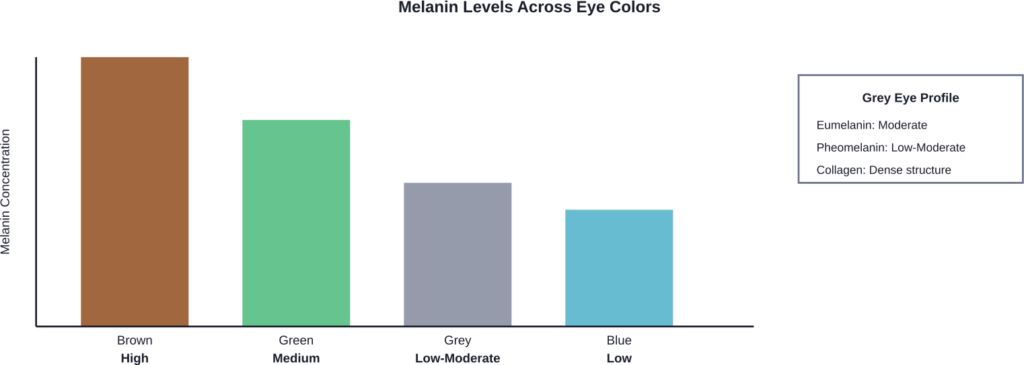
The amount and type of melanin in the iris fundamentally determines eye color. Two types of melanin exist: eumelanin (brown-black pigment) and pheomelanin (yellow-red pigment).
Grey eyes contain moderate levels of eumelanin and low to moderate amounts of pheomelanin. This combination sits in a narrow band between the minimal melanin of blue eyes and the slightly higher levels found in some green eyes.
But melanin alone doesn’t tell the complete story.
The Role of Collagen in Grey Eyes
Here’s where it gets interesting. The structural composition of the iris stroma—particularly collagen density—plays a critical role in determining whether eyes appear grey versus blue.
The iris stroma contains collagen fibers that scatter incoming light through a phenomenon called Rayleigh scattering. This is the same physical principle that makes the sky appear blue. When light hits the collagen fibers, shorter wavelengths (blue) scatter more than longer wavelengths (red).
In grey eyes, the collagen fibers are arranged more densely than in blue eyes. This denser structure, combined with the specific melanin levels, scatters light differently. The result is a grey appearance rather than the clearer blue seen in less dense stromal structures.
Think of it like the difference between fog and clear sky. Both involve light scattering, but the density of particles creates vastly different visual outcomes.
How Rare Are Grey Eyes Actually?
Now for the numbers. Grey eyes represent one of the absolute rarest eye colors found in humans. Based on available demographic data, estimates suggest less than 1% of the global population possesses true grey eyes.
That makes grey eyes rarer than green eyes, which affect only about 2% of the world’s population. To put this in perspective, brown eyes dominate globally at roughly 79% of all humans.
Geographic Distribution
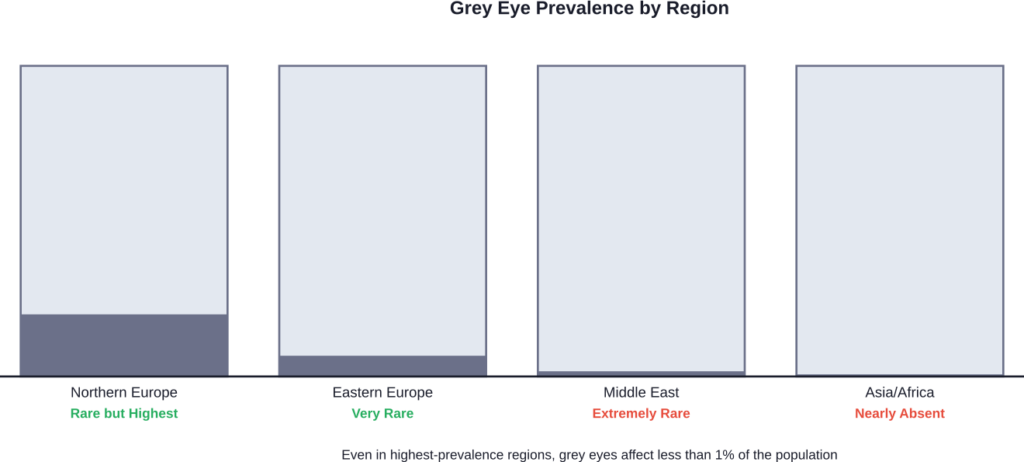
Grey eyes appear most frequently in populations of Northern and Eastern European descent. The prevalence is highest in regions including Finland, the Baltic states, and parts of Russia.
Research examining eye color distribution shows that regions with historically lower UV exposure tend to have higher frequencies of lighter eye colors overall. Grey eyes fit into this pattern, though they remain rare even within these populations.
Outside of European-ancestry populations, grey eyes become exceptionally uncommon. A 2023 study published in Biomedicines examining eye color in the Malakand Division of Pakistan found brown eye color to be the most prevalent, with lighter eye colors being extremely rare in that population.
| Eye Color | Global Prevalence | Relative Rarity |
|---|---|---|
| Brown | ~79% | Most Common |
| Blue | ~8-10% | Common |
| Hazel | ~5% | Uncommon |
| Amber | ~5% | Uncommon |
| Green | ~2% | Rare |
| Grey | <1% | Very Rare |
Grey Eyes vs. Blue Eyes: What’s the Difference?
Many people confuse grey eyes with blue eyes, and for good reason. Both eye colors involve low melanin levels and light scattering through the iris stroma. But several key differences distinguish them.
Structural Differences
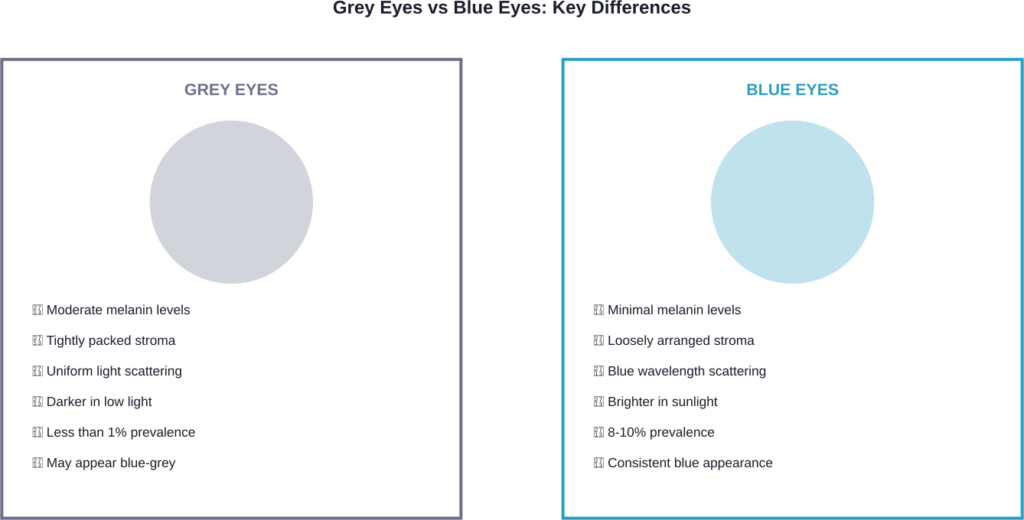
The collagen density in the iris stroma represents the primary structural distinction. Grey eyes possess a denser, more tightly packed collagen matrix compared to blue eyes. This denser structure alters how light scatters as it passes through the iris.
Blue eyes have a more loosely arranged stromal structure that preferentially scatters blue wavelengths, creating that characteristic blue appearance. Grey eyes scatter light more uniformly across wavelengths due to the denser matrix, resulting in the grey color perception.
Melanin Content Variations
While both grey and blue eyes have relatively low melanin compared to brown or green eyes, grey eyes typically contain slightly more melanin than blue eyes. This subtle difference, combined with the structural variations, creates the grey appearance.
The melanin in grey eyes is also distributed somewhat differently throughout the iris layers. The anterior border layer may contain slightly more pigment granules in grey eyes compared to blue eyes.
Visual Appearance Under Different Lighting
Both grey and blue eyes can appear to change color under different lighting conditions, but they do so in distinct ways. Blue eyes tend to appear brighter and more vibrant in direct sunlight due to increased scattering of blue wavelengths.
Grey eyes often appear darker in low light and may take on blue or green tinges depending on ambient lighting and surrounding colors. This chameleon-like quality stems from the dense stromal structure interacting differently with various light conditions.
Variations in Grey Eye Color
Not all grey eyes look identical. The grey eye color category encompasses several distinct variations, each with slightly different characteristics.
Dark Grey Eyes
Some individuals possess dark grey eyes that can appear almost slate-colored. These eyes contain higher melanin levels within the grey eye spectrum and often have a particularly dense stromal structure. In certain lighting, dark grey eyes may appear to have subtle blue or green undertones.
Grey-Blue Eyes
The most common variation involves grey eyes with noticeable blue tinges. This occurs when the collagen structure falls somewhere between the typical grey and blue eye configurations. The interplay between grey and blue creates a captivating appearance that can shift between the two colors depending on lighting and clothing.
Grey-Green Eyes
Less common but equally striking, grey-green eyes combine the dense collagen structure of grey eyes with slightly higher pheomelanin levels. This creates subtle green tinges, particularly visible in natural sunlight. The green undertones typically appear around the pupil or in specific iris sectors.
Health Considerations for Grey Eyes
Eye color isn’t just about appearance—it can have implications for eye health and light sensitivity.
Light Sensitivity
Individuals with grey eyes, like those with other light eye colors, typically experience higher light sensitivity compared to brown-eyed individuals. The lower melanin content provides less natural protection against bright light and UV radiation.
This increased photosensitivity means people with grey eyes often benefit from wearing sunglasses in bright conditions. UV protection becomes particularly important for maintaining long-term eye health.
UV Protection Needs
Research has linked lighter eye colors, including grey, with increased sensitivity to UV radiation. While this doesn’t translate to higher disease risk in all cases, it does emphasize the importance of proper eye protection when outdoors.
The American Academy of Ophthalmology recommends UV-blocking sunglasses for everyone, but this recommendation carries extra weight for individuals with grey or other light-colored eyes.
Eye Color and Disease Risk
Some research has examined correlations between eye color and certain ocular conditions. However, it’s important to note that eye color alone doesn’t determine disease risk—many other factors play far more significant roles.
According to the American Academy of Ophthalmology, changes in eye color can sometimes signal health issues. Any noticeable change in eye color warrants a comprehensive eye exam to rule out conditions like pigment dispersion or other iris abnormalities.
Can Eye Color Change to Grey?
Eye color can change under certain circumstances, though true changes in adults are rare. Most eye color shifts occur during infancy and early childhood as melanin production stabilizes.
Natural Eye Color Changes
Babies are often born with blue or grey eyes that darken over the first year or two of life as melanin production increases. This represents normal development rather than true eye color change.
In adults, eye color changes are uncommon and may indicate underlying health issues. The American Academy of Ophthalmology notes that actual color changes in one or both eyes should prompt immediate medical evaluation.
Conditions That Affect Eye Color
Several conditions can alter iris appearance. Heterochromia causes different colored eyes or multiple colors within a single iris. Pigment dispersion syndrome can lighten eye color as pigment granules disperse from the iris.
Certain medications, particularly prostaglandin analogs used for glaucoma treatment, can darken light-colored eyes over time. This represents a genuine change in melanin production within the iris.
Grey Eyes in Different Populations
The distribution of grey eyes varies dramatically across different ethnic and geographic populations. Understanding these patterns provides insight into the evolutionary and genetic factors that influence eye color.
European Populations
Grey eyes appear most frequently in Northern and Eastern European populations. Countries including Finland, Estonia, Latvia, and parts of Russia show the highest prevalence. Even within these populations, however, grey eyes remain uncommon compared to blue or brown.
Asian and African Populations
Grey eyes are extremely rare in East Asian, Southeast Asian, and African populations. The dominant OCA2 and HERC2 gene variants in these populations strongly favor brown eye color production.
When lighter eye colors do appear in these populations, they’re more likely to result from specific genetic conditions or admixture with populations carrying the genetic variants for lighter eyes.
Middle Eastern Populations
Some Middle Eastern populations show occasional instances of grey or light-colored eyes, particularly in regions with historical European genetic influence. However, brown eyes remain overwhelmingly dominant throughout most of the Middle East.
The Science of Eye Color Determination
Modern understanding of eye color genetics has advanced far beyond simple Punnett squares. The mechanisms that determine whether someone develops grey, blue, brown, or green eyes involve multiple layers of biological complexity.
Polygenic Inheritance
Eye color is a polygenic trait, meaning multiple genes contribute to the final outcome. Research indicates multiple genetic variants account for significant variation in eye color traits.
While OCA2 and HERC2 represent the major players, genes including SLC24A4, TYR, TYRP1, and others contribute to the final eye color. This polygenic nature explains why eye color inheritance doesn’t follow simple predictable patterns.
Gene-Environment Interactions
Environmental factors can influence gene expression related to pigmentation. UV exposure, for instance, can stimulate melanin production in skin and potentially affect melanin levels in the iris over time, though this effect is much less pronounced in the eyes than in skin.
Epigenetic Factors
Emerging research suggests epigenetic modifications—changes in gene expression that don’t alter the underlying DNA sequence—may play roles in eye color determination. Methylation patterns and other epigenetic marks can influence how pigmentation genes are expressed.
Distinguishing Grey Eyes from Similar Colors
Accurately identifying grey eyes requires understanding how they differ from similar eye colors that might be confused with grey.
Grey vs. Light Blue
Light blue eyes can sometimes appear greyish, especially in certain lighting. The key distinction lies in the overall tone. Blue eyes, even light ones, have a distinct blue cast that becomes evident in natural daylight. Grey eyes maintain a more neutral, silver-toned appearance without the blue vibrancy.
Grey vs. Hazel
Hazel eyes contain multiple colors, typically brown and green with possible blue or grey elements. True grey eyes lack the brown pigmentation characteristic of hazel eyes. If brown or golden tones are visible, particularly near the pupil, the eyes are more likely hazel than grey.
Central Heterochromia
Some individuals have central heterochromia, where the iris contains two distinct colors in a ring pattern. Eyes with grey outer rings and different colored centers represent a variation of heterochromia rather than true grey eyes.
Frequently Asked Questions
Grey eyes are absolutely real and scientifically documented. They represent one of the rarest naturally occurring eye colors, affecting less than 1% of the global population. The grey appearance results from specific combinations of melanin levels and collagen structure in the iris that scatter light differently than blue or other eye colors.
The primary difference between grey and blue eyes lies in the density of collagen fibers in the iris stroma. Grey eyes have a denser, more tightly packed collagen matrix that scatters light more uniformly across wavelengths. This dense structure, combined with low to moderate melanin levels, creates the characteristic grey appearance rather than the blue color seen with looser stromal structures.
True eye color changes from brown to grey in adults are extremely rare and would typically indicate a medical condition requiring evaluation. Some older adults may develop a greyish ring around the cornea called arcus senilis, which can make the outer iris appear lighter, but this doesn’t represent actual eye color change. Any noticeable color change in the iris should be evaluated by an ophthalmologist.
Grey eyes appear most frequently in Northern and Eastern European populations, particularly in countries like Finland, Estonia, Latvia, and parts of Russia. However, even in these regions where grey eyes are most common, they remain rare compared to brown or blue eyes, affecting less than 1% of the population even in areas with the highest prevalence.
Grey eyes can appear to shift color under different lighting conditions, often taking on blue or green tinges depending on ambient light and surrounding colors. This chameleon-like quality results from the dense collagen structure interacting with different light wavelengths. Grey eyes typically appear darker in low light and may show more color variation than brown eyes but in different ways than blue eyes.
Yes, individuals with grey eyes typically experience higher light sensitivity compared to brown-eyed individuals. The lower melanin content in grey eyes provides less natural protection against bright light and UV radiation. This increased photosensitivity means wearing UV-protective sunglasses becomes particularly important for maintaining eye health in bright conditions.
Predicting grey eyes with certainty is challenging due to the polygenic nature of eye color inheritance. While genetic testing can identify variants associated with lighter eye colors, the specific combination of genes required for grey eyes makes precise prediction difficult. Babies born with blue or grey eyes may develop darker colors as melanin production increases during the first year or two of life.
Conclusion: The Reality of Grey Eyes
Grey eyes are not only possible—they’re one of nature’s most fascinating examples of genetic complexity and light physics working together. Though extraordinarily rare, affecting less than 1% of the global population, grey eyes represent a legitimate eye color category with distinct genetic, structural, and visual characteristics.
The combination of specific genetic variants in genes like OCA2 and HERC2, moderate melanin levels, and dense collagen structures in the iris creates this unique appearance. Understanding grey eyes requires moving beyond simple genetic models to appreciate the polygenic inheritance, structural variations, and light-scattering principles that determine eye color.
Whether someone possesses grey eyes or simply finds them fascinating, the science behind this rare trait demonstrates how human variation emerges from intricate biological processes. The rarity of grey eyes doesn’t make them mythical—it makes them a remarkable example of the diversity encoded in human genetics.
If eye color changes or unusual iris patterns develop, consulting an eye care professional ensures any potential health issues are identified early. For those fortunate enough to have naturally grey eyes, understanding their uniqueness adds another layer of appreciation for this rare genetic trait.