

Quick Summary: Yes, it’s technically possible to have just one bed bug in your home, though it’s extremely rare. Bed bugs are social insects that typically hitchhike in groups, and a single bug often indicates others are hiding nearby. If you find one bed bug, treat it as a potential infestation and conduct a thorough inspection immediately.
Finding a single bed bug crawling across your pillow or mattress triggers instant panic. The immediate question racing through your mind: does one bed bug mean an infestation?
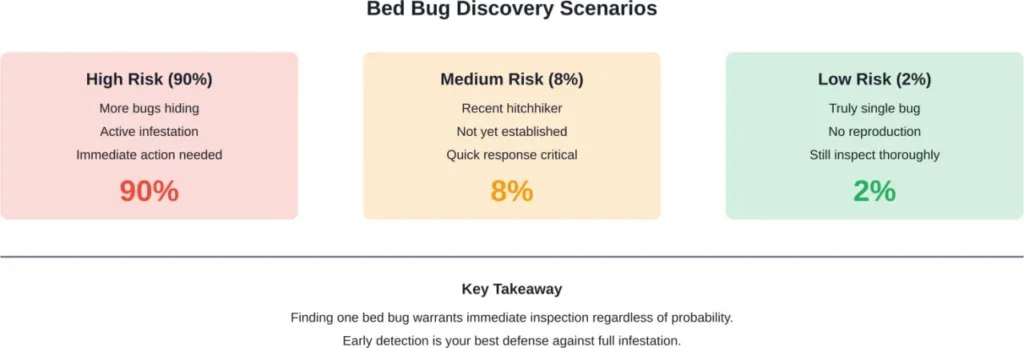
Here’s the thing though—while it’s technically possible to have just one bed bug, the odds aren’t in your favor. Community discussions reveal that some people have indeed found a single hitchhiker that never led to a larger problem. But these cases are the exception, not the rule.
Understanding what a single bed bug sighting really means can help you respond appropriately without losing sleep over every shadow.
What Does Finding One Bed Bug Actually Mean?
The short answer? In most situations, one visible bed bug suggests more are hiding nearby.
Bed bugs don’t live solitary lives. They’re social insects that cluster together in harborages—cracks, crevices, mattress seams, and furniture joints. According to the EPA, adult bed bugs are about the size of an apple seed, brown and oval-shaped. They’re flat when hungry and balloon-like after feeding on blood.
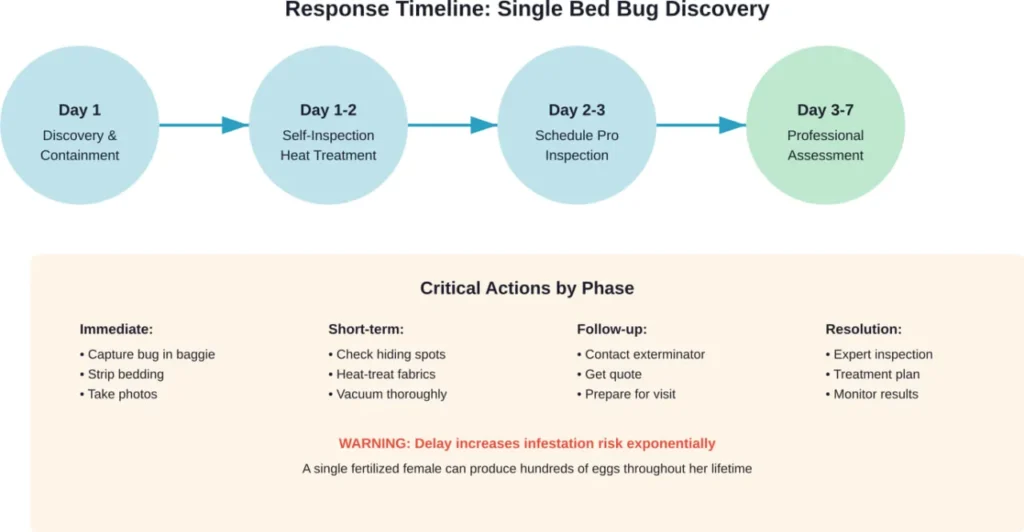
Real talk: bed bugs multiply quickly. A single fertilized female can produce hundreds of eggs throughout her lifetime. Those eggs hatch into nymphs—translucent or whitish-yellow smaller versions that are harder to spot.
That said, there are legitimate scenarios where you might have just one:
- A single bug hitchhiked home on your clothing or luggage but hasn’t reproduced yet
- You caught the problem incredibly early, before a male and female paired up
- The bug came from a nearby apartment or hotel room but didn’t establish a colony
- You found a stray male that can’t reproduce on its own
User experiences from community discussions confirm these rare cases happen. Community discussions document cases where individuals found a single bed bug that never led to further issues after immediate action.
Signs You Have More Than One Bed Bug
Don’t just assume a single sighting means you’re in the clear. Look for these telltale signs:
Physical evidence on your mattress and furniture: Dark spots (fecal stains), reddish-brown smears (crushed bugs), tiny white eggs in seams and crevices, shed skins from molting nymphs.
Bites on your body: Small red welts, often in clusters or lines. But here’s the catch—not everyone reacts to bed bug bites. Some people show no symptoms at all.
Musty odor: Large infestations produce a sweet, musty smell from pheromones released by bed bugs.
According to research from the Norwegian Institute of Public Health, after bed bugs feed, approximately 90% move to hiding places within 24 hours. They require about three days to settle completely, with generally low activity levels afterward. This means you won’t see them parading around—they’re masters of concealment.
Immediate Steps After Finding One Bed Bug
Sound familiar? You’ve spotted the bug, captured it, and now you’re wondering what comes next.
First, don’t panic. But don’t ignore it either. Here’s your action plan:
| Step | Action | Why It Matters |
|---|---|---|
| 1. Preserve Evidence | Place the bug in a sealed plastic baggie or container | Professional identification confirms it’s actually a bed bug—many bugs look similar |
| 2. Inspect Thoroughly | Check mattress seams, box springs, bed frames, nearby furniture | Early detection reveals the scope of the problem |
| 3. Wash and Heat-Treat | Launder bedding and clothing on high heat for 30 minutes minimum | EPA guidance confirms high heat kills all bed bug life stages |
| 4. Call Pest Control | Schedule a professional inspection even if you don’t see more bugs | Trained experts spot signs invisible to untrained eyes |
| 5. Document Everything | Take photos, note the date and location of discovery | Helpful for pest control and potential housing disputes |
According to EPA guidance on bed bug control in schools, placing potentially infested clothing in a hot dryer for 30 minutes at the highest heat setting will kill all stages of bed bugs. This same principle applies to residential settings.
When to Call Professional Pest Control
The answer? Immediately.
Even if you’ve only seen a single bed bug, professional inspection is worth the investment. Pest control experts know exactly where to look and can spot early warning signs you’d miss.
But wait. What if it really is just one bug and you spend money for nothing?
Consider the alternative: ignoring a potential infestation that grows exponentially over weeks or months. The cost of treating a severe infestation far exceeds an early inspection.
Professionals use specialized tools and techniques unavailable to homeowners. They can determine whether you have an active infestation or caught a lone straggler before it became a problem.
Common Bed Bug Myths Debunked
The Utah Department of Health addresses several bed bug myths that cause unnecessary confusion.
Myth: You can’t see bed bugs. Reality: Adult bed bugs, nymphs, and eggs are all visible to the naked eye, though eggs and early-stage nymphs require close inspection.
Myth: One bed bug always means infestation. Reality: While highly probable, there are rare cases of isolated bugs that didn’t establish populations.
Myth: Bed bugs only live in beds. Reality: They hide in furniture, outlets, picture frames, and anywhere close to sleeping areas.
Myth: Bed bugs spread disease. Reality: Despite feeding on blood, bed bugs aren’t known to transmit diseases to humans, though bites can cause allergic reactions and secondary infections from scratching.
Frequently Asked Questions
No. Bed bugs require mating between males and females to reproduce. A single male or unfertilized female cannot create an infestation alone. However, a single fertilized female can lay hundreds of eggs, rapidly establishing a population.
Adult bed bugs can survive several months without feeding, sometimes up to a year in cool conditions. This means a single bug can remain dormant in your home for extended periods waiting for a meal.
Not necessarily. Mattress disposal is expensive and often unnecessary. Professional treatment can eliminate bed bugs from mattresses effectively. Save the expense unless the infestation is severe or the mattress is damaged beyond repair.
According to the EPA, adult bed bugs are approximately the size of an apple seed, brown, oval-shaped, and flat when unfed. Many bugs resemble bed bugs, so professional identification is recommended. Place the specimen in a sealed container and have an expert verify the species.
Absolutely. Bed bugs travel through wall voids, electrical conduits, and pipes between units. A single bug from a neighboring apartment could wander into your space. This is why apartment dwellers should notify property management immediately upon discovery.
Yes, bed bugs are excellent hitchhikers. They can attach to clothing, bags, or personal items from infested locations like hotels, public transportation, theaters, or workplaces. This is one scenario where you might genuinely have just one bug that hasn’t established a colony yet.
Continue monitoring for several weeks. Inspect your sleeping area regularly, use mattress encasements, and maintain vigilance. Sometimes a single bug really is just that—but staying alert ensures you’ll catch any future problems early.
Prevention Strategies Going Forward
Whether you had one bug or narrowly avoided an infestation, prevention is critical:
- Inspect hotel rooms before unpacking during travel
- Keep luggage on stands away from beds and walls
- Wash and heat-dry clothing immediately after trips
- Use mattress and box spring encasements designed for bed bug prevention
- Reduce clutter that provides hiding spots
- Vacuum regularly, especially around beds and furniture
- Seal cracks and crevices in walls and baseboards
Now, this is where it gets interesting. Prevention is significantly easier than elimination. The effort invested in defensive measures pays dividends compared to the cost and stress of treating an established infestation.
Final Thoughts on the One Bed Bug Question
So can you really have just one bed bug? Technically yes. Realistically? Probably not.
The odds strongly favor the presence of additional bugs when you spot one. That said, catching the problem at the single-bug stage—whether it’s truly alone or just the first you’ve noticed—gives you the best chance of preventing a serious infestation.
Don’t gamble with maybes and probabilities. Treat every bed bug sighting as serious, act immediately, and bring in professionals to assess the situation properly. Early action is your strongest weapon against these persistent pests.
Contact a licensed pest control company today if you’ve found even one bed bug in your home. The peace of mind from professional confirmation is worth far more than the anxiety of wondering whether more are hiding in the shadows.