

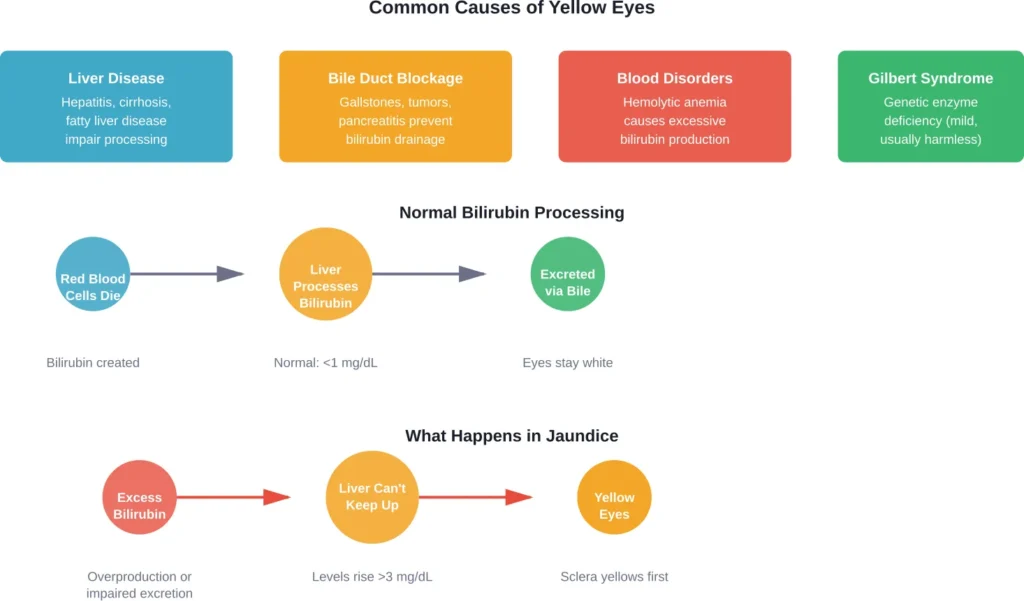
Quick Summary: Yes, it’s possible to have yellow eyes—a condition called jaundice that occurs when bilirubin (a yellow pigment from broken-down red blood cells) builds up in your body. Normal bilirubin levels are less than 1 mg/dL, but yellow discoloration becomes visible when levels exceed 3 mg/dL. This yellowing typically indicates liver disease, bile duct blockage, or certain blood disorders that require medical attention.
When the whites of your eyes—medically known as the sclera—take on a yellow tint, it’s not just cosmetically concerning. It’s your body waving a red flag about something happening internally.
The short answer? Absolutely, yellow eyes are possible. And they’re more common than many people realize.
According to the National Institutes of Health, this yellowing occurs when bilirubin accumulates in your body tissue.
What Exactly Causes Eyes to Turn Yellow?
The medical term for yellow eyes is jaundice, also called hyperbilirubinemia. But what’s actually happening inside your body?
Every day, a small number of red blood cells die and get replaced. Your liver and spleen remove these old cells, creating bilirubin as a byproduct. Normally, your liver processes this yellow substance and removes it through bile.
When something disrupts this process—either your body produces too much bilirubin or your liver can’t eliminate it properly—levels climb above normal.
Here’s the thing though: you won’t notice yellowing immediately. According to research from the National Library of Medicine, clinical presentation of jaundice becomes noticeable only when serum bilirubin levels exceed 3 mg/dL, well above the normal threshold of less than 1 mg/dL.
The sclera yellows first and is often the most visible sign of jaundice. With further increases in bilirubin, skin discoloration follows, ranging from lemon yellow to apple green in long-standing cases. That greenish tint? It’s from biliverdin, another bile pigment.
Common Medical Conditions That Cause Yellow Eyes
Several health conditions can trigger bilirubin buildup. Some are relatively minor, while others demand immediate medical attention.
Liver Disease and Cirrhosis
The liver plays the starring role in processing bilirubin. When liver disease develops—whether from hepatitis, fatty liver disease, or chronic alcoholism—this processing system breaks down.
Cirrhosis represents advanced scarring of liver tissue. As healthy liver cells die and scar tissue takes over, the liver loses its ability to filter bilirubin effectively.
Gallstones and Bile Duct Blockages
Bile is made by the liver and stored in the gallbladder. When gallstones form and block the bile ducts connecting your liver to your intestines, bilirubin has nowhere to go. It backs up into your bloodstream instead.
Pancreatitis commonly causes jaundice through this same mechanism—a blockage preventing normal bile flow.
Gilbert Syndrome
This genetic condition affects about 3% to 7% of people. If born with Gilbert syndrome, the liver doesn’t produce enough of a specific enzyme needed to process bilirubin efficiently.
Most people with this condition experience mild, intermittent yellowing that worsens during stress, illness, or fasting. It’s generally harmless but worth monitoring.
Hemolytic Anemia and Blood Disorders
Sometimes the problem isn’t with bilirubin removal—it’s with overproduction. Hemolytic anemia causes red blood cells to break down faster than normal, flooding your system with more bilirubin than your liver can handle.
Certain inherited blood disorders create similar problems, overwhelming even a healthy liver’s processing capacity.
Cancers Affecting the Bile System
Liver cancer, pancreatic cancer, and gallbladder cancer can all obstruct bile flow or damage liver function. These cancers often present with jaundice as an early symptom.
Yellow Eyes in Newborns: A Special Case
Jaundice affects a staggering number of newborns. Research published in Biomedical Optics Express indicates that 60% of term infants and 80% of preterm infants develop jaundice in their first week of life. About 10% of breastfed babies remain jaundiced at four weeks old.
Why so common in babies? Newborn livers aren’t fully developed yet. They struggle to process bilirubin efficiently, especially in the first few days after birth.
Most cases of neonatal jaundice resolve on their own as the baby’s liver matures. Phototherapy (light treatment) helps in more severe cases by breaking down bilirubin in the skin.
But wait. While usually benign, severe neonatal jaundice can become life-threatening if bilirubin levels climb too high. That’s why hospitals monitor newborns closely before discharge.
When Yellow Eyes Signal an Emergency
Not all yellow eyes require panic. Gilbert syndrome, for instance, causes intermittent mild yellowing without serious consequences.
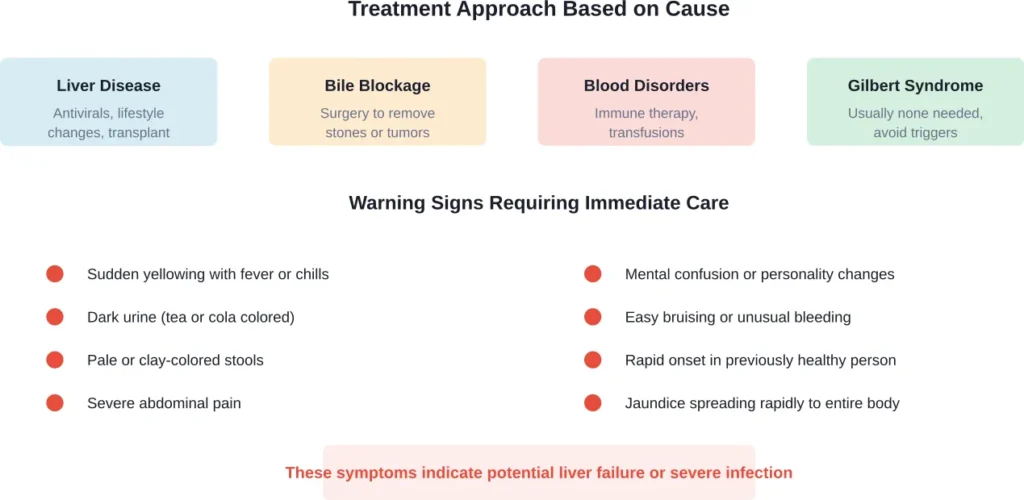
However, certain warning signs demand immediate medical attention:
- Sudden onset of yellowing accompanied by fever
- Dark urine resembling tea or cola
- Pale or clay-colored stools
- Severe abdominal pain
- Confusion or changes in mental status
- Easy bruising or bleeding
These symptoms suggest acute liver failure, severe infection, or bile duct obstruction—all medical emergencies.
How Doctors Diagnose the Cause of Yellow Eyes
When jaundice appears, doctors run several tests to pinpoint the underlying cause.
Blood tests measure total bilirubin levels, liver enzyme levels, and complete blood counts. These results reveal whether the problem stems from liver disease, bile duct obstruction, or blood disorders.
Imaging studies like ultrasound, CT scans, or MRI help visualize the liver, gallbladder, and bile ducts. These scans can identify gallstones, tumors, or structural abnormalities.
In some cases, liver biopsy becomes necessary to diagnose specific liver diseases or assess cirrhosis severity.
| Diagnostic Test | What It Reveals | When It’s Used |
|---|---|---|
| Bilirubin Blood Test | Total and direct bilirubin levels | First-line test for all jaundice cases |
| Liver Function Panel | Enzyme levels indicating liver damage | Assessing liver health and function |
| Complete Blood Count | Red blood cell breakdown rates | Suspected hemolytic anemia |
| Abdominal Ultrasound | Gallstones, liver size, bile duct dilation | Suspected blockage or structural issues |
| CT or MRI Scan | Detailed liver and pancreas imaging | Cancer screening or complex cases |
| Liver Biopsy | Tissue analysis for specific diseases | Unclear diagnosis or cirrhosis staging |
Treatment Options for Yellow Eyes
Here’s the thing: yellow eyes are a symptom, not a disease. Treatment focuses on addressing the root cause.
Treating Underlying Liver Disease
Hepatitis may require antiviral medications. Autoimmune liver diseases respond to immunosuppressive drugs. Alcoholic liver disease demands complete alcohol cessation.
Advanced cirrhosis may eventually require liver transplantation when the liver fails completely.
Removing Bile Duct Obstructions
Gallstones blocking bile ducts typically require surgical removal of the gallbladder (cholecystectomy). Endoscopic procedures can clear stones from the bile ducts themselves.
Tumors obstructing bile flow may need surgery, chemotherapy, or radiation depending on cancer type and stage.
Managing Blood Disorders
Hemolytic anemia treatment varies based on cause. Some cases require medications to suppress the immune system. Others need blood transfusions or spleen removal.
Gilbert Syndrome Management
This condition rarely needs treatment. Avoiding triggers like fasting, dehydration, and stress helps minimize yellowing episodes.
Can Yellow Eyes Be Prevented?
Prevention depends on the underlying cause. Some conditions like Gilbert syndrome are genetic and can’t be prevented.
However, several preventive measures reduce risk for acquired causes:
- Limit alcohol consumption to protect liver health
- Maintain healthy weight to prevent fatty liver disease
- Get vaccinated against hepatitis A and B
- Use medications only as prescribed (many drugs can damage the liver)
- Practice safe sex and avoid sharing needles to prevent hepatitis transmission
- Eat a balanced diet rich in antioxidants
The Outlook for People With Yellow Eyes
Prognosis varies dramatically based on the underlying condition.
Gilbert syndrome carries an excellent outlook—it’s a benign condition that doesn’t affect lifespan or quality of life. Gallstones treated surgically typically resolve completely with no recurrence of jaundice.
Hepatitis outcomes depend on type and treatment timing. Hepatitis A usually resolves on its own. Hepatitis C can now be cured with modern antiviral medications in most cases.
Advanced cirrhosis and liver cancer carry more serious prognoses, though treatment advances continue improving outcomes. Early detection makes a massive difference.
Frequently Asked Questions
Sometimes, yes. Mild cases caused by Gilbert syndrome or resolving viral infections may clear without treatment. However, persistent yellow eyes require medical evaluation to rule out serious conditions. Don’t wait more than a few days to see a doctor if yellowing doesn’t improve.
No, healthy sclerae should appear white. Even slight yellowing indicates elevated bilirubin levels above 3 mg/dL. While not always dangerous, this warrants medical assessment to identify the cause.
Excessive consumption of carotene-rich foods (carrots, sweet potatoes, squash) can cause yellowish skin discoloration called carotenoderma, but this condition spares the sclerae. If the whites of the eyes turn yellow, it’s not from diet—it’s jaundice requiring medical evaluation.
Onset varies. Acute conditions like gallstone obstruction or sudden hemolysis can cause yellowing within hours to days. Chronic liver disease may produce gradual yellowing over weeks to months. Sudden onset typically signals a more urgent problem.
Not necessarily. While liver disease is a common cause, yellow eyes can also result from bile duct blockages, blood disorders, pancreatic problems, or genetic conditions like Gilbert syndrome. Only proper medical testing can determine the specific cause.
Mild neonatal jaundice is harmless and extremely common. However, severe untreated jaundice can lead to kernicterus, a type of brain damage. This is why hospitals monitor bilirubin levels closely in newborns and treat elevated levels promptly with phototherapy.
The yellow eyes themselves aren’t contagious, but some underlying causes are. Viral hepatitis can spread through contaminated food, water, blood, or sexual contact. If someone has jaundice from hepatitis, appropriate precautions prevent transmission to others.
Don’t Ignore Yellow Eyes
So, is it possible to have yellow eyes? Absolutely. And when it happens, your body is telling you something important.
The yellowing occurs when bilirubin levels climb above 3 mg/dL, making the sclera visibly discolored. This buildup signals problems with liver function, bile drainage, or red blood cell breakdown.
Some causes are relatively benign. Gilbert syndrome affects about 3% to 7% of people with minimal health impact. But other causes—cirrhosis, cancer, acute liver failure—demand immediate intervention.
Real talk: don’t play doctor with yellow eyes. The stakes are too high. Schedule an appointment with a healthcare provider for proper diagnosis and treatment. Early detection of serious liver disease dramatically improves outcomes.
Your eyes do more than help you see the world. Sometimes, they reveal what’s happening inside your body. Listen to what they’re telling you.