

Quick Summary: Yes, it’s possible to live in a hotel long-term, and many people do exactly that for various reasons—from apartment hunting to lifestyle flexibility. Extended-stay hotels often offer weekly or monthly rates that can rival apartment rent, especially when you factor in utilities and furnishings. However, legal considerations, tenant rights, and costs vary significantly by location and duration of stay.
The idea of living in a hotel might sound extravagant or eccentric. Famous figures like a famous French designer lived at the Ritz Hotel in Paris for 37 years, while the Chelsea Hotel in New York City housed legendary musicians and writers who made it their long-term home.
But hotel living isn’t just for celebrities or the ultra-wealthy anymore. Extended-stay hotels have transformed the landscape, offering weekly and monthly rates that make long-term hotel residence practical for business travelers, people in housing transitions, and those seeking a minimalist lifestyle.
So is it actually feasible? The short answer is yes—but there’s a lot more to consider before trading your lease for a key card.
What Does It Mean to Live in a Hotel?
Living in a hotel typically means staying at a hotel property for an extended period—anywhere from several weeks to months or even years. This differs from traditional hotel stays that last a few nights.
Extended-stay hotels specifically cater to this market. They offer amenities that traditional hotels don’t, like full kitchens, separate living areas, and laundry facilities. These properties understand that guests need more than a bed and a bathroom when staying for weeks or months.
The arrangement can be temporary—such as living in a hotel while apartment hunting—or more permanent as a lifestyle choice. Some people prefer the flexibility and lack of long-term commitment that hotel living provides.
Is It Legal to Live in a Hotel?
Here’s where things get interesting. Hotel living exists in a legal gray area that varies significantly by jurisdiction.
Most hotels welcome extended stays and profit from them. However, local laws and hotel policies create boundaries around how long guests can stay before their legal status changes.
Tenant Rights and Extended Stays
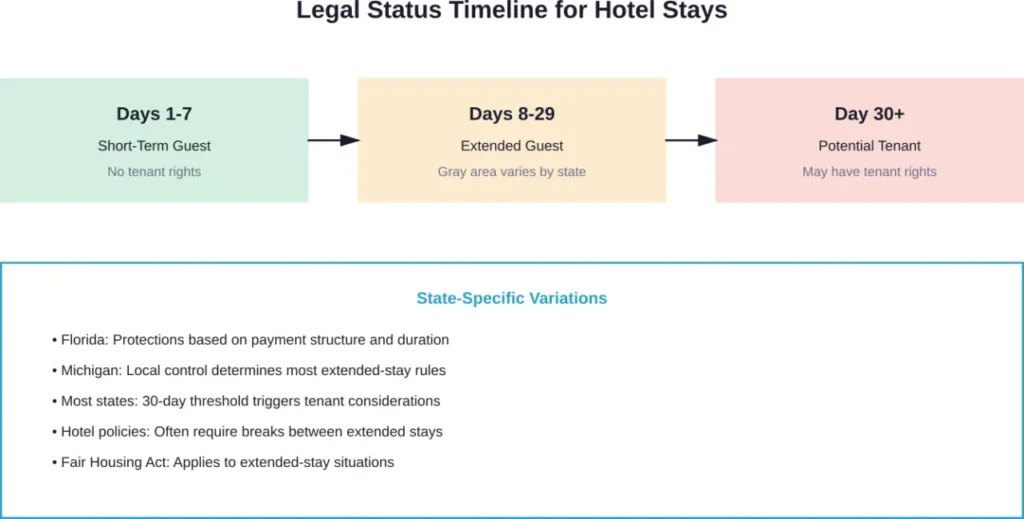
In many states, staying at a hotel beyond a certain timeframe can grant tenant rights. This creates complications for both hotels and guests.
According to the Fair Housing Act considerations in the extended-stay industry, hotels must navigate complex legal terrain when guests transition from short-term visitors to potential long-term residents. The duration that triggers tenant protections varies by state—some set the threshold at 30 days, others at different intervals.
Florida statutes, for instance, distinguish between transient accommodations and residential tenancies based on duration and payment structure. When stays exceed certain periods or when monthly payment arrangements exist, occupants may gain protections under landlord-tenant law.
This matters because tenant rights include protections against arbitrary eviction. Hotels typically reserve the right to ask any guest to leave with minimal notice, but once someone establishes residency, formal eviction proceedings may be required.
Hotel Policies on Extended Stays
Many hotels set maximum stay limits precisely to avoid these legal complications. Common policies include:
- Maximum consecutive stay periods (often 28-30 days)
- Required breaks between extended stays at the same property
- Different rate structures for long-term guests
- Specific extended-stay agreements with different terms than standard reservations
Always clarify the hotel’s extended-stay policy before committing to a long-term arrangement. Some properties embrace long-term guests, while others actively discourage them.
How Much Does It Cost to Live in a Hotel?
Cost is often the deciding factor for anyone considering hotel living. The numbers vary dramatically based on location, hotel type, and negotiating power.
According to data from KAYAK, the average hotel rate needs context when compared to housing costs. Recent data shows that according to KAYAK data, the average monthly rental price for all bedrooms and property types in the US is approximately $2,100.
But does hotel living compare favorably? That depends on several factors.
Breaking Down Hotel Living Costs
Extended-stay hotels typically offer three rate structures:
- Daily rates: The most expensive option, suitable only for very short stays
- Weekly rates: Often 20-30% cheaper than paying daily rates for seven nights
- Monthly rates: The most economical for long-term stays, sometimes approaching or beating apartment rent
When calculating true costs, factor in what’s included. Most extended-stay hotels provide:
- All utilities (electricity, water, heating, air conditioning)
- Internet and cable TV
- Weekly housekeeping and fresh linens
- Furnished accommodations
- Basic kitchen appliances
An apartment at $2,100 per month doesn’t include utilities (typically $150-300), internet ($60-100), or furniture. When factoring these costs, hotel living becomes more competitive than it initially appears.
Hidden Costs to Consider
Hotel living includes expenses that apartment dwellers don’t face:
- Limited storage: Paying for external storage negates cost savings
- Eating out: Even with a kitchenette, limited cooking space often leads to more restaurant meals
- Parking fees: Some hotels charge daily parking rates that add up quickly
- Pet fees: Daily pet charges can be substantial for animal owners
| Cost Factor | Apartment | Extended-Stay Hotel |
|---|---|---|
| Base rent/rate | $2,100/month | $1,800-2,500/month |
| Utilities | $150-300/month | Included |
| Internet/cable | $60-100/month | Included |
| Furniture | $3,000-10,000 upfront | Included |
| Security deposit | $2,100+ (one-time) | Usually none |
| Housekeeping | DIY or extra cost | Weekly service included |
| Lease commitment | 6-12 months typical | Week-to-week or month-to-month |
Pros and Cons of Living in a Hotel
Like any housing arrangement, hotel living comes with distinct advantages and drawbacks.
Advantages of Hotel Living
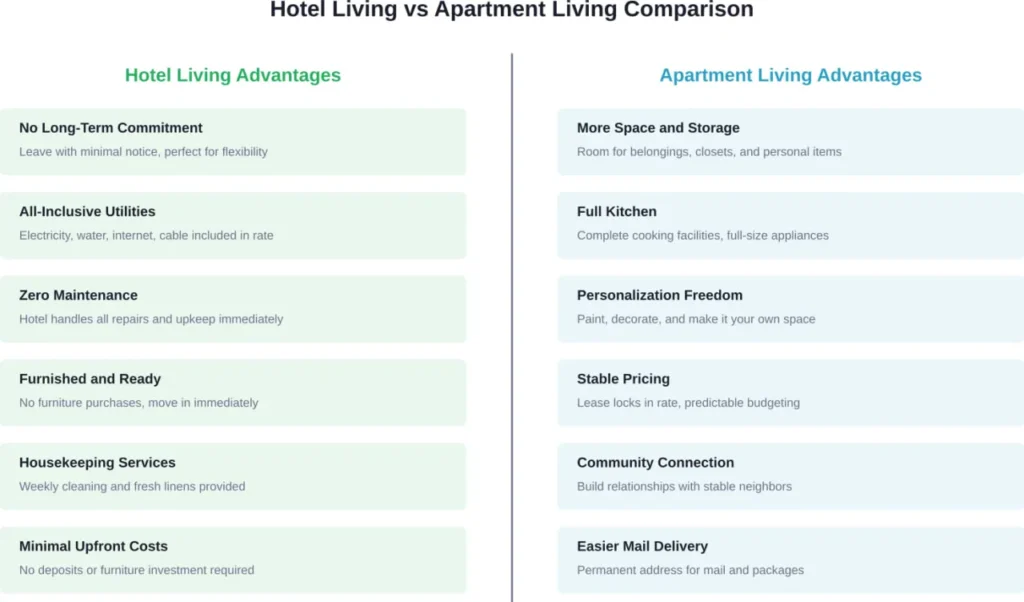
Flexibility and mobility: Week-to-week or month-to-month arrangements allow quick relocation without lease penalties. This appeals to people in career transitions, digital nomads, or anyone who values geographic freedom.
No maintenance responsibilities: Broken appliances, plumbing issues, or HVAC problems become someone else’s problem. The hotel handles all repairs and maintenance immediately.
Amenities included: Access to fitness centers, pools, business centers, and common areas comes standard. These amenities would cost extra in most apartment complexes or require separate memberships.
Minimal upfront costs: Moving into an apartment requires first month’s rent, last month’s rent, security deposit, and furniture purchases. Hotels require none of this—just show up with a credit card.
Simplified lifestyle: Limited space forces minimalism. Less stuff means less to clean, organize, and worry about. For some people, this simplification is liberating.
According to a Yale School of Public Health study, individuals housed in hotels reported improvements in health and well-being. Access to basic amenities like a private bathroom, food storage, and reliable electrical outlets helped occupants gain more control over their time and schedules.
Disadvantages of Hotel Living
Limited space and storage: Even spacious hotel suites offer less storage than apartments. Long-term residents struggle to store seasonal items, hobby equipment, or accumulated belongings.
Lack of personalization: Hotels restrict decorating, painting, or making spaces feel like home. The generic hotel aesthetic gets tiresome after months of residence.
Potential cost variability: Hotels can raise rates with minimal notice. Apartment leases lock in pricing for the lease term, providing budget certainty.
Limited kitchen facilities: Hotel kitchenettes typically include a microwave, mini-fridge, and maybe a two-burner stove. Cooking elaborate meals or meal-prepping for the week becomes challenging.
Social isolation: Hotels lack the community aspect of apartment buildings. Neighbors constantly change, making it difficult to build relationships or feel rooted in a community.
Mail and package delivery: Receiving mail at hotels creates complications. While extended-stay properties often accommodate package delivery, the situation is less straightforward than having a permanent address.
Hotel Chains That Accommodate Long-Term Stays
Not all hotels welcome extended-stay guests, but several major chains specifically cater to this market.
Extended Stay America: The name says it all. This chain specializes in long-term accommodations with full kitchens, weekly rates, and flexible policies designed for extended guests.
Residence Inn by Marriott: Designed for stays of five nights or longer, Residence Inn offers apartment-style suites with full kitchens, separate living areas, and complimentary breakfast.
Homewood Suites by Hilton: Similar to Residence Inn, Homewood Suites provides home-like accommodations with full kitchens and weekly social events for guests.
Candlewood Suites: Part of the IHG family, Candlewood Suites offers extended-stay accommodations without daily housekeeping but with full kitchens and free laundry facilities.
InTown Suites: Budget-focused extended-stay properties that offer weekly rates with basic amenities and no required long-term commitment.
Suburban Extended Stay: Another budget-friendly option providing weekly rates and essential amenities for cost-conscious long-term guests.
Apps like Hotels.com and HotelTonight sometimes offer better deals on extended stays than booking directly. Always compare rates across multiple platforms before committing.
Practical Tips for Living in a Hotel Long-Term
Making hotel living work requires strategy and adaptation. Here’s how to maximize comfort and minimize headaches.
Choose the Right Hotel
Not every extended-stay property is created equal. Prioritize these features:
- Full kitchen with stovetop (not just a microwave)
- In-room washer/dryer or on-site laundry facilities
- Adequate storage and closet space
- Separate living and sleeping areas
- Strong internet connectivity for work-from-home situations
- Location near grocery stores, gyms, and essential services
Visit the property before committing to a long stay. Photos online can be misleading, and seeing the room in person reveals important details about space, condition, and noise levels.
Negotiate Your Rate
Published rates are rarely the best rates for extended stays. Call the hotel directly and speak with a manager about long-term pricing. Many properties offer unpublished weekly or monthly rates that beat anything available online.
Negotiating points include:
- Length of commitment (longer stays get better rates)
- Reduced housekeeping frequency (weekly instead of daily)
- Paying upfront for multiple weeks or months
- Corporate or government rates if applicable
Minimize Your Belongings
Limited hotel storage makes minimalism necessary. If items haven’t been used in a year, they probably aren’t essential. Donate, sell, or discard them rather than paying for external storage that negates hotel living’s cost benefits.
Focus on versatile items that serve multiple purposes. A laptop replaces books, TV, and stereo. Quality basics in neutral colors maximize outfit combinations while minimizing wardrobe space.
Establish Routines and Boundaries
Hotel living can feel transient and unsettling without intentional routines. Establish regular wake times, meal patterns, and work schedules just as in any permanent residence.
Create boundaries with hotel staff. While daily housekeeping is nice initially, many long-term residents prefer privacy and opt for weekly service. Communicate preferences clearly to avoid unwanted interruptions.
Handle Mail and Packages Strategically
Most extended-stay hotels accept packages for guests, but confirm their policy. Some charge fees or have restrictions on package size and number.
Consider these alternatives:
- Rent a PO box at the local post office
- Use a private mailbox service with a street address
- Have important mail sent to family or friends
- Use package lockers like Amazon Hub for deliveries
Build Community Connections
Combat social isolation by intentionally connecting with people outside the hotel. Join local gyms, co-working spaces, clubs, or community groups. These connections provide the social anchoring that hotel living naturally lacks.
Some long-term hotel residents report feeling rootless without community ties. Proactively building connections in the surrounding area counteracts this challenge.
Alternatives to Hotel Living
If hotel living doesn’t quite fit, consider these related options that offer similar flexibility.
Furnished Short-Term Rentals
Platforms like Airbnb, VRBO, and Furnished Finder offer apartments and homes for monthly rentals. These typically provide more space and kitchen facilities than hotels, often at competitive prices for stays of 30 days or longer.
Monthly rates on these platforms often include significant discounts compared to nightly rates. Furnished apartments provide more normalcy and privacy than hotel living while maintaining flexibility.
Corporate Housing
Corporate housing companies specialize in temporary furnished accommodations for business travelers and people in transition. These fully furnished apartments include utilities, housewares, and flexible lease terms starting at 30 days.
While typically more expensive than unfurnished apartments, corporate housing costs less than extended hotel stays for similar amenities and space.
Extended-Stay Rentals
Some apartment communities offer short-term leases or month-to-month arrangements, particularly when they have vacant units. These provide traditional apartment amenities with less commitment than standard year-long leases.
Expect to pay premium rent for this flexibility—typically 20-40% more than standard lease rates.
House Sitting or Property Caretaking
Platforms connect property owners who need caretakers with people seeking temporary housing. House sitting arrangements can provide free or low-cost housing in exchange for property maintenance, pet care, or security presence.
This option requires flexibility and responsibility but can dramatically reduce housing costs while providing more space than hotels.
| Housing Option | Typical Cost Range | Minimum Stay | Flexibility | Best For |
|---|---|---|---|---|
| Extended-Stay Hotel | $1,800-3,000/month | 1 week | Very high | Maximum flexibility, short notice |
| Short-Term Rental (Airbnb) | $2,000-4,000/month | 30 days typical | High | More space, home-like feel |
| Corporate Housing | $2,500-5,000/month | 30 days | Medium-high | Business travelers, relocations |
| Month-to-Month Apartment | $1,400-2,800/month | 1 month | Medium | Testing new cities, job transitions |
| Traditional Apartment | $1,200-2,500/month | 6-12 months | Low | Stability, cost efficiency |
Who Should Consider Hotel Living?
Hotel living isn’t for everyone, but it’s ideal for specific situations and personality types.
People in housing transitions: Between homes, waiting for a new place to become available, or uncertain about where to settle permanently? Hotels bridge the gap without requiring long-term commitments.
Traveling professionals: Consultants, traveling nurses, contract workers, and others whose jobs require frequent relocation benefit from hotel flexibility. No furniture to move, no leases to break.
Minimalists seeking simplicity: Some people genuinely prefer living with fewer possessions and less maintenance responsibility. Hotel living forces minimalism and eliminates home ownership burdens.
Location explorers: Testing cities before committing to a move? Living in a hotel for a few months provides authentic experience of daily life in a new place without signing a lease.
People recovering from disruptions: After divorce, job loss, or other major life changes, hotel living offers stability during uncertain times. While hotels provided stability and improved well-being, study participants reported stress about the uncertainty of stay duration. These accommodations help individuals gain control over their schedules and improve health through access to basic amenities like private bathrooms and reliable electricity.
Common Challenges and How to Overcome Them
Long-term hotel residents face predictable challenges. Addressing them proactively makes the experience more sustainable.
Feeling Rootless
The transient nature of hotel living can create a sense of not belonging anywhere. Combat this by establishing routines, frequenting the same local businesses, and building relationships in the community rather than just at the hotel.
Limited Cooking Options
Hotel kitchenettes lack the equipment and counter space of full kitchens. Invest in a few quality portable appliances like an electric pressure cooker, air fryer, or induction burner. These expand cooking capabilities dramatically while remaining compact.
Meal planning becomes essential. Shop more frequently for fresh ingredients rather than trying to stock a week’s worth in a mini-fridge.
Noise and Privacy Concerns
Hotels have thin walls and active hallways. Noise-canceling headphones, white noise machines, and strategic room selection help. Request rooms away from elevators, ice machines, and vending areas. Upper floors and end units typically offer more quiet.
Maintaining Work-Life Balance
When living and working in the same small space, boundaries blur. Create physical separation by designating specific areas for work versus relaxation. Leave the room daily, even briefly, to maintain sanity and perspective.
Frequently Asked Questions
There’s no universal legal limit on hotel stays, but most jurisdictions have thresholds where extended guests may gain tenant rights—typically around 30 days. Many hotels set their own maximum stay policies to avoid these legal complications. Check both local laws and specific hotel policies before planning an extended stay.
It depends on location and circumstances. Extended-stay hotel rates typically range from $1,800-3,000 monthly, which can be competitive with apartments when factoring in utilities, furniture, and flexibility. However, apartments usually offer more space and better long-term value for stays exceeding a few months.
Most extended-stay hotels accept mail and packages for long-term guests, but policies vary. Always confirm with management before using the hotel as a mailing address. For important documents or frequent deliveries, consider renting a PO box or private mailbox service for more reliability.
Unlike apartments, hotels typically don’t require formal applications, background checks, or credit checks. However, they do require a valid credit card and may place holds for incidental charges. Some properties verify identification and payment ability, especially for extended arrangements.
Payment policies vary by property. Some extended-stay hotels require weekly or monthly prepayment. If payment fails, the hotel may ask guests to leave immediately or potentially hold belongings until payment is received. Unlike apartment evictions, hotels can typically remove non-paying guests much more quickly since tenant protections may not apply.
Establishing legal residency at a hotel is complicated and varies by jurisdiction. Most states require a more permanent address for voter registration and tax purposes. Consult with local election officials and tax professionals about specific residency requirements in the relevant jurisdiction.
Pet policies vary significantly. Many extended-stay chains accommodate pets but charge daily fees ($10-25 per pet per day) that add up quickly. Some properties restrict pet size or breed. Always verify pet policies and calculate additional costs before committing to a long-term stay with animals.
Making the Decision: Is Hotel Living Right for You?
Hotel living offers undeniable advantages for people valuing flexibility, simplicity, and freedom from maintenance responsibilities. The all-inclusive nature eliminates many financial variables, while the lack of long-term commitment allows rapid life changes.
But it’s not without significant trade-offs. Limited space, reduced privacy, potential cost variability, and social isolation challenge many long-term hotel residents. The lack of personalization and community roots can feel unsettling after the initial novelty wears off.
The decision ultimately depends on individual circumstances, priorities, and personality. For someone in a six-month work contract in a new city, hotel living makes perfect sense. For someone wanting to plant roots, build community, and accumulate belongings, traditional housing serves better.
Consider hotel living a viable option in the housing spectrum—not universally ideal, but perfectly suited for specific situations and people. The key is honest self-assessment about needs, priorities, and how long the arrangement will last.
Ready to explore extended-stay options in specific cities? Research hotel chains that specialize in long-term accommodations, compare rates against local apartment costs, and don’t hesitate to negotiate with properties directly. The flexibility and simplicity of hotel living might be exactly what the next chapter of life requires.