
Quick Summary: Losing 3 pounds in a single day is technically possible but almost entirely represents water weight, not fat loss. True fat loss requires a 10,500-calorie deficit, which is physiologically impossible to achieve safely in 24 hours. Rapid weight fluctuations from water loss, glycogen depletion, or digestive changes are normal and temporary.
Step on the scale one morning and see you’ve dropped 3 pounds overnight. Sounds like a win, right?
But here’s the thing—that number doesn’t tell the whole story. Weight fluctuates constantly, sometimes dramatically, for reasons that have nothing to do with actual fat loss.
So what’s really happening when the scale drops 3 pounds in 24 hours? And more importantly, is it something worth chasing?
The Math Behind Actual Fat Loss
Let’s get real about what losing 3 pounds of actual body fat would require.
One pound of fat contains approximately 3,500 calories. That means burning 3 pounds of pure fat demands a deficit of 10,500 calories in a single day.
To put that in perspective: most adults burn between 1,600 and 2,400 calories daily just existing. Even with intense exercise, adding another 500-800 calories burned is considered aggressive.
The math simply doesn’t work. Creating a 10,500-calorie deficit in 24 hours would require consuming nothing while simultaneously running multiple marathons.
According to the CDC, healthy weight loss occurs at a gradual, steady pace—about 1 to 2 pounds per week. Even modest weight loss of 5% to 10% of total body weight can improve blood pressure, cholesterol, and blood sugar levels.
So when the scale shows a 3-pound drop overnight, something else is happening.
What Really Causes Rapid Weight Fluctuations
The human body isn’t static. Weight shifts throughout the day and from day to day based on multiple factors.
Water Weight Changes
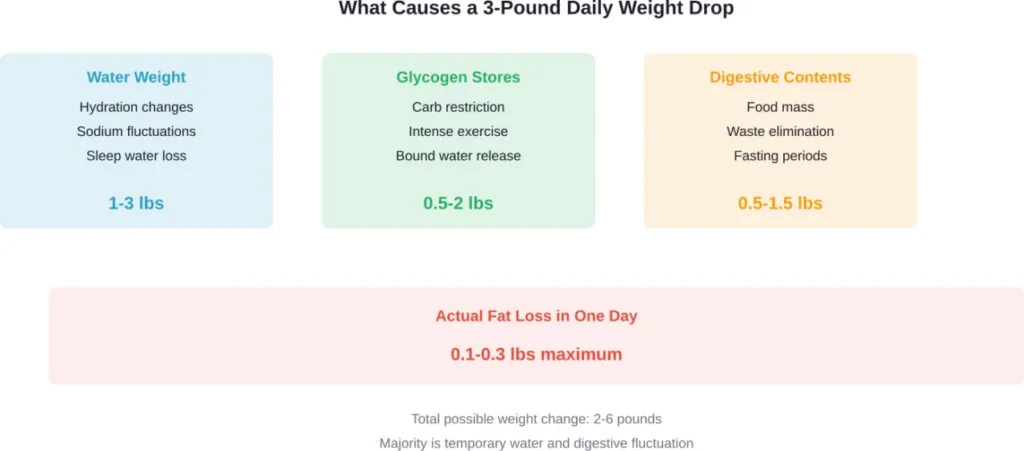
Water accounts for 50-60% of total body weight. Small changes in hydration status create significant scale movements.
Dehydration from reduced fluid intake, sweating, or simply breathing overnight can easily account for 2-4 pounds of weight loss. Rapid weight loss can induce measurable changes in body water and plasma volume.
Sodium intake plays a massive role here. High-sodium meals cause the body to retain water, while lower sodium days trigger water release. That single salty dinner can add 2-3 pounds temporarily.
Glycogen Depletion
The body stores carbohydrates as glycogen in muscles and the liver—roughly 500 grams on average.
Here’s where it gets interesting: each gram of glycogen binds to water to store carbohydrates. When glycogen stores deplete through low carbohydrate intake or intense exercise, the bound water releases too.
Burning through glycogen stores can account for 2-4 pounds of scale weight without touching fat reserves. This explains why low-carb diets create dramatic initial weight loss—it’s largely water.
Digestive System Contents
Food and waste moving through the digestive system adds measurable weight.
The average person carries 1-3 pounds of food and waste at any given time. A day with less food intake or a complete bowel movement can shift the scale noticeably.
Sleep also factors in. During sleep, the body loses water through breathing and sweating without any intake, contributing to overnight weight loss.
What Happens With Extreme Calorie Restriction
Some people attempt aggressive tactics to force rapid weight loss. The results rarely match expectations.
Severe calorie restriction—dropping intake to 500-1,000 calories daily—does create faster initial weight loss. But research shows this approach carries significant risks.
According to NCBI research on excessive weight loss, losing more than 10% of body weight or weight loss at faster rates may improve overall health markers initially but increases the possibility of health risks.
Muscle Loss Versus Fat Loss
The body doesn’t selectively burn fat when calories drop dramatically.
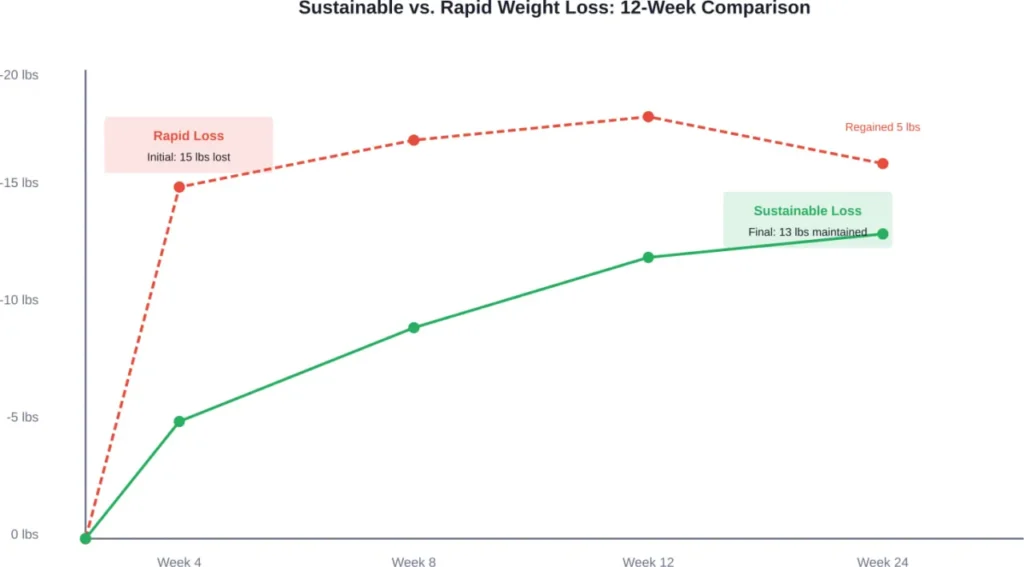
Rapid weight loss typically results in significant muscle mass loss alongside fat. Studies comparing rapid versus slow weight loss show that while both approaches can reduce body weight, rapid methods often sacrifice lean muscle tissue.
Muscle tissue burns calories even at rest. Losing muscle reduces metabolic rate, making future weight maintenance harder.
Metabolic Adaptation
The body adapts to severe calorie restriction by reducing energy expenditure.
Research on contestants from The Biggest Loser competition revealed persistent metabolic adaptation even six years after extreme weight loss. Participants burned significantly fewer calories than expected for their body size, creating a biological resistance to maintaining weight loss.
This metabolic slowdown isn’t just during active dieting—it persists long-term, making weight regain more likely.
Why Quick Weight Loss Doesn’t Last
The pattern repeats itself constantly: dramatic initial weight loss followed by rapid regain.
According to a 2023 review, people usually lose weight for 6 to 9 months before reaching a plateau, where weight loss drastically reduces or comes to a halt. At this point, many gradually regain the weight they lost.
Here’s why. When weight drops quickly through water depletion and glycogen reduction, those losses reverse as soon as normal eating resumes.
Drink water after a dehydrated day? The scale jumps back up. Eat carbohydrates after depletion? Glycogen and its bound water return.
This creates a frustrating cycle. The quick losses feel motivating, but they’re not sustainable markers of progress.
What Safe, Sustainable Weight Loss Looks Like
Real fat loss happens through consistent, moderate calorie deficits over time.
The CDC recommends aiming for 1 to 2 pounds per week. This pace allows for fat loss while preserving muscle mass and maintaining metabolic function.
For a 200-pound person, even a 5% weight reduction—just 10 pounds—can lower the risk for chronic diseases by improving metabolic markers.
Creating a Realistic Calorie Deficit
A deficit of 500-750 calories daily produces roughly 1-1.5 pounds of fat loss weekly.
This can come from a combination of reduced intake and increased activity. Cutting 300 calories from food while burning an extra 200 through exercise hits that target without extreme deprivation.
The approach needs to be sustainable. Extreme restrictions that can’t be maintained for months won’t create lasting results.
The Role of Physical Activity
Exercise supports weight loss but not just through calories burned.
According to the CDC, adults need at least 150 minutes of moderate-intensity aerobic activity weekly for overall health. This could be brisk walking 30 minutes daily, five days per week.
Strength training matters too. Building and maintaining muscle tissue increases resting metabolic rate and improves body composition even if scale weight changes slowly.
Common Scenarios That Create 3-Pound Drops
Community discussions reveal several situations where dramatic overnight weight changes occur.
After High-Sodium Days
Eating significantly more sodium than usual causes temporary water retention.
Restaurant meals, processed foods, and salty snacks often contain high sodium levels. The body responds by holding extra water to maintain proper sodium concentration.
The day after returning to normal sodium intake, that excess water releases, sometimes creating 2-4 pounds of scale movement.
Following Intense Exercise
Hard workouts deplete glycogen stores and cause significant fluid loss through sweat.
An intense training session can significantly deplete glycogen stores and result in measurable fluid loss through sweat. If that fluid isn’t immediately replaced, the next morning’s weigh-in shows a dramatic drop.
But this isn’t fat loss—it’s temporary depletion that reverses with proper recovery nutrition and hydration.
During Illness
Fever, reduced appetite, and increased fluid losses during illness create rapid weight changes.
A day or two of eating very little while battling a stomach bug or flu can show 3-5 pounds of weight loss. This represents dehydration and lack of digestive contents, not meaningful fat reduction.
When to Be Concerned About Rapid Weight Changes
While day-to-day fluctuations are normal, certain patterns warrant attention.
Unexplained weight loss of more than 5% of body weight over 6-12 months without trying deserves medical evaluation. This could indicate underlying health issues including thyroid problems, diabetes, or other metabolic conditions.
Rapid weight loss combined with extreme fatigue, dizziness, or other symptoms suggests potential problems. Medical consultation becomes important.
For athletes engaging in weight-class sports, repeated cycles of rapid weight loss and regain can have long-term metabolic consequences. Research shows this pattern affects body composition and energy metabolism negatively.
Better Metrics Than Daily Scale Weight
The scale provides limited information and high frustration potential.
Body Measurements
Waist circumference, hip measurements, and other body dimensions track fat loss more reliably than scale weight.
Losing inches while maintaining weight often indicates favorable body composition changes—fat loss with muscle preservation or gain.
How Clothing Fits
The way clothes fit provides practical, real-world feedback about body changes.
Pants fitting looser in the waist or shirts fitting better in the shoulders indicates progress regardless of scale numbers.
Performance Markers
Improved strength, endurance, or athletic performance signals positive adaptations.
Being able to run farther, lift heavier weights, or complete daily activities with less effort matters more than arbitrary weight targets for many people.
Health Markers
Blood pressure, cholesterol levels, blood sugar control, and other metabolic markers reflect actual health improvements.
According to the CDC, even modest weight loss of 5-10% can improve these markers significantly, reducing disease risk regardless of final weight achieved.
| Measurement Type | Frequency | What It Shows | Reliability |
|---|---|---|---|
| Daily Scale Weight | Every morning | Total body mass including water, food, waste | Low – high fluctuation |
| Weekly Average Weight | Weekly calculation | Weight trend over time | Moderate – smooths daily variation |
| Body Measurements | Every 2-4 weeks | Fat loss in specific areas | High – directly reflects body composition |
| Progress Photos | Every 4 weeks | Visual body changes | High – shows actual appearance changes |
| Clothing Fit | Ongoing | Practical size changes | High – real-world functional metric |
| Body Fat Percentage | Every 4-8 weeks | Ratio of fat to lean mass | Moderate – depends on measurement method |
Creating a Realistic Weight Loss Plan
Sustainable results require a strategic approach, not dramatic tactics.
Set Appropriate Goals
Aim for 0.5-2 pounds of fat loss weekly. For a 200-pound person, this represents 0.25-1% of body weight per week.
Weight management strategies emphasize the significance of attaining a 5% weight loss to maintain healthy metabolism. That’s 10 pounds for someone weighing 200 pounds—achievable in 5-10 weeks with consistent effort.
Create a Moderate Deficit
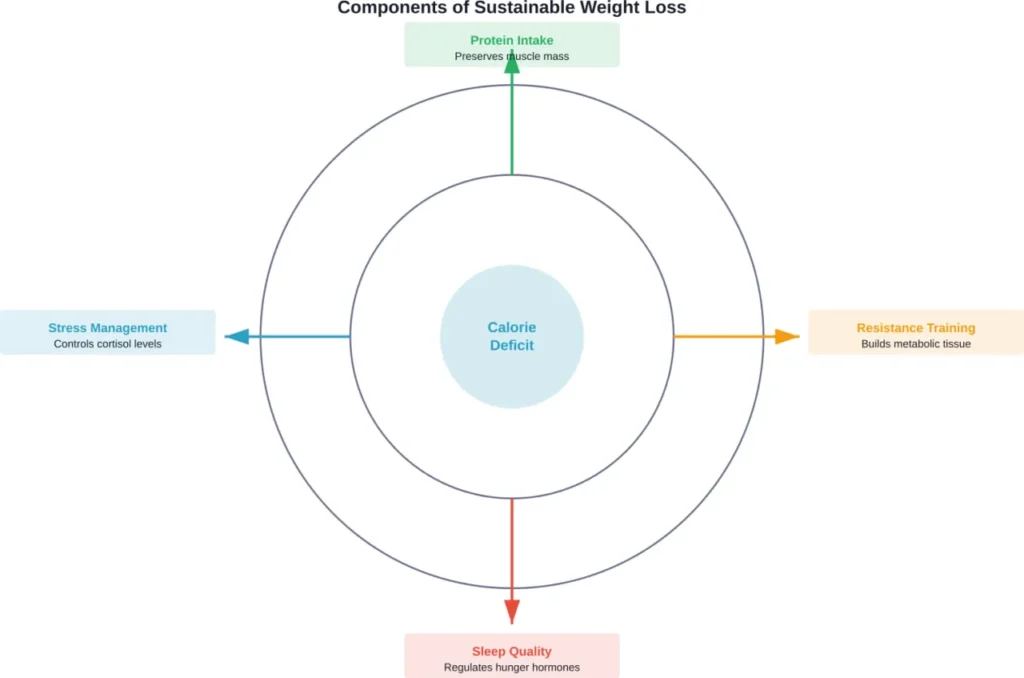
Calculate maintenance calories and reduce intake by 300-500 calories daily through a combination of dietary changes and activity increases.
This deficit allows for steady fat loss without triggering extreme hunger, muscle loss, or metabolic adaptation.
Prioritize Protein
Adequate protein intake supports muscle retention during weight loss.
Higher-protein, lower-carbohydrate meal approaches support muscle retention while promoting satiety, making the calorie deficit easier to maintain.
Include Resistance Training
Strength training at least 2-3 times weekly protects muscle mass during fat loss.
Building or maintaining muscle improves body composition, supports metabolic rate, and enhances long-term weight maintenance.
Get Adequate Sleep
Sleep quality directly impacts weight management hormones including leptin and ghrelin.
Getting enough sleep supports fat loss efforts by regulating hunger hormones. Poor sleep increases hunger, reduces willpower, and impairs recovery from exercise.
Manage Stress
Chronic stress elevates cortisol, which can promote fat storage particularly in the abdominal area.
Incorporating stress management techniques—meditation, walking, hobbies, social connection—supports overall health and weight goals.
Understanding Normal Weight Fluctuation Ranges
Weight naturally varies within a predictable range.
For most adults, daily fluctuations of 2-5 pounds are completely normal. Factors affecting these swings include meal timing, sodium intake, hormone cycles, stress levels, sleep quality, and exercise intensity.
Women often experience additional fluctuations related to menstrual cycles. Water retention can increase by 2-5 pounds in the days before menstruation, then normalize afterward.
Rather than fixating on daily numbers, tracking weekly averages provides more meaningful data. Calculate the average of seven daily weigh-ins to identify actual trends versus noise.
A consistent downward trend in weekly averages indicates successful fat loss, even if daily numbers jump around significantly.
The Psychology of Quick Weight Loss
The appeal of rapid results is understandable but often counterproductive.
Seeing the scale drop dramatically creates immediate gratification. But when those losses reverse—as they inevitably do with water and glycogen-based drops—motivation crashes.
This pattern feeds yo-yo dieting cycles. Chase quick results, achieve temporary success, regain weight, repeat.
Building sustainable habits takes longer but produces lasting outcomes. The goal isn’t just losing weight—it’s maintaining that loss long-term while building a healthier relationship with food and activity.
Research consistently shows that gradual weight loss with behavioral changes produces better long-term maintenance than aggressive short-term interventions.
Frequently Asked Questions
No. Losing 3 pounds of actual fat requires a 10,500-calorie deficit, which is physiologically impossible to achieve safely in 24 hours. Any 3-pound daily weight loss represents primarily water weight, glycogen depletion, or digestive changes—not fat loss.
Overnight weight loss of 2-3 pounds typically occurs due to water loss through breathing and sweating during sleep, combined with no fluid or food intake for 7-8 hours. This is normal nightly variation and doesn’t represent fat loss.
Yes. Daily weight fluctuations of 2-5 pounds are completely normal for adults and result from changes in hydration status, sodium intake, glycogen stores, digestive contents, and hormone levels. These variations don’t indicate actual fat gain or loss.
Realistic fat loss in one day ranges from 0.1-0.3 pounds maximum, based on sustainable calorie deficits. However, total scale weight can drop 2-4 pounds through water loss, glycogen depletion, and digestive changes—though these losses are temporary.
According to the CDC, safe weight loss occurs at 1-2 pounds per week. This pace allows for primarily fat loss while preserving muscle mass and avoiding metabolic slowdown. Faster rates increase risks including muscle loss, nutrient deficiencies, and gallstones.
Daily weigh-ins can work if you track weekly averages rather than fixating on individual readings. Weigh at the same time under the same conditions, then calculate weekly averages to identify actual trends. If daily fluctuations cause stress, weekly weigh-ins may be better.
Proper hydration supports weight loss by promoting satiety, optimizing metabolic function, and reducing false hunger signals. However, drinking water doesn’t directly cause fat loss—it simply supports overall health and helps maintain a calorie deficit more comfortably.
The Bottom Line on Losing 3 Pounds in a Day
So, is it possible to lose 3 pounds in a day? Technically yes—but it’s not what it seems.
That dramatic scale drop represents temporary changes in water weight, glycogen stores, and digestive contents. Actual fat loss? Maybe 0.1-0.3 pounds at most.
The real question isn’t whether you can see that number drop. It’s whether you can create meaningful, lasting change.
Sustainable fat loss happens at 1-2 pounds weekly through consistent moderate calorie deficits, adequate protein intake, resistance training, quality sleep, and stress management. This approach preserves muscle, maintains metabolic function, and creates results that actually stick.
Stop chasing dramatic daily scale movements. Start building habits that produce long-term transformation.
Focus on weekly trends, body measurements, how clothes fit, and health markers—not the temporary water fluctuations that mean nothing tomorrow.
According to the CDC, even 5-10% body weight reduction can significantly improve blood pressure, cholesterol, and blood sugar levels. For a 200-pound person, that’s 10-20 pounds—achievable in 2-5 months with a sustainable approach.
That timeline might not sound exciting. But those results will still be there six months later, a year later, and beyond.
And that’s worth far more than any fleeting 3-pound overnight drop.