

Quick Summary: Losing 30 pounds in 2 months requires a 15-pound monthly loss rate — significantly faster than the 4-8 pounds per month recommended by the CDC. While technically possible for individuals with higher starting weights through extreme calorie restriction, this approach carries serious health risks including muscle loss, nutritional deficiencies, and unsustainable results.
The question comes up constantly in weight loss forums and community discussions: can someone really shed 30 pounds in just eight weeks?
It’s an aggressive goal. And the honest answer isn’t as simple as yes or no.
The math technically works. But the health implications, sustainability concerns, and realistic expectations tell a different story than what many rapid weight loss programs promise.
What the CDC Actually Recommends for Safe Weight Loss
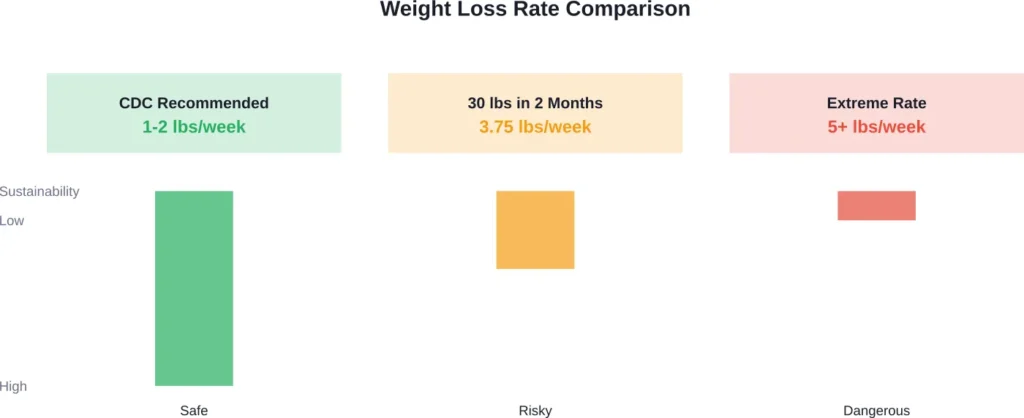
According to the CDC, healthy weight loss follows a gradual, steady pace — about 1 to 2 pounds per week. That translates to roughly 4 to 8 pounds per month through sustainable lifestyle changes.
Losing 30 pounds in two months means dropping 15 pounds monthly, or approximately 3.75 pounds per week. That’s nearly double the upper limit of what health authorities consider safe.
Here’s the thing though — the CDC also acknowledges that individuals at higher starting weights may initially lose weight faster than average. Someone who weighs 290 pounds will naturally create larger calorie deficits than someone at 180 pounds, even with similar dietary changes.
But there’s a critical distinction between what’s temporarily possible and what’s medically advisable.
Why Gradual Weight Loss Matters
The CDC emphasizes gradual weight loss for several reasons. Slow, steady progress helps preserve muscle mass while burning fat. It allows the body to adjust metabolically rather than triggering starvation responses.
Research cited by the National Institutes of Health indicates that even modest weight loss can improve health markers. A 5% to 10% weight reduction — that’s 10 to 20 pounds for a 200-pound person — can significantly lower blood pressure, cholesterol, and blood sugar levels.
These benefits don’t require extreme measures. And they’re far more likely to stick when achieved gradually.
The Math Behind Losing 30 Pounds in 60 Days
Weight loss fundamentally comes down to energy balance. Creating a calorie deficit forces the body to use stored energy — primarily fat — for fuel.
One pound of body fat contains roughly 3,500 calories. To lose 30 pounds, a person needs to create a total deficit of 105,000 calories over 60 days.
That breaks down to 1,750 calories per day.
For context, most moderately active adults burn between 1,800 and 2,500 calories daily through normal metabolism and activity. Creating an additional 1,750-calorie daily deficit would require either eating almost nothing or exercising at extreme intensity for hours.
What This Looks Like in Practice
Community discussions reveal that people attempting this goal typically combine severe calorie restriction with intensive exercise. Some report eating 800-1,200 calories daily while exercising 60-90 minutes per day.
The numbers might work on paper. But the human body doesn’t operate like a simple calculator.
Metabolism adapts to prolonged calorie restriction. Energy levels plummet. Hunger hormones intensify. And the body preferentially breaks down muscle tissue alongside fat stores when the deficit becomes too severe.
Real Health Risks of Rapid Weight Loss
According to research published by the National Institutes of Health, weight loss exceeding 10% of body weight increases the possibility of health complications. The faster the loss occurs, the higher those risks climb.
Nutritional Deficiencies
Severe calorie restriction makes it nearly impossible to obtain adequate vitamins, minerals, and essential nutrients. Even carefully planned diets struggle to provide complete nutrition under 1,200 calories daily.
Deficiencies in iron, calcium, vitamin D, and B vitamins commonly develop during aggressive dieting. These shortfalls can trigger fatigue, weakened immunity, bone density loss, and other serious issues.
Muscle Mass Loss
The body doesn’t selectively burn only fat during weight loss. Rapid calorie deficits cause significant muscle breakdown, particularly when protein intake falls short or resistance training gets neglected.
Losing muscle mass tanks metabolic rate, making weight regain more likely once normal eating resumes. It also reduces strength, physical function, and overall body composition quality.
Gallstone Formation
Medical research cited by the NIH indicates that rapid weight loss significantly increases gallstone risk. When weight drops too quickly, the liver secretes extra cholesterol into bile, which can crystallize into stones.
This complication causes severe abdominal pain and often requires surgical intervention.
Metabolic Adaptation
The body treats extreme calorie restriction as a famine situation. Metabolism slows dramatically to conserve energy. Hunger hormones surge. Energy expenditure drops beyond what weight loss alone would predict.
This adaptive response makes continued weight loss progressively harder and weight regain frighteningly easy. Research shows that sustaining weight loss after extreme dieting proves exceptionally challenging for this reason.
| Health Risk | Likelihood | Severity |
|---|---|---|
| Nutritional deficiencies | High | Moderate to Severe |
| Muscle mass loss | Very High | Moderate |
| Gallstone formation | Moderate | Severe |
| Metabolic slowdown | Very High | Moderate |
| Fatigue and weakness | Very High | Moderate |
| Hair loss | Moderate | Mild |
| Electrolyte imbalances | Moderate | Severe |
Who Might Actually Lose 30 Pounds in Two Months
Not everyone faces the same challenges or risks with rapid weight loss. Starting weight matters enormously.
Individuals at higher weights — say, 250 pounds and above — naturally create larger calorie deficits with the same dietary changes. Someone who weighs 290 pounds burning 3,000 calories daily can theoretically eat 1,500 calories and create a substantial deficit without going to extremes.
These individuals may experience faster initial weight loss, particularly in the first few weeks when water weight drops alongside fat. But even for heavier people, maintaining a 3.75-pound weekly loss rate for eight consecutive weeks remains exceptionally difficult and potentially harmful.
The Water Weight Factor
Much of the dramatic initial weight loss reported in aggressive diet attempts comes from water, not fat. Reducing carbohydrate intake depletes glycogen stores, which hold significant water.
Seeing 10-15 pounds drop in the first two weeks feels encouraging. But it’s misleading. Fat loss continues at a much slower pace once water weight stabilizes.
Safer Alternatives That Actually Work Long-Term
The CDC recommends aiming for 5% to 10% body weight reduction as an initial goal. This approach improves health markers substantially while remaining achievable and sustainable.
For someone weighing 200 pounds, that means targeting 10 to 20 pounds over several months — not weeks.
Building Sustainable Eating Patterns
Rather than following extreme restrictive diets, the CDC emphasizes developing healthy eating patterns that include variety and balance. This means choosing nutrient-dense foods while allowing flexibility for occasional treats.
Protein intake becomes particularly important during weight loss. Adequate protein helps preserve muscle mass, increases satiety, and supports metabolic function. Protein intake becomes particularly important during weight loss to help preserve muscle mass and support metabolic function.
Exercise for Health, Not Just Calorie Burning
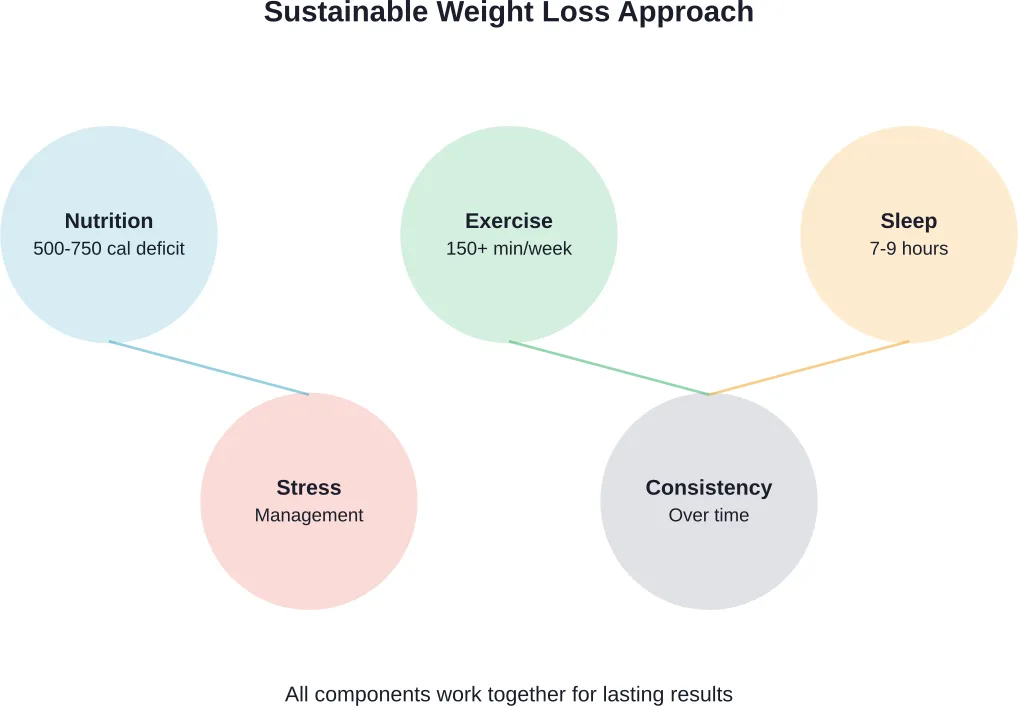
Physical activity supports weight loss primarily by preserving muscle mass and supporting metabolism. According to CDC guidance, adults should aim for at least 150 minutes of moderate-intensity activity weekly, plus muscle-strengthening exercises twice per week.
Exercise allows more dietary flexibility by increasing calorie expenditure. A mix of cardio and strength training produces better body composition results than cardio alone.
But trying to out-exercise an extremely restrictive diet creates an unsustainable, exhausting situation that most people can’t maintain.
Sleep and Stress Management
Research highlighted by the CDC shows that adequate sleep directly impacts weight loss success. Studies found that people sleeping 8.5 hours nightly lost 55% more body fat than those getting only 5.5 hours, even with identical calorie intake.
Sleep deprivation disrupts hunger hormones, increases cravings for high-calorie foods, and impairs decision-making around eating.
Stress management matters too. Chronic stress elevates cortisol, which promotes fat storage particularly around the midsection. It also triggers emotional eating and disrupts sleep patterns.
More Realistic Timeline and Expectations
So what’s a reasonable timeline for losing 30 pounds safely?
At the CDC-recommended rate of 1-2 pounds weekly, losing 30 pounds takes 15 to 30 weeks — roughly 4 to 7 months.
That might sound disappointingly slow compared to two months. But consider this: which outcome sounds better five years from now?
Losing 30 pounds in two months through extreme measures, only to regain it all plus extra within a year? Or losing 30 pounds gradually, developing sustainable habits, and maintaining that weight loss indefinitely?
The research on long-term weight maintenance heavily favors the gradual approach. Medical literature cited by the NIH indicates that people who lose weight slowly through lifestyle changes have significantly higher maintenance success rates.
Setting Milestone Goals
Breaking a 30-pound goal into smaller milestones creates momentum without overwhelming pressure. Aiming for 10 pounds in the first two months provides meaningful progress while staying within safe parameters.
According to the CDC, even a 5% weight reduction delivers measurable health improvements. Celebrating these smaller victories helps maintain motivation for the longer journey ahead.
| Timeline | Approach | Weekly Loss | Sustainability |
|---|---|---|---|
| 2 months | Extreme restriction | 3.75 lbs | Very Low |
| 3-4 months | Aggressive but safer | 2-2.5 lbs | Low to Moderate |
| 5-6 months | Recommended pace | 1-1.5 lbs | High |
| 7-8 months | Conservative | 0.75-1 lb | Very High |
When Medical Supervision Becomes Necessary
Certain medically supervised weight loss programs do produce faster results safely. Very low-calorie diets under physician monitoring can create rapid weight loss for individuals with obesity-related health complications requiring urgent intervention.
These programs typically provide meal replacements formulated to prevent nutritional deficiencies, close medical monitoring of vital signs and lab work, and behavioral support.
But these aren’t do-it-yourself approaches. Medical supervision exists precisely because the risks of rapid weight loss require professional oversight.
The National Institutes of Health notes that FDA-approved weight loss medications can also enhance results when combined with lifestyle changes. Options like GLP-1 receptor agonists have demonstrated effectiveness in weight reduction for appropriate candidates.
Anyone considering aggressive weight loss should consult healthcare providers first, particularly those with existing health conditions, taking medications, or with a history of eating disorders.
Frequently Asked Questions
Technically possible but not advisable. Creating the necessary 1,750-calorie daily deficit through diet alone would require near-starvation intake levels for most people, leading to severe nutritional deficiencies, muscle loss, metabolic slowdown, and likely weight regain. The CDC recommends combining moderate calorie reduction with increased physical activity for sustainable results.
According to CDC guidelines, safe weight loss follows a pace of 1-2 pounds weekly. Over two months (8 weeks), that translates to 8-16 pounds. Individuals at higher starting weights may occasionally exceed this in the initial weeks when water weight drops, but sustained weekly losses above 2 pounds increase health risks significantly.
Research indicates that rapid weight loss through extreme calorie restriction typically results in substantial weight regain. The metabolic adaptations, muscle loss, and unsustainable eating patterns that accompany aggressive dieting make long-term maintenance exceptionally difficult. Studies show gradual weight loss produces much higher maintenance success rates.
This approach requires creating a 1,750-calorie daily deficit — an extreme and potentially dangerous target for most people. Rather than focusing on this aggressive timeline, aim for a 500-750 calorie deficit below maintenance needs, which produces safe 1-1.5 pound weekly losses. Calculate maintenance calories first, then subtract conservatively while ensuring intake stays above 1,200 calories for women or 1,500 for men.
Walking alone cannot create the massive deficit needed for 30-pound loss in two months unless combined with severe dietary restriction. Walking provides calorie expenditure that varies based on individual factors including weight and intensity. Even walking 2 hours daily only creates an 800-calorie deficit — less than half what’s required. Walking provides excellent health benefits and supports weight loss, but expecting it alone to produce extreme results sets unrealistic expectations.
No single diet proves superior for rapid weight loss, and medical authorities emphasize that extreme restriction of any type carries similar risks regardless of specific approach. Research cited by the NIH shows that low-carbohydrate, low-calorie, and time-restricted eating approaches all produce weight loss primarily through calorie reduction. Sustainability and nutritional adequacy matter more than speed. Choose eating patterns that include variety, meet nutritional needs, and can be maintained long-term.
Studies published in medical journals show that time-restricted eating produces weight loss comparable to standard calorie restriction — not superior results. If intermittent fasting helps create a reasonable calorie deficit and feels sustainable, it can be one approach among many. But it won’t magically accelerate fat loss beyond what the calorie deficit creates, and it carries the same risks when taken to extremes as any other aggressive diet.
The Bottom Line on Losing 30 Pounds in 2 Months
Can it be done? For some people, under specific circumstances, the math technically works.
Should it be done? Medical authorities, research evidence, and long-term success data all point toward no.
The 15-pound monthly loss rate required to hit 30 pounds in two months nearly doubles what the CDC considers safe. The extreme measures needed to achieve it — severe calorie restriction, excessive exercise, or both — create significant health risks while setting up almost certain failure through metabolic adaptation and unsustainable practices.
Real talk: if sustainable weight management is the goal rather than just a number on the scale two months from now, a more gradual approach wins every time.
According to research from the National Institutes of Health, losing just 5-10% of body weight through lifestyle changes produces meaningful health improvements. These benefits don’t require extreme sacrifice or dangerous shortcuts.
A 5-7 month timeline for 30 pounds aligns with medical recommendations, protects health, preserves muscle mass, and dramatically improves the odds of maintaining that loss for years to come.
That’s not failure to meet an arbitrary deadline. That’s actually succeeding at something much more valuable — building a healthier relationship with food, developing sustainable habits, and creating lasting change rather than temporary results.
The scale will eventually show 30 pounds down either way. But only one path gets there without sacrificing health, sanity, and long-term success in the process.