
Quick Summary: Losing 30 pounds in a single month is not medically safe or realistic for most people. According to the CDC, healthy weight loss occurs at a rate of 1 to 2 pounds per week, meaning 30 pounds would take approximately 4 to 6 months. Rapid weight loss exceeding this rate increases risks of muscle loss, nutritional deficiencies, gallstones, and metabolic complications.
The promise of dropping 30 pounds in 30 days floods social media feeds and weight loss forums. It’s tempting. Who wouldn’t want to see dramatic results quickly?
But here’s the thing—what sounds appealing rarely aligns with what medical research actually supports. The question isn’t just whether it’s possible to lose that much weight in a month. The real question is whether anyone should try.
According to the CDC, people who lose weight at a gradual, steady pace—about 1 to 2 pounds per week—are more successful at keeping weight off long-term. That translates to roughly 4 to 8 pounds per month, nowhere near the 30-pound target some programs promise.
This article examines the science behind rapid weight loss, explains why the one-month timeline is problematic, and outlines what actually works for sustainable fat loss based on current medical guidelines.
What the Medical Research Says About Rapid Weight Loss
Medical literature defines weight loss exceeding 10% of body weight as “large” weight loss. For someone weighing 200 pounds, that’s 20 pounds. Research published by the National Institutes of Health indicates that losing approximately 5% to 10% of body weight over 6 months produces measurable health improvements, including better blood sugar control, reduced blood pressure, and improved cholesterol levels.
Losing more than this amount, or losing weight at faster rates, may create health improvements initially but significantly increases the risk of complications.
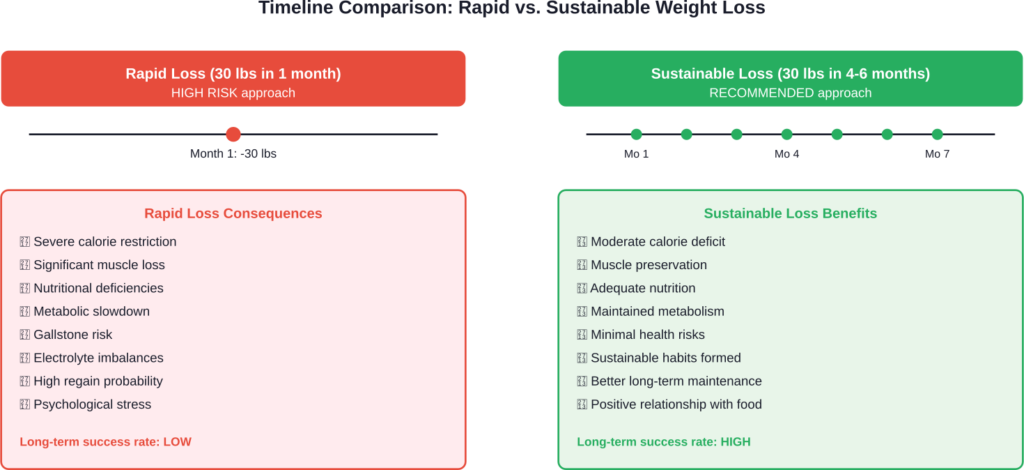
The StatPearls medical database notes that weight loss exceeding recommended rates can lead to:
- Loss of lean muscle mass alongside fat tissue
- Nutritional deficiencies from inadequate calorie and nutrient intake
- Gallstone formation due to rapid changes in bile composition
- Electrolyte imbalances affecting heart function
- Metabolic slowdown making future weight loss harder
According to research on cardiovascular effects, even modest weight losses of 5-10% produce significant health benefits when achieved gradually. Pushing beyond safe rates doesn’t multiply benefits—it multiplies risks.
Why 30 Pounds in 30 Days Is Mathematically Problematic
Weight loss ultimately comes down to energy balance. One pound of body fat contains approximately 3,500 calories. To lose 30 pounds of pure fat in 30 days would require a deficit of 105,000 calories over the month, or 3,500 calories per day.
Most adults maintain their current weight on 1,800 to 2,500 calories daily. Creating a 3,500-calorie daily deficit would mean burning far more than consumed—an impossibility without extreme measures.
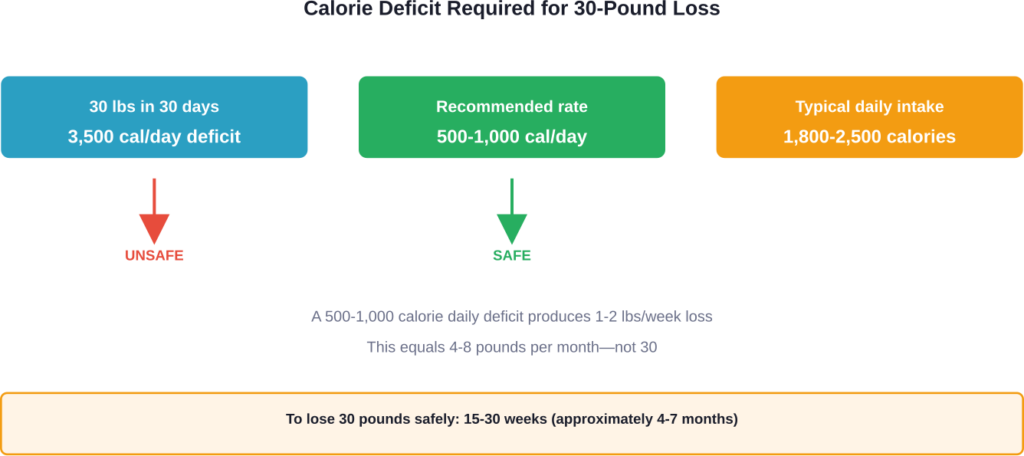
The CDC recommends creating a deficit of 500 to 1,000 calories per day through a combination of diet and exercise. This produces the clinically recommended 1 to 2 pounds of weekly loss.
Real talk: Any program promising 30 pounds in 30 days is either selling something dangerous or counting on massive water weight loss that’ll return immediately.
What Initial Rapid Weight Loss Actually Represents
Some people do see dramatic numbers on the scale during their first month of dieting. Community discussions on weight loss forums frequently mention losing 10, 15, or even 20 pounds in the first month before the rate slows dramatically.
This initial drop isn’t primarily fat loss. It’s water weight.
When carbohydrate intake decreases, the body depletes glycogen stores in muscles and liver. Each gram of glycogen binds to approximately 3-4 grams of water. Depleting these stores releases several pounds of water weight within days.
Additionally, sodium restriction—common in most diet plans—reduces water retention. Lower inflammation from eating less processed food also contributes to reduced fluid retention.
But water weight is temporary. It returns when normal eating resumes. Research on fat loss shows that energy deficit alone determines actual fat reduction, regardless of diet type. The negative energy balance is responsible for weight reduction, not the specific diet method employed.
The Health Risks of Extreme Calorie Restriction
Attempting to lose 30 pounds in a month would require severe calorie restriction, likely below 800-1,000 calories daily for most people. Medical literature documents multiple complications associated with such extreme restriction.
Muscle Loss and Metabolic Damage
Rapid weight loss causes the body to break down muscle tissue for energy alongside fat stores. Losing muscle mass reduces basal metabolic rate—the calories burned at rest. This metabolic adaptation makes it progressively harder to lose weight and easier to regain it.
Research on metabolic consequences of weight reduction emphasizes that maintaining a healthy metabolism requires gradual weight loss with adequate protein intake and resistance training to preserve lean tissue.
Nutritional Deficiencies
Very low-calorie diets make it nearly impossible to obtain adequate vitamins, minerals, and essential fatty acids. Deficiencies can develop in:
- B vitamins affecting energy and nervous system function
- Iron, leading to anemia and fatigue
- Calcium and vitamin D, weakening bone density
- Electrolytes like potassium and magnesium, affecting heart rhythm
According to the American Heart Association, severe nutritional deficiencies from eating disorders and extreme dieting can cause serious cardiovascular complications, including arrhythmias and sudden cardiac death.
Gallstone Formation
Rapid weight loss increases gallstone risk substantially. When weight drops too quickly, bile chemistry changes and cholesterol can crystallize, forming stones that may require surgical removal.
Medical guidelines recommend against losing more than 3 pounds per week specifically because faster rates significantly increase this risk.
Psychological Impacts and Disordered Eating
Extreme restriction often triggers binge eating, guilt cycles, and unhealthy relationships with food. The psychological stress of maintaining unsustainable diets can contribute to long-term eating disorders.
Research on weight cycling—repeated loss and regain—shows it may increase health risks and make future weight loss attempts more difficult.
What Actually Works: Evidence-Based Weight Loss
The CDC outlines five evidence-based steps for healthy weight loss that prioritize sustainability over speed:
1. Set Realistic Goals
According to CDC guidelines, even modest weight loss helps. For someone weighing 200 pounds, losing just 5% (10 pounds) can improve blood pressure, cholesterol, and blood sugar levels. This amount is enough to reduce risk for chronic diseases.
A realistic goal for losing 30 pounds? Plan for 15 to 30 weeks—approximately 4 to 7 months at the recommended 1 to 2 pounds per week rate.
2. Follow a Balanced, Reduced-Calorie Diet
Rather than extreme restriction, the CDC recommends eating patterns that include:
- Plenty of vegetables, fruits, and whole grains
- Lean proteins from various sources
- Limited saturated fats, added sugars, and sodium
- Appropriate portion sizes creating a moderate calorie deficit
The Harvard Healthy Eating Plate provides a visual guide: fill half the plate with vegetables and fruits, one-quarter with whole grains, and one-quarter with healthy protein sources.
3. Incorporate Regular Physical Activity
The CDC recommends at least 150 minutes of moderate-intensity aerobic activity per week for overall health. That’s about 22 minutes daily or 30 minutes five days per week.
For weight loss specifically, more activity helps. Physical activity guidelines suggest that combining aerobic exercise with muscle-strengthening activities on two or more days weekly optimizes results.
Exercise contributes to the calorie deficit while preserving muscle mass—crucial for maintaining metabolic rate during weight loss.
4. Prioritize Sleep and Stress Management
According to CDC weight loss guidelines, adequate sleep and stress management support healthy weight. Sleep deprivation disrupts hunger hormones, increasing appetite and cravings. Chronic stress elevates cortisol, which promotes fat storage, particularly around the abdomen.
Weight management strategies should address these lifestyle factors alongside diet and exercise.
5. Track Progress and Adjust
Studies of people who successfully maintained weight loss found that most continued tracking their food intake and physical activity. Monitoring creates awareness and allows for adjustments when progress stalls.
Now, this is where it gets interesting. The same research found that people who maintained weight loss also stayed physically active—most got 60 to 90 minutes of moderate physical activity daily to prevent regain.
Special Circumstances: When Faster Loss Happens
Some situations result in faster initial weight loss that exceeds typical recommendations:
Very High Starting Weight
People with obesity, particularly those weighing over 300 pounds, may lose weight faster initially while still following safe guidelines. A 1-2% weekly loss for someone at 350 pounds equals 3.5 to 7 pounds per week—much faster than someone starting at 180 pounds.
For individuals with extreme obesity, the American Heart Association notes that even losing 10% of body weight can begin reducing health risks. Medical supervision becomes important at higher weight levels and faster loss rates.
Medically Supervised Programs
Very low-calorie diets (VLCDs) delivering 800 calories or fewer per day exist but only under direct medical supervision. These programs include:
- Regular monitoring by physicians
- Nutritional supplementation to prevent deficiencies
- Screening for contraindications and complications
- Transitional phases to regular eating
According to StatPearls medical literature, FDA-approved weight loss medications may also support faster loss when combined with lifestyle changes, but these require medical oversight.
These aren’t DIY approaches. Attempting very low-calorie diets without medical supervision significantly increases risk of serious complications.
The Weight Regain Problem
Here’s what most rapid weight loss programs won’t tell you: the weight almost always comes back.
Research on weight cycling shows that repeated patterns of loss and regain may increase health risks. More importantly, extreme diets don’t teach sustainable habits. Once the restrictive period ends, old eating patterns resume, and weight returns—often with additional pounds.
CDC data on maintaining weight loss shows that people who successfully keep weight off share common strategies:
- Continued attention to diet quality and portions
- Regular physical activity (often 60-90 minutes daily)
- Consistent self-monitoring of weight and behaviors
- Problem-solving skills to handle setbacks
None of these strategies involve month-long extreme interventions. They’re long-term lifestyle adjustments.
A Better Question Than “Is It Possible?”
The question shouldn’t be whether it’s possible to lose 30 pounds in a month. With extreme enough measures, almost anything becomes technically possible.
The better question: Is it worth the health risks, metabolic damage, and near-certain regain?
Medical evidence overwhelmingly answers no.
A more effective approach targets 30 pounds over 4 to 6 months using CDC-recommended strategies. This timeline allows for:
- Fat loss while preserving muscle mass
- Development of sustainable eating habits
- Adequate nutrition to support health
- Metabolic adaptation without severe slowdown
- Skills and behaviors that support long-term maintenance
The American Heart Association emphasizes that intentional weight loss does reduce obesity-related cancer risk and cardiovascular disease—but these benefits come from sustained weight loss, not temporary drops followed by regain.
Frequently Asked Questions
Water fasting for extended periods is extremely dangerous and can cause severe electrolyte imbalances, muscle loss, heart arrhythmias, and death. Medical literature on eating disorders documents that severe restriction and malnutrition can permanently damage the heart. Extended fasting should never be attempted without direct medical supervision in a clinical setting.
Ketogenic diets can produce faster initial weight loss, primarily from water weight as glycogen stores deplete. However, research shows that fat loss depends on energy deficit only, regardless of diet composition. Keto may help some people maintain a calorie deficit more easily, but it doesn’t bypass the fundamental requirement for gradual, sustainable loss. The initial dramatic drop is temporary.
For most people, 4 to 8 pounds in the first month aligns with the CDC-recommended 1 to 2 pounds per week. Those with higher starting weights may lose somewhat more while still following safe guidelines. An additional 2 to 4 pounds of water weight in the first week is common when starting a lower-sodium, lower-carbohydrate eating pattern.
Research strongly supports this. The CDC reports that people who lose weight gradually at 1 to 2 pounds per week are more successful at keeping it off. Gradual loss allows time to develop sustainable habits, preserves metabolic rate better, and reduces the psychological stress that often leads to abandoning diets and regaining weight.
Medical situations requiring rapid weight loss should be managed by healthcare providers who can monitor for complications. Doctors may recommend medically supervised very low-calorie diets or other interventions appropriate for the specific medical context. Never attempt extreme weight loss for surgery or medical procedures without discussing it with the treating physician.
A large initial drop in the first week is usually water weight and glycogen depletion, not fat loss. This isn’t typically dangerous by itself. However, if rapid loss continues beyond the first week at rates exceeding 2 pounds weekly for average-weight individuals, it signals too severe a calorie restriction and increases health risks.
No supplement or pill can safely produce 30 pounds of fat loss in one month. FDA-approved weight loss medications, when used under medical supervision alongside diet and exercise, typically produce 5-10% body weight loss over several months—not 30 pounds in 30 days. Many supplements marketed for rapid weight loss are unregulated, ineffective, or dangerous.
The Bottom Line on Losing 30 Pounds
Losing 30 pounds in a single month isn’t a realistic or safe goal for the vast majority of people. Medical guidelines from the CDC, NIH, and other health authorities consistently recommend 1 to 2 pounds of weekly loss—translating to 4 to 7 months for a 30-pound reduction.
Rapid weight loss comes with serious health risks including muscle loss, nutritional deficiencies, gallstones, metabolic damage, and cardiovascular complications. Perhaps most importantly, extreme approaches rarely produce lasting results. The weight typically returns once unsustainable restrictions end.
But here’s the good news: gradual weight loss works. Even modest reductions of 5-10% of body weight produce meaningful health improvements. A 10-pound loss for someone weighing 200 pounds can improve blood pressure, cholesterol, and blood sugar levels.
The most effective approach combines moderate calorie reduction through balanced nutrition, regular physical activity including both aerobic exercise and strength training, adequate sleep, stress management, and consistent self-monitoring. These strategies form the foundation of successful long-term weight management.
Rather than chasing dramatic month-long transformations, focus on building sustainable habits that support health for years to come. Set a realistic timeline of 15 to 30 weeks for losing 30 pounds. Work with healthcare providers or registered dietitians for personalized guidance.
The goal isn’t just to lose weight—it’s to improve health and keep the weight off permanently. That requires patience, consistency, and evidence-based strategies, not gimmicks or extreme measures.
Ready to start a sustainable weight loss journey? Consult with a healthcare provider to develop a personalized plan based on your specific health status, weight loss goals, and medical history. The slower path may require more patience, but it’s the one that actually leads to lasting success.