

Quick Summary: Losing 5 pounds in a week is technically possible but not recommended by health authorities like the CDC, which advocate for a safer 1-2 pounds per week. Most rapid weight loss consists of water weight and muscle, not fat. For sustainable results, focus on gradual weight reduction through balanced nutrition and regular physical activity.
Every Monday morning, the same promise circulates across fitness forums and social media: “Lose 5 pounds in just one week!” It’s tempting. A special event is coming up, or perhaps frustration with slow progress has reached a breaking point.
But here’s the thing—the question isn’t really whether it’s possible. The real question is what happens when someone tries.
According to the CDC, healthy weight loss occurs at a gradual, steady pace of about 1 to 2 pounds per week. That recommendation exists for good reasons rooted in metabolism, muscle preservation, and long-term success. Yet the allure of rapid results remains powerful.
The Mathematical Reality Behind Losing 5 Pounds
To understand what losing 5 pounds in a week actually requires, the numbers need examination. One pound of body fat contains approximately 3,500 calories. Simple multiplication reveals that 5 pounds equals 17,500 calories.
Spread across seven days, that’s a deficit of 2,500 calories daily. For context, most adults maintain their weight on 1,800 to 2,500 calories per day. The math doesn’t add up for fat loss alone.
Community discussions on platforms like Reddit reveal confusion around this topic. Contestants on weight loss television shows regularly hit 5-pound weekly targets, leading many to wonder how such results happen. The answer lies in what’s actually being lost.

Water Weight vs. Fat Loss
The scale measures total body mass, not fat specifically. That number includes water, muscle tissue, bone, organs, and the contents of the digestive system. When someone drops 5 pounds quickly, the majority comes from water.
Carbohydrate restriction triggers immediate water loss. Each gram of stored glycogen binds to approximately 3 grams of water. Depleting glycogen stores through low-carb eating can release several pounds of water within days.
Sodium reduction has a similar effect. High-sodium meals cause temporary water retention. Cutting back on salt allows the body to shed excess fluid. This explains why contestants on weight loss shows—who often drastically reduce both carbs and sodium—see dramatic initial drops.
But here’s what matters: water weight returns once normal eating resumes. It’s not fat loss. It’s not permanent.
What Health Authorities Actually Recommend
The CDC’s position is clear. According to their guidelines, people who lose weight at a gradual, steady pace of about 1 to 2 pounds per week have better long-term success. This rate allows for sustainable lifestyle changes rather than extreme restrictions.
Even modest weight loss provides health benefits. The CDC notes that a 5% weight reduction for someone weighing 200 pounds—just 10 pounds total—can lower the risk for chronic diseases by improving blood pressure, cholesterol, and blood sugar levels.
Research published by the National Institutes of Health confirms that weight losses limited to 5-10% of body weight over six months produce meaningful cardiovascular health improvements. Loss of approximately 5% to 10% of body weight has improved glycemic control and clinically reduced blood pressure and cholesterol.
The key phrase there? “Over six months.” Sustainable change takes time.
The Hidden Costs of Rapid Weight Loss
According to MedlinePlus, a service of the National Library of Medicine, rapid weight loss diets are defined as those where someone loses more than 2 pounds per week over several weeks. These approaches require eating very few calories and come with significant risks.
StatPearls research on excessive weight loss identifies several health concerns. While there’s no single definition of “excessive” weight loss, losing more than 10% of body weight or dropping weight at faster rates may increase the possibility of health risks.
Real talk: the body doesn’t distinguish between intentional calorie restriction and starvation. Severe deficits trigger protective mechanisms.
Muscle Loss Matters
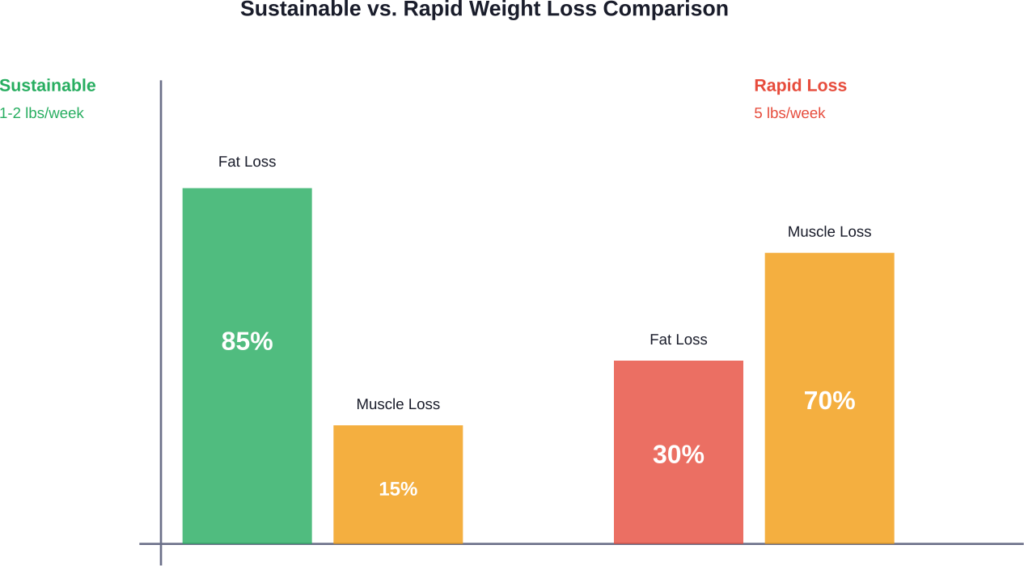
Aggressive calorie restriction causes the body to break down muscle tissue for energy. Muscle is metabolically expensive to maintain, so the body preferentially sacrifices it during periods of severe deficit.
This creates a vicious cycle. Less muscle means a slower metabolism. A slower metabolism means fewer calories burned at rest. Weight loss becomes harder, and weight regain becomes easier.
Metabolic Adaptation
The metabolism isn’t static. It adapts to calorie intake. Severe restriction causes metabolic rate to slow down beyond what would be expected from weight loss alone. This adaptive thermogenesis can persist even after returning to normal eating patterns.
Research indicates that metabolic adaptation makes maintaining weight loss increasingly difficult over time, particularly when the loss occurred rapidly.
Nutritional Deficiencies
Eating very few calories makes it nearly impossible to get adequate vitamins, minerals, protein, and essential fatty acids. StatPearls notes that neurological complications, including polyneuropathy, have been documented after rapid and massive weight loss.
Who Might Actually Lose 5 Pounds in a Week
Certain situations do result in legitimate 5-pound weekly losses, at least initially. Understanding these contexts matters.
People with Significant Obesity
Those with substantial excess weight often experience faster initial loss. Someone weighing 300 pounds has a higher baseline metabolic rate than someone weighing 150 pounds. A moderate calorie deficit for them creates more dramatic results.
This is why contestants on weight loss television shows—who typically start in a heavier weight range—can hit 5-pound targets. Their larger bodies support faster loss rates, especially during the first few weeks.
But even for this population, such rates don’t continue indefinitely. As weight decreases, so does the rate of loss.
The First Week Effect
The first week of any diet typically produces the most dramatic scale changes. Glycogen depletion, reduced inflammation, and digestive system changes all contribute to rapid initial drops.
This isn’t sustainable. Week two shows different results. By week three, the rate normalizes to something closer to the CDC’s recommended 1-2 pounds.
Creating a Realistic Calorie Deficit
Safe, effective weight loss requires a moderate calorie deficit paired with nutrient-dense food choices. The NIH and CDC recommend focusing on overall eating patterns rather than simply restricting calories.
According to the American Heart Association, adults need at least 150 minutes per week of moderate-intensity aerobic activity for overall health. That’s roughly 30 minutes a day, five days per week. Research from the University of Kentucky found that burning about 3,000 calories per week through exercise contributes to significant weight loss when combined with dietary changes.
But combining moderate calorie reduction with exercise produces better results than exercise alone. Studies show that cutting approximately 200 calories per day while maintaining regular physical activity leads to meaningful weight loss and improved vascular health in adults with obesity.
| Approach | Weekly Deficit | Expected Loss | Sustainability |
|---|---|---|---|
| Extreme restriction | 17,500 calories | 5 lbs (mostly water) | Very low |
| Aggressive deficit | 7,000 calories | 2 lbs | Low to moderate |
| Moderate deficit | 3,500-5,000 calories | 1-1.5 lbs | High |
| Conservative deficit | 2,500 calories | 0.5-1 lb | Very high |
What Actually Works for Sustainable Weight Loss
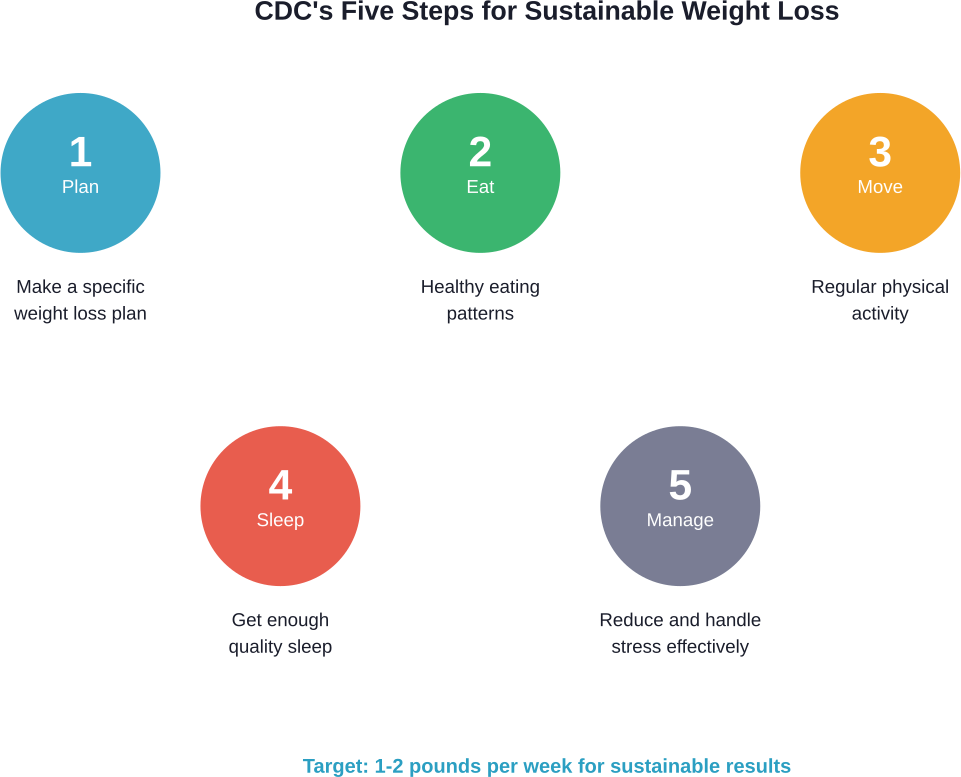
The CDC outlines a comprehensive approach to healthy weight management that goes beyond simple calorie counting. Their five-step framework emphasizes lifestyle changes over quick fixes.
Healthy Eating Patterns
Rather than focusing on individual foods or strict meal plans, the emphasis should be on overall patterns. The American Heart Association recommends building an eating approach around whole foods, vegetables, fruits, whole grains, lean proteins, and healthy fats.
Fiber plays a particularly important role. According to the American Heart Association, high-fiber foods help with weight loss by promoting fullness on fewer calories. A healthy diet of lower-calorie foods combined with regular physical activity provides the best strategy for achieving and maintaining a healthy weight.
Regular Physical Activity
The CDC’s physical activity guidelines specify at least 150 minutes weekly of moderate-intensity aerobic activity for overall health. This could be brisk walking for 22 minutes daily, 30 minutes a day for five days weekly, or whatever schedule fits individual needs.
Physical activity provides immediate and long-term health benefits beyond weight management. Benefits include stronger bones and muscles, improved brain health, and better metabolic function.
Adequate Sleep
Sleep often gets overlooked in weight loss discussions, but it’s crucial. Poor sleep disrupts hunger hormones, increases cravings for high-calorie foods, and reduces metabolic efficiency. The CDC includes optimal sleep as a core component of healthy weight management.
Stress Management
Chronic stress elevates cortisol levels, which can promote fat storage, particularly around the midsection. Stress also drives emotional eating and disrupts sleep patterns. Effective stress management supports weight loss efforts through multiple pathways.
When Medical Intervention Makes Sense
Some situations warrant medical supervision or pharmaceutical support. The FDA has approved several weight loss medications that demonstrate effectiveness in weight reduction, according to StatPearls research.
Medications like semaglutide and tirzepatide have shown significant results in clinical trials. Research on tirzepatide demonstrates dose-dependent weight loss, with higher doses producing mean differences in body weight percentage of 8.07%, 10.79%, and 11.83% compared to placebo at 5, 10, and 15 mg doses respectively.
These medications work through different mechanisms than simple calorie restriction. They’re not quick fixes, though. They require ongoing use and work best when combined with lifestyle modifications.
Medical weight loss programs provide structured support, professional monitoring, and accountability. For individuals with obesity or weight-related health conditions, these programs offer safer alternatives to unsupervised rapid weight loss attempts.
The Psychology of Quick Fix Promises
Why does the “lose 5 pounds in a week” message resonate so powerfully? It taps into desire for immediate results and control over the body.
But weight management isn’t a one-week project. It’s a long-term lifestyle adjustment. The CDC emphasizes that healthy weight includes sustainable habits, not temporary restrictions.
Community experiences shared across online forums reveal a pattern: rapid loss followed by rapid regain. The weight comes back, often with additional pounds. This cycle of loss and regain—commonly called weight cycling—carries its own health risks.
Setting Realistic Expectations
Taking off just 5-10% of body weight improves health and well-being, according to the CDC. For someone weighing 200 pounds, that’s 10-20 pounds total—not per week.
Achieving that modest loss requires patience. At 1 pound weekly, a 10-pound goal takes 10 weeks. That’s two and a half months. At 2 pounds weekly, it takes five weeks.
Those timeframes might seem slow compared to dramatic before-and-after photos circulating online. But they reflect how the human body actually works. Metabolism doesn’t care about social media timelines or upcoming events.
| Starting Weight | 5% Loss | Time at 1 lb/week | Time at 2 lbs/week |
|---|---|---|---|
| 150 lbs | 7.5 lbs | 7-8 weeks | 4 weeks |
| 180 lbs | 9 lbs | 9 weeks | 4-5 weeks |
| 200 lbs | 10 lbs | 10 weeks | 5 weeks |
| 220 lbs | 11 lbs | 11 weeks | 5-6 weeks |
| 250 lbs | 12.5 lbs | 12-13 weeks | 6-7 weeks |
Frequently Asked Questions
No. Five pounds of fat represents 17,500 calories, requiring a daily deficit of 2,500 calories—more than most people consume total. Any 5-pound weekly loss consists primarily of water weight, with minimal actual fat reduction.
It can be, particularly if achieved through severe calorie restriction. MedlinePlus defines rapid weight loss as more than 2 pounds weekly and notes this approach requires eating very few calories. Risks include muscle loss, nutritional deficiencies, metabolic slowdown, and potential neurological complications.
The CDC recommends 1-2 pounds per week as a safe, sustainable rate. This allows for gradual lifestyle changes while preserving muscle mass and supporting long-term success. Even modest weight loss of 5-10% total body weight provides significant health benefits.
Initial rapid loss comes from glycogen depletion and associated water loss. Each gram of stored glycogen binds to approximately 3 grams of water. Carbohydrate restriction and reduced sodium intake trigger water release, creating dramatic initial scale drops that don’t continue at the same rate.
Most of it will, because it’s primarily water weight, not fat. Once normal eating resumes, glycogen stores refill, bringing water weight back with them. Only the small portion that was actual fat loss remains—typically less than 1 pound of the original 5.
This varies by individual based on age, sex, activity level, and starting weight. Creating a deficit of 500-1,000 calories daily supports the CDC’s recommended 1-2 pound weekly loss. Research shows that reducing intake by approximately 200 calories daily while exercising produces meaningful results without extreme restriction.
Exercise alone rarely produces 5-pound weekly losses. University of Kentucky research found that burning about 3,000 calories weekly through physical activity contributes to significant weight loss when paired with dietary changes. The CDC recommends at least 150 minutes of moderate-intensity activity weekly for health, but combining it with nutrition changes improves weight loss outcomes.
The Bottom Line on Rapid Weight Loss
So is it possible to lose 5 pounds in a week? Technically, yes. The scale might show that number. But understanding what that number represents changes everything.
The majority is water. A significant portion is muscle. The actual fat loss? Minimal. And the metabolic consequences, nutritional deficiencies, and likelihood of regain make it a poor strategy for anyone seeking lasting change.
Health authorities including the CDC, NIH, and American Heart Association consistently recommend gradual weight loss of 1-2 pounds weekly. This pace allows for sustainable habit formation, muscle preservation, and metabolic health.
Even small losses matter. A 5% reduction in total body weight—achieved gradually over weeks or months—improves blood pressure, cholesterol, and blood sugar levels. Those improvements don’t require dramatic weekly drops or extreme deprivation.
Real, lasting weight loss isn’t about one week. It’s about building patterns that support health over years. The body doesn’t respond well to emergency measures and crash approaches. It responds to consistency, adequate nutrition, regular movement, quality sleep, and stress management.
Ready to start a sustainable weight loss journey? Focus on the CDC’s five-step framework: make a specific plan, establish healthy eating patterns, engage in regular physical activity, prioritize adequate sleep, and manage stress effectively. The scale might move more slowly than extreme diets promise, but the results will actually last.