

Quick Summary: Everyone dreams every night during REM sleep, but many people don’t remember their dreams upon waking. Research shows that up to 32% of people report rarely recalling dreams, though studies on REM sleep behavior disorder confirm that even self-identified ‘non-dreamers’ do experience dreams—they simply don’t retain the memories.
Ever wake up with zero recollection of dreaming? You’re not alone. Many people go months or even years without remembering a single dream, leading them to wonder if they dream at all.
The short answer is yes, everyone dreams. But the longer answer reveals fascinating insights about memory, sleep stages, and why some people never seem to recall their nocturnal experiences.
The Dream Recall Spectrum
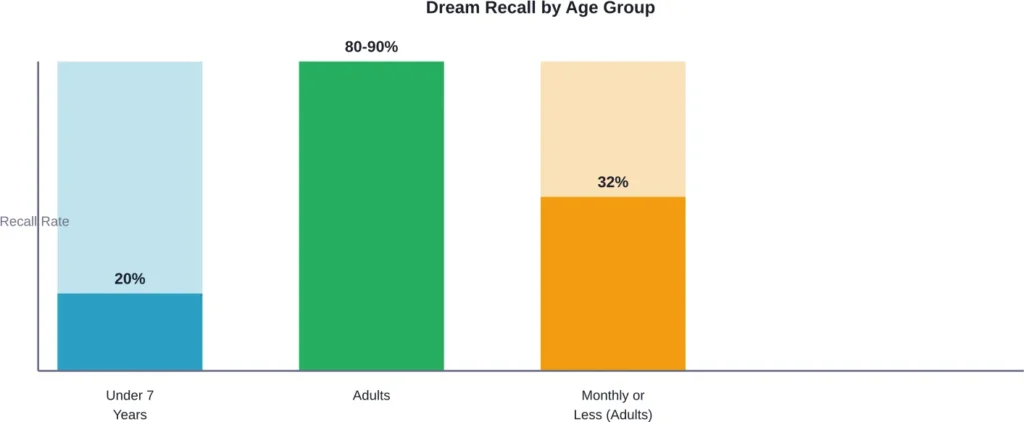
Not everyone remembers dreams with equal clarity. In a 1998 study of 1,000 Austrians, 32% reported dreaming less than once per month. That’s nearly a third of people who rarely recall any dream content.
But here’s the thing—not recalling dreams doesn’t mean those dreams never happened.
According to research, adults report dreaming during 80-90% of REM sleep awakenings. When researchers wake people during REM sleep in controlled laboratory settings, the vast majority can describe detailed dream experiences. This suggests the dreaming process itself is universal, even if memory of those dreams isn’t.
The Non-Dreamer Phenomenon
Some individuals consistently report never recalling dreams and claim no dream experiences even when awakened during polysomnographically defined sleep. Research specifically examining these self-identified non-dreamers raises an intriguing question: might some people genuinely not experience dreaming?
However, studies on REM sleep behavior disorder—a condition where people physically act out their dreams—provide compelling evidence against this idea. Researchers found that individuals who claimed never to dream exhibited dream-enacting behaviors during REM sleep that were congruent with sleep mentation. When awakened during these episodes, they could describe dream content matching their physical actions.
This suggests that even non-dreamers do dream. They just don’t form retrievable memories of the experience.
Why Dream Recall Varies So Dramatically
Several factors determine whether dreams make it from sleeping consciousness into waking memory. Understanding these mechanisms explains why some people remember vivid narratives while others wake with blank slates.
The Timing of Awakening
William Dement, founder of Stanford’s Sleep Research Center, made early connections between dreaming and REM sleep that remain relevant today. His research showed people typically don’t remember dreams unless they wake up during or immediately after the dream occurs.
Think about it this way: dreams exist in a neurological state fundamentally different from waking consciousness. The transition between these states must happen at precisely the right moment for memory consolidation to occur.
Wake up during non-REM sleep? Dream recall plummets. Wake up hours after REM sleep ended? The memory has already faded. But wake during or right after REM? That’s when dream memories transfer to waking consciousness.
Age and Dream Recall
Age significantly affects dream reporting. Studies by David Foulkes revealed that children under seven reported dreaming only 20% of the time when awakened from REM sleep, compared with 80-90% in adults. Preschoolers’ dreams, when recalled, were notably less complex and vivid.
This developmental pattern suggests dream recall involves cognitive abilities that mature over time—abilities related to narrative construction, self-awareness, and memory formation.
The Neuroscience Behind Dream Memory
Dream recall isn’t just about waking at the right moment. Brain chemistry and neurological states play crucial roles in whether dreams become memories.
REM Sleep and Brain Activity
During REM sleep, brain activity resembles waking states in many ways—hence why REM sleep was originally termed “paradoxical sleep.” The cortex shows high activation levels, yet the brain operates under dramatically different neurochemical conditions than waking consciousness.
Research examining REM sleep mechanisms shows that different mental health conditions affect REM sleep architecture. Insomnia is comorbid in 85-90% of individuals diagnosed with major depression, and alterations in REM sleep characteristics are particularly prominent in most mental disorders.
These disruptions affect not just sleep quality but dream characteristics and recall patterns.
The Hippocampus Connection
The hippocampus plays a vital role in memory consolidation. Research on depression shows the hippocampus of depressed patients was 12–15% smaller than that of non-depressed patients. Given the hippocampus’s central role in transferring experiences into long-term memory, its function directly impacts dream recall.
When hippocampal activity is compromised—through depression, sleep disorders, or simply the neurochemical environment of sleep—dream memories may form weakly or not at all.
Dreams Occur Throughout All Sleep Stages
Here’s a common misconception worth addressing: dreams don’t only happen during REM sleep.
Early studies indicated that 80% of dreaming took place in REM sleep, with 6.9% of dreams reported from the other sleep stages. But with improved methodology and expanded definitions of dreaming, researchers found dream reports from all sleep stages. The content differs—non-REM dreams tend to be more thought-like and less vivid—but dreaming isn’t exclusive to REM sleep.
This means even if someone’s REM sleep is disrupted, they’re still experiencing some form of sleep mentation throughout the night.
| Sleep Stage | Dream Characteristics | Recall Likelihood |
|---|---|---|
| REM Sleep | Vivid, narrative, emotional, bizarre | High (80-90% when awakened) |
| Non-REM Stage 2 | Thought-like, fragmented, mundane | Low to moderate |
| Non-REM Deep Sleep | Minimal, vague impressions | Very low |
| Sleep Onset | Hypnagogic imagery, brief scenes | Moderate if awakened immediately |
Does Not Remembering Dreams Affect Sleep Quality?
This question concerns many people who never recall dreams. The good news? Dream recall and sleep quality aren’t directly correlated.
Sleep quality depends on cycling properly through sleep stages, achieving sufficient deep sleep, and waking feeling restored. Someone who never remembers dreams can still get excellent, restorative sleep if they’re completing healthy sleep cycles.
However, certain conditions that affect dream recall—like sleep disorders, medications, or alcohol consumption—can independently impact sleep quality. The issue isn’t the lack of dream memory itself, but rather the underlying factors causing it.
REM Sleep Suppression
Research on selective REM sleep suppression shows it increases next-day negative affect and amygdala responses to social exclusion. REM sleep serves important functions for emotional regulation and processing, regardless of whether dreams are remembered.
So while not remembering dreams is harmless, not getting adequate REM sleep is problematic.
Tips for Improving Dream Recall
Want to remember dreams more consistently? Several strategies can improve recall rates.
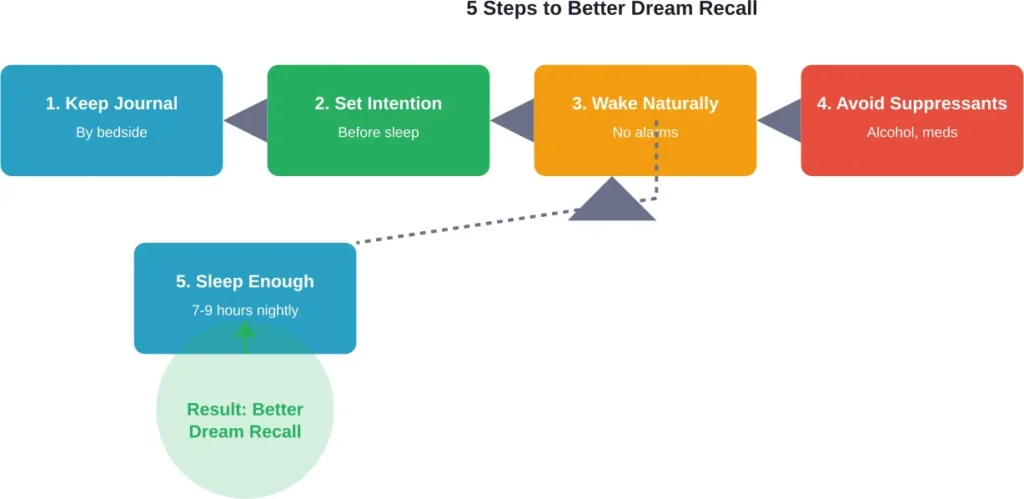
Keep a dream journal. Place a notebook by the bed and write immediately upon waking. Even fragmentary notes help train the brain to prioritize dream memory formation.
Set an intention before sleep. Simply deciding to remember dreams can measurably improve recall. The brain responds to conscious intentions about what to prioritize.
Wake naturally when possible. Alarms that jolt someone from deep sleep make dream recall less likely. Waking naturally during lighter sleep stages improves memory consolidation.
Avoid alcohol and certain medications. Both can suppress REM sleep or interfere with memory formation. Cannabis use affects the endocannabinoid system, which is a stress-responsive system that mediates homeostatic responses affecting sleep; however, the source material does not provide specific evidence that cannabis significantly affects dream recall.
Get sufficient sleep. Sleep deprivation reduces overall REM time and impairs memory consolidation. Aim for seven to nine hours nightly.
Frequently Asked Questions
Yes, it’s relatively common. Research shows 32% of people report dreaming less than once per month. While everyone dreams during sleep, individual differences in brain chemistry, sleep patterns, and memory consolidation mean some people rarely form retrievable dream memories.
Yes, dreams occur during all sleep stages, not just REM sleep. However, REM dreams tend to be more vivid, narrative, and emotionally intense. Non-REM dreams are typically more thought-like and fragmentary, though still constitute a form of sleep mentation.
Absolutely. The neurological and psychological benefits of REM sleep and dreaming occur regardless of whether dreams are remembered. Emotional processing, memory consolidation, and other functions happen during sleep itself, not through conscious dream recall.
Specific types of brain damage, particularly to areas involved in visual processing and memory formation, can affect dreaming and dream recall. However, such cases are rare and typically involve significant neurological injury beyond just absent dream memories.
Many medications affect sleep architecture and dream recall. Antidepressants, blood pressure medications, and sleep aids can all suppress REM sleep or interfere with memory formation. Anyone concerned about medication effects on sleep should consult their healthcare provider.
Changes in sleep patterns, stress levels, medications, or sleep quality can all trigger shifts in dream recall. Life changes that affect when or how someone wakes—like retirement, new work schedules, or stopping certain medications—often correlate with increased dream memory.
Research suggests genetic factors may influence sleep architecture and memory formation processes, which could affect dream recall. However, environmental factors, sleep habits, and life circumstances play significant roles, making dream recall a complex interaction of multiple factors.
The Bottom Line on Not Dreaming
So is it possible to not dream? The scientific consensus says no—everyone dreams during sleep, even if those dreams never become waking memories.
The variability in dream recall reflects differences in sleep patterns, brain chemistry, memory consolidation, and when awakening occurs. Self-identified non-dreamers do experience dreams, as evidenced by studies on REM sleep behavior disorder, but they lack the memory mechanisms to recall those experiences.
For most people, absent dream recall poses no health concerns. Sleep quality depends on completing proper sleep cycles, not on remembering dreams. That said, anyone concerned about sleep quality, experiencing sudden changes in dream patterns, or dealing with sleep disturbances should consult a healthcare provider.
Want to explore the fascinating world of dreams? Start with simple practices like keeping a dream journal and setting pre-sleep intentions. The dreams are already there—sometimes all it takes is training the mind to remember them.