

Quick Summary: Yes, it’s possible to not have a belly button. Some people are born without one due to birth defects like omphalocele or gastroschisis, while others lose theirs through abdominal surgeries. Surgical reconstruction can create a natural-looking navel for those who want one.
Belly buttons are one of those body parts we take for granted. Innie or outie, most of us have one without giving it much thought.
But here’s something that might surprise you: not everyone has a belly button. Some people are living completely normal lives without this familiar abdominal landmark.
So what’s going on? How can someone not have a belly button when it’s such a universal human feature?
The answer involves both congenital conditions and surgical procedures. Let’s break down the science behind this uncommon situation.
How Belly Buttons Normally Form
Before diving into why some people don’t have belly buttons, it helps to understand how they typically form.
During pregnancy, the umbilical cord connects the developing baby to the placenta. This cord delivers oxygen and nutrients while removing waste products. According to the Mayo Clinic, after birth, the cord is clamped and cut, leaving a small stump attached to the newborn’s abdomen.
Over the next 1 to 3 weeks, this stump dries out and eventually falls off. What’s left behind is scar tissue that becomes the belly button.
It’s essentially a permanent reminder of where you were once connected to your mother. But not everyone’s development follows this typical path.
Birth Defects That Result in No Belly Button
Some babies are born without a belly button due to congenital abdominal wall defects. These rare conditions affect how the belly forms during fetal development.
Omphalocele
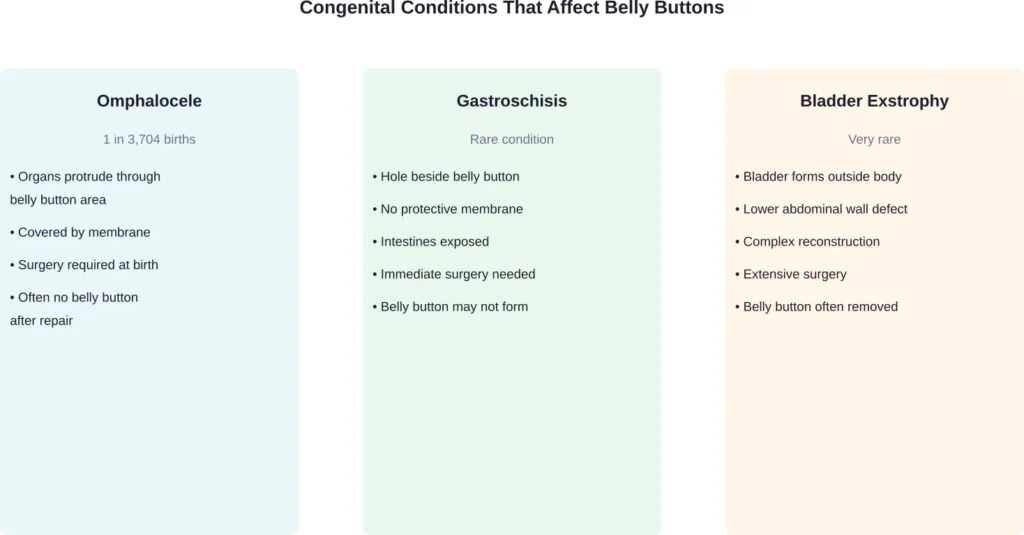
Omphalocele is a birth defect where the intestines, liver, and sometimes other organs stick out of the belly button area. According to the CDC, researchers estimate that about 1 in every 3,704 to 7,000 babies is born with omphalocele in the United States.
The organs are covered by a thin, transparent membrane and protrude through an opening in the abdominal muscles. The umbilical cord typically attaches to this sac rather than to a normal abdominal wall.
When surgeons repair an omphalocele, they place the organs back inside the abdomen and close the opening. But this repair process often leaves little or no belly button behind.
Gastroschisis
Gastroschisis is similar but distinct. With this condition, the intestines push through a hole in the abdominal wall, usually to the right of the belly button.
Unlike omphalocele, there’s no protective membrane covering the organs. The hole is typically smaller, and the defect doesn’t involve the umbilical cord insertion site in the same way.
Still, surgical repair can sometimes eliminate the natural belly button formation, leaving affected individuals without one.
Bladder Exstrophy
This is a rare defect where the bladder forms outside the body. The lower abdominal wall doesn’t close properly during development.
Surgical reconstruction is necessary to place the bladder inside the body and close the abdominal wall. The extensive nature of this surgery often means the belly button doesn’t form or is removed during the repair process.
Surgical Reasons for Missing Belly Buttons
Birth defects aren’t the only reason someone might lack a belly button. Surgical procedures can also be the culprit.
Abdominal Tumor Removal
Large tumors that grow in or near the belly button area sometimes require extensive surgical removal. Some individuals report that cancer surgeries involving abdominal masses have required removal of the belly button.
The priority is always removing all cancerous tissue. If the belly button is involved or in the way, surgeons won’t hesitate to take it.
Hernia Repairs
Umbilical hernias occur when tissue pushes through a weak spot near the belly button. While most hernia repairs preserve the navel, severe cases with complications might require more extensive reconstruction that eliminates it.
Abdominoplasty Complications
Tummy tucks typically create a new belly button as part of the procedure. But complications—infection, poor healing, tissue death—can sometimes result in complete loss of the navel.
It’s not the intended outcome, but it happens.
Living Without a Belly Button
Here’s the thing: your belly button doesn’t actually do anything once you’re born.
The umbilical cord was essential for fetal development. But after it’s cut and healed? The belly button is purely cosmetic. It serves no physiological function whatsoever.
People without belly buttons live completely normal, healthy lives. There are no medical consequences to not having one.
That said, the psychological and cosmetic aspects are real. The belly button is expected. Its absence can draw unwanted attention or make someone feel self-conscious about their body.
Creating a Belly Button Through Surgery
For those who want one, surgical reconstruction is definitely possible.
Neoumbilicoplasty
This is the technical term for belly button creation surgery. Several techniques exist, each with slightly different approaches:
- The dome procedure creates natural-looking depth and wrinkles
- Four flaps technique uses surrounding skin to build structure
- Superiorly based skin flap methods achieve superior hooding
According to Newsweek (as cited in Healthline source material), the cost for belly button creation or improvement surgery is usually around $2,000, though this varies by location and complexity.
The procedure is performed under general anesthesia. Recovery typically takes a few weeks, with full healing over several months.
What to Expect
Results from neoumbilicoplasty are generally quite good. Skilled surgeons can create a natural-looking belly button that’s indistinguishable from a birth navel.
The goal is sufficient depth, appropriate size and shape, and natural-looking folds or wrinkles. Superior hooding—that slight overhang at the top—is considered aesthetically important.
Scarring is minimal when the surgery is done well, as the scar tissue is hidden within the belly button structure itself.

Frequently Asked Questions
Absolutely. The belly button has no function after birth—it’s just scar tissue. Babies born with conditions like omphalocele can live completely normal lives after surgical repair, even without a belly button.
No. The absence of a belly button poses no health risks or medical issues. It’s purely a cosmetic matter. Some people choose reconstruction for aesthetic or psychological reasons, but it’s not medically necessary.
It’s rare. The CDC estimates omphalocele occurs in about 1 in 3,704 births. Gastroschisis and bladder exstrophy are even less common. Most people without belly buttons lost them through surgery rather than being born without one.
When performed by an experienced surgeon, yes. Modern neoumbilicoplasty techniques can create belly buttons that look completely natural with appropriate depth, shape, and skin folds. The results are typically indistinguishable from birth navels.
This depends on the surgical technique used and how well the tissue healed. Generally speaking, surgeons recommend waiting at least a year after reconstruction. Some reconstructed navels may not have sufficient depth or tissue strength for piercing.
Like any surgery, neoumbilicoplasty carries standard risks: infection, bleeding, poor wound healing, or scarring. Most procedures go smoothly, but complications are possible. Choosing a qualified surgeon with experience in this specific procedure reduces risks.
Coverage varies. If the absence results from medically necessary surgery (like cancer removal), reconstruction might be covered. But if it’s purely cosmetic, insurance typically won’t pay. Check with your specific insurance provider about their policies.
The Bottom Line
Not having a belly button is uncommon but entirely possible.
Some babies are born with abdominal wall defects that prevent normal belly button formation. Others lose their navels through necessary medical procedures like tumor removal or complex abdominal surgeries.
The good news? Living without a belly button poses zero health risks. And for those who want one, surgical options exist to create a natural-looking navel.
Whether someone chooses reconstruction is a personal decision based on comfort, aesthetics, and individual preferences. There’s no right or wrong answer.
If you or someone you know is living without a belly button and considering reconstruction, consult with a qualified plastic surgeon experienced in neoumbilicoplasty. They can explain the options, set realistic expectations, and help determine if the procedure is right for you.