

Quick Summary: While a fatal melatonin overdose is extremely rare, taking excessive amounts can cause significant side effects including headaches, dizziness, nausea, and disrupted sleep patterns. The CDC reports a dramatic increase in pediatric melatonin ingestions, with over 260,000 cases between 2012-2021, highlighting growing safety concerns especially for children.
Melatonin has become America’s go-to sleep supplement. Sales jumped from $285 million in 2016 to $821 million in 2020, according to CDC data. But here’s the thing—more people taking melatonin means more questions about safety.
Can you actually overdose on this “natural” hormone? The short answer is yes, though it’s complicated.
Unlike prescription sleeping pills with clear toxicity thresholds, melatonin exists in a regulatory gray zone. The FDA classifies it as a dietary supplement, not a medication. That means less oversight and, frankly, less research on what constitutes a dangerous dose.
What Exactly Is Melatonin?
According to the National Institutes of Health, melatonin is a hormone naturally produced by the pineal gland in your brain. It regulates sleep-wake cycles by interacting with the suprachiasmatic nucleus of the hypothalamus and the retina.
The body’s natural melatonin production rises in the early evening—roughly three hours before sleep onset. This biological signal tells the body it’s time to wind down.
Synthetic melatonin supplements mimic this regulatory function. But supplemental doses often far exceed what the body produces naturally, which creates potential problems.
How Much Melatonin Is Too Much?
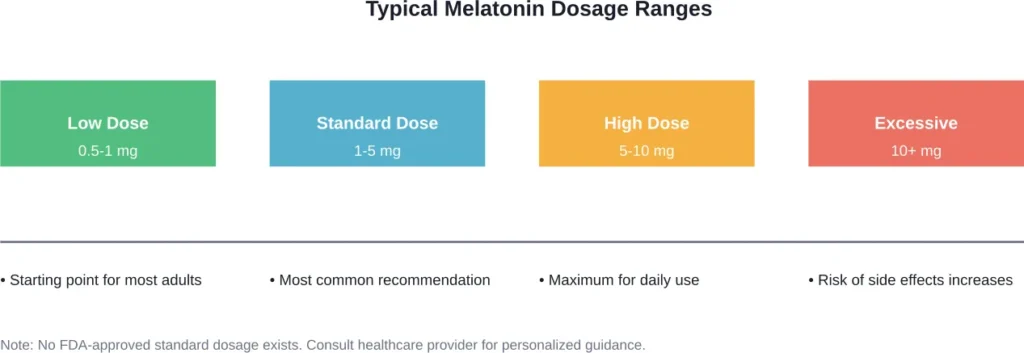
Here’s where things get murky. No standardized “safe” dose exists for melatonin.
Most adults take between 1 to 5 milligrams, with 10 milligrams generally considered the upper limit for daily use. Columbia University Irving Medical Center notes that typical dosing ranges from 0.5 to 10 mg, taken 30 to 60 minutes before the desired bedtime.
But studies reveal a troubling inconsistency. Research has found variability in melatonin supplement content, with some products containing significantly more or less than labeled amounts. That’s a massive discrepancy that makes accurate dosing nearly impossible.
Documented Cases of Melatonin Overdose
Real-world overdose cases provide crucial insights. A 2024 case report published in Sleep Medicine X documented a 16-year-old male who intentionally consumed 900 mg of melatonin—180 tablets. The patient remained unconscious for 32 hours before regaining consciousness.
Medical case reports document various overdose presentations, including lethargy as a symptom. These cases underscore an important point: while melatonin overdoses rarely prove fatal, they can cause significant medical complications.
Research published in the European Journal of Psychiatry reviewed multiple suicide attempts involving melatonin. Despite massive doses, most patients survived with supportive care.
Symptoms of Taking Too Much Melatonin
Overdose symptoms vary based on the amount consumed and individual factors like age, gender, and existing health conditions.
Common symptoms include:
- Severe headaches and dizziness
- Nausea and gastrointestinal distress
- Extreme drowsiness extending into the next day
- Vivid dreams or nightmares
- Irritability and mood changes
- Confusion or disorientation
- Changes in blood pressure
- Disrupted circadian rhythm
Here’s what’s counterintuitive: taking more melatonin doesn’t necessarily improve sleep. In fact, excessive doses can disrupt your natural sleep-wake cycle and make insomnia worse.
| Dose Range | Typical Effects | Risk Level |
|---|---|---|
| 0.5-5 mg | Normal sleep promotion, minimal side effects | Low |
| 5-10 mg | Increased drowsiness, possible next-day fatigue | Moderate |
| 10-50 mg | Headaches, dizziness, nausea, mood changes | High |
| 50+ mg | Severe symptoms, potential medical intervention needed | Very High |
The Pediatric Melatonin Crisis
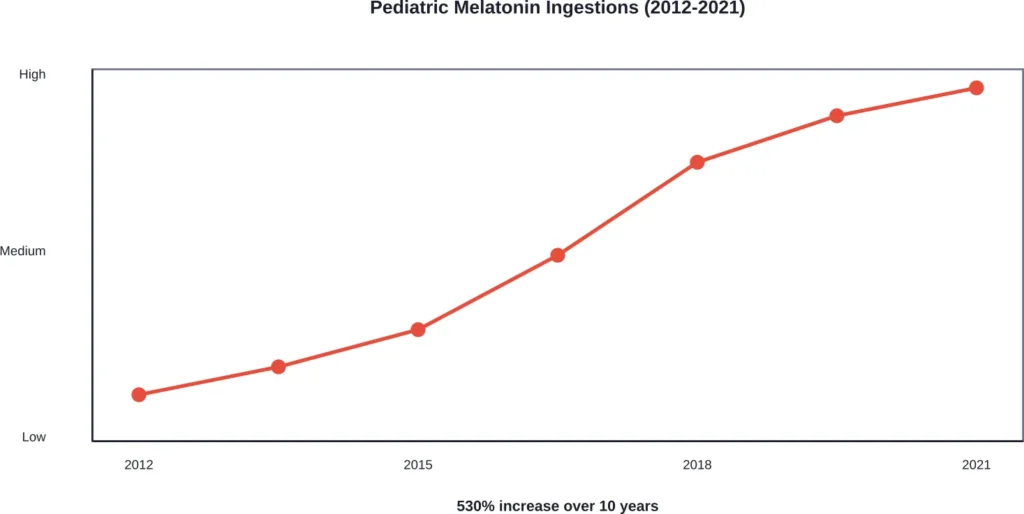
Children face significantly higher risks. According to the CDC, pediatric melatonin ingestions increased by 530% between 2012 and 2021, with 260,435 reported cases. Even more concerning: 27,795 children required medical evaluation, and 4,097 were hospitalized.
Case reports document pediatric melatonin ingestion deaths, though causality and contributing factors vary.
Why the explosion in pediatric cases? Several factors converge:
- Increased parental use of melatonin for childhood sleep problems
- Gummy formulations that resemble candy
- Over-the-counter availability without prescription requirements
- Perception of melatonin as “natural” and therefore harmless
The CDC emphasizes storing melatonin—especially gummy formulations—out of children’s reach, just like any medication.
What to Do If Someone Takes Too Much
If someone consumes excessive melatonin, take these steps:
- Call Poison Control immediately at 1-800-222-1222 or use the webPOISONCONTROL online tool
- Do not induce vomiting unless instructed by medical professionals
- Monitor vital signs and level of consciousness
- Call 911 if the person has a seizure, stops breathing, or can’t be awakened
Treatment typically involves supportive care. In severe cases documented in medical literature, gastric lavage was performed to remove unabsorbed melatonin from the stomach. Most patients recover fully with appropriate medical monitoring.
Long-Term Safety Concerns
Beyond acute overdose, long-term melatonin use raises questions. The National Institutes of Health notes that melatonin’s toxicology profile remains poorly understood despite widespread public use.
Potential long-term concerns include:
- Suppression of natural melatonin production
- Hormonal disruption, particularly in developing children
- Interactions with prescription medications
- Dependency on supplements for sleep initiation
Research published in StatPearls emphasizes that melatonin isn’t FDA-approved for any indication in the United States. It exists as a dietary supplement with minimal regulatory oversight.
Who Should Avoid Melatonin?
Certain populations face elevated risks:
| Population | Risk Factors | Recommendation |
|---|---|---|
| Pregnant women | Unknown fetal effects | Avoid unless prescribed |
| Children under 3 | Hormonal development concerns | Only under medical supervision |
| People on blood thinners | Potential drug interactions | Consult physician first |
| Seizure disorder patients | May lower seizure threshold | Medical clearance required |
Frequently Asked Questions
Fatal melatonin overdoses are extremely rare. Medical literature documents very few deaths directly attributable to melatonin alone, though massive doses can cause serious complications requiring hospitalization.
Doses of 20 mg typically cause significant side effects including severe drowsiness, headaches, dizziness, nausea, and mood disturbances. The effects may last well into the next day, disrupting normal functioning.
Symptoms usually peak within 30 minutes to 2 hours after ingestion. Recovery time varies based on dose and individual metabolism, but most effects resolve within 24-48 hours. Documented cases show patients remaining unconscious for up to 32 hours after massive overdoses.
While 10 mg falls within commonly used ranges, it’s considered the upper limit for daily use. Many experts recommend starting with much lower doses (0.5-3 mg) and only increasing if necessary under medical guidance.
Some evidence suggests the body may develop tolerance to melatonin supplements over time, requiring higher doses to achieve the same effect. This makes starting with the lowest effective dose particularly important.
Generally no. Melatonin works best when taken 30-60 minutes before your intended bedtime. Taking it during the night can disrupt your circadian rhythm and cause next-day drowsiness.
Call Poison Control immediately at 1-800-222-1222. According to the CDC, unsupervised pediatric melatonin ingestions require professional evaluation, especially if the child consumed multiple doses.
The Bottom Line on Melatonin Safety
Melatonin occupies a unique space—widely available, heavily used, yet inadequately studied. While fatal overdoses remain exceedingly rare, the risks aren’t zero, particularly for children.
The CDC’s data on pediatric ingestions tells a concerning story. As melatonin use continues climbing, accidental exposures will likely increase too.
Real talk: if you’re using melatonin regularly, talk to a healthcare provider. Sleep problems often have underlying causes that supplements can’t fix. And if you have kids, store melatonin like you would any medication—locked up and out of reach.
Before reaching for that bottle tonight, consider whether you’re taking the lowest effective dose. More isn’t better with melatonin. In fact, it’s often worse.
Need help with sleep issues? Consult a healthcare provider to discuss non-drug approaches and appropriate supplement use tailored to your specific situation. If you suspect a melatonin overdose, call Poison Control at 1-800-222-1222 immediately.