

Quick Summary: While fatal marijuana overdoses are extremely rare, it is possible to consume too much cannabis and experience severe intoxication symptoms. According to research, the risk of death from cannabis toxicity alone is negligible, though consuming excessive amounts—especially through edibles—can lead to serious medical emergencies requiring treatment.
The question of whether someone can overdose on weed sparks intense debate. Here’s what the medical evidence actually shows: fatal overdoses from cannabis alone are extraordinarily uncommon, but that doesn’t mean marijuana is risk-free.
Cannabis-related emergency department visits have increased significantly in recent years. According to the CDC, cannabis-involved emergency visits among young people rose notably during the COVID-19 pandemic compared to before. This tells us something important—people are definitely consuming too much and ending up in hospitals.
But what exactly happens when someone uses too much marijuana? And when does it become dangerous?
Understanding Marijuana Intoxication vs. Fatal Overdose
Marijuana intoxication—also called cannabis intoxication or marijuana toxicity—occurs when someone uses too much marijuana and experiences its effects intensely. The main psychoactive compound, THC (tetrahydrocannabinol), affects both brain and body.
Research indicates that the risk of death due to cannabis toxicity is negligible. However, the same research notes cannabis can prove fatal in circumstances with risk of traumatic physical injury or in individuals with cardiac conditions.
So while you’re extremely unlikely to die directly from THC poisoning, severe intoxication creates real dangers. People experiencing extreme marijuana intoxication may injure themselves, have accidents, or trigger underlying health problems.
Why Cannabis Rarely Causes Fatal Overdoses
Unlike opioids or alcohol, cannabis doesn’t suppress breathing or heart function in ways that typically cause death. The brain’s cannabinoid receptors aren’t concentrated in areas controlling these vital functions.
That said, cannabis potency has changed dramatically. According to NIDA, between 1995 and 2022, the delta-9 THC potency in illegal cannabis products seized by law enforcement quadrupled from 3.96% to 16.14%. Cannabis flower and concentrates in dispensaries can now contain THC concentrations exceeding 40%.
Higher THC concentrations increase the risk of severe intoxication symptoms and adverse reactions.
Signs and Symptoms of Marijuana Overdose
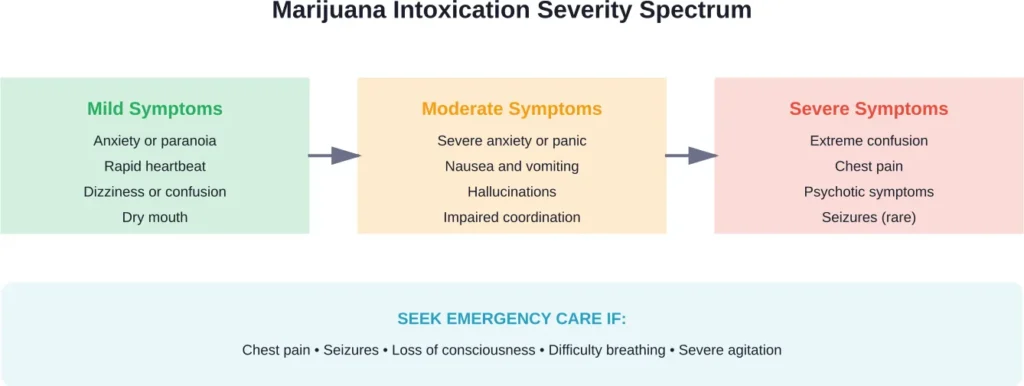
When someone consumes too much THC, symptoms range from uncomfortable to genuinely frightening. Recognizing these signs matters because some require medical attention.
Common Intoxication Symptoms
Mild to moderate marijuana overdose symptoms include:
- Anxiety, paranoia, or panic attacks
- Rapid or irregular heartbeat
- Confusion and disorientation
- Extreme dizziness or vertigo
- Nausea and vomiting
- Hallucinations or altered perceptions
- Impaired motor coordination
- Excessive sleepiness or lethargy
More serious symptoms requiring immediate medical attention include chest pain, difficulty breathing, seizures, psychotic symptoms, or loss of consciousness.
The Edibles Problem: Why Cannabis Poisoning Increased
Here’s where cannabis intoxication gets tricky. The CDC notes that edibles—food and drink products infused with cannabis—carry different risks than smoked marijuana.
According to the CDC, edibles take from 30 minutes to 2 hours to feel intoxicating effects. This delayed onset causes many people to consume too much, leading to poisoning and potentially serious injury.
The THC concentration in edibles is often difficult to measure and frequently unknown or inaccurately labeled. This unpredictability contributes to unintentional poisonings.
| Consumption Method | Onset Time | Duration | Overdose Risk |
|---|---|---|---|
| Smoking/Vaping | Minutes | 2-3 hours | Lower (immediate feedback) |
| Edibles | 30 min – 2 hours | 6-8 hours | Higher (delayed effects) |
| Concentrates/Dabs | Minutes | 2-4 hours | Higher (extreme potency) |
| Tinctures | 15-45 minutes | 4-6 hours | Moderate |
Who’s Most at Risk for Marijuana Intoxication?
Certain groups face elevated risks when consuming cannabis. Research shows unintentional pediatric exposures increased significantly in states after legalization, with children often mistaking edibles for regular candy or cookies.
According to CDC data on cannabis-involved emergency department visits, young people under 25 showed increased rates of cannabis-related medical encounters. Inexperienced users who don’t understand proper dosing also face heightened risks.
People with underlying heart conditions, mental health disorders, or those taking certain medications may experience more severe reactions to cannabis intoxication.
What to Do When Someone Consumes Too Much Cannabis
For mild symptoms, at-home management often works. The affected person should avoid driving or operating machinery, stay hydrated, rest in a calm environment, and have someone monitor them until symptoms pass.
But when should medical help be sought? Call emergency services immediately if the person experiences:
- Chest pain or irregular heartbeat
- Difficulty breathing
- Seizures or convulsions
- Loss of consciousness
- Severe agitation or violent behavior
- Psychotic symptoms lasting beyond a few hours
In hospital settings, treatment focuses on managing symptoms. Medical staff may provide IV fluids, medications to reduce anxiety or nausea, and monitoring for complications.
Preventing Cannabis Poisoning and Unintentional Exposure
Prevention strategies matter, especially in households with children. The CDC recommends strengthening safe cannabis storage practices and modifying cannabis packaging to decrease appeal to young people.
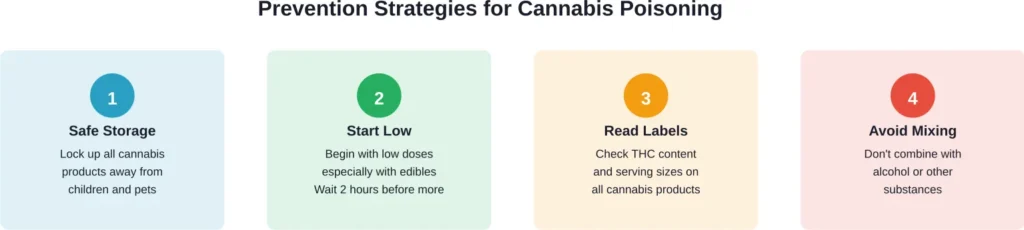
For those choosing to use cannabis products:
- Start with very low doses, especially with edibles (5-10mg THC or less)
- Wait at least two hours before consuming more
- Read product labels carefully for THC concentration
- Avoid mixing cannabis with alcohol or other substances
- Never drive or operate machinery while intoxicated
- Keep products in original child-resistant packaging
Frequently Asked Questions
Fatal overdoses from cannabis toxicity alone are extraordinarily rare. Medical research confirms the risk of death due to cannabis toxicity is negligible. However, severe intoxication can lead to accidents, injuries, or complications in people with pre-existing heart conditions.
This varies dramatically based on tolerance, consumption method, and THC potency. For edibles, doses above 10-20mg THC can cause severe intoxication in inexperienced users. Modern cannabis concentrates can contain 40% or more THC, making overconsumption easier than with traditional flower.
Symptoms from smoking typically last 2-3 hours, while edible effects can persist 6-8 hours or longer. Severe intoxication symptoms may take 12-24 hours to fully resolve, depending on the amount consumed and individual metabolism.
Marijuana intoxication happens from consuming too much at once. Cannabinoid hyperemesis syndrome (CHS) is a condition that develops in some chronic, heavy cannabis users, causing severe cyclical vomiting that only hot showers temporarily relieve.
Yes, significantly. Synthetic cannabinoids found in products like K2 or Spice have been associated with much greater toxicity and higher addiction potential than natural cannabis. These products carry substantially higher overdose and health risks.
Yes. Dogs and cats are highly sensitive to THC. Even small amounts can cause severe intoxication in pets, requiring veterinary care. Keep all cannabis products securely away from animals.
Seek emergency care if experiencing chest pain, difficulty breathing, seizures, loss of consciousness, or severe psychological symptoms. For milder symptoms like anxiety or nausea, at-home management in a safe environment with supervision is usually sufficient.
The Bottom Line on Marijuana Overdose
So can you overdose on weed? The answer is nuanced. Fatal overdoses from cannabis alone remain exceptionally rare—the risk of death from direct cannabis toxicity is negligible according to medical research.
But that doesn’t mean consuming too much marijuana is harmless. Cannabis-involved emergency department visits have increased, particularly among young people and with the rise of high-potency products and edibles.
Understanding proper dosing, recognizing intoxication symptoms, and knowing when to seek medical help can prevent serious complications. If concerned about cannabis use or experiencing problematic symptoms, consult a healthcare provider for personalized guidance and support.