

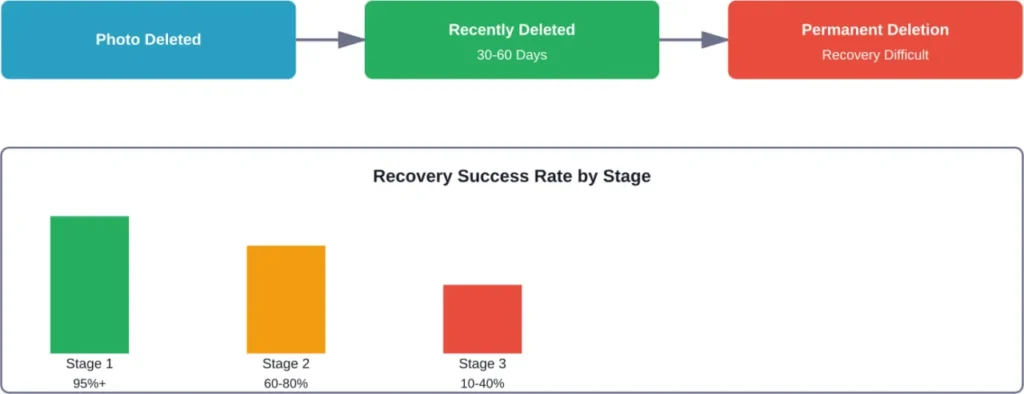
Quick Summary: Recovering deleted photos is possible in most cases, especially if they’re still in your device’s trash or recently deleted folder (typically 30-60 days). After permanent deletion, recovery becomes more difficult but not impossible—specialized software can sometimes retrieve data before it’s overwritten. Success depends on how quickly you act and whether the storage space has been reused.
Accidentally deleting precious photos creates instant panic. But here’s the thing—deletion doesn’t always mean gone forever.
The answer depends on where the photos lived, how they were deleted, and how quickly action is taken. Modern devices build in safety nets specifically for this scenario.
The Recently Deleted Safety Net
Most platforms hold deleted photos in a temporary folder before permanent removal. This grace period varies by service.
Apple devices keep deleted photos in the Recently Deleted album for 30 days. After that window closes, they’re permanently removed from the device. According to Apple Support, recovering items from this folder takes just a few taps.
Google Photos operates differently. Photos backed up to the cloud stay in trash for 60 days, while non-backed items disappear after 30 days. Once permanently deleted from trash, Google states these items can’t be restored through normal methods.
Microsoft’s Windows File Recovery tool offers command-line options for Windows 10 and 11 users, though Microsoft notes that Windows 10 support ended in October 2025.
When Files Are Permanently Gone
Permanent deletion happens when files leave the trash folder. But the data often remains on storage devices until overwritten by new information.
According to NIST research on deleted file recovery, forensic techniques can retrieve data from storage media even after deletion. IEEE technical standards document methods for carving fragmented files from damaged or wiped devices.
Louisiana State University researchers announced a breakthrough system in November 2025 that reconstructs fragmented data from damaged devices—technology previously unavailable for severely compromised storage.
Recovery software works by scanning storage for file remnants before they’re overwritten. Success rates drop significantly once new data occupies the same space.
Platform-Specific Recovery Methods
| Platform | Trash Period | Built-in Recovery |
|---|---|---|
| iPhone/iPad | 30 days | Recently Deleted album |
| Google Photos (backed up) | 60 days | Trash folder |
| Google Photos (not backed up) | 30 days | Trash folder |
| Windows 10/11 | Varies | Recycle Bin, File History |
| OneDrive | 30 days | Recycle bin |
Third-Party Recovery Tools
Professional recovery software offers deeper scanning capabilities. These tools work best when used immediately after deletion—before the operating system reuses storage space.
The International Association of Computer Investigative Specialists (IACIS) trains forensic examiners through its 76-hour Basic Computer Forensic Examiner course. Their certification requires a minimum score of 80% and emphasizes understanding underlying recovery principles rather than just tool operation.
Recovery situations vary widely based on user reports. Some report successful recovery weeks later, others find nothing retrievable within hours.
FAQ
Once photos are removed from Recently Deleted or Trash, standard recovery options disappear. Third-party recovery software may retrieve them if the storage hasn’t been overwritten, but success isn’t guaranteed.
Apple devices provide 30 days. Google Photos offers 60 days for backed-up content and 30 days for non-backed items. Act quickly—waiting reduces recovery chances.
Recovery software can retrieve deleted files if the storage space hasn’t been reused. Effectiveness depends on how much time passed and whether new data was written to the device.
Factory resets significantly reduce recovery chances by wiping file system references. However, forensic tools can sometimes retrieve fragments if the storage wasn’t fully overwritten.
Yes. Every action risks overwriting deleted file data. Stop taking photos, installing apps, or downloading content until attempting recovery.
Cloud services keep deleted items temporarily (30-93 days depending on the service). After that window, recovery requires contacting support—often unsuccessfully.
Sometimes. Recent forensic advances allow data reconstruction from severely damaged devices, though success varies based on damage type and extent.
Take Action Now
Check Recently Deleted folders immediately. That’s where most accidentally deleted photos hide, waiting for simple restoration.
Beyond that grace period, recovery requires specialized tools and fast action. Stop using the device to prevent overwriting, then explore recovery software options or professional services.
Prevention beats recovery—enable automatic cloud backups today. Multiple backup locations ensure photos survive accidental deletion, device failure, or loss.