

Quick Summary: Yes, it’s possible to sleep too much. Regularly sleeping more than 9-10 hours per night is considered oversleeping (hypersomnia) and can be linked to health risks including heart disease, diabetes, depression, and increased mortality. While most adults need 7-9 hours of sleep, consistently exceeding this range may signal underlying medical conditions or sleep disorders that warrant medical evaluation.
Sleep is essential for health. But here’s the thing—getting too much can be just as problematic as getting too little.
Most people worry about sleep deprivation. According to the CDC, more than one in three American adults don’t get the recommended amount of sleep. That’s a real problem. But on the flip side, consistently sleeping more than necessary carries its own set of health risks that often fly under the radar.
So how much sleep is too much? And what happens when someone regularly exceeds healthy sleep duration? Let’s break it down.
How Much Sleep Do Adults Actually Need?
The National Heart, Lung, and Blood Institute recommends that adults sleep between 7 and 9 hours each night. This isn’t arbitrary—it’s based on extensive research linking this duration to optimal health outcomes.
Sleep needs vary by age. Here’s what different age groups require:
| Age Group | Recommended Sleep Duration |
|---|---|
| Newborns (0-3 months) | 14-17 hours |
| Infants (4-12 months) | 12-16 hours (including naps) |
| Toddlers (1-2 years) | 11-14 hours (including naps) |
| Preschoolers (3-5 years) | 10-13 hours |
| School age (6-13 years) | 9-11 hours |
| Teens (14-17 years) | 8-10 hours |
| Adults (18-64 years) | 7-9 hours |
| Older adults (65+ years) | 7-8 hours |
Individual variability exists. Some adults function well on 7 hours, while others need closer to 9. But regularly sleeping 10 or 11 hours? That crosses into oversleeping territory.
What Is Hypersomnia?
Hypersomnia refers to excessive sleepiness or sleeping too much. People with this condition sleep much longer than usual—often 11 hours or more—but still feel extremely tired and struggle to stay awake during the day.
There are several types of hypersomnia. Idiopathic hypersomnia is the most common, where no underlying cause can be identified. Other forms include secondary hypersomnia caused by medical conditions, medications, or sleep disorders.
Key symptoms include:
- Sleeping significantly longer than 9-10 hours regularly
- Excessive daytime sleepiness despite long sleep duration
- Difficulty waking up or feeling groggy for extended periods
- Regular need to nap during the day
- Falling asleep at inappropriate times
- Cognitive difficulties including memory and concentration problems
Sound familiar? These symptoms can seriously disrupt daily life and relationships.
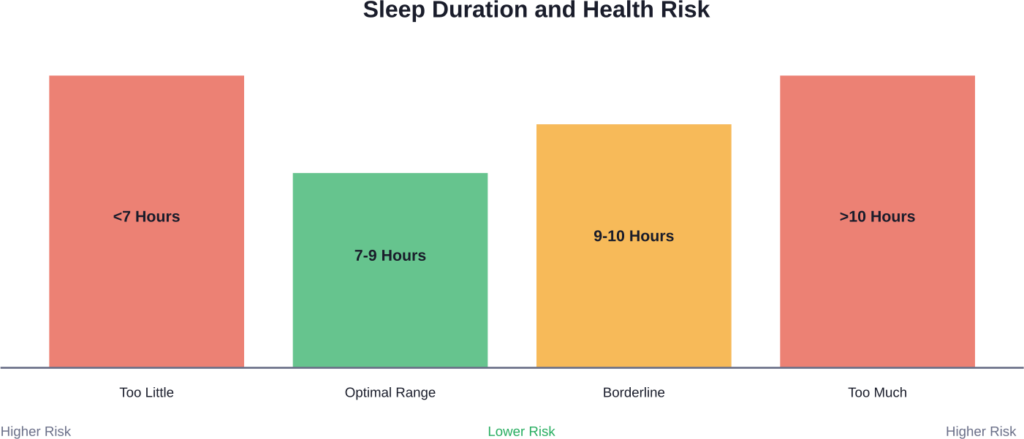
Health Risks Linked to Oversleeping
Research consistently shows connections between long sleep duration and various health problems. Now, this doesn’t mean oversleeping causes these conditions—often it’s a symptom or marker of underlying issues.
Cardiovascular Disease
According to the National Heart, Lung, and Blood Institute, healthful sleep patterns include getting 7-8 hours of sleep each night. A study in Circulation found that adults with healthy sleep patterns had fewer incidents of heart failure throughout a 10-year period.
The research showed that getting 7-8 hours of sleep each night was associated with an 8% reduced risk of heart failure (per the study cited). Both short and long sleep durations appeared problematic for heart health.
Type 2 Diabetes
The CDC notes that sleep problems mean blood pressure stays higher for longer periods. Diabetes is closely connected to poor sleep patterns, with insufficient sleep contributing to elevated blood sugar levels and insulin resistance.
Obesity and Weight Gain
One study showed that people who slept for 9 or 10 hours every night were 21% more likely to become obese over a six-year period than those who slept between 7 and 8 hours. The association between sleep and weight isn’t fully understood, but it’s significant.
Mental Health Concerns
Sleep and mental health are closely connected. Waking up after 10 or 11 hours might sound restorative, but it can actually leave people feeling mentally off. Depression commonly features hypersomnia as a symptom, and excessive sleep can worsen depressive symptoms in a cyclical pattern.
Cognitive Decline
Research partially funded by the NHLBI found that seniors sleeping more than 9 hours each night could be at higher risk of dementia in later years. The study, published in Neurology, showed increased risk particularly in people not accustomed to sleeping that much before.
Researchers noted that the need for extra sleep might be a sign of dementia risk rather than the cause—an important distinction.
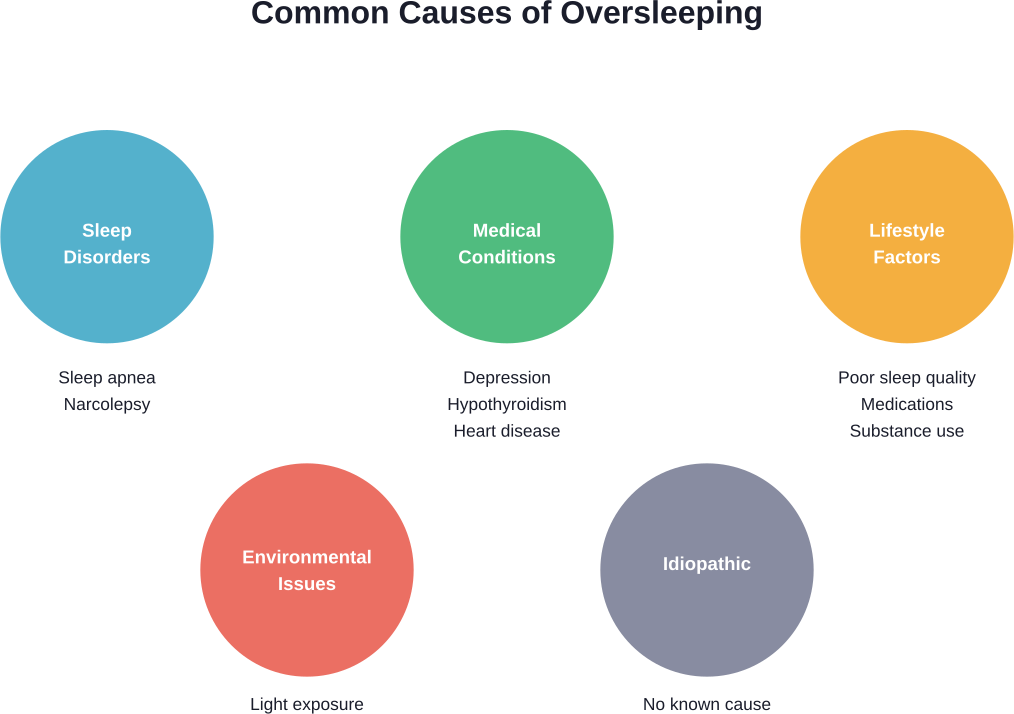
What Causes Oversleeping?
Several factors can lead to excessive sleep duration:
Sleep Disorders
Conditions like sleep apnea cause fragmented, poor-quality sleep. Even after 10 hours in bed, the actual restorative sleep may be inadequate, leading to continued fatigue and extended time in bed.
Narcolepsy causes uncontrollable sleep episodes throughout the day, sometimes requiring extended nighttime sleep as well.
Medical Conditions
Depression, hypothyroidism, heart disease, and neurological disorders can all contribute to hypersomnia. Medications for these and other conditions may also cause excessive sleepiness as a side effect.
Poor Sleep Quality
Sometimes people sleep longer trying to compensate for poor sleep quality. Factors affecting quality include nighttime light exposure—research from Harvard Medical School found that nighttime light exposure raises cardiovascular disease risk by between 30% and 50% compared to sleeping in darkness, partly through circadian rhythm disruption.
The CDC recommends keeping bedrooms quiet, relaxing, and at a cool temperature while turning off electronic devices at least 30 minutes before bedtime.
Lifestyle Factors
Alcohol consumption, irregular sleep schedules, and certain substances can extend sleep duration while reducing sleep quality. This creates a cycle where more hours don’t equal better rest.
When to See a Healthcare Provider
Talk to a healthcare provider if:
- Sleep consistently exceeds 9-10 hours per night
- Excessive daytime sleepiness persists despite long sleep duration
- Falling asleep at inappropriate times or without warning
- Sleep patterns have changed significantly
- Loud snoring, gasping, or breathing pauses occur during sleep
- Oversleeping interferes with work, relationships, or daily activities
Proper diagnosis may involve sleep studies, blood tests, or other evaluations to identify underlying causes. Treatment depends on the specific condition identified.
Getting Quality Sleep Without Oversleeping
Here’s what actually works for maintaining healthy sleep patterns:
Maintain consistent sleep schedules. Going to bed and waking up at the same time daily helps regulate the body’s circadian rhythm, even on weekends.
Create an optimal sleep environment. The CDC recommends keeping bedrooms quiet, relaxing, and cool. Darkness matters—research shows nighttime light exposure significantly impacts health.
Limit screen time before bed. Power down electronic devices at least 30 minutes before sleep. Studies suggest this enhances sleep quality.
Avoid alcohol and large meals near bedtime. Both can disrupt sleep architecture and extend time needed in bed.
Exercise regularly but not too close to bedtime. Physical activity improves sleep quality but can be stimulating if done right before bed.
Address underlying conditions. Work with healthcare providers to manage medical issues affecting sleep.
Frequently Asked Questions
Regularly sleeping 10 hours may indicate underlying health issues or sleep disorders. While occasional extended sleep is normal after sleep deprivation, consistently sleeping 10+ hours is associated with increased health risks including cardiovascular disease, diabetes, and cognitive decline. Most adults need 7-9 hours.
Sleep debt can be partially repaid, but chronically oversleeping to compensate for regular sleep deprivation isn’t effective. The body benefits most from consistent, adequate sleep each night rather than dramatic variations in sleep duration.
Sleeping excessively can disrupt natural sleep cycles and circadian rhythms, leaving people feeling groggy rather than refreshed. This may also signal poor sleep quality, sleep disorders like sleep apnea, or underlying medical conditions that require evaluation.
Depression, hypothyroidism, heart disease, neurological disorders, sleep apnea, narcolepsy, and idiopathic hypersomnia can all cause excessive sleep. Certain medications also have hypersomnia as a side effect. Medical evaluation can identify specific causes.
Set consistent wake times with alarms placed across the room, maximize morning light exposure, address underlying medical conditions, improve sleep quality rather than duration, avoid excessive caffeine, and consult a healthcare provider if oversleeping persists despite lifestyle changes.
Hypersomnia can significantly impact quality of life, work performance, relationships, and safety. It increases accident risk and may indicate serious underlying conditions. The condition itself can be serious and warrants medical evaluation and treatment.
Research shows people sleeping 9-10 hours nightly had a 21% increased likelihood of becoming obese over six years compared to those sleeping 7-8 hours. The mechanism isn’t fully understood, but oversleeping correlates with reduced physical activity and metabolic changes.
The Bottom Line
Yes, sleeping too much is possible—and it matters for health.
While sleep deprivation rightfully receives attention, regularly sleeping more than 9-10 hours carries real health risks. The optimal range for most adults remains 7-9 hours of quality sleep per night.
Oversleeping often signals underlying problems rather than causing them directly. But that doesn’t make it less important to address. If excessive sleep duration or daytime sleepiness despite long sleep persists, medical evaluation is warranted.
Ready to optimize sleep duration? Start by tracking actual sleep hours for two weeks, then compare against recommended guidelines. If consistently above or below the healthy range, consider scheduling an appointment with a healthcare provider or sleep specialist to identify potential causes and develop an appropriate treatment plan.