

Quick Summary: Stage 4 cancer is not always a death sentence. While treatments are rarely curative, significant advances in targeted therapies, immunotherapies, and other treatments have enabled many patients to live for years with metastatic disease. According to the American Cancer Society’s 2026 Cancer Facts and Figures report, more than one-third of people with stage 4 cancer now survive five years or longer, with some achieving complete remission or long-term disease control.
When someone receives a stage 4 cancer diagnosis, the question that immediately follows is often one word: “How long?”
But here’s what’s changed dramatically over the past two decades. Stage 4 cancer—cancer that has spread from its original location to distant parts of the body—is no longer the automatic death sentence it once was. The landscape of metastatic cancer treatment has transformed in ways that even oncologists from 20 years ago wouldn’t recognize.
According to the American Cancer Society’s 2026 Cancer Facts and Figures report, more than one-third of people with stage 4 cancer now survive five years or longer. That’s a milestone that represents remarkable progress in cancer care.
What Does Stage 4 Cancer Actually Mean?
Stage 4 cancer—also called metastatic or advanced cancer—means the disease has spread from where it started to other organs or distant tissues in the body. When cancer cells break away from the original tumor, they can travel through the bloodstream or lymph system and establish new tumors elsewhere.
The staging system helps doctors understand how far cancer has progressed. Stage 0 means abnormal cells are present but haven’t spread. Stages 1 through 3 indicate increasing levels of local or regional spread. Stage 4 represents distant metastasis.
But wait. Does every stage 4 diagnosis look the same?
Not even close. A person with a few small metastatic tumors in one location faces a very different scenario than someone with widespread disease across multiple organs. The type of cancer matters enormously too—some stage 4 cancers respond dramatically to treatment while others remain stubbornly resistant.
The Changing Survival Landscape
The numbers tell a compelling story. According to the National Cancer Institute, some people with metastatic cancer are living longer than was once possible because of new treatments such as targeted therapies and immunotherapies.
Consider these developments. For advanced melanoma, what was almost always fatal has transformed into a disease that often can be brought under control for years, or even cured. Memorial Sloan Kettering reports that people with advanced melanoma now have a five-year survival rate of about 50%.
That’s not a typo. Half of people with stage 4 melanoma are alive five years later.
Real talk: these aren’t just statistics. LaDawn Jefferson, a New York City Police administrator, was diagnosed with stage 4 breast cancer three years ago. The cancer had spread to the fluid around her brain and spinal cord. She’s now been in complete remission for more than two years and ran the NYC Marathon last fall.
Bethany Ross was diagnosed with stage IV neuroendocrine cancer in 2018. Since then, she’s started a new job, run four half marathons, and continues treatment for her metastatic disease. She’s living with cancer, not dying from it.
Why Some Stage 4 Cancers Are More Treatable Than Others
Not all metastatic cancers behave the same way. Some types respond remarkably well to treatment while others remain challenging.
Take testicular cancer. About 80 percent of men who are treated for metastatic testicular cancer can be cured, even when the disease has spread. That’s an exception to the general rule that stage 4 cancer is rarely curable.
Colorectal cancer that has spread to a limited number of spots on the liver represents another exception. Surgery to remove these metastases, sometimes followed by chemotherapy, can result in long-term survival or even cure in select patients.
Then there’s the concept of oligometastatic cancer—when cancer has spread to only a few spots. The National Cancer Institute reports that researchers are studying whether treating these individual tumors directly with surgery or stereotactic body radiation therapy can help patients live longer or improve quality of life.
The Role of Cancer Type
Some cancers are inherently more responsive to systemic treatments. Blood cancers like certain lymphomas can sometimes achieve complete remission even at stage 4. Hormone-sensitive cancers like prostate cancer and some breast cancers can be controlled for years with targeted hormone therapies.
Lung cancer survival has improved dramatically with the introduction of targeted therapies for specific genetic mutations. Patients whose tumors have certain EGFR mutations or ALK rearrangements may respond to targeted drugs that can control the disease for extended periods.
Treatment Advances Driving Survival Improvements
So what’s behind these improving survival numbers? Several game-changing treatment categories have emerged.
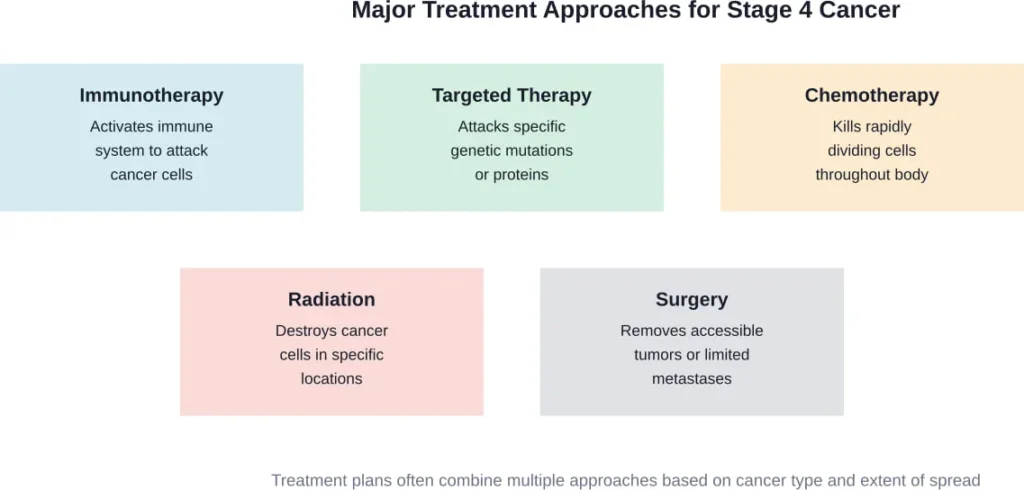
Immunotherapy
Immunotherapy drugs help the immune system recognize and attack cancer cells. For melanoma, immunotherapy has moved the needle from almost certain death to a 50% five-year survival rate. In February 2024, the FDA approved lifileucel (Amtagvi), a tumor-infiltrating lymphocyte therapy, for patients whose melanoma cannot be surgically removed and who don’t respond to other treatments.
These treatments work by removing the molecular brakes that cancer cells put on the immune system. When those brakes are released, T cells can attack tumors they previously ignored.
Targeted Therapies
Targeted drugs attack specific genetic mutations or proteins that cancer cells depend on. For breast cancer patients with low levels of the HER2 protein—nearly half of all breast cancer patients—treatment options were limited until recently. Now, new HER2-low targeted therapies are providing options beyond palliative chemotherapy.
The precision matters. Instead of carpet-bombing all rapidly dividing cells like traditional chemotherapy, targeted therapies go after the specific vulnerabilities in cancer cells.
Combination Approaches
Increasingly, doctors are combining treatments to attack cancer from multiple angles. Immunotherapy plus chemotherapy. Targeted therapy plus radiation. The combinations can be more effective than any single approach.
Clinical trials are testing thousands of new combinations right now. That’s important because it means treatment options continue expanding even for cancers that don’t respond to currently available therapies.
Living With Stage 4 Cancer: Quality of Life Matters
Survival statistics only tell part of the story. How people live with metastatic cancer matters just as much as how long they live.
The National Cancer Institute brought together researchers and people living with metastatic cancer to discuss their needs and how to improve their care. One consistent theme emerged: people want to maintain their quality of life while managing their disease.
That means different things to different people. For LaDawn Jefferson, it meant training for and running a marathon. For Bethany Ross, it meant continuing her software engineering career while managing treatment schedules. For others, it might mean spending time with grandchildren or pursuing creative projects.
The Role of Palliative Care
Here’s something many people misunderstand. Palliative care isn’t just for end-of-life situations. It’s specialized medical care focused on providing relief from symptoms and stress of serious illness—and it can start at diagnosis.
Palliative care teams work alongside oncologists to manage pain, nausea, fatigue, and other symptoms. They help coordinate care and support decision-making. Research shows that early palliative care can actually improve survival in addition to quality of life.
Factors That Influence Stage 4 Cancer Survival
Multiple factors determine how someone with metastatic cancer will fare. Understanding these can provide realistic expectations.
| Factor | Impact on Survival |
|---|---|
| Cancer Type | Some cancers (testicular, certain lymphomas) have high cure rates even at stage 4; others remain more challenging |
| Genetic Profile | Specific mutations can make tumors vulnerable to targeted therapies or immunotherapy |
| Number of Metastases | Oligometastatic disease (few metastases) generally has better outcomes than widespread disease |
| Location of Spread | Metastases to certain organs may be more treatable than others |
| Overall Health Status | Patients with good performance status typically tolerate treatment better and have better outcomes |
| Age | Younger patients often have more treatment options, though age alone doesn’t determine outcomes |
| Treatment Response | How quickly and completely tumors respond to initial treatment strongly predicts long-term outcomes |
The Genetics Revolution
Tumor genetic testing has changed the game. Oncologists now routinely sequence tumor DNA to identify specific mutations that might be targetable with precision drugs. A mutation that makes one patient’s lung cancer aggressive might make another patient’s tumor exquisitely sensitive to a particular drug.
This personalized approach means two people with the same cancer type and stage can have vastly different treatment plans and outcomes.
What the Statistics Actually Tell Us
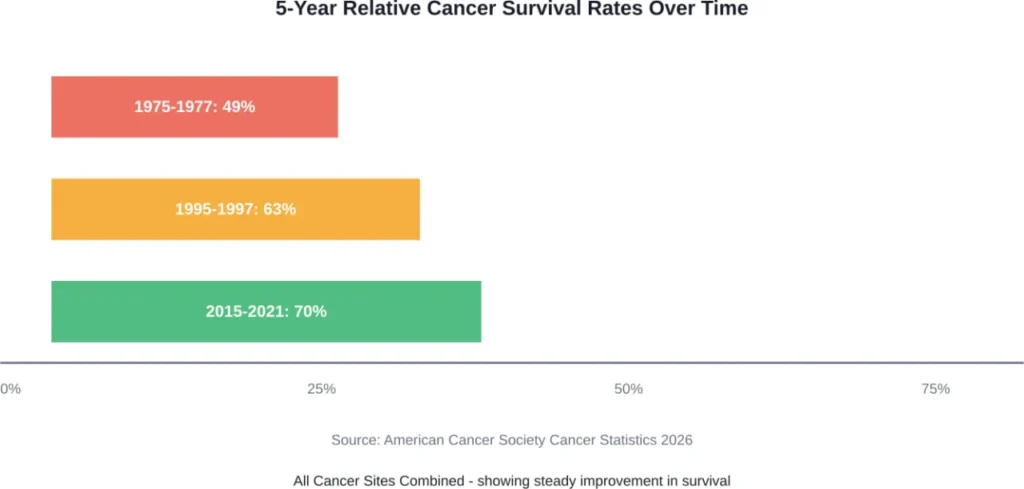
According to the American Cancer Society’s latest data, 7 in 10 people with cancer now reach the 5-year survival mark. That’s up from about half in the mid-1970s. The 5-year relative survival rate increased from 49% in 1975-1977 to 63% in 1995-1997 to 70% for cancers diagnosed in 2015-2021.
But those numbers combine all stages. What about stage 4 specifically?
Stage 4 survival varies dramatically by cancer type. Some examples based on available data:
- Stage 4 testicular cancer: approximately 80% cure rate
- Stage 4 melanoma: approximately 50% five-year survival with modern immunotherapy
- Stage 4 breast cancer: varies widely based on subtype, with some HER2-positive patients living many years on targeted therapy
- Stage 4 non-small cell lung cancer: 60-70% of patients are diagnosed at this stage, but survival has improved significantly with targeted therapies for certain mutations
One crucial point: survival statistics lag behind current treatment advances. Data published in 2026 typically reflects outcomes from patients diagnosed several years earlier. People diagnosed today have access to treatments that didn’t exist when those statistics were generated.
When Stage 4 Cancer Becomes a Chronic Disease
For some patients, stage 4 cancer becomes more like a chronic disease than a death sentence. They live with cancer for years, managing it with ongoing treatment much like someone might manage diabetes or heart disease.
This shift in thinking represents a fundamental change. Instead of focusing solely on cure, oncologists increasingly talk about disease control and maintaining quality of life over extended periods.
Community discussions on platforms like Reddit reveal this reality. People with stage 4 cancer describe living relatively happy, productive lives while managing their disease. One person might have stage 4 prostate cancer controlled with hormone therapy for years. Another might have metastatic breast cancer managed with a series of different treatments as the disease evolves.
The Scan-to-Scan Reality
Living with metastatic cancer often means living from scan to scan. Every few months, imaging tests check whether the current treatment is working. That cycle creates its own psychological challenges—the anxiety before scans, the relief or devastation depending on results.
But people adapt. They find ways to live full lives in the spaces between scans. They celebrate stable disease as a victory. They adjust to new normals as treatments change.
The Research Pipeline: What’s Coming Next
Researchers at institutions like Memorial Sloan Kettering remain dedicated to research that will spur advances against metastasis. Understanding how cancer cells spread—and finding ways to prevent or reverse that spread—represents one of the field’s biggest challenges.
Current research areas include:
- New immunotherapy combinations and approaches
- Targeted therapies for previously undruggable mutations
- Treatments that prevent metastatic cells from establishing new tumors
- Precision radiation techniques for oligometastatic disease
- Cell therapies that engineer a patient’s own immune cells to attack cancer
Each advance builds on previous discoveries. What seems impossible today may become standard treatment tomorrow.
Hope Grounded in Reality
So is it possible to survive stage 4 cancer? Yes. But survival means different things for different people and different cancers.
For some, it means cure—being completely free of disease years after treatment. For others, it means living with controlled disease for extended periods. For still others, it means making the most of whatever time remains with the best possible quality of life.
The improvements over the past two decades are real and significant. More people are living longer with metastatic cancer than ever before. New treatments continue emerging at a rapid pace.
But challenges remain. Stage 4 cancer still claims hundreds of thousands of lives each year in the United States alone. Not everyone responds to available treatments. Disparities in access to cutting-edge care mean not everyone benefits equally from advances.
The most honest answer is this: stage 4 cancer is no longer the automatic death sentence it once was, but outcomes remain highly individual. Cancer type, genetics, overall health, access to care, and sometimes just biological luck all play roles.
Frequently Asked Questions
Yes, though it’s rare. Some cancers like testicular cancer can be cured even at stage 4, with about 80% of men achieving cure. Certain patients with limited metastases that can be surgically removed or precisely targeted with radiation may also achieve cure. However, for most stage 4 cancers, the goal is disease control and extending life rather than cure.
Survival varies dramatically by cancer type and individual factors. According to the American Cancer Society, more than one-third of people with stage 4 cancer now survive five years or longer. Some people live for many years managing cancer as a chronic disease, while outcomes depend on cancer type, genetic profile, treatment response, and overall health status.
They’re the same thing. Stage 4 cancer and metastatic cancer both mean the disease has spread from where it originated to distant organs or tissues in the body. The terms are used interchangeably, though metastatic cancer is the more technical term while stage 4 refers to the staging classification.
Absolutely. Immunotherapies and targeted therapies have transformed outcomes for many metastatic cancers. For example, stage 4 melanoma went from almost always fatal to having a 50% five-year survival rate. The FDA approved new therapies like lifileucel (Amtagvi) in 2024, and new HER2-low breast cancer treatments are providing options where few existed before.
Clinical trials often provide access to cutting-edge treatments not yet widely available. They’re especially worth considering if standard treatments aren’t working or for cancer types with limited treatment options. Discuss with your oncologist whether any trials match your specific situation—many cancer centers maintain databases of available trials.
Quality of life varies greatly by individual. Some people with metastatic cancer continue working, exercising, and pursuing hobbies. Others need to adjust activities based on symptoms and treatment side effects. Palliative care—which can start at diagnosis—helps manage symptoms and maintain the best possible quality of life alongside cancer treatment.
No. While stage 4 cancer is serious and often life-limiting, it’s not always immediately terminal. Many people live for years with controlled metastatic disease. Some achieve complete remission. The term “terminal” typically refers to situations where death is expected within months, but many stage 4 cancer patients live well beyond that timeframe with treatment.
Moving Forward With Stage 4 Cancer
A stage 4 diagnosis changes everything. But it doesn’t have to end everything.
The medical landscape has shifted dramatically. Treatments that didn’t exist a decade ago are now standard. Therapies currently in clinical trials may become available within months. Precision medicine approaches mean treatment plans are increasingly tailored to each person’s unique cancer.
As of May 2025, it is estimated that there are 18.6 million cancer survivors in the United States. That number includes many people living with or beyond stage 4 diagnoses. They’re working, raising families, pursuing passions, and making the most of their lives. And the number is projected to grow to 22.4 million by 2035.
If you or someone you love is facing stage 4 cancer, seek care from experienced oncologists who stay current with the latest treatment advances. Ask about genetic testing of the tumor. Inquire about clinical trials. Consider adding palliative care to the treatment team early. And connect with others navigating similar journeys—shared experience provides perspective that statistics can’t capture.
The question isn’t just whether it’s possible to survive stage 4 cancer. It’s how to live as fully as possible while facing it—and the answer to that question keeps getting better.