

Quick Summary: While collagen supplements are generally considered safe, consuming excessive amounts can lead to digestive discomfort, hypercalcemia, and allergic reactions in sensitive individuals. Research shows that doses between 2.5 to 15 grams daily are typically safe and effective, though no official upper limit has been established. Most healthy adults can safely take collagen supplements when following recommended dosages, but those with allergies, kidney issues, or certain medical conditions should consult healthcare providers first.
Collagen supplements have exploded in popularity over recent years, with the global beauty supplement market was valued at $3.5 billion in 2016 and projected to grow to $6.8 billion by end of 2024. As more people add collagen peptides to their daily routine for skin, joint, and bone health, a critical question emerges: can you actually take too much?
The short answer? Yes, but it’s more nuanced than a simple overdose scenario.
Understanding safe collagen consumption requires looking at current research, potential side effects, and individual health factors. Here’s what the science actually says about collagen supplementation limits.
Understanding Collagen: The Body’s Most Abundant Protein
Collagen is the most abundant protein in the human body, accounting for one-third of total body protein. This structural protein provides the framework for skin, bones, tendons, ligaments, and connective tissues throughout the body.
Collagen makes up 70% to 80% of skin tissue and contributes approximately 65-80% of the dry weight of tendons. After age 25, natural collagen production begins to decline, prompting many to turn to supplementation.
Among the 28 identified types of collagen, Type I comprises 90% of the collagen in the human body. The most common types include:
- Type I: Found in skin, bones, tendons, and organs
- Type II: Primary component of cartilage
- Type III: Present in skin, muscles, and blood vessels
- Type IV: Located in kidney filtration layers
- Type V: Found in hair and placenta
Supplements typically contain hydrolyzed collagen (collagen peptides) or undenatured collagen, which are processed differently for absorption.
What Does Research Say About Safe Collagen Dosage?
No official daily guidelines exist for collagen supplementation, which makes determining safe limits challenging. However, research provides helpful parameters.
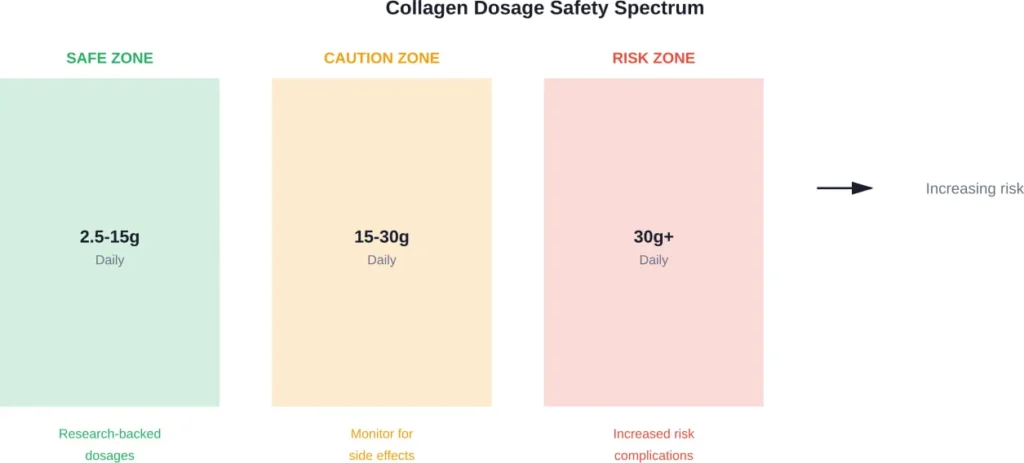
Studies suggest that 2.5 to 15 grams of hydrolyzed collagen peptides daily may be safe and effective. Dosages vary depending on the specific health goal:
| Health Goal | Typical Daily Dosage | Study Duration |
|---|---|---|
| Skin hydration and elasticity | 2.5-10 grams | 8-24 weeks |
| Joint pain and mobility | 8-12 grams | 12-24 weeks |
| Bone health | 5-15 grams | 12+ months |
| Muscle mass and strength | 15 grams | 12 weeks |
Undenatured collagen is typically taken at much lower doses—around 40 milligrams daily for joint health—because it works differently than hydrolyzed forms.
Long-term safety studies provide reassurance. A 90-day repeated oral dose toxicity study on marine collagen peptides in rats found no adverse effects at high doses. Similarly, a chronic 24-month feeding study of marine collagen preparation tested diet concentrations up to 18% without identifying significant toxicity concerns.
Can You Actually Overdose on Collagen?
Real talk: a true collagen “overdose” in the traditional sense is extremely rare. Unlike some vitamins and minerals that have established toxic thresholds, collagen doesn’t accumulate in dangerous ways in most people.
That said, taking excessive amounts can trigger uncomfortable side effects and health complications. The body processes collagen as protein, breaking it down into amino acids for absorption. But collagen is a low-tryptophan protein—an essential amino acid for humans—meaning excessive intake could theoretically impact overall protein quality in the diet.
Research on male Wistar rats showed that replacing 20-25% of dietary protein with collagen decreased feed efficiency and bioavailability of high biological value proteins like casein.
Here’s the thing though—most supplement users aren’t replacing that much dietary protein with collagen. Standard supplementation of 10-15 grams daily represents a small fraction of total protein intake.
Symptoms and Side Effects of Excess Collagen
While severe reactions are uncommon, taking too much collagen can produce noticeable symptoms. Based on available research and community discussions, several patterns emerge:
Digestive Issues
The most frequently reported side effects involve the digestive system. Excessive collagen intake can cause:
- Bloating and fullness
- Diarrhea or constipation
- Heartburn or acid reflux
- Nausea
- General digestive discomfort
These symptoms typically occur when consumption exceeds 15-20 grams daily, though sensitivity varies individually.
Hypercalcemia Risk
Marine collagen supplements can contain high calcium levels. Excessive intake may lead to hypercalcemia—abnormally high calcium in the blood—which causes:
- Fatigue and weakness
- Bone pain
- Kidney stones
- Irregular heart rhythms
- Confusion or cognitive issues
People with kidney conditions face elevated risk for calcium-related complications.
Allergic Reactions
Collagen sources matter significantly for allergy risk. Marine collagen derives from fish skin and scales, bovine collagen comes from cows, and porcine collagen originates from pigs.
According to FDA recall data, undeclared allergens in collagen products have triggered serious reactions. People with fish allergies face risk of serious or life-threatening reactions from marine collagen products.
In rare cases, severe reactions can occur. One documented case reported Stevens-Johnson Syndrome/Toxic Epidermal Necrolysis overlap induced by a collagen supplement—a serious skin condition requiring immediate medical attention.
Other Potential Effects
Less common but possible side effects include:
- Persistent bad taste in the mouth
- Headaches
- Joint stiffness (paradoxically, when taken in excess)
- Skin reactions or rashes
Who Should Be Extra Cautious?
Certain populations need particular care when considering collagen supplementation:
| Risk Group | Primary Concern | Recommendation |
|---|---|---|
| People with allergies | Allergic reactions to source material | Check source; avoid marine if fish-allergic |
| Kidney disease patients | Protein processing and calcium buildup | Consult nephrologist before use |
| Pregnant/nursing women | Limited safety research | Discuss with healthcare provider |
| People on medications | Potential interactions | Review with pharmacist or doctor |
How to Take Collagen Safely
Maximizing benefits while minimizing risks requires strategic supplementation:
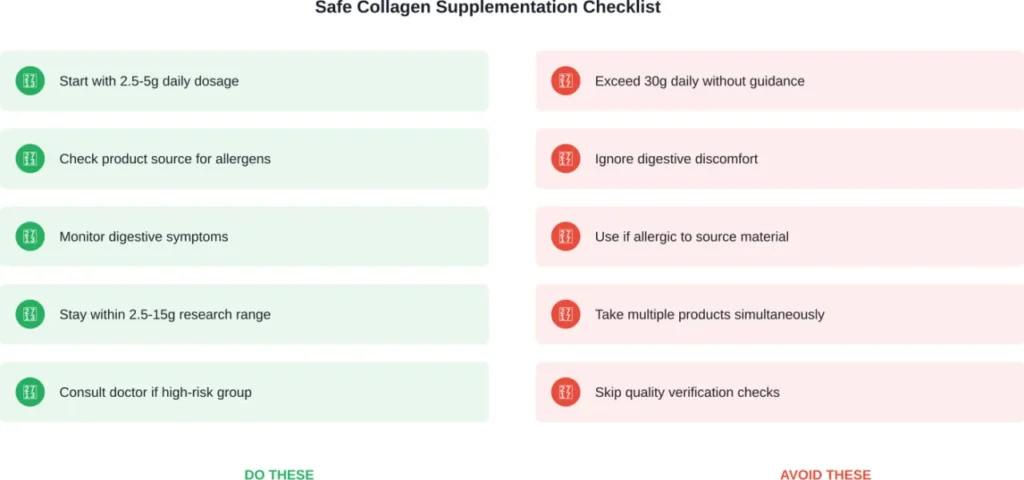
Start low and go slow. Begin with 2.5-5 grams daily and observe how the body responds before increasing dosage.
Follow product guidelines. Manufacturers formulate products with specific dosing in mind. Exceeding recommended amounts doesn’t accelerate results.
Choose quality sources. Look for products tested for purity and from reputable manufacturers. Third-party testing provides additional assurance.
Consider the source. Match collagen type to personal dietary restrictions and allergy profile. Bovine and marine collagen have different amino acid profiles and potential allergens.
Monitor for changes. Track any digestive issues, skin reactions, or other symptoms that emerge after starting supplementation.
Time it right. Some find taking collagen with food reduces digestive discomfort, while others prefer empty stomach consumption for absorption.
When Medical Conditions Complicate Collagen Use
Certain health conditions create special considerations for collagen supplementation.
Kidney disease patients must exercise particular caution. The kidneys process protein breakdown products, and excess protein intake can strain compromised kidney function. High calcium content in some marine collagen products compounds this concern.
People with histories of kidney stones should consult healthcare providers before supplementing, especially with marine collagen varieties.
Those with calcium metabolism disorders need medical guidance. Conditions affecting calcium regulation can interact problematically with calcium-rich collagen sources.
Anyone taking medications should review potential interactions. While collagen doesn’t typically interfere with medications, individual circumstances vary.
The Role of Individual Variation
Not everyone responds identically to collagen supplementation. Factors influencing tolerance and optimal dosage include:
- Age: Older adults may benefit from higher doses but also face increased digestive sensitivity
- Body weight: Larger individuals may tolerate higher amounts
- Baseline diet: Total protein intake affects how much supplemental collagen fits appropriately
- Health status: Underlying conditions alter processing and tolerance
- Activity level: Athletes may benefit from higher doses for joint and muscle support
This variability explains why some people thrive on 5 grams daily while others use 15 grams without issue.
Quality Matters: Not All Collagen Is Equal
Product quality significantly impacts both effectiveness and safety. The supplement industry faces limited regulation, creating quality variation.
FDA warning letters to collagen manufacturers highlight concerns about misbranding, undeclared allergens, and unsubstantiated claims. These regulatory actions underscore the importance of choosing carefully vetted products.
Look for:
- Third-party testing certification
- Clear source identification (bovine, marine, porcine)
- Transparent ingredient lists
- Hydrolyzed or peptide forms for better absorption
- Manufacturers with good regulatory compliance history
Frequently Asked Questions
Taking collagen daily at recommended doses (2.5-15 grams) is generally safe for most people. Long-term studies up to 24 months have shown no significant adverse effects. However, exceeding recommended amounts or having certain medical conditions can increase risk of side effects.
While 20 grams exceeds typical research-backed dosages, many people tolerate this amount without issues. However, higher doses increase the likelihood of digestive discomfort, including bloating, diarrhea, or nausea. Monitor for symptoms and reduce intake if problems develop.
Digestive symptoms typically appear within hours to a few days of excessive intake. Other effects like calcium-related symptoms may take weeks of consistent overconsumption to manifest. Most side effects resolve quickly after reducing or stopping supplementation.
Neither is inherently safer—safety depends on individual factors. Marine collagen suits those avoiding mammalian products but risks allergic reactions in people with fish allergies. Bovine collagen avoids fish allergens but isn’t suitable for those with beef sensitivities. Both show similar safety profiles in research when used appropriately.
Collagen doesn’t typically cause kidney problems in healthy individuals. However, people with existing kidney disease should consult healthcare providers before supplementing, as excess protein and calcium can strain compromised kidney function.
Research doesn’t indicate necessity for supplementation breaks in healthy individuals taking appropriate doses. However, some practitioners recommend periodic breaks to assess whether benefits continue and prevent potential accumulation effects, though evidence for this approach is limited.
No evidence suggests the body builds tolerance to collagen supplementation in the way it might to certain medications or stimulants. Consistent use at appropriate doses can provide ongoing benefits without requiring dosage increases over time.
The Bottom Line on Collagen Safety
So, is it possible to take too much collagen? Absolutely—but the threshold is higher than many fear.
Research consistently shows that doses between 2.5 and 15 grams daily are safe and effective for most healthy adults. While no established upper limit exists, exceeding 20-30 grams daily increases risk of digestive issues, calcium-related complications, and other side effects without providing proportional benefits.
The key to safe supplementation lies in starting conservatively, monitoring individual response, choosing quality products, and respecting personal health limitations. Most people can safely incorporate collagen into their wellness routine when following evidence-based guidelines.
Sound familiar? If digestive discomfort, unusual fatigue, or other concerning symptoms develop after starting collagen, reduce the dosage or discontinue use and consult a healthcare provider.
Remember: more isn’t always better. The goal is finding the sweet spot where benefits are maximized while side effects remain minimal—and that varies for each individual.
Ready to optimize your collagen supplementation? Start with research-backed dosages, choose high-quality sources matched to your dietary needs, and listen to your body’s signals. When approached thoughtfully, collagen can be a valuable addition to a comprehensive health strategy without safety concerns.