

Quick Summary: While it’s difficult to fully reverse fabric shrinkage, several methods can help relax fibers and partially restore shrunken clothes. Soaking garments in lukewarm water with hair conditioner or baby shampoo for 30 minutes can soften fibers, allowing gentle stretching back toward their original size. Success varies by fabric type and shrinkage extent, with natural fibers like cotton and wool responding better than synthetics.
That sinking feeling hits hard when you pull your favorite hoodie from the dryer, and it’s suddenly two sizes smaller. Community discussions on platforms like Reddit’s r/laundry reveal this frustration is common among users—and the question that follows is always the same: can you actually unshrink clothes?
The short answer? It depends. But the good news is that several methods can help relax fabric fibers and restore at least some of the original size.
Here’s what actually works, what science tells us about fabric shrinkage, and practical techniques that might save your wardrobe from the donation pile.
Why Clothes Shrink in the First Place
Understanding shrinkage helps explain why reversing it is tricky. Fabric shrinkage happens when textile fibers contract, typically due to heat, moisture, and agitation during washing and drying.
Natural fibers like cotton and wool are particularly susceptible. Research into shrinkage of stretchable denim fabric shows that drying temperature has a significant effect on dimensional changes. In studies of cotton-polyester denim containing elastin, drying temperature significantly affected shrinkage rates.
But why does this happen? When fabrics are manufactured, fibers are stretched and locked into place through tension. Heat and water release this tension, allowing fibers to return to their natural, relaxed state. The mechanical agitation in washing machines accelerates this process.
Wool behaves differently. Wool fibers have scales on their surface that interlock when exposed to heat, moisture, and friction—a process called felting. Once felted, wool shrinkage is particularly difficult to reverse.
Fabric Types and Shrinkage Susceptibility
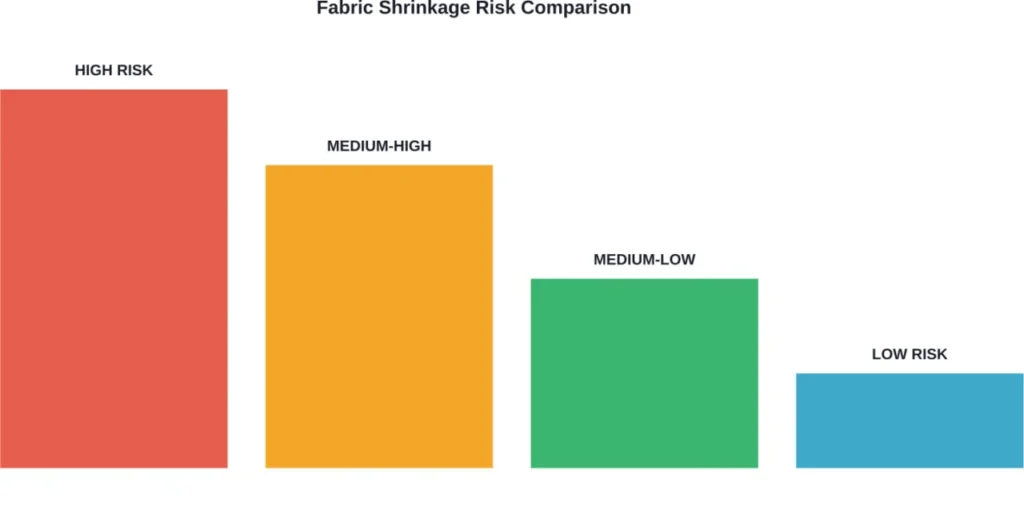
Not all fabrics shrink equally. Cotton, linen, wool, and rayon are high-risk materials. Synthetic fibers like polyester and nylon resist shrinkage better because they’re heat-set during manufacturing.
Blended fabrics fall somewhere in between, with shrinkage depending on the natural fiber percentage.
Can You Actually Unshrink Clothes?
Here’s the thing though—truly reversing shrinkage is nearly impossible. What these methods actually do is relax the fibers enough to allow manual stretching back toward the original dimensions.
Think of it as coaxing fibers back into position rather than magically undoing the chemical and physical changes that occurred. The effectiveness depends on several factors:
- Fabric composition (natural vs. synthetic)
- Degree of shrinkage (minor vs. severe)
- Type of shrinkage (relaxation vs. felting)
- How quickly you act after shrinking occurs
User experiences from community discussions show mixed results. Some report successfully recovering a shrunken hoodie enough to wear again, while others find minimal improvement. The key is managing expectations—most garments won’t return completely to their pre-shrunk size.
Methods to Unshrink Clothes: What Actually Works
Several techniques can help relax shrunken fibers. The most effective methods share a common approach: softening fibers with a conditioning agent, then gently stretching while damp.
The Hair Conditioner Method
This is the most popular technique for unshrinking clothes, particularly cotton items.
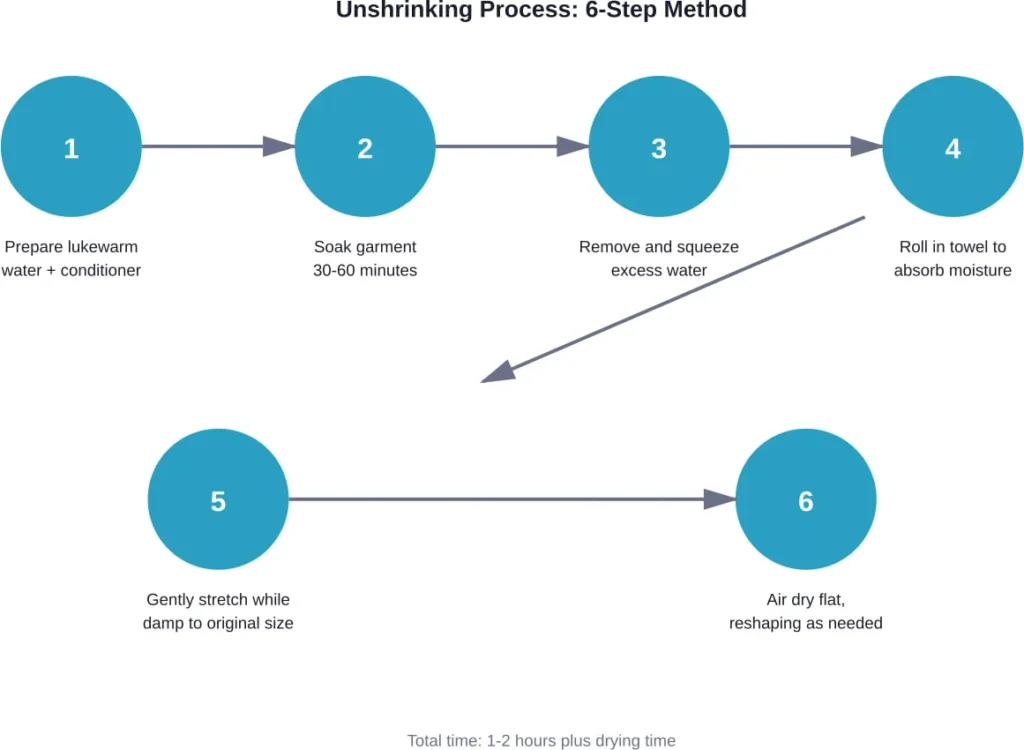
Step 1: Fill a basin or sink with lukewarm water—never hot, as heat will worsen shrinkage. Add approximately one tablespoon of hair conditioner or baby shampoo per gallon of water. Mix thoroughly.
Step 2: Submerge the shrunken garment completely. Gently press it down to ensure the fibers absorb the water and conditioner mixture. Soak for 30 minutes to one hour, leaving the garment undisturbed.
Step 3: Remove the garment without rinsing—the conditioner needs to remain in the fibers. Gently squeeze out excess water without wringing or twisting, which can damage the fabric structure.
Step 4: Lay the garment flat on a clean towel. Roll the towel with the garment inside to absorb more moisture. Unroll and transfer to a dry towel.
Step 5: While still damp, gently stretch the garment back toward its original size. Work slowly and evenly, paying attention to particularly tight areas. Some users report using heavy objects to hold stretched edges in place.
Step 6: Air dry flat, reshaping as needed during the drying process.
The Vinegar Alternative
Instead of conditioner, some prefer using white vinegar. Mix one part white vinegar with three parts lukewarm water. The process follows the same steps—soak for about 30 minutes, then gently stretch while damp.
Vinegar can help relax fibers, though user experiences suggest conditioner produces slightly better results for most fabric types.
Special Considerations for Wool
Wool requires extra care due to its unique fiber structure. The conditioner method works, but wool needs gentler handling.
For wool specifically, use baby shampoo rather than regular hair conditioner. The gentler formula is less likely to damage delicate wool fibers. Soak for only 10 to 30 minutes depending on the degree of shrinkage, and never agitate the water—movement encourages further felting.
When stretching wool, work even more gradually than with cotton. Wool fibers are more fragile when wet.
How Effective Are These Methods Really?
Real talk: results vary widely. Several factors determine success rates.
Fabric type matters most. Cotton and cotton blends respond better to unshrinking attempts than heavily felted wool. Synthetic fabrics show minimal improvement because their shrinkage often involves heat damage to the polymer structure itself.
The degree of shrinkage is crucial. Minor shrinkage (one size or less) can often be partially reversed. Severe shrinkage—like that favorite shirt that went from large to child-sized—is nearly impossible to fix completely.
Timing matters too. Attempting to unshrink clothes immediately after the shrinkage occurs produces better results than waiting weeks or months.
| Fabric Type | Success Rate | Best Method | Expected Recovery |
|---|---|---|---|
| Cotton | Moderate-High | Conditioner soak | 50-70% of shrinkage |
| Wool | Low-Moderate | Baby shampoo soak | 30-50% of shrinkage |
| Cotton blends | Moderate | Conditioner soak | 40-60% of shrinkage |
| Linen | Moderate | Conditioner or vinegar | 40-60% of shrinkage |
| Polyester | Very Low | Professional service | 10-30% of shrinkage |
| Rayon | Low | Gentle conditioner soak | 20-40% of shrinkage |
When to Skip DIY and Get Professional Help
Some garments are too valuable or delicate to risk home methods. Professional dry cleaners have specialized equipment and techniques that can sometimes achieve better results than DIY approaches.
Consider professional services for expensive garments, delicate fabrics like silk or cashmere, structured garments with interfacing or linings, and items with severe shrinkage where home methods have already failed.
Professional fabric restoration uses blocking techniques, steam pressing with controlled tension, and chemical relaxing agents not available to consumers.
Preventing Shrinkage: Better Than Curing It
Prevention beats restoration every time. Standard test methods for dimensional changes after laundering, such as AATCC Test Method 135-2025, are used to determine how fabrics change dimensionally when subjected to home laundering procedures—but consumers need practical prevention strategies.
Always check care labels before washing. When labels say “cold water only” or “lay flat to dry,” they’re not suggestions—they’re requirements based on fabric testing.
Wash in cold or lukewarm water whenever possible. Research consistently shows that lower temperatures significantly reduce shrinkage across fabric types.
Skip the dryer for natural fibers. Air drying eliminates the heat that causes most shrinkage. If you must use a dryer, choose the lowest heat setting and remove garments while slightly damp.
Turn garments inside out before washing to reduce surface friction. Use gentle cycle settings for delicate fabrics. And never overload the washing machine—crowding increases mechanical stress on fabrics.
Pre-Shrinking New Clothes
For items likely to shrink, consider intentionally pre-shrinking them before first wear. Wash and dry new cotton or linen garments according to care instructions immediately after purchase. Any shrinkage happens before you’ve gotten attached to the fit.
Some manufacturers pre-shrink fabrics during production, but not all do. If the label says “pre-shrunk,” you’re safer—but not completely immune to dimensional changes.
What Doesn’t Work
Several myths about unshrinking clothes circulate online. Save yourself the trouble and avoid these ineffective approaches.
High heat doesn’t “reset” shrunken fibers—it makes shrinkage worse. Stretching dry fabric tears fibers without producing meaningful size recovery. And fabric softener in the dryer after shrinking has already occurred does essentially nothing.
Commercial “unshrinking” products rarely outperform simple conditioner. Most contain similar ingredients at a higher cost.
Frequently Asked Questions
No. Natural fibers like cotton and wool respond best to unshrinking methods, while synthetic fabrics like polyester and nylon are extremely difficult to unshrink because their shrinkage involves heat-damaged polymer chains. Blended fabrics fall in between, with results depending on the natural fiber percentage.
For cotton and linen, soak for 30 minutes to one hour. Wool requires less time—10 to 30 minutes depending on shrinkage severity. Longer soaking times don’t necessarily produce better results and may weaken fibers unnecessarily.
When done correctly with lukewarm water and gentle handling, unshrinking methods rarely cause additional damage. However, aggressive stretching or high heat can tear weakened fibers. Always stretch gradually and evenly, and never attempt to speed-dry with heat after the unshrinking process.
Shrinkage that has set over multiple wash cycles is more difficult to reverse than recent shrinkage. Fibers become increasingly locked in their contracted state over time. That said, the conditioner method may still provide minor improvements—just expect more modest results.
Fabric softener alone won’t unshrink clothes effectively. Hair conditioner or baby shampoo work better because they contain specific conditioning agents that penetrate and soften individual fibers more effectively than fabric softener, which primarily coats fabric surfaces.
Relaxation shrinkage occurs when tension in fibers releases, allowing them to contract to their natural state—this type can sometimes be partially reversed. Felting happens in wool when scales on fiber surfaces interlock permanently under heat, moisture, and friction. Felting is much harder to reverse because it involves structural changes to how fibers connect.
Avoid the dryer after unshrinking—heat will cause fibers to contract again, undoing your work. Always air dry unshrunk garments flat, reshaping them periodically as they dry. Once completely dry, store them properly to maintain the restored size.
The Bottom Line on Unshrinking Clothes
So is it possible to unshrink clothes? Yes—with significant caveats.
These methods relax fibers enough to allow partial size recovery, not complete restoration. Success depends on fabric type, shrinkage severity, and how quickly action is taken. Natural fibers respond better than synthetics, and minor shrinkage is more reversible than severe cases.
The conditioner soak method offers the best balance of effectiveness and simplicity for most fabrics. It won’t work miracles, but it might save a favorite garment from becoming unusable.
Better yet, focus on prevention. Proper washing techniques, appropriate temperatures, and careful drying prevent most shrinkage from occurring in the first place.
If there’s a shrunken garment worth saving, the conditioner method is worth trying—nothing is being risked except 30 minutes. But for valuable or delicate items, professional dry cleaning services offer specialized techniques that achieve better results than home methods.
Check care labels, wash cold, and skip the high-heat dryer. Your wardrobe will thank you.