

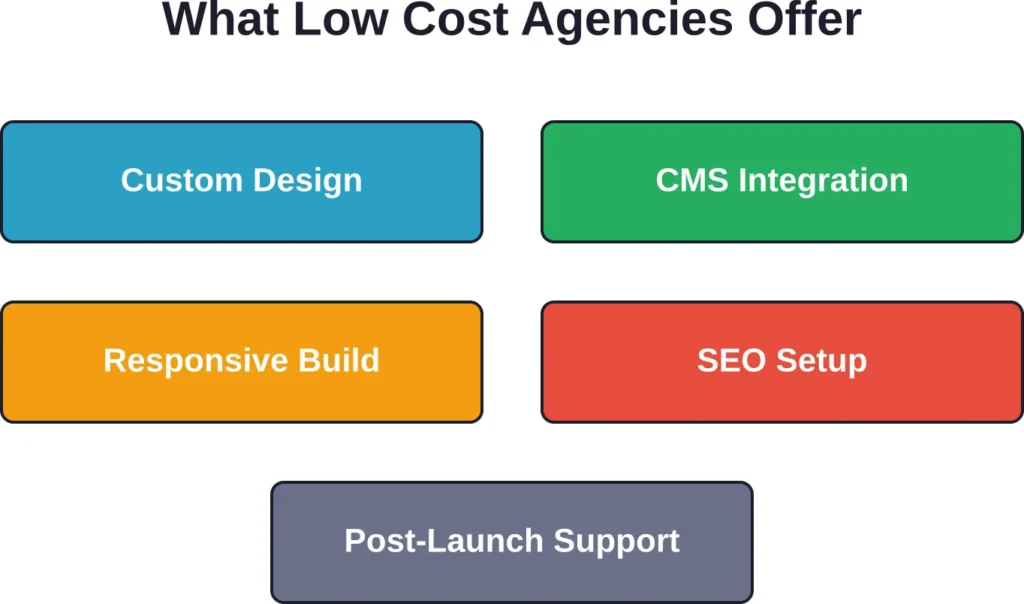
Quick Summary: This article examines 15 reputable low-cost web design agencies that deliver professional results without premium pricing. Each company specializes in different verticals—from SaaS startups to small businesses—offering custom design, CMS integration, and ongoing support. The list prioritizes firms with verified client reviews, transparent processes, and proven track records in building sites that convert visitors into customers.
Finding the right web design partner when budgets are tight feels like walking a tightrope. Pay too little and the site looks generic. Overspend and the runway shrinks before launch.
The good news? A growing tier of agencies delivers professional web design at accessible price points. These aren’t template mills or offshore operations that vanish after delivery. They’re established firms with verifiable portfolios, transparent workflows, and clients who stick around.
This guide profiles 15 low cost web design companies operating in 2026. Each entry includes what they do well, who they serve best, and why clients choose them over competitors. No fluff, no invented testimonials—just the signal.
What Makes a Web Design Agency “Low Cost”?
Low cost doesn’t mean cheap. It means the agency structures its business to serve clients who need professional results without enterprise budgets.
These companies typically focus on efficiency: they use proven design systems, limit revision rounds, and specialize in specific verticals. That focus lets them deliver faster and bill less while maintaining quality.
According to research cited in Loyola University Chicago’s materials on eye tracking and website design, 94% of people cite design as the primary factor for rejecting or distrusting a website. A low cost agency that understands this truth will prioritize clean layouts, fast load times, and intuitive navigation over ornamental features that drain budgets.
The right low cost partner operates transparently. Before signing anything, expect to see:
- A clear scope document defining deliverables
- Examples of past work in a similar vertical
- A timeline with milestones and approval gates
- Post-launch support terms spelled out in plain language
If any of those pieces are missing, keep looking.
The 15 Best Low Cost Web Design Companies in 2026
The following agencies earned spots on this list through verified client feedback, consistent portfolio quality, and demonstrated ability to deliver sites that perform. They’re ranked in no particular order—each serves different needs.
1. Gilzor
Gilzor builds custom digital products with a strong emphasis on web and mobile development. They create websites and web applications that combine clean design, solid architecture, and user-centric experiences.
What sets Gilzor apart is its full-cycle approach from idea validation and UI/UX design to development, QA, and go-to-market strategy.
Best for: Startups and small-to-medium businesses that need high-quality web solutions without overpaying for large agency overhead.
Why clients choose them: User-focused design, fast project start, technical excellence, and reliable post-launch support.
Contact Information:
- Website: www.gilzor.com
- Email: [email protected]
- Address: Poland, Warsaw, Office 58, street Adama Mickiewicza 37, 01-625
- LinkedIn: www.linkedin.com/company/gilzor-softwaredevelopment
2. A-listware
A-listware provides software development and dedicated teams with solid capabilities in web application development, UX/UI design, and custom solutions.
What sets A-listware apart is its flexible team augmentation and outsourcing model that allows companies to quickly scale web development efforts with experienced professionals.
Best for: Enterprises, small and medium businesses, and startups seeking cost-effective yet high-quality web and software solutions.
Why clients choose them: Seamless team integration, broad technical expertise, and end-to-end management of development projects.
Contact Information:
- Website: a-listware.com
- Phone: +1 (888) 337 93 73
- Email: [email protected]
- Address: North Bergen, NJ 07047, USA
- LinkedIn: www.linkedin.com/company/a-listware
- Facebook: www.facebook.com/alistware
3. Mobian
Mobian builds dedicated engineering teams that deliver production-ready web and mobile solutions on time and within budget. The studio specializes in creating scalable digital products with clean architecture and strong user experiences.
What sets Mobian apart is its dual model of full outsourcing and outstaffing, giving companies flexibility while maintaining senior-level execution and post-launch support.
Best for: IT, Healthcare, Fintech, and Logistics companies that need reliable web applications without the risks of bad hires.
Why clients choose them: End-to-end product development, scalable architecture, and seamless team integration.
Contact Information:
- Website: mobian.studio
- Phone: [email protected]
- Address: Harju maakond, Tallinn, Kesklinnalinnaosa, Masina tn 22, 10113
- LinkedIn: www.linkedin.com/company/mobian-studio
4. Oski
Oski designs and develops well-engineered web solutions for tech-forward enterprises and ambitious startups. They specialize in modern frontend and full-stack development with a focus on performance and scalability.
What sets Oski apart is its AI-accelerated engineering process that enables faster delivery of clean, conversion-oriented websites and web applications.
Best for: Companies that need modern, smart web solutions built with current technologies like React and Next.js.
Why clients choose them: Strong technical expertise, excellent UI/UX focus, fast team deployment, and reliable long-term maintenance.
Contact Information:
- Website: oski.site
- Phone: +48571282759
- Email: [email protected]
- Address: Kaupmehe tn 7, 10114 Tallinn, Estonia
- LinkedIn: www.linkedin.com/company/oski-solutions
5. Lengreo
Lengreo serves as a complete marketing and tech partner specializing in website development as part of broader B2B growth strategies. They build business websites, landing pages, and e-commerce solutions optimized for lead generation and conversions.
What sets Lengreo apart is its integrated approach that combines website development with SEO, paid ads, and personalized lead generation campaigns.
Best for: B2B companies and SaaS businesses looking for websites that actively drive sales and marketing results.
Why clients choose them: Proven track record in boosting conversions and generating opportunities, full-funnel support, and client-focused strategy.
Contact Information:
- Website: lengreo.com
- Phone: +31 686 147 566
- Email: [email protected]
- Address: Vrijstraat 9 C/D, 5611 AT Eindhoven, Netherlands
- LinkedIn: www.linkedin.com/company/lengreo
- Instagram: www.instagram.com/lengreo.agency
- Twitter: x.com/Lengreo
6. Instrument

Instrument specializes in digital experiences for tech and consumer brands. The agency handles strategy, design, and development under one roof.
Instrument’s work spans web design, brand identity, and digital campaigns. The team brings creative storytelling into technical projects, making it a fit for companies launching new products or entering new markets.
Best for: Consumer tech brands and B2C companies that need narrative-driven digital experiences.
Why clients choose them: Integrated strategy and creative, strong storytelling, and polished execution.
7. Basic Agency (part of DEPT)
Basic Agency, now part of the larger DEPT network, focuses on web design for tech and lifestyle brands. The agency combines brand strategy with technical implementation.
Basic’s strength lies in creating sites that feel distinctive while performing reliably. The team handles everything from initial positioning through post-launch optimization, making it a fit for companies that want a single partner managing the full lifecycle.
Best for: Mid-market tech companies that need brand differentiation alongside technical reliability.
Why clients choose them: End-to-end ownership, brand and web integration, and access to DEPT’s broader capabilities.
8. Fantasy
Fantasy designs digital products and websites for ambitious brands. The agency works primarily with tech companies, entertainment properties, and cultural organizations.
Fantasy’s work emphasizes craft and attention to detail. Expect custom interactions, thoughtful motion design, and sites that feel purposefully designed rather than assembled from templates.
Best for: Brands that compete on experience quality and need sites that reflect product sophistication.
Why clients choose them: High craft standards, custom interaction design, and cultural fluency.
9. Ueno
Ueno operates as a digital agency building websites, mobile apps, and digital products. The team works with startups and established brands across verticals.
Ueno’s approach balances playfulness with functionality. The agency creates sites that feel approachable while performing reliably. Expect clean code, responsive implementations, and designs that age well.
Best for: Tech companies that want personality in their digital presence without sacrificing usability.
Why clients choose them: Balanced tone, technical reliability, and designs that stay fresh longer than trend-driven work.
10. Build in Amsterdam
Build in Amsterdam specializes in digital design for tech and lifestyle brands. The agency combines brand strategy, web design, and digital product work.
The team focuses on creating cohesive digital ecosystems rather than standalone websites. If the roadmap includes a web app, marketing site, and brand refresh, Build in Amsterdam handles all three with consistent design language.
Best for: Companies building multiple digital touchpoints that need consistent experience design across platforms.
Why clients choose them: Multi-platform design systems, strategic thinking, and cross-disciplinary teams.
11. ParallelHQ

ParallelHQ specializes in web design for AI and SaaS startups. The agency combines product design sensibility with conversion-focused web builds, making it a strong fit for technical founders who need clarity over decoration.
What sets Parallel apart is its startup-native approach. The team understands runway constraints and builds sites that can evolve as the product matures. Expect Webflow or Framer implementations with CMS setups that let non-technical teams update content without breaking layouts.
Best for: Early-stage SaaS companies that need a site reflecting product maturity without six-figure budgets.
Why clients choose them: Clean design systems, fast turnaround, and designers who speak product language.
12. Clay Agency
Clay focuses on brand-forward tech companies that need visual identity work alongside web design. The agency treats the website as one piece of a larger brand system.
Clay’s strength lies in creating cohesive experiences across touchpoints. If the plan includes updating logos, pitch decks, and marketing collateral alongside the site, Clay handles all of it without handing off to separate vendors.
Best for: Tech companies preparing for Series A or rebranding ahead of a major launch.
Why clients choose them: Unified brand and web design, premium aesthetic execution, and strategic positioning support.
13. Lollypop Design Studio

Lollypop operates as a full-service design studio with a dedicated web design practice. The agency works across industries but has deep experience in fintech, health tech, and e-commerce.
The team emphasizes research-driven design. Expect user interviews, competitive audits, and usability testing built into the process. That rigor makes Lollypop a fit for projects where getting the experience right matters more than launching fast.
Best for: Companies in regulated industries that need accessibility compliance and UX validation baked in.
Why clients choose them: Research-backed design decisions, cross-functional teams, and experience with complex user flows.
14. Duck Design
Duck Design serves small businesses and local service providers. The agency builds WordPress sites optimized for local search and lead generation.
Duck’s model focuses on getting businesses online quickly with sites that convert local traffic. Expect contact forms, appointment booking integrations, and straightforward CMS training so teams can manage updates internally.
Best for: Local businesses, consultants, and service providers who need a professional web presence without ongoing agency dependency.
Why clients choose them: Fast delivery, local SEO focus, and post-launch training that reduces long-term costs.
15. Excited Agency

Excited approaches web design through a product-first lens. The agency prioritizes structure, clarity, and conversion over surface-level aesthetics.
The team combines UX research, web design, branding, and motion design to create sites that scale with the product. Excited works primarily with B2B SaaS companies and digital product teams that need sites supporting long-term growth rather than one-time campaigns.
Best for: B2B SaaS companies with complex offerings that need clear information architecture.
Why clients choose them: Product-minded design, motion design integration, and strategic UX thinking.
How to Choose the Right Low Cost Web Design Company
Not every agency on this list will fit every project. The right choice depends on business stage, vertical, and what success looks like six months after launch.
Here’s a practical framework for evaluation.
Match the Agency’s Specialty to Your Vertical
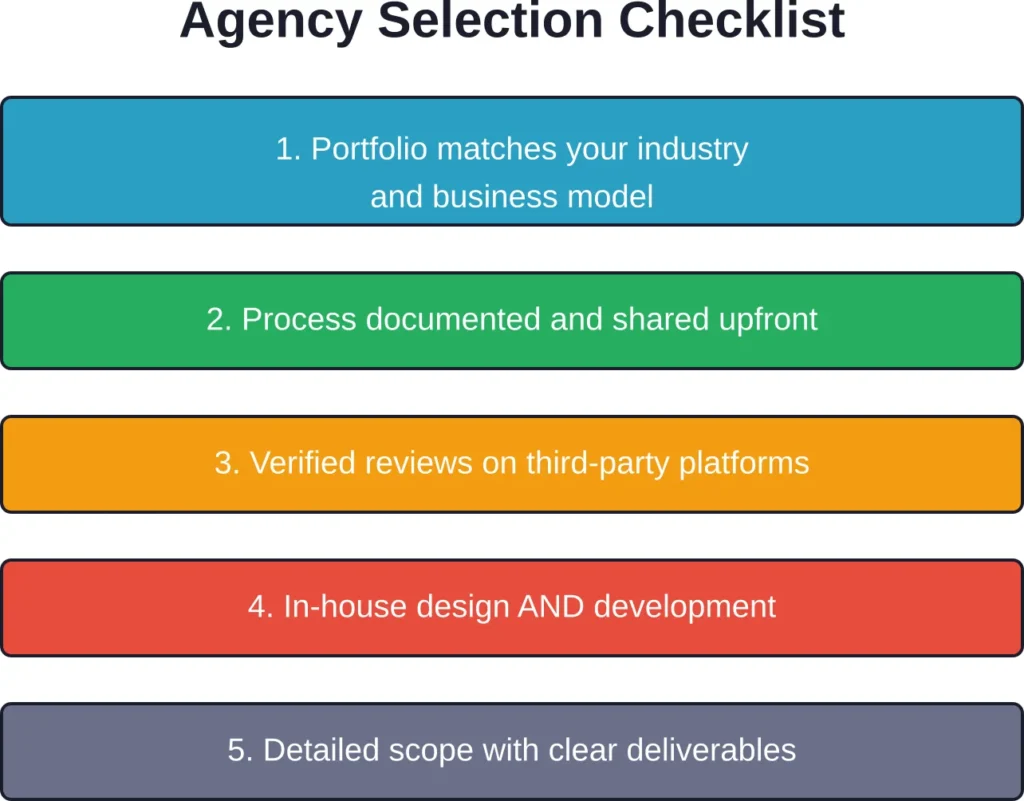
Agencies develop expertise in specific industries. A firm that builds sites for SaaS companies won’t necessarily understand local service business needs. Check the portfolio for work in a similar space.
Look for more than visual similarity. Does the agency understand the buyer journey in this vertical? Do they know which features convert in this market? Can they reference specific challenges the industry faces?
If the portfolio shows three health tech sites but the project is a restaurant, keep searching.
Evaluate Process Transparency
Strong agencies document their process and share it upfront. Weak ones keep things vague until after the contract is signed.
Before committing, ask these questions:
- Who will be the day-to-day designer on this project?
- How many revision rounds are included in the base scope?
- What happens if the project timeline slips?
- Who owns the design files after delivery?
- What does post-launch support actually include?
Vague answers to any of those questions are red flags.
Check Verified Client Feedback
Portfolio screenshots can be faked. Client reviews on third-party platforms can’t be (easily).
Look for reviews on Clutch, Google Business, or industry-specific directories. Pay attention to recurring themes in feedback. If three separate reviews mention missed deadlines, that’s a pattern. If multiple clients praise responsive communication, that’s signal.
The absence of reviews isn’t necessarily damning—new agencies won’t have many. But established firms with zero external validation should raise questions.
Assess Technical Capabilities
Design looks are one thing. Technical implementation is another.
Many low cost agencies focus exclusively on visual design and hand off development to contractors. That creates coordination overhead and potential quality gaps.
Ask whether design and development happen in-house or if the agency outsources either function. If development is outsourced, ask who manages that relationship and how bugs get handled post-launch.
Sites that look beautiful but load slowly or break on mobile devices aren’t professional work—regardless of cost.
Understand the True Scope
Low cost agencies stay profitable by defining scope tightly. That’s not a problem if everyone agrees on what’s included.
Request a detailed scope document before signing. It should list:
- Number of unique page templates
- Included integrations (CRM, email, analytics, etc.)
- Revision rounds per milestone
- Training or documentation provided
- Support period and what it covers
Anything outside that list will cost extra. Know that going in.
Low Cost Agency vs. Freelancer: Which Is Better?
Both options can work. The right choice depends on project complexity and internal bandwidth.
When a Freelancer Makes Sense
Freelancers excel at tightly scoped projects with clear deliverables. If the need is a five-page marketing site with straightforward requirements, a skilled freelancer can deliver faster and cheaper than an agency.
Freelancers also work well when there’s internal design or project management capacity. Someone needs to define requirements, provide feedback, and coordinate any integrations. If that expertise exists in-house, a freelancer can execute efficiently.
The downside? Limited capacity and single points of failure. If the freelancer gets sick, goes on vacation, or takes another project, work stops. There’s no backup team.
When an Agency Is Worth It
Agencies provide redundancy and breadth. If the project needs design, development, copywriting, and SEO setup, an agency coordinates all of it without multiple vendor relationships.
Agencies also handle scope creep better. When requirements expand mid-project (they always do), agencies can shift resources. Freelancers often can’t absorb unplanned work without renegotiating timelines.
The premium for agency support varies. In many cases it’s negligible—especially when comparing experienced freelancers to low cost agencies. The agency advantage isn’t always price; it’s process and accountability.
What to Expect from a Low Cost Web Design Project
Realistic expectations prevent disappointment. Here’s what a typical low cost web design engagement looks like in 2026.
Discovery and Planning (1-2 Weeks)
Strong agencies start with questions, not mockups. Expect an initial call covering business goals, target audience, competitive landscape, and success metrics.
The agency should ask for examples of sites that work (and ones that don’t). They’ll want access to brand assets, existing content, and any technical requirements or integrations.
This phase ends with a creative brief and project timeline. Review both carefully—misalignments here compound later.
Design and Revision (2-4 Weeks)
Most agencies present homepage designs first. This establishes visual direction before designing every page.
Expect two to three revision rounds on the homepage, then one to two rounds on internal pages. Low cost agencies limit revisions to stay profitable. Feedback that expands scope (“Can we add a customer portal?”) will trigger change orders.
Design review meetings work best when feedback is specific. “I don’t like the blue” isn’t actionable. “The blue doesn’t match our brand guide (PMS 294)” is.
Development and Testing (2-3 Weeks)
Once designs are approved, development begins. The agency builds the site on a staging URL where it can be reviewed before going live.
Testing should cover functionality (forms, navigation, integrations) and responsiveness (mobile, tablet, desktop). Many low cost agencies skip formal QA, so plan to test thoroughly before approval.
This phase also includes CMS training. If the team will manage content updates, block time to learn the system properly. Skipping training creates post-launch support dependency.
Launch and Handoff (1 Week)
Launch day involves DNS updates, SSL certificate setup, and final checks. Agencies typically handle this unless there are special hosting requirements.
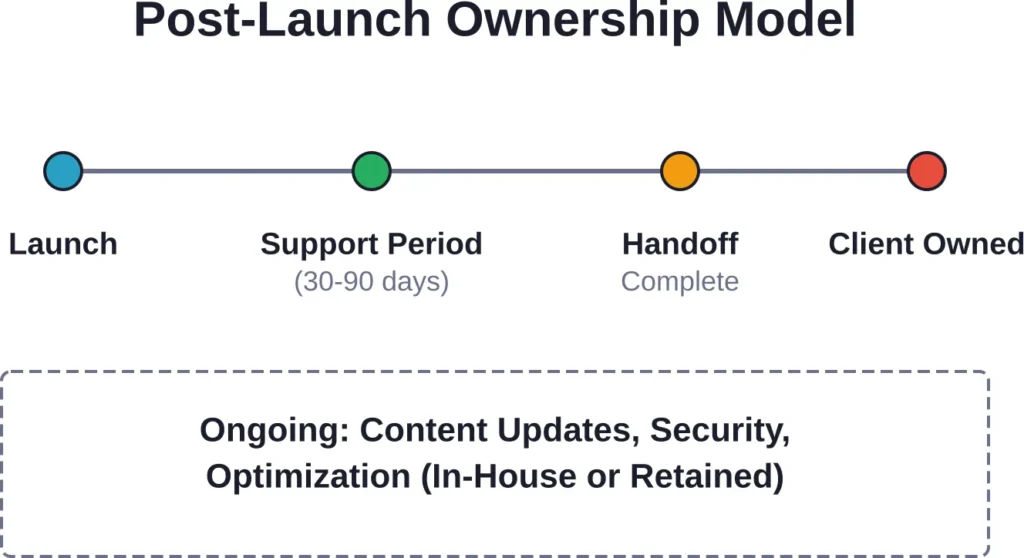
Post-launch support varies by agency. Some include 30 days of bug fixes. Others charge hourly for any post-delivery changes. Confirm this before launch—finding out after the fact creates friction.
| Phase | Duration | Key Deliverables |
|---|---|---|
| Discovery | 1-2 weeks | Creative brief, timeline, sitemap |
| Design | 2-4 weeks | Homepage design, internal page designs, revision rounds |
| Development | 2-3 weeks | Staging site, CMS setup, testing, training |
| Launch | 1 week | Live site, DNS setup, SSL certificate, documentation |
Common Mistakes When Hiring Low Cost Agencies
Even experienced teams make predictable mistakes when selecting web design partners. Here are the ones that cause the most pain.
Choosing Based on Portfolio Alone
Portfolios show what agencies can do. They don’t show what working with them is like.
An agency might produce beautiful work but miss every deadline. Or communicate poorly. Or nickel-and-dime for minor changes. None of that shows up in case studies.
Talk to references. Ask about responsiveness, how conflict was handled, and whether they’d hire the agency again. Those answers matter more than screenshots.
Skipping the Kickoff Meeting
Kickoff meetings feel like bureaucracy. They’re not.
This is where the team aligns on goals, audience, tone, and success metrics. Skipping it means everyone builds assumptions that diverge over time. By the time those misalignments surface, the project is weeks behind.
Treat kickoff as sacred. Bring decision-makers. Take notes. Confirm mutual understanding before any design work begins.
Ignoring Content Strategy
Beautiful designs can’t save weak content. Yet many projects treat copywriting as an afterthought.
If the agency isn’t providing copy, have it ready before design starts. Designing around lorem ipsum creates layouts that break when real content (which is always longer or shorter than placeholder text) gets added.
Some low cost agencies include copywriting. Most don’t. Clarify this early and plan accordingly.
Underestimating Internal Time Commitment
Agencies can’t work in a vacuum. They’ll need feedback, approvals, assets, and answers to questions.
Projects stall when internal teams don’t allocate time for agency collaboration. If the point person is too busy to respond within 48 hours, expect timeline delays.
Block time for this work upfront. It’s less than building the site in-house, but it’s not zero.
How Long Does a Low Cost Web Design Project Take?
Timeline depends on scope, but most low cost projects fall into predictable ranges.
A simple marketing site (five to ten pages, template-based design, standard CMS) takes six to eight weeks from kickoff to launch. That assumes timely feedback and no scope expansion.
A custom design with advanced functionality (custom CMS, third-party integrations, unique page layouts) stretches to ten to twelve weeks. Complex builds requiring API work or custom development push beyond that.
Timeline compression rarely works. Asking an agency to deliver a ten-week project in six usually produces corners cut somewhere—often in QA or responsive testing.
If launch timing is critical, build buffer into the schedule. Projects rarely finish early. Most run one to two weeks over the original estimate.
What Happens After Launch?
Launch isn’t the end. Sites require ongoing maintenance, updates, and optimization.
Technical Maintenance
WordPress and other CMS platforms release security updates regularly. Plugins need updating. Hosting environments require patches.
Some agencies include maintenance in monthly retainers. Others offer it as an optional add-on. Many don’t offer it at all, leaving clients to handle updates or hire separate support.
Neglecting technical maintenance creates security vulnerabilities and performance degradation. Budget for this work even if the agency doesn’t provide it.
Content Updates
Sites need fresh content to perform well in search and stay relevant to visitors. That means adding blog posts, updating service descriptions, and refreshing imagery periodically.
Most low cost agencies train clients to handle content updates independently. That’s usually preferable to paying agency rates for routine edits.
If internal bandwidth doesn’t exist for content work, confirm whether the agency offers ongoing support and at what cost.
Performance Optimization
Post-launch analytics often reveal opportunities for improvement. Maybe a key landing page has high bounce rates. Or form submissions are lower than expected.
Optimization work—A/B testing, conversion rate improvements, page speed enhancements—typically falls outside initial project scope. Some agencies offer it as a separate service. Others don’t do optimization work at all.
If performance improvement is a priority, discuss this during agency selection. Not every firm has optimization expertise.
Red Flags to Watch For
Not every agency offering low prices delivers professional results. Here are warning signs that suggest looking elsewhere.
No Written Contract
Operating without a contract puts both parties at risk. Professional agencies provide clear agreements outlining scope, timeline, payment terms, and IP ownership.
If an agency resists providing a written contract or pushes to start work before one is signed, walk away. That’s not how legitimate businesses operate.
Requests for Full Payment Upfront
Standard payment terms involve a deposit (typically 30-50%) at project start, a milestone payment at design approval, and final payment at launch.
Agencies requesting 100% payment before starting work create risk. If the relationship sours or quality doesn’t meet expectations, there’s no leverage to resolve issues.
Vague or Missing Process Documentation
Strong agencies can articulate how they work. Weak ones keep things vague intentionally—it gives them room to improvise (or underdeliver) later.
If an agency can’t explain its process clearly during the sales conversation, expect confusion during the project.
Portfolios Without Verifiable Client Names
Legitimate agencies showcase real client work with company names attached. Portfolios full of anonymous case studies (“A leading fintech company…”) should raise questions.
Anonymized work isn’t always a red flag—some clients require confidentiality. But if every portfolio piece is anonymous, the work might not be real.
Offshore Teams Presented as Local
Some agencies market themselves as US or European firms but outsource all work offshore. That’s not inherently bad, but it should be transparent.
Time zone differences and communication barriers affect project flow. If the team is distributed, that’s fine—but clients deserve to know upfront.
Questions to Ask Before Signing
Smart questions surface issues before they become problems. Here’s what to ask during agency evaluation.
About the Team
- Who will be assigned to this project? (Ask for names and LinkedIn profiles.)
- Will the same designer handle the project start to finish, or does it get handed off?
- Is development in-house or outsourced?
- What’s the typical response time for questions during the project?
About the Process
- What information do you need from us before starting?
- How many revision rounds are included?
- What happens if we need changes outside the agreed scope?
- How do you handle missed deadlines?
About Deliverables
- What file formats will we receive? (Design files, source code, etc.)
- Who owns the designs and code after delivery?
- Will the site be built on our hosting or yours?
- What training or documentation is provided?
About Support
- What’s included in post-launch support?
- How long does support last?
- What happens after the support period ends?
- Do you offer ongoing maintenance? If so, what does it cost?
Evasive or unclear answers to any of these questions suggest the agency either lacks process maturity or is intentionally withholding information. Neither is acceptable.
Do Low Cost Agencies Deliver Quality Work?
The short answer? It depends.
Low cost doesn’t automatically mean low quality. Many talented designers and developers operate lean businesses with low overhead, allowing them to charge less while delivering professional results.
The correlation between price and quality weakens at the extremes. Paying $500 for a site rarely produces professional results. Paying $50,000 doesn’t guarantee brilliance.
The middle tier—where most low cost agencies operate—offers the best value. These firms charge enough to hire skilled talent but structure operations to stay affordable.
Quality indicators to look for:
- Clean, readable code (ask to review a staging site before launch)
- Fast load times (test with PageSpeed Insights or GTmetrix)
- Responsive design that works across devices (test on actual phones and tablets, not just browser resize)
- Accessible markup (check for proper heading hierarchy, alt text, ARIA labels)
- SEO fundamentals (meta tags, semantic HTML, logical URL structure)
An agency that delivers all five at an accessible price point is providing quality work. One that cuts corners on any of them isn’t—regardless of cost.
Frequently Asked Questions
Template services (like Squarespace, Wix, or pre-built WordPress themes) offer do-it-yourself tools with standardized designs. Low cost agencies provide custom work tailored to specific needs, along with strategy, implementation, and support. Templates work for very simple sites with no unique requirements. Agencies make sense when customization, integrations, or professional design thinking matter.
Most low cost web projects take six to twelve weeks from kickoff to launch, depending on scope. Simple sites (five to ten pages, template-based) complete in six to eight weeks. Custom designs with advanced features require ten to twelve weeks. Complex builds with API integrations or custom development extend beyond that. Timeline depends heavily on how quickly feedback and approvals are provided.
Most low cost agencies build sites on content management systems (WordPress, Webflow, or similar) that allow non-technical updates. Training should be included in the project scope. If ongoing updates feel overwhelming or time-consuming, many agencies offer maintenance retainers. Clarify training and post-launch support terms before signing.
Most agencies include a support period (30 to 90 days) covering bug fixes and minor adjustments. Changes outside that scope—new features, page additions, design revisions—typically require separate agreements. Some agencies offer hourly support rates. Others provide monthly retainers. Discuss post-launch change processes during initial conversations to avoid surprises.
Verify portfolio work by visiting the live sites listed in case studies and checking that they match what’s shown. Look for client testimonials with full names and companies. Search for agency reviews on Clutch, Google, or industry directories. If most portfolio pieces are anonymous or can’t be verified, ask the agency directly for client references.
Remote collaboration works well for web design projects—most communication happens via video calls and project management tools regardless of location. Local agencies offer easier in-person meetings if that’s preferred, but geography matters less than portfolio fit, process quality, and communication style. Evaluate agencies on merit rather than location.
Ensure the contract specifies that all design files, source code, and credentials transfer to the client at project completion. Host the site on client-owned hosting (not agency infrastructure). With those protections in place, another developer can maintain or modify the site if the original agency becomes unavailable. Avoid agencies that insist on proprietary hosting or withhold source files.
Final Thoughts
Low cost web design agencies fill an important gap. Not every project needs a six-figure budget, but every business deserves a professional web presence.
The agencies on this list operate at different scales and serve different markets. Some focus on SaaS startups. Others serve local businesses. A few specialize in brand-forward design while others prioritize conversion efficiency.
The right choice depends on business stage, industry, and what the site needs to accomplish. A restaurant doesn’t need the same site as a fintech company. A solo consultant has different requirements than a Series A startup.
Start by clarifying goals. What does success look like six months after launch? More inbound leads? Lower support costs? Improved brand perception? The answer shapes which agency is the best fit.
Then evaluate portfolios, processes, and client feedback. Talk to references. Ask the hard questions about scope, timelines, and support. Verify that what’s promised in the sales conversation matches what gets delivered.
Web design at accessible price points isn’t a compromise. It’s a business model built on efficiency, specialization, and repeatable processes. When done right, it delivers professional results that scale with the business.
The agencies listed here have proven they can do that consistently. Start with the ones that match the vertical and business stage, then evaluate fit through discovery conversations.
A well-designed website remains one of the highest-leverage investments a business can make. Finding the right partner to build it doesn’t require guesswork—just clear criteria and disciplined evaluation.