
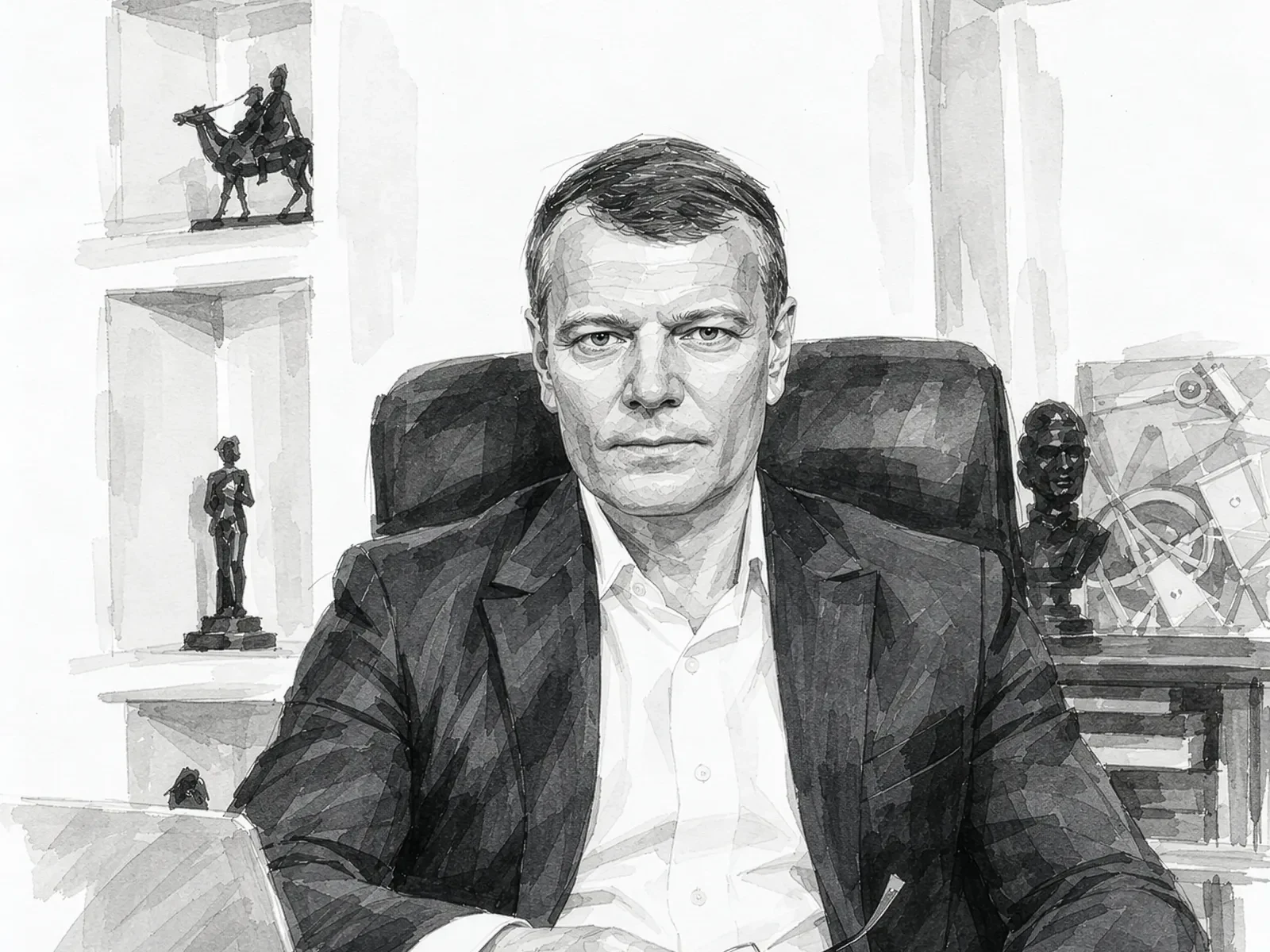
Buildings become part of a city’s memory when they link everyday life with people’s hopes for the future. Al Nasr is proof that a sports project can carry a place the whole city cares about into its next chapter. Nikolai Serebriakov — industrialist, hockey player and investor in Galaxy Hockey Academy — explains why he chose to save a historic complex, what its revival requires and why a new generation of hockey players should grow up inside it.
Living in Dubai, you quickly learn that the city doesn’t mourn what it loses. One tower replaces another, sites are levelled, concrete is poured and the skyline changes almost overnight. So when I first walked through the Al Nasr sports complex — neglected for several years, its corridors full of the special silence of places that were once crowded and loud — I understood straight away that this was a rare chance: not to watch a building be demolished, but to give it a future.
At first glance it was just an old building that everyone assumed would be knocked down, with yet another residential tower to follow. The more closely we looked, though, the more obvious it became that Al Nasr was more than walls in need of repair. It contained photographs, papers and trophies — and, above all, the memories of people for whom this ice palace was part of their own life story.
In 1979 the idea of an indoor ice rink in Dubai seemed almost absurd. I was told people came simply to see it with their own eyes, to touch it and make sure that ice could really exist in that heat. Al Nasr became one of the very first leisure centres of its type in the Middle East, and its reputation spread far beyond the city. Once we realised that, the project stopped being merely a large building job.
Sport has always been part of my life. As a boy I played football in summer and, in winter, bandy — hockey with a ball — which was a typical combination for teenagers then. Strong skating, a sense of speed and the ability to read a game never leave you, even after a professional career is over. Ice hockey arrived in my life long ago and I still play, these days for Galaxy Warriors in the Emirates Hockey League. When you go out on the ice yourself, you understand the game from within: where comfort matters, what gets in the way of good training, why the smallest details count.
Construction is the other half of my biography. Spending many years building a big industrial project taught me that a structure is never just a volume with a façade. Behind every finished building there are engineering choices, materials, deadlines and people who need to understand exactly what is required of them. Eventually I asked myself where that experience should go next, and the answer was right in front of me: bring business and sport together and invest in something I truly care about.
In Al Nasr, three things came together that rarely meet in a single venture — the game I have loved since childhood, a building with real history and the chance to give the city something durable. You can always design a sensible business model for a new restaurant or mall. My question was different: could a sports complex come to matter to people who will be walking through its doors long after us?
As we uncovered the palace’s past, it became clear why it could never be treated as an empty shell. People told us they had grown up here, met friends here, had lessons here — whole pieces of childhood were tied to the place. Once, as we stood in the car park, a local man came up and asked what we were doing. When he heard that we were restoring the complex, he hugged us and thanked us; he had been certain it was about to be torn down. That brief moment said more than any presentation could. We had been trusted with somewhere people loved, and that affection demanded real care in return.
Respecting history doesn’t mean freezing everything as it was. The old bowling alley, for instance, is becoming a gym, which suits a sports centre far better — but the bowling isn’t lost: its balls and pins are now part of the room’s décor. The neighbouring squash court we left exactly as it was. The building gets a new purpose and keeps the features that make it recognisable.
During the works we came across old trophies and sporting records, and some of the documents were taken by government officials. We decided the story of Al Nasr should be told at the very centre of the complex: an artist is painting a large mural, and the trophies will have their own lit display. The aim is to explain why this place has its own name and memory; decoration comes second.
Saving the building also meant rethinking how it works. We are renewing the façade, the roof and the canopy and redesigning the interiors. Some of those decisions would have been unnecessary if all we wanted was to reopen the doors. But on a project like this you can’t keep asking whether anyone will notice. Sometimes it is enough that you know.
We applied the same logic to equipment. Cheaper lighting for the arena would probably have looked identical from the stands. Instead we chose a professional system from a manufacturer that lights major sports venues and American landmarks such as the Statue of Liberty and the White House. For us the point was to be certain that the engineering lived up to the standard of the whole centre.
Every building has features that will never appear in a photograph but decide how well it serves the people inside. Our survey revealed there was no proper fire-suppression system. In a place where children will train daily and large crowds will gather for events, that couldn’t be postponed, so it became part of the restoration. Safety is the base on which everything else rests.
Ice demands equal precision. Its quality depends on how it is prepared and on ventilation, temperature, humidity and airflow. When the air is too humid, moisture settles on the surface and condensation forms on the ceiling; the ice loses its evenness and skating feels different. I know that from playing — a hockey player senses immediately when the ice is right and when something in the system needs attention.
Professional sport showed me the gap between an attractive floor plan and a space that genuinely works. Changing rooms, showers, the route onto the ice and the layout as a whole create the environment in which an athlete trains. That is why I make a point of understanding the construction and engineering decisions, talking them through with the team and asking questions. My industrial background helps me connect what an athlete experiences with what designers and engineers have to deliver.
Al Nasr is being planned as a centre where ice hockey is part of a much broader sporting life: a main arena and a practice rink, a gym, shooting zones for hockey players, off-ice areas for figure skaters, and studios for martial arts and dance. Next door, padel and badminton courts are going up. Each discipline brings its own community, and together they create a place for people with very different interests and goals.
The main arena will host matches and training as well as concerts, exhibitions and other events. For those, the boards can be taken down and the ice covered with special flooring that bears heavy loads and helps keep the cold underneath. Once the event is over, the cover comes off and the rink is ready to skate on again. That flexibility is vital for the complex’s future, because the arena has to pay its way all year round. The rink will fully comply with the requirements for international ice hockey tournaments — which will also give visitors to the UAE another reason to discover the country.
The building isn’t ours yet: we manage it, and talks about its future ownership are still under way. Even so, we are putting a great deal of money, energy and time into it, and that makes you think especially carefully about the long term. What matters to us is that the complex becomes a sustainable business that can keep running whoever happens to be in charge.
Passion for hockey alone won’t achieve that. The centre needs firm commercial foundations — partners, tenants, sponsors and events that bring people through the door. Financial sustainability is what makes the sporting mission possible. If the academy and the centre last, children will be able to train here for years and follow their whole development path.
That is why the children’s hockey academy is, for me, the heart of it all. Many boys dreamed of hockey watching legends like Valeri Kharlamov; so did I. Galaxy Hockey Academy already trains children from many countries, and I would like the sport to become more accessible to local kids as well, so that they can try skating and keep going if they fall in love with the game.
Our aim is to create the conditions for a future UAE national team built from local players who grew up here. That goal is measured in years. A child who starts at five or six may show serious results at fifteen or sixteen, and senior players take longer still. There are no shortcuts in sport: you need training, experience, the right environment and people able to lead a team forward.
The academy has already shown that these plans can deliver. One of our pupils recently trained with the Russian national team — a big achievement in a country where hundreds of thousands of children play hockey. For me the most important part is that he got there while training in the Emirates. Stories like his show what becomes possible when an athlete has room to grow.
At the same time, the centre must be open to everyone who lives in the UAE, in all their diversity. People from dozens of nations have made their home here, and every sport has its fans. Most of all, though, we wanted Emirati children to have the chance to play hockey, because in time it may be they who represent their country on the ice.
A big project may start with a dream, but what holds it together are goals you can measure. You begin with a picture of the future, then break it into steps and take them one at a time. At Al Nasr there are many: reinforcing the structure, building the infrastructure, launching the sports programmes, preserving traces of the past and growing an academy over the years.
I have always liked to work on things that inspire me, especially when they carry history and a chance to do something meaningful. Once we understood what Al Nasr had been and what it meant to people, our original purpose became sharper. We decided to do everything properly and to keep moving, without trying to predict how long each result would take.
A good restoration keeps the past without turning it into a museum. It lets a place start a new life and still remain itself. At Al Nasr history will live on in the trophies and photographs, the squash court and the details of the interior, while on the ice a new chapter begins: children learning to skate, teams heading out for matches, parents bringing their sons and daughters.
Perhaps what matters most to me is building a foundation that keeps working long after today’s team are no longer the only ones who remember how it started. Personal recognition and an impressive arena mean little in comparison. If, years from now, children who grew up here are playing for their country, then a love of hockey will have found its continuation — and Al Nasr will have earned its place in the future.