
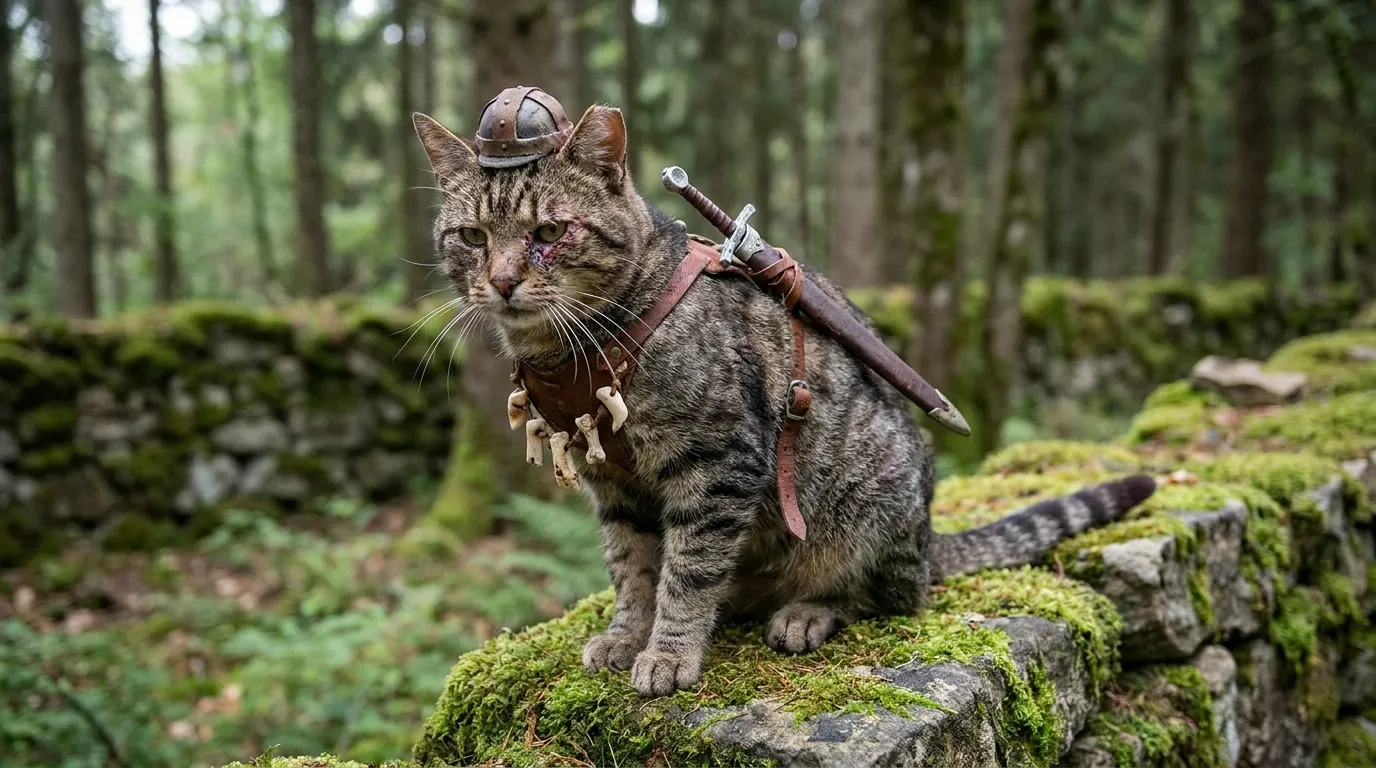
Quick Summary: Warrior cat names follow a unique two-part naming system created by series founder Vicky Holmes, combining prefixes (describing appearance or personality) with suffixes (indicating rank and stage of life). Kits receive ‘-kit’, apprentices get ‘-paw’, warriors earn descriptive suffixes like ‘-claw’ or ‘-heart’, and leaders take ‘-star’, creating memorable names like Firestar, Graystripe, or Leafpool that reflect each cat’s journey through Clan life.
The Warriors series by Erin Hunter has captivated readers with the original series “The Prophecies Begin”, and one of its most distinctive features remains the intricate naming system. According to the official Warriors Story Team, series creator Vicky Holmes invented the hierarchy of changing names to signify each stage of a Clan cat’s life.
Understanding warrior cat names opens up the rich world-building that makes these books special. Whether creating original characters or simply appreciating the canon names, the naming conventions reveal how deeply thought-out this fictional universe truly is.
The Warrior Cat Naming System Explained
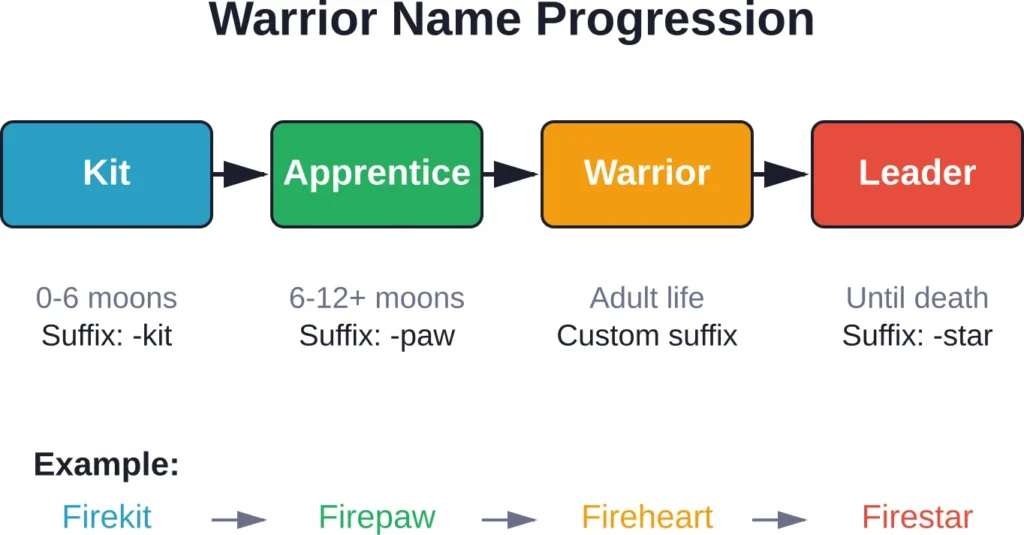
The naming hierarchy reflects a cat’s journey through Clan life. Each name change marks a significant transition and carries meaning within the warrior code.
Kits are born with names ending in ‘-kit’ (Firekit, Graykit, Leafkit). This suffix immediately identifies the youngest Clan members who must be fed before apprentices and warriors, as outlined in the warrior code.
At six moons old, kits become apprentices and receive the suffix ‘-paw’ (Firepaw, Graypaw, Leafpaw). This name remains until they complete their training and earn their warrior name.
Warriors receive their full name from their leader during a naming ceremony. The prefix stays the same, but the suffix changes to reflect their personality, skills, or physical traits (Fireheart, Graystripe, Leafpool).
Leaders replace their warrior suffix with ‘-star’ (Firestar, Bluestar, Tigerstar), signifying their authority and connection to StarClan. They receive nine lives and lead until death or retirement.
Medicine Cats and Special Roles
Medicine cats follow the same pattern but often receive gentler suffixes. Names like Leafpool, Jayfeather, and Yellowfang reflect their healing role rather than fighting prowess.
Elders keep their warrior names. Deputy positions don’t change names—it’s a role, not a rank requiring renaming.
Prefix Selection: Appearance and Personality
Prefixes typically describe what a kit looks like at birth. Parents choose these names based on pelt color, markings, or striking features.
Color-based prefixes dominate the naming landscape. Fire-, Flame-, and Ginger- indicate orange cats. Gray-, Stone-, and Ash- work for gray pelts. Black-, Raven-, and Crow- suit dark cats. White-, Snow-, and Ice- fit pale cats.
Pattern prefixes add specificity. Spotted-, Dappled-, and Speckle- describe spotted cats. Stripe- and Tiger- indicate tabby markings. Patch- suits tortoiseshell patterns.
Nature prefixes draw from the forest environment. Oak-, Birch-, Bramble-, and Holly- reference plants. Lion-, Tiger-, and Leopard- honor big cats. Mouse-, Rabbit-, and Vole- name prey animals.
Unique and Creative Prefixes
Some prefixes break the appearance mold. Brave-, Swift-, and Bright- predict personality traits parents hope their kit will develop. These forward-looking names add depth but appear less frequently in canon.
Weather and time prefixes create atmospheric names. Storm-, Cloud-, Mist-, Dawn-, and Dusk- evoke specific moods and imagery.
Suffix Meanings and Applications
Warrior suffixes hold more complexity than the standardized kit, apprentice, and leader endings. Leaders choose these during naming ceremonies to honor the new warrior’s defining qualities.
Physical trait suffixes remain popular. -fur, -pelt, and -coat describe cats with notable fur. -tail works for distinctive tails. -stripe, -spot, and -patch emphasize patterns. -whisker highlights facial features.
Skill-based suffixes celebrate abilities. -claw and -fang suit fierce fighters. -heart honors bravery and loyalty. -foot indicates speed. -leap works for agile cats. -strike combines power and precision.
Nature suffixes mirror prefix themes. -leaf, -flower, and -petal suit gentle cats. -stream, -brook, and -pool fit RiverClan or calm personalities. -storm, -wind, and -thunder convey power.
| Suffix Type | Examples | Common Meaning |
|---|---|---|
| Physical | -fur, -pelt, -tail, -whisker | Notable appearance features |
| Combat | -claw, -fang, -strike, -slash | Fighting prowess and strength |
| Character | -heart, -spirit, -soul, -wish | Personality and loyalty |
| Nature | -leaf, -stream, -stone, -flame | Environmental connections |
| Movement | -foot, -leap, -flight, -step | Speed and agility |
Clan-Specific Naming Themes
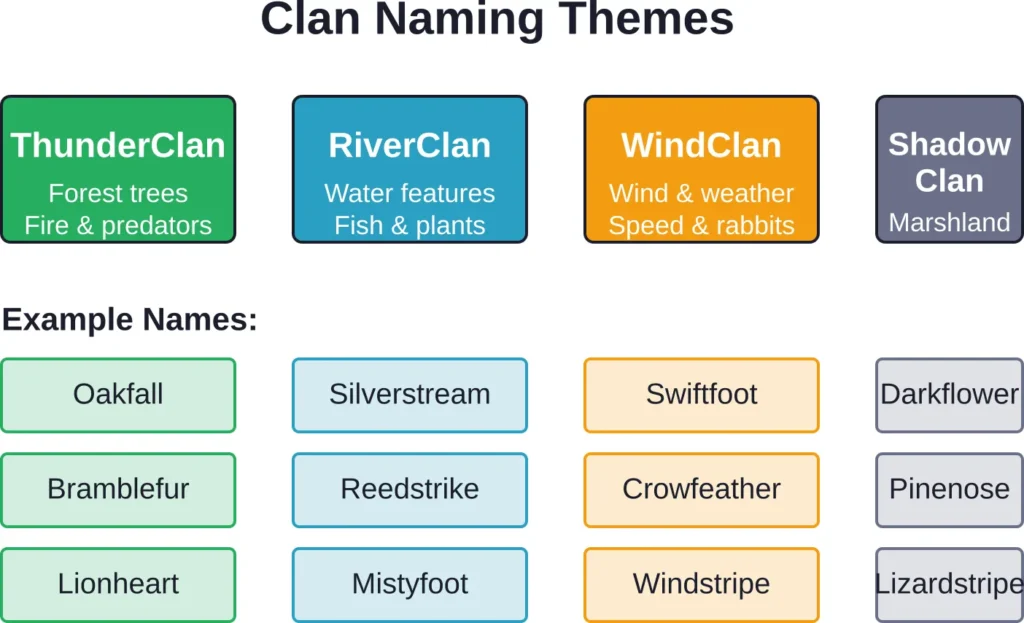
Each Clan’s territory influences naming conventions. These patterns aren’t rigid rules but reflect environmental immersion.
ThunderClan cats often receive forest-related names. Hardwood trees (Oak-, Birch-, Bramble-), forest predators (Lion-, Adder-), and fire imagery (Flame-, Spark-) appear frequently. Examples include Oakfall, Bramblefur, and Lionheart.
RiverClan names flow with water themes. River plants (Reed-, Moss-, Willow-), fish (Pike-, Trout-), water features (Ripple-, Wave-, Splash-), and smooth stones create names like Reedstrike, Silverstream, and Mistyfoot.
WindClan embraces open-moor terminology. Wind and weather (Storm-, Gust-, Breeze-), rabbits (their primary prey), swift birds (Hawk-, Swift-), and running terms produce names like Windstripe, Swiftfoot, and Crowfeather.
ShadowClan draws from marshland ecology. Reptiles and amphibians (Lizard-, Frog-, Newt-), pine trees, shadows and darkness (Dark-, Night-, Shadow-), and tougher plants yield names like Darkflower, Pinenose, and Lizardstripe.
Naming Rules and Restrictions
Canon naming follows unofficial but consistent patterns. Understanding these helps create authentic-feeling warrior cat names.
Names should be pronounceable and flow naturally. Harsh consonant clusters (like Skritch- or Thrast-) rarely appear. Two-syllable prefixes work best, though one-syllable options dominate.
Objects and concepts cats wouldn’t know stay off-limits. No technology (Computer-, Phone-), human items (Spoon-, Jacket-), or abstract concepts (Democracy-, Mathematics-). Cats name what they observe in nature.
Avoid duplicate meanings. Combining similar elements (Fireflameheart, Stoneroakheart) sounds redundant. Mix complementary aspects instead.
What About Kittypet and Loner Names?
Kittypets (house cats) have human-given names—Rusty became Firepaw, Princess stayed Princess, Smudge kept his kittypet name. These follow normal pet naming conventions.
Loners and rogues choose their own names or keep kittypet names. Barley, Ravenpaw (who kept his apprentice name after leaving ThunderClan), and Sasha demonstrate this flexibility.
Creating Your Own Warrior Cat Names
Building memorable warrior cat names combines creativity with established conventions. Start with the visual.
Look at the cat’s appearance first. Pelt color provides the obvious starting point. But dig deeper—unique markings, eye color, build, or distinctive features offer richer options than generic color terms.
Consider personality next. Is this cat fierce or gentle? Quick-tempered or patient? Brave or cautious? The suffix should capture their defining trait.
Test pronunciation aloud. Names should roll off the tongue. If it trips you up, readers will struggle too.
Check the Clan. Does your name fit the environment? A ShadowClan cat named Coralshine feels wrong—coral doesn’t exist in marshland. Keep it geographically sensible.
Popular Prefix Categories
Nature prefixes offer the widest selection:
- Trees: Oak-, Birch-, Pine-, Willow-, Alder-, Cedar-
- Flowers: Rose-, Lily-, Daisy-, Poppy-, Violet-
- Weather: Storm-, Cloud-, Rain-, Mist-, Frost-
- Colors: Gray-, Silver-, Golden-, Russet-, Amber-
- Animals: Lion-, Tiger-, Hawk-, Raven-, Viper-
Versatile Warrior Suffixes
Some suffixes work for nearly any personality:
- -heart: loyalty, bravery, emotion
- -fur/-pelt: notable coat quality
- -stripe/-spot: pattern emphasis
- -tail: distinctive tail
- -whisker: attention to detail, sensitivity
Common Naming Mistakes to Avoid
Even fans familiar with the series sometimes create names that feel off. Here’s what breaks immersion.
Don’t combine two prefixes. Fireoak- or Graystorm- doesn’t follow the pattern. Pick one strong prefix.
Avoid overly complex or lengthy constructions. Magnificentsplendor- sounds ridiculous. Keep it simple—two to three syllables maximum for the full name.
Don’t use modern concepts. Neon-, Plastic-, or Internet- pull readers out of the forest setting. Stick to timeless natural elements.
Skip the edgy extremes. Names like Bloodslaughter- or Deathkiller- feel try-hard. Canon names balance strength with authenticity.
Watch suffix logic. A cat with -pool shouldn’t hate water. A cat with -claw should show some combat ability. Make the name match the character.
Frequently Asked Questions
Yes, cats in different Clans can share names. Clans operate independently, and duplicate names across Clan boundaries cause no issues. However, within a single Clan, names remain unique to avoid confusion during ceremonies and daily life.
Cats keep their birth-given prefix even if their appearance changes. An injury, scar, or aging doesn’t trigger a prefix change—only the suffix changes at warrior and leader ceremonies. The prefix remains constant from kithood onward.
Medicine cats follow the same naming structure but tend to receive gentler suffixes reflecting their healing role. Names like Leafpool, Spottedleaf, and Yellowfang emphasize nature and wisdom over combat prowess. The naming pattern itself doesn’t differ.
Canon shows mixed approaches. Some leaders who step down or lose their position revert to their warrior name. Others maintain the -star suffix. The series doesn’t establish a hard rule, leaving this flexible for storytelling purposes.
No official banned list exists, but certain terms rarely appear. Star- as a prefix is avoided since -star marks leaders. Moon-, Sun-, and Sky- work but appear less frequently. The Story Team tends toward nature-based terms cats would realistically encounter.
Half-Clan cats receive names following their birth Clan’s conventions. The naming cat (usually the mother) chooses the prefix. Politics might influence the choice—neutral prefixes avoid highlighting the forbidden relationship. But structurally, half-Clan names follow normal patterns.
Loners, rogues, and kittypets use single-word names (Barley, Ravenpaw, Smudge). Clan cats always use the two-part system. A Clan cat wouldn’t be named just “Fire” or “Gray”—the prefix-suffix structure is mandatory for Clan life.
Naming Your Warrior Cat Characters
The warrior cat naming system represents one of the most thoughtful world-building elements in the series. Since 2003, when “Into the Wild” first introduced readers to Firepaw and his journey, these distinctive names have helped millions of readers instantly understand character relationships, rank, and identity.
Creating warrior cat names requires balancing creativity with established conventions. The best names feel natural, roll off the tongue easily, and capture something essential about the character. Whether generating names for fan fiction, role-playing, or simply appreciating canon characters, understanding the prefix-suffix system and Clan-specific themes produces authentic results.
Start with appearance, layer in personality, respect the Clan environment, and test pronunciation. Avoid modern concepts, keep combinations logical, and remember that simplicity often beats complexity.
The naming conventions reflect the careful thought Vicky Holmes and the Story Team put into building the Warriors universe. These names aren’t random—they’re a language that communicates hierarchy, geography, personality, and the progression through life that defines warrior cat culture.
Ready to create your own warrior cat? Start with what you see, add what you know, and build a name that honors the tradition while bringing something new to the Clans.