

Quick Summary: Finding the right web design and SEO agency can transform your online presence, but the market is crowded with options. This guide profiles 15 top agencies that combine technical expertise, proven results, and strategic thinking to help businesses rank higher and convert better in 2026’s AI-driven search landscape.
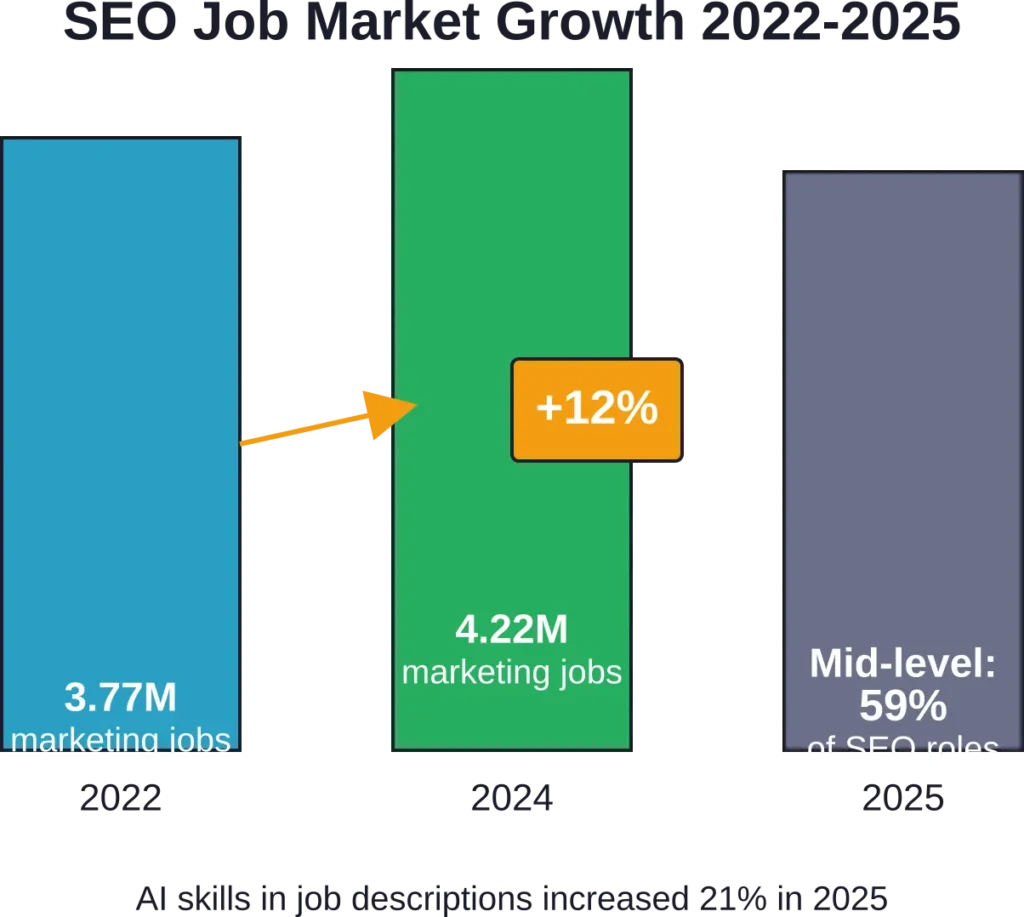
The digital marketing landscape shifted dramatically between 2022 and 2024, with U.S. marketing employment grew by 12% between 2022 and 2024. That growth reflects something fundamental: businesses recognize that visibility drives revenue, and visibility requires expertise.
But here’s the challenge. A significant portion of Google searches in the U.S. end without a click to an external website. Traditional SEO alone isn’t enough anymore.
The agencies that deliver results in 2026 understand both search engine optimization and generative engine optimization. They build websites that convert visitors into customers, not just pretty portfolios. And they measure success in revenue growth, not vanity metrics.
This guide profiles 15 agencies that meet those standards. Each brings specialized expertise, documented client results, and strategic approaches that adapt to how people actually search today.
What Makes a Web Design and SEO Agency Worth Hiring
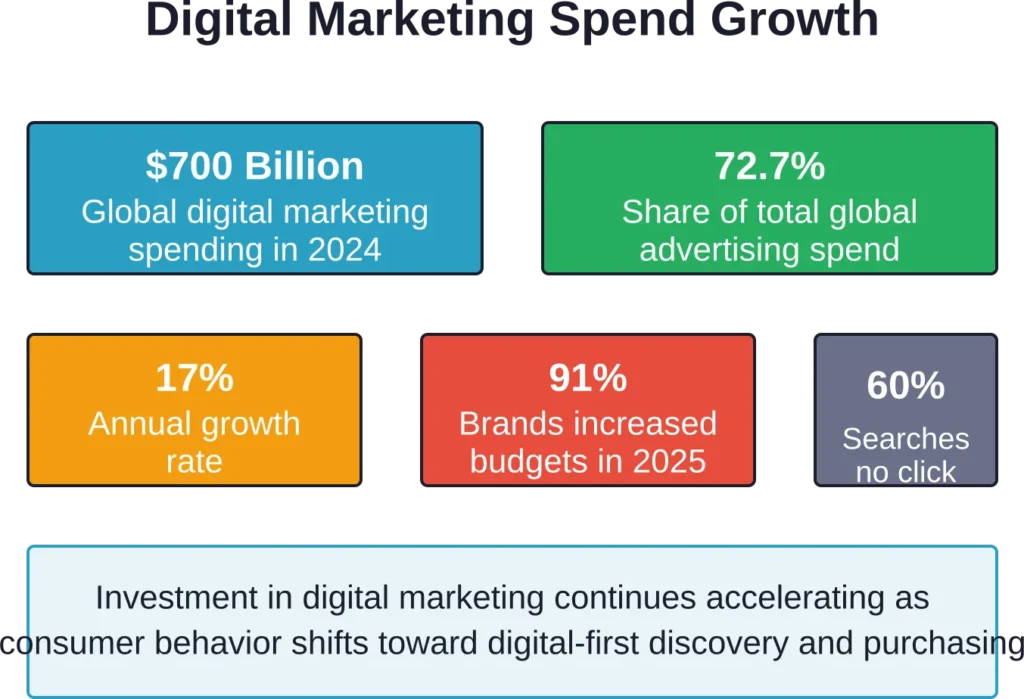
Digital marketing represents a significant share of global advertising spend. That investment flows toward agencies that demonstrate three core capabilities.
First, technical excellence. Modern websites need speed, mobile responsiveness, clean code, and accessibility. Search algorithms prioritize user experience signals, which means design directly impacts rankings.
Second, strategic thinking. Cookie-cutter approaches fail because every business faces unique competitive dynamics, customer behaviors, and market conditions. The best agencies diagnose problems before proposing solutions.
Third, measurable results. Revenue, qualified leads, conversion rates—these metrics matter more than traffic volume or keyword rankings alone. Agencies should track outcomes that connect to business objectives.
The firms profiled below excel across these dimensions. They’ve built reputations through consistent delivery rather than aggressive marketing.
How the Digital Marketing Industry Evolved by 2026
The business model landscape transformed between 2013 and 2025. According to MIT CISR research, business models have evolved significantly, with ecosystem-oriented approaches gaining prominence. Meanwhile, traditional Supplier models dropped from 46% to just 15%.
That shift reflects how digital experiences work now. Customers interact across multiple touchpoints, platforms, and devices. 44% of consumers spend over five hours daily on smartphones.
Search behavior changed, too. While Google maintains over 90% of search engine market share, generative AI tools like ChatGPT and Google’s AI Overviews now answer queries directly. Agencies must optimize for both traditional search results and AI-generated responses.
The data backs up this urgency. Many brands increased their digital marketing budgets in 2025. Digital marketing spending grows annually—faster than almost any other advertising category.
Agencies that understand these dynamics help clients navigate complexity. They don’t just build websites or optimize keywords. They architect digital ecosystems that capture attention wherever customers look.
Top 15 Web Design and SEO Companies in 2026
The agencies below represent diverse specializations, team sizes, and approaches. What they share: proven track records, technical sophistication, and strategic capabilities that drive measurable business growth.
1. Lengreo

Lengreo built its reputation as a complete marketing and tech partner that combines strategic B2B digital marketing with hands-on website development and technical execution. The agency focuses on delivering measurable growth for software companies, service providers, and technology businesses through integrated campaigns.
Their methodology starts with deep marketing audits and custom strategy development rather than generic templates. They perform competitor analysis, keyword research, and technical website optimizations before building targeted SEO, content, and lead generation campaigns.
Lengreo has developed strong expertise in full-cycle website development and SEO services, including local SEO, link building, and conversion-focused site architecture. Their team builds e-commerce, business, and landing pages designed to improve search visibility while driving qualified leads.
The agency operates through close collaboration between strategists and technical specialists. Clients work directly with senior team members who stay involved from strategy through implementation and ongoing optimization.
Client results show consistent impact across industries, including 400% increases in annually acquired clients for software companies, 6X+ reductions in cost per lead, and significant conversion rate improvements. Long-term partnerships and strong testimonials reflect high satisfaction with both execution and business outcomes.
Contact Information:
- Website: Lengreo.com
- Phone: +31 686 147 566
- Email: [email protected]
- Address: Vrijstraat 9 C/D, 5611 AT Eindhoven, Netherlands
- LinkedIn: Lengreo
- Twitter: @Lengreo
- Instagram: @lengreo
2. Gilzor

Gilzor positions itself as a custom software development partner that creates digital products designed to perform in competitive markets. The company focuses on building web and mobile applications that support strong user experiences and scalable online presence.
Their approach combines thorough idea validation, business analysis, and user-centric design with full-cycle development. Every project begins with research and prototyping to ensure the final product meets both technical requirements and market needs.
Gilzor excels at creating web applications and mobile solutions with clean architecture, strong performance, and conversion-oriented interfaces. Their UI/UX design process prioritizes intuitive navigation and seamless experiences that support business goals across devices.
Projects are delivered by dedicated teams that handle everything from initial concept to post-launch support and maintenance. This end-to-end ownership ensures continuity and deep understanding of each client’s product vision.
Client outcomes include successful product launches with strong early adoption, significant efficiency gains for businesses, and positive user reception across industries such as e-commerce, startups, and specialized applications.
Contact Information:
- Website: www.gilzor.com
- Email: [email protected]
- Address: Poland, Warsaw, Office 58, street Adama Mickiewicza 37, 01-625
- LinkedIn: www.linkedin.com/company/gilzor-softwaredevelopment
3. Oski
Oski delivers smart, well-engineered software solutions for tech-forward enterprises and ambitious startups. The company specializes in building robust digital platforms that combine advanced development with modern design and performance standards.
Their methodology emphasizes rapid team assembly and AI-accelerated engineering to deliver high-quality solutions quickly. Every project follows structured processes covering cloud architecture, frontend development, and seamless integration.
Oski stands out in frontend solutions, UI/UX design, and cloud implementations that create fast, responsive, and visually compelling web experiences. Their expertise extends to CMS platforms and scalable architectures that support strong search performance and user engagement.
Dedicated specialists work across cloud, frontend, AI, and infrastructure disciplines, maintaining close alignment with client objectives throughout the project lifecycle.
The agency has helped clients across travel, logistics, e-commerce, education, fintech, and insurance build digital solutions that enhance operations, improve customer experiences, and drive business growth.
Contact Information:
- Website: oski.site
- Phone: +48571282759
- Email: [email protected]
- Address: Kaupmehe tn 7, 10114 Tallinn, Estonia
- LinkedIn: www.linkedin.com/company/oski-solutions
4. A-Listware

A-Listware operates as a software development and consulting company focused on delivering high-quality digital solutions through dedicated teams and strategic technology partnerships. They specialize in creating reliable applications and infrastructure that power modern businesses.
Their approach centers on seamless team integration and full project management, whether through outsourcing or team augmentation. Every engagement begins with clear requirements and continues with transparent communication and quality-focused delivery.
The company provides strong capabilities in UX/UI design, custom software development, cloud solutions, and infrastructure services that form solid technical foundations for websites and digital platforms. Their work emphasizes secure, responsive, and scalable solutions.
Clients receive end-to-end support across software development, application services, testing, and ongoing maintenance. Teams act as natural extensions of the client’s own organization.
A-Listware maintains long-term relationships with enterprises, SMBs, and startups, consistently delivering solutions that strengthen digital capabilities and operational efficiency.
Contact Information:
- Website: a-listware.com
- Phone: +1 (888) 337 93 73
- Email: [email protected]
- Address: North Bergen, NJ 07047, USA
- LinkedIn: www.linkedin.com/company/a-listware
- Facebook: www.facebook.com/alistware
5. Mobian Studio
Mobian Studio builds dedicated engineering teams that deliver production-ready mobile and web solutions for companies in competitive sectors. The agency focuses on helping clients ship high-quality digital products faster without compromising on architecture or performance.
Their methodology offers two flexible models — full outsourcing with end-to-end delivery or outstaffing with senior engineers embedded directly into client teams. Both approaches maintain the same standards of clean code, thorough documentation, and scalable architecture.
Mobian excels at full-stack development that includes mobile applications, modern web solutions, AI integrations, and legacy system connections. Their design and development processes prioritize user experience, conversion potential, and technical excellence.
Each project receives focused attention from dedicated teams with domain expertise in healthcare, fintech, logistics, and IT. Post-launch support ensures continued performance and rapid iteration when needed.
Clients benefit from faster delivery of reliable digital products, improved operational efficiency, and scalable solutions built specifically for their industry requirements and growth ambitions.
Contact Information:
- Website: mobian.studio
- Phone: [email protected]
- Address: Harju maakond, Tallinn, Kesklinnalinnaosa, Masina tn 22, 10113
- LinkedIn: www.linkedin.com/company/mobian-studio
6. Ignite Visibility
Ignite Visibility operates as an integrated digital marketing agency with services spanning SEO, paid media, social advertising, email marketing, and creative services. Their cross-channel expertise allows them to develop cohesive strategies that reinforce messaging across touchpoints.
The agency emphasizes data-driven decision making. They implement robust analytics tracking, build custom dashboards, and conduct regular performance reviews. That analytical rigor helps identify what’s working, what isn’t, and where to allocate budget for maximum impact.
Ignite Visibility’s team includes former in-house marketers who understand client-side constraints and objectives. That perspective shapes how they structure engagements—they think like partners rather than vendors.
Industry recognition validates their capabilities. The agency has received numerous awards for campaign performance, client satisfaction, and workplace culture.
7. WebFX
WebFX brings scale and specialization uncommon among digital agencies. Their large team allows them to field specialists in narrow disciplines—technical SEO auditors, link building strategists, conversion rate optimizers, and UX researchers all work on client accounts.
The agency developed proprietary technology platforms that power their services. Their MarketingCloudFX software tracks revenue attribution, forecasts campaign performance, and identifies optimization opportunities through machine learning algorithms.
WebFX’s web design services emphasize strategic positioning and competitive differentiation. They conduct market research, analyze competitor sites, and develop messaging frameworks that resonate with target audiences. Design executes strategy rather than existing independently.
Client retention rates exceed industry averages, suggesting satisfaction with both results and service quality. The agency maintains relationships spanning multiple years across diverse industries.
8. Straight North
Straight North specializes in B2B marketing with particular expertise in lead generation campaigns. They understand longer sales cycles, multiple decision makers, and the importance of lead quality over volume.
Their SEO methodology targets commercial keywords and buyer-intent queries rather than just traffic volume. They develop content that addresses specific pain points, questions, and objections that prospects research during evaluation phases.
Straight North offers validated lead generation—they verify that leads meet client qualification criteria before passing them along. That quality control differentiates them from agencies that optimize for form submissions regardless of fit.
The agency’s web design work focuses on credibility and trust-building. They emphasize clear value propositions, strong calls to action, social proof elements, and professional design that reinforces brand positioning.
9. Directive
Directive focuses specifically on SaaS and enterprise software companies. Their niche specialization means they understand software buyer behaviors, competitive dynamics in technology markets, and the importance of product-led growth strategies.
The agency’s approach combines customer generation with brand building. They develop content strategies that target bottom-funnel keywords for immediate conversions while simultaneously building thought leadership through educational content.
Directive’s team includes former software marketers and startup operators. That background gives them practical understanding of product marketing, competitive positioning, and go-to-market challenges their clients face.
Their case studies demonstrate meaningful impact on qualified pipeline and revenue—metrics that matter for software companies. Clients see improvements in demo requests, trial signups, and ultimately closed deals attributed to organic channels.
10. OuterBox
OuterBox specializes in e-commerce SEO and web design. Their focus on online retail shapes their service offerings—they understand product feeds, category optimization, faceted navigation, and the technical challenges large product catalogs create.
The agency’s design work emphasizes conversion optimization and user experience. They conduct A/B testing on product pages, checkout flows, and navigation structures. That iterative approach produces measurable improvements in conversion rates and average order values.
OuterBox develops content strategies that go beyond product descriptions. They create buying guides, comparison articles, and educational resources that target informational queries earlier in the purchase journey. That content attracts new customers while building domain authority.
Client testimonials consistently mention the agency’s understanding of e-commerce-specific challenges and their proactive communication style. They function as extensions of internal marketing teams rather than distant vendors.
11. First Page Sage

First Page Sage built its reputation on a philosophy: better original content than anyone else, combined with thoughtful strategic planning that leads to provable lead generation and ROI. The agency focuses specifically on SEO strategy for companies that compete in knowledge-intensive industries.
Their methodology emphasizes research depth. Before launching campaigns, they analyze competitor content gaps, search intent patterns, and technical infrastructure. That diagnostic work informs custom strategies rather than templated playbooks.
The agency has developed particular expertise in AI visibility optimization—ensuring clients rank not just in traditional search results but also in AI-generated answers from ChatGPT, Perplexity, and Google’s AI Overviews. As search behavior shifts toward conversational queries and direct AI responses, this capability becomes increasingly valuable.
First Page Sage structures engagements around long-term partnerships rather than project work. Their founder-led approach means senior strategists stay involved throughout implementations, not just during sales cycles.
12. Thrive Internet Marketing Agency
Thrive operates as a full-service digital marketing agency with specialized teams across SEO, web design, PPC, social media, and content marketing. Their integrated approach allows them to coordinate efforts across channels rather than optimizing in silos.
The agency demonstrated its capabilities through work with a healthcare provider struggling with online visibility. Thrive updated high-priority location and service pages, improved site performance, and built authority through targeted content and backlink campaigns. The results: significant increases in organic traffic, qualified leads, and patient acquisitions.
Thrive’s web design team focuses on conversion optimization alongside aesthetics. They conduct user testing, analyze heat maps, and iterate designs based on behavioral data. That evidence-based approach produces sites that look professional and perform commercially.
Client retention rates suggest satisfaction with results. The agency maintains long-term relationships with clients across industries including healthcare, legal services, e-commerce, and B2B technology.
13. Victorious
Victorious specializes exclusively in enterprise SEO, serving larger organizations with complex technical requirements and competitive markets. Their focus on enterprise clients shapes their methodology—they’re equipped to handle large-scale migrations, international implementations, and sophisticated tracking systems.
The agency’s approach combines technical SEO excellence with content strategy. They audit site architecture, fix indexation issues, optimize page speed, and implement structured data markup. Simultaneously, they develop content frameworks that target commercial keywords and buyer-intent queries.
Victorious assigns dedicated teams to each client rather than spreading resources across many accounts. That model provides continuity and deep familiarity with each client’s business, competitive landscape, and performance patterns.
Their case studies demonstrate consistent growth in organic traffic and revenue. Clients typically see meaningful improvements within six months, with compounding gains over multi-year engagements.
14. Coalition Technologies

Coalition Technologies combines web design, development, and digital marketing under one roof. Their technical capabilities extend beyond typical agency offerings—they handle custom application development, complex integrations, and enterprise-level infrastructure.
The agency’s design philosophy prioritizes user experience and conversion optimization. They conduct thorough discovery phases to understand target audiences, business objectives, and competitive positioning. That research informs design decisions from information architecture to visual hierarchy.
Coalition’s SEO services integrate tightly with their development work. They build sites with clean code, fast load times, proper heading structures, and semantic HTML—technical foundations that improve both user experience and search visibility.
Client feedback consistently highlights their responsiveness and project management. The agency maintains transparent communication, meets deadlines, and delivers work that aligns with specifications.
15. SmartSites
SmartSites positions itself as a results-driven digital marketing agency with particular strength in e-commerce. They’ve developed expertise in platforms like Shopify, WooCommerce, and Magento, understanding the unique SEO and conversion challenges online retailers face.
Their web design process emphasizes mobile-first development—essential given that 44% of consumers spend over five hours daily on smartphones. They optimize navigation, streamline checkout flows, and ensure consistent experiences across devices.
For SEO, SmartSites focuses heavily on local optimization alongside organic strategies. They manage Google Business Profiles, build location-specific landing pages, and develop citation strategies that improve visibility in map packs and local search results.
The agency has grown rapidly through client referrals and positive reviews. Their team includes specialists across disciplines, allowing them to field comprehensive campaigns without relying on subcontractors.
Specialized Expertise vs. Full-Service Capabilities
The agencies above fall into two broad categories: specialists and generalists. Both approaches offer advantages depending on business needs and project scope.
Specialist agencies focus narrowly on specific industries, services, or company stages. Directive serves SaaS companies exclusively. OuterBox concentrates on e-commerce. Victorious works primarily with enterprise clients. That focus allows them to develop deep expertise in particular problems, competitive landscapes, and best practices.
The benefit: efficiency and pattern recognition. Specialists have solved similar problems many times. They understand industry-specific challenges, regulatory constraints, and competitive dynamics. They bring proven playbooks rather than learning on the job.
Full-service agencies like Thrive, Ignite Visibility, and WebFX offer broader capabilities across multiple marketing channels. They handle web design, SEO, paid advertising, social media, email marketing, and content creation within one organization.
The benefit: integrated strategies and coordinated execution. When one team manages multiple channels, messaging stays consistent, budgets allocate efficiently, and insights from one channel inform others. That coordination becomes increasingly important as customer journeys span multiple touchpoints.
Neither approach is inherently superior. The right choice depends on specific circumstances: company size, internal capabilities, budget constraints, and strategic priorities.
Key Selection Criteria When Evaluating Agencies
Beyond the specific agencies profiled above, businesses evaluating potential partners should assess several critical factors. These criteria help separate agencies that deliver results from those that simply deliver reports.
Portfolio and Case Studies
Review actual work examples, not just client logos. Look for case studies that include specific challenges, implemented solutions, and measurable results. The best portfolios show before-and-after comparisons with quantified improvements.
Pay attention to whether case studies focus on vanity metrics (traffic, rankings) or business outcomes (revenue, leads, conversions). Agencies confident in their impact highlight commercial results.
Check whether portfolio examples align with your industry, company size, and goals. An agency’s success with enterprise software companies might not transfer to local service businesses.
Team Structure and Expertise
Understand who will actually work on your account. Sales presentations often feature senior strategists who then disappear after contracts are signed. Ask explicitly about team composition, experience levels, and how much senior involvement continues during implementation.
Mid-level SEO roles make up 59% of all SEO jobs, reflecting industry maturation. Agencies should employ experienced professionals, not just entry-level generalists following checklists.
Check for specialized roles: technical SEO specialists, content strategists, link builders, UX designers, and conversion optimizers. Depth of expertise matters more than team size alone.
Communication and Reporting
Establish clear expectations about communication frequency, reporting formats, and decision-making processes. The best agency relationships feature transparent, proactive communication rather than monthly check-ins with generic dashboards.
Ask how agencies handle underperformance. When strategies don’t produce expected results, responsive agencies diagnose problems, adjust approaches, and maintain accountability. Less reputable firms blame algorithms, competitors, or circumstances.
Request sample reports to evaluate clarity and insight depth. Good reports connect activities to outcomes and provide actionable recommendations, not just data dumps.
Process and Methodology
Understand how agencies approach new engagements. Rigorous methodologies typically include discovery phases, competitive analysis, technical audits, and strategic planning before implementation begins.
Be wary of agencies that propose detailed solutions during initial conversations without understanding your business, customers, or competitive landscape. Cookie-cutter approaches rarely produce exceptional results.
Ask about testing and optimization processes. Digital marketing requires continuous iteration based on performance data. Agencies should conduct experiments, measure results, and refine strategies accordingly.
References and Reviews
Request client references and actually contact them. Ask about responsiveness, results delivery, problem-solving abilities, and whether they would hire the agency again.
Check third-party review platforms like Clutch, Google Business, and industry-specific directories. Look for patterns across multiple reviews rather than focusing on individual testimonials.
Pay attention to how agencies respond to negative reviews. Professional responses that acknowledge issues and describe resolutions demonstrate accountability and customer service orientation.
| Evaluation Factor | What to Look For | Red Flags |
|---|---|---|
| Portfolio Quality | Specific results, business outcomes, relevant industries | Generic examples, only traffic metrics, outdated work |
| Team Expertise | Specialized roles, senior involvement, low turnover | Junior staff only, high churn, vague bios |
| Communication | Proactive updates, clear reporting, strategic advice | Monthly-only contact, data dumps, reactive only |
| Methodology | Custom strategies, testing culture, continuous optimization | Cookie-cutter solutions, one-time setups, rigid processes |
| Client Feedback | Verified reviews, referenceable clients, long relationships | Only testimonials, no references, high client churn |
The Changing Role of AI in SEO and Web Design
Generative AI fundamentally altered how both SEO and web design work. Agencies that adapted to these changes deliver better results than those clinging to pre-AI methodologies.
On the SEO side, generative engine optimization emerged as a distinct discipline. ChatGPT, Perplexity, Google’s AI Overviews, and similar tools now provide direct answers to queries without sending users to websites. That shift means ranking well in traditional search results isn’t sufficient—content must also appear in AI-generated responses.
Job postings reflect this evolution. AI-related skill requirements in SEO job postings are up 21%. Forward-thinking agencies hired specialists who understand how large language models retrieve and synthesize information.
For web design, AI enables more sophisticated personalization, automated testing, and predictive analytics. Agencies now deploy tools that customize layouts, messaging, and calls to action based on visitor behavior patterns and characteristics.
But technology alone doesn’t win. The agencies profiled above combine AI capabilities with strategic thinking and creative execution. They use AI to work more efficiently and gain insights faster, not as a replacement for expertise.
Industry-Specific Considerations
Different industries face distinct digital marketing challenges. The right agency match depends partly on understanding sector-specific dynamics.
Healthcare and Medical Services
Healthcare organizations deal with HIPAA compliance, medical advertising regulations, and high-stakes trust requirements. Agencies serving this sector need experience navigating regulatory constraints while developing content that demonstrates expertise without making prohibited claims.
Local SEO takes priority for practices serving specific geographic areas. Optimization efforts focus on Google Business Profiles, location pages, and reputation management alongside organic content strategies.
Legal Services
Law firms compete in highly competitive markets with sophisticated competitors. SEO strategies must target both general practice area keywords and specific case types or specializations.
Content marketing plays an outsized role given the importance of demonstrating expertise and building trust. Successful agencies develop comprehensive resource libraries, case results pages, and attorney profile content that establishes authority.
E-commerce and Retail
Online retailers face technical SEO challenges around large product catalogs, faceted navigation, and duplicate content. Agencies need experience with e-commerce platforms and understanding of how to optimize category pages, product pages, and checkout flows.
Conversion rate optimization matters as much as traffic generation. Small improvements in conversion rates or average order values often deliver more revenue than traffic increases.
B2B Technology and SaaS
Software companies sell complex products to sophisticated buyers who conduct extensive research. Content strategies must address multiple buyer personas, various stages of evaluation, and technical as well as business considerations.
Product-led growth models require different approaches than traditional sales-led models. Agencies must understand how to drive trial signups, activate users, and support expansion revenue alongside new customer acquisition.
Home Services and Local Businesses
Plumbers, electricians, HVAC companies, and similar service providers compete in local markets where map pack rankings drive most leads. Google Business Profile optimization, citation building, and review generation take priority.
These businesses typically need lead generation focused on volume and speed rather than nurture campaigns. Landing pages emphasize clear calls to action, phone numbers, and service area coverage.
What to Expect During Agency Engagements
Understanding typical engagement structures helps set appropriate expectations and identify potential issues early.
Discovery and Strategy Phase
Most agencies begin with discovery work: stakeholder interviews, competitive analysis, technical audits, analytics review, and customer research. This phase typically lasts two to four weeks depending on engagement scope.
The output should be a documented strategy that includes specific recommendations, prioritized initiatives, success metrics, and implementation timelines. Vague strategies that lack specificity suggest insufficient discovery work.
Implementation and Execution
Implementation timelines vary by project scope. Simple website redesigns might complete in six to eight weeks. Comprehensive SEO programs show meaningful results in six to twelve months, with compounding gains over multi-year engagements.
Expect regular communication during this phase—weekly or biweekly check-ins are common. Agencies should proactively report progress, surface issues, and adjust tactics based on early performance data.
Optimization and Iteration
Digital marketing requires continuous optimization. High-performing agencies don’t just implement initial strategies and walk away. They monitor performance, conduct experiments, analyze results, and refine approaches based on what the data reveals.
This iterative process drives compounding improvements over time. Small optimizations—better headlines, adjusted targeting, improved page layouts—accumulate into substantial performance gains.
Reporting and Accountability
Monthly reporting is standard, though communication should happen more frequently. Reports should connect activities to business outcomes, not just present data tables.
The best agencies provide strategic recommendations alongside performance updates. They identify trends, explain variances, and suggest adjustments based on what’s working and what isn’t.
Common Mistakes When Selecting Agencies
Businesses often make predictable mistakes during agency selection. Avoiding these pitfalls improves outcomes.
Prioritizing Cost Over Value
The cheapest option rarely delivers the best results. Digital marketing generates revenue—it’s an investment, not an expense. Agencies that deliver meaningful business growth justify premium fees through ROI.
Focus evaluation on expected returns rather than upfront costs. An agency that doubles qualified leads might cost more monthly but delivers far greater value than a budget option that moves metrics without impacting revenue.
Focusing on Rankings Instead of Revenue
Keyword rankings make poor success metrics. Rankings fluctuate, mean nothing for business outcomes alone, and can be manipulated through tactics that don’t generate actual customers.
Insist that agencies define success in business terms: revenue, qualified leads, conversion rates, customer acquisition costs, or lifetime value. Those metrics matter; rankings are just intermediate indicators.
Expecting Immediate Results
SEO takes time. Search engines need to crawl sites, index content, and evaluate authority signals. Competitive markets require sustained effort to outperform established competitors.
Set realistic timelines. Most SEO programs show early progress within three to four months and meaningful results by six to twelve months. Agencies promising top rankings in weeks are either dishonest or using risky tactics that lead to penalties.
Ignoring Cultural Fit
Agency relationships work best when communication styles, work processes, and values align. A technically excellent agency that communicates poorly or doesn’t understand your business will underperform one with slightly less experience but better chemistry.
Assess cultural fit during sales conversations. Do they listen well? Ask insightful questions? Demonstrate understanding of your challenges? These signals predict working relationship quality.
Not Establishing Clear Goals
Vague objectives lead to disappointing outcomes. “Improve SEO” or “get more traffic” don’t provide sufficient direction. Agencies need specific, measurable goals tied to business objectives.
Define success explicitly: “Generate 50 qualified leads per month from organic search,” or “Increase e-commerce revenue from organic traffic by 40% within twelve months.” Clear goals enable strategic planning and meaningful accountability.
The Business Model Shift Toward Outcomes
The evolution toward Ecosystem Driver business models—which grew from 12% in 2013 to 58% by 2025—reflects fundamental changes in how companies create and capture value. Digital agencies participate in this shift.
Traditional agency models sold time: hours, projects, or retainers based on activities performed. That model aligns incentives poorly. Agencies get paid for work completed regardless of results delivered.
Progressive agencies increasingly offer performance-based components or outcome-oriented engagements. They might structure fees partly around lead volume, revenue generated, or other business metrics. That alignment ensures agency success depends on client success.
Some agencies develop deeper partnerships that resemble strategic alliances more than vendor relationships. They participate in planning, provide ongoing counsel beyond specific campaigns, and function as extensions of internal teams.
These relationship models work best when trust develops through demonstrated competence and results delivery. They require transparency, frequent communication, and shared commitment to objectives.
Evaluating Technical Capabilities
Modern web design and SEO require sophisticated technical capabilities. Non-technical buyers should still assess whether agencies possess necessary expertise.
Website Performance and Core Web Vitals
Page speed directly impacts both user experience and search rankings. Agencies should demonstrate understanding of performance optimization: image compression, code minification, caching strategies, content delivery networks, and efficient hosting.
Core Web Vitals—Google’s specific performance metrics—have become ranking factors. Agencies should monitor and optimize Largest Contentful Paint, First Input Delay, and Cumulative Layout Shift.
Mobile Optimization
With 44% of consumers spending over five hours daily on smartphones, mobile experience can’t be an afterthought. Agencies should design mobile-first, ensuring full functionality and optimal experience on small screens.
Mobile optimization extends beyond responsive layouts. It includes touch-friendly interfaces, simplified navigation, faster load times, and streamlined conversion paths appropriate for mobile contexts.
Technical SEO Fundamentals
Strong technical foundations enable content and authority-building efforts to work effectively. Agencies should handle crawlability, indexation, site architecture, URL structures, canonical tags, structured data markup, XML sitemaps, and robots.txt configuration.
They should conduct thorough technical audits identifying issues like broken links, redirect chains, duplicate content, and crawl errors. Then they must actually fix those problems, not just report them.
Analytics and Tracking
Data-driven optimization requires accurate measurement. Agencies should implement comprehensive analytics tracking: goal conversions, e-commerce transactions, form submissions, phone calls, and other valuable actions.
They should set up custom dashboards, create meaningful segments, and configure reporting that surfaces actionable insights rather than overwhelming clients with data.
Security and Compliance
Websites must be secure. Agencies should implement SSL certificates, follow security best practices, keep software updated, and protect against common vulnerabilities.
For industries with specific compliance requirements—healthcare (HIPAA), finance (GLBA), e-commerce (PCI DSS)—agencies need familiarity with relevant regulations and how to build compliant solutions.
Questions to Ask During Agency Consultations
The right questions during initial conversations reveal agency capabilities, processes, and fit. Here are essential questions to include.
Can you share case studies from companies similar to ours? Look for relevant industry experience and comparable company sizes. Agencies that have solved problems like yours bring valuable pattern recognition.
Who will actually work on our account day-to-day? Understand team composition, experience levels, and how much involvement senior strategists maintain after onboarding.
What does your discovery process look like? Rigorous agencies conduct thorough research before proposing solutions. Be wary of detailed proposals without understanding your business.
How do you measure success? Agencies should define success in business terms—revenue, leads, conversions—not just activity metrics like traffic or rankings.
What’s your process for ongoing optimization? Digital marketing requires continuous iteration. Understand how agencies test, learn, and refine strategies based on performance data.
How do you stay current with algorithm changes and industry developments? The digital landscape evolves constantly. Agencies need systematic approaches to professional development and adaptation.
Can you provide client references we can contact? Speaking with current or past clients reveals information that polished presentations obscure. Ask about responsiveness, results delivery, and problem-solving abilities.
What happens if we’re not seeing expected results? Understand how agencies handle underperformance. Responsive partners diagnose issues and adjust strategies; less reputable firms deflect responsibility.
What tools and technology do you use? Modern agencies employ sophisticated tools for analytics, rank tracking, technical auditing, and reporting. Understanding their tech stack reveals capability sophistication.
How do you approach AI and generative engine optimization? Forward-thinking agencies have adapted strategies to ensure visibility in AI-generated responses alongside traditional search results.
Red Flags That Should Concern You
Certain warning signs during agency evaluation suggest potential problems. Trust your instincts when these appear.
Guaranteed rankings or unrealistic promises. No agency can guarantee specific rankings. Search algorithms consider hundreds of factors, many outside any agency’s control. Promises of “#1 rankings in 30 days” indicate either dishonesty or risky tactics.
Lack of transparency about methods. Reputable agencies explain their approaches clearly. Vague descriptions or refusal to discuss specific tactics suggest they’re using questionable techniques that violate search engine guidelines.
Pressure tactics or aggressive sales. Professional agencies educate and consult. High-pressure sales tactics—limited-time offers, scare tactics about competitors, urgent deadlines—indicate problematic business practices that likely extend beyond sales.
No clear reporting or success metrics. Agencies should define success explicitly and report against those metrics regularly. Reluctance to commit to specific goals or provide transparent reporting suggests they lack confidence in results.
Poor communication during sales process. How agencies behave during courtship predicts how they’ll behave during engagement. Slow responses, unclear answers, or dismissive attitudes worsen after contracts are signed.
Very cheap pricing. Quality work requires investment. Agencies offering professional services at bargain prices either employ inexperienced staff, use automated tools without strategic oversight, or will disappoint in execution.
No relevant case studies or references. Every established agency has success stories and satisfied clients. Inability to provide relevant examples suggests limited experience or poor results.
Focus solely on traffic rather than business outcomes. Agencies obsessed with traffic metrics without discussing conversions, lead quality, or revenue don’t understand business objectives. Traffic means nothing if it doesn’t generate customers.
Building Successful Long-Term Partnerships
The best agency relationships function as strategic partnerships rather than vendor transactions. Both sides can foster this dynamic.
Provide agencies with context and access. Share business objectives, competitive intelligence, customer insights, and performance data. The more agencies understand your business, the better strategies they develop.
Maintain regular communication beyond formal reporting. Quick check-ins, collaborative planning sessions, and open dialogue improve alignment and enable faster problem-solving.
Give feedback honestly and promptly. When something isn’t working or expectations aren’t met, address issues directly. Similarly, acknowledge strong work and successful outcomes.
Think long-term. Digital marketing generates compounding returns. Strategies that take six months to show results might deliver exceptional ROI over multi-year periods. Short-term thinking undermines optimal outcomes.
Involve agencies in strategic planning. The best partnerships include agency input on broader business strategy, not just marketing execution. Their market perspective and competitive intelligence provide valuable context.
Set realistic expectations. Understand that digital marketing requires sustained investment, faces external factors outside agency control, and produces variable results that require ongoing optimization.
Frequently Asked Questions
Investment levels vary widely based on project scope, company size, competitive landscape, and agency expertise. Generally speaking, professional web design projects for small to mid-sized businesses typically start in the lower five figures, while comprehensive SEO programs require ongoing monthly investment. Enterprise solutions involve substantially higher budgets. The key consideration is expected return—digital marketing generates revenue, so evaluate cost relative to anticipated business impact rather than as an isolated expense.
SEO timelines depend on starting point, competitive intensity, and resource investment. Most programs show early progress within three to four months as technical improvements take effect and new content gets indexed. Meaningful business impact—substantial traffic increases, lead generation growth—typically appears around six to twelve months. SEO delivers compounding returns, with performance often accelerating in year two and beyond as domain authority builds. Agencies promising immediate results should raise concerns.
Both approaches offer advantages depending on specific circumstances. Specialist agencies bring deep expertise in particular industries, services, or company stages. They’ve solved similar problems repeatedly and understand niche-specific challenges. Full-service firms provide integrated strategies across multiple channels with coordinated execution and consistent messaging. Consider your internal capabilities—companies with strong in-house teams might benefit from specialist expertise, while those needing comprehensive support often prefer full-service partners.
Web design focuses on user experience, visual aesthetics, information architecture, and interface layout—how websites look and feel. Web development handles technical implementation, coding, functionality, database integration, and performance optimization—how websites actually work. The best agencies combine both disciplines, ensuring designs are both attractive and technically sound. Some agencies emphasize one side more than the other, so clarify capabilities during evaluation.
Industry experience provides valuable advantages: understanding of customer behaviors, familiarity with competitive dynamics, knowledge of regulatory requirements, and proven playbooks for common challenges. However, smart agencies without direct industry experience can still deliver excellent results through thorough discovery and strategic thinking. Prioritize demonstrated problem-solving ability, strategic sophistication, and relevant technical capabilities alongside but not exclusively based on industry portfolio examples.
Internal execution works when companies can attract and retain specialized expertise across necessary disciplines: technical SEO, content strategy, link building, UX design, front-end development, and analytics. The cost of full-time specialists typically exceeds agency fees unless volume justifies dedicated headcount. Many companies use hybrid approaches—internal strategy and management with agency execution, or agency strategy with internal implementation. Assess capabilities honestly rather than assuming internal teams can handle all aspects effectively.
AI fundamentally altered both disciplines. For SEO, generative engines like ChatGPT now provide direct answers without sending users to websites, requiring optimization for AI-generated responses alongside traditional rankings. Job postings reflect this shift—AI-related skill requirements in SEO roles increased 21% between 2024 and early 2025. For web design, AI enables sophisticated personalization, automated testing, and predictive analytics that customize experiences based on visitor behavior. Forward-thinking agencies have adapted methodologies to leverage AI capabilities while maintaining strategic thinking and creative execution that technology alone can’t provide.
Conclusion
The agencies profiled above represent diverse approaches, specializations, and capabilities. What they share: technical excellence, strategic sophistication, and track records of delivering measurable business results.
Digital marketing evolved dramatically as investment reached $700 billion globally and 72.7% of all advertising spending shifted to digital channels. The rise of AI-powered search, with 60% of Google searches ending without clicks to external websites, demands new optimization approaches alongside traditional SEO.
Selection requires looking beyond surface-level factors like price or promises. Evaluate portfolio quality, team expertise, methodology rigor, communication practices, and cultural fit. Ask tough questions. Check references. Trust instincts about who you’d genuinely want as a strategic partner.
The right agency relationship delivers compounding returns over time. Early investments in strategy, technical foundations, and content development accelerate results in subsequent periods. That compounding effect makes long-term partnerships more valuable than transactional project work.
Marketing employment grew 12% between 2022 and 2024, reaching 4.22 million professionals. That growth reflects business recognition that digital visibility drives revenue. The agencies that capture this opportunity combine technical capabilities with strategic thinking and commitment to client success.
Take time with your selection process. The agency you choose will influence your competitive position, revenue growth, and market presence for years. A thoughtful decision based on fit, capabilities, and strategic alignment pays dividends far exceeding the time invested in proper evaluation.
Ready to transform your digital presence? Review the agencies above based on your specific needs, reach out to those that align with your objectives, and start conversations. The right partner is waiting to help you achieve the visibility and growth your business deserves.