

Quick Summary: Not eating for a day triggers a metabolic shift where the body depletes stored glucose (glycogen) within 6-24 hours and transitions to burning fat for energy through ketone production. According to NIH research, this 24-hour fasting period is a form of intermittent fasting that may improve insulin sensitivity and metabolic health, though it carries risks like dizziness, fatigue, and nutrient deficiencies if practiced improperly or by vulnerable populations.
Fasting has gained attention as more than just a weight loss strategy. Whether motivated by intermittent fasting trends, religious practices, or medical testing, the question remains: what actually happens inside your body when you skip food for an entire day?
The answer involves a complex cascade of metabolic changes that begin hours after your last meal and continue throughout the 24-hour period. Some changes benefit health, while others pose risks depending on individual circumstances.
Let’s explore the science behind 24-hour fasting, what your body experiences during this time, and whether this approach aligns with your health goals.
The Metabolic Timeline: What Your Body Does During 24 Hours Without Food
According to research published by the National Institutes of Health, fasting triggers distinct metabolic phases as your body adapts to the absence of incoming calories.
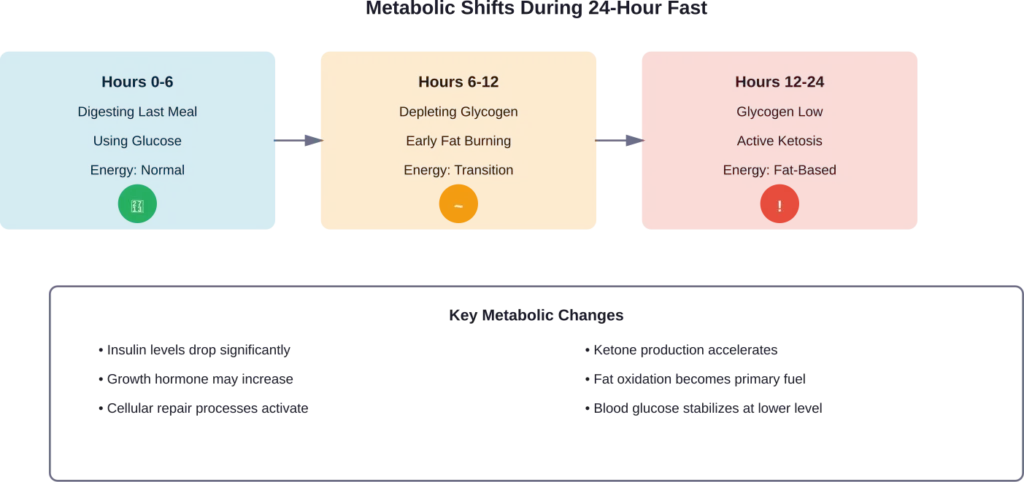
Hours 0-6: Digestion and Glucose Utilization
During the first six hours after eating, your body continues digesting your last meal. The digestive system breaks down food into glucose, which enters the bloodstream and provides immediate energy for cellular functions.
Your body operates normally during this phase, using readily available glucose without tapping into reserves. This is standard post-meal metabolism.
Hours 6-24: Glycogen Depletion and Fat Burning Begins
Once glucose from your last meal is depleted, your body shifts to stored energy sources. The liver contains glycogen—chains of polymerized glucose that serve as the body’s first backup energy reserve.
According to the NCBI Bookshelf on fasting physiology, the liver plays the greatest role in maintaining blood glucose during the first 24 hours of a fast. After fasting for around 24 hours, glycogen stores become significantly depleted.
As glycogen runs low, the body increasingly relies on stored fat for energy. This process, called lipolysis, breaks down fatty acids which the liver converts into ketone bodies—an alternative fuel source that the brain and other organs can use when glucose is scarce.
Research in the journal Nutrients found that even among trained athletes, 24-hour fasting resulted in measurable changes in metabolic parameters, though the body maintained the ability to perform physical tasks.
Is 24-Hour Fasting Safe? Understanding the Eat-Stop-Eat Approach
The eat-stop-eat method involves fasting for a full 24 hours once or twice per week, consuming only calorie-free beverages like water, black coffee, or tea during the fasting window. When the 24-hour period ends, eating resumes normally.
According to the NIH, this approach represents one form of intermittent fasting that has been studied for its effects on weight management and metabolic health.
Who Should Consider It
Generally speaking, healthy adults with no underlying medical conditions may safely practice occasional 24-hour fasts. However, this approach isn’t suitable for everyone.
Who Should Avoid Extended Fasting
Certain populations face increased risks from prolonged fasting periods:
- Pregnant or breastfeeding individuals
- Children and adolescents
- People with diabetes or blood sugar regulation issues
- Those with a history of eating disorders
- Individuals taking medications that require food intake
- People with chronic health conditions without medical supervision
The CDC emphasizes that any significant dietary change should align with individual health status and goals, ideally with guidance from healthcare providers.
Potential Benefits of Not Eating for a Day
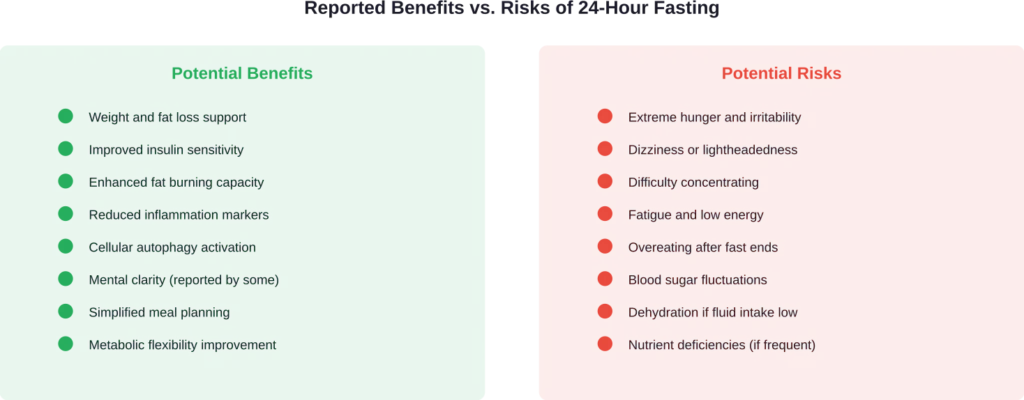
Research compiled in systematic reviews shows that intermittent fasting protocols, including 24-hour fasts, may offer several health benefits when practiced appropriately.
Weight and Fat Loss
One study cited in PMC found that overweight adults practicing alternate-day fasting (consuming only 20% of normal calories on fasting days) lost 8% of their initial body weight over the study period. The caloric deficit created by skipping an entire day of eating can contribute to weight loss over time.
But here’s the thing—weight loss only occurs if total weekly caloric intake decreases. Some people compensate by eating significantly more on non-fasting days, which can negate the caloric deficit.
Metabolic Health Improvements
According to NIH research, fasting periods may improve several metabolic markers:
| Metabolic Marker | Observed Effect | Mechanism |
|---|---|---|
| Insulin Sensitivity | May improve | Lower insulin levels during fasting enhance cellular insulin response |
| Blood Pressure | May decrease | Reduced oxidative stress and inflammation |
| Inflammatory Markers | May reduce | Cellular repair processes activated during fasting |
| Cholesterol Levels | Mixed results | Effects vary based on diet quality during eating periods |
A narrative review in the Journal of Yeungnam Medical Science noted that intermittent fasting, including protocols with extended fasting windows, showed promise for improving various health indicators related to metabolic syndrome.
Cellular Health and Autophagy
Extended fasting periods may trigger autophagy—a cellular cleanup process where cells break down and recycle damaged components. This process is believed to contribute to cellular health and longevity, though most autophagy research comes from animal studies.
Side Effects and Risks to Consider
While many healthy adults tolerate occasional 24-hour fasts, side effects can occur, particularly when first adapting to this eating pattern.
Common Side Effects
Research and clinical observations note these frequent experiences:
- Intense hunger, especially during typical meal times
- Irritability and mood changes (sometimes called “being hangry”)
- Difficulty concentrating or brain fog
- Fatigue and reduced energy for physical activities
- Headaches, particularly if caffeine intake is disrupted
- Dizziness or feeling faint when standing quickly
According to NIH research, studies have found that people who regularly fast more than 16 or 18 hours a day have a higher risk of certain health issues like gallstones.
The Overeating Risk
Here’s where things get tricky. Arriving at a meal ravenously hungry after 24 hours without food can lead to poor food choices and excessive portion sizes. If this pattern repeats, it can undermine weight loss goals and create an unhealthy relationship with food.
Community discussions among those who’ve tried extended fasting often mention this challenge—the difficulty of eating normally rather than binging after a long fast.
The Role of Hydration During Fasting
Drinking adequate fluids remains crucial during a 24-hour fast. Water, herbal tea, and black coffee are typically allowed and help manage hunger while preventing dehydration.
The body loses water through breathing, sweating, and urination even without food intake. Since many foods contain water, not eating eliminates this hydration source, making intentional fluid consumption essential.
Dehydration can worsen common fasting side effects like headaches, dizziness, and fatigue.
Different Types of Intermittent Fasting Compared
The 24-hour fast represents just one approach among several intermittent fasting protocols. Understanding the alternatives helps determine which method might work best for different goals and lifestyles.
| Fasting Method | Description | Fasting Duration | Best For |
|---|---|---|---|
| Eat-Stop-Eat | Complete 24-hour fast once or twice weekly | 24 hours | Experienced fasters seeking significant caloric reduction |
| 16:8 (Time-Restricted) | Daily 16-hour fast with 8-hour eating window | 16 hours | Beginners wanting daily routine consistency |
| 5:2 Diet | Normal eating 5 days, restricted calories (500-600) for 2 days | Partial restriction | Those preferring flexibility over complete fasting |
| Alternate-Day Fasting | Alternating between fasting days and normal eating days | 24-36 hours | Advanced practitioners seeking aggressive approach |
| OMAD (One Meal a Day) | Eating all daily calories in a single meal | 23 hours | Those who prefer simplicity and one large meal |
According to Mayo Clinic information, time-restricted eating with fasts of 6 to 8 hours is most common among beginners, while longer fasting windows of 16 hours or more represent more advanced protocols.
Making 24-Hour Fasting Work: Practical Considerations
For those who decide to try occasional 24-hour fasts, certain strategies can improve the experience and reduce negative side effects.
Timing Your Fast
Many people find it easier to fast from dinner to dinner rather than breakfast to breakfast. Eating dinner, then sleeping through the night, counts as several hours of fasting without conscious effort. The remaining hours require managing hunger during waking time.
Breaking the Fast Properly
The meal that breaks a 24-hour fast matters. Starting with easily digestible foods like fruits, vegetables, and moderate portions helps the digestive system readjust. Heavy, greasy, or extremely large meals can cause digestive discomfort.
Frequency Matters
Practicing 24-hour fasts once or twice per week differs significantly from daily extended fasting. The occasional fast creates caloric deficits without the chronic stress of constant food restriction.
Listen to Your Body
If dizziness becomes severe, confusion sets in, or you feel unwell beyond normal hunger, break the fast. Pushing through serious warning signs can be dangerous, particularly for those with underlying health conditions.
Does It Actually Work for Weight Loss?
The effectiveness of 24-hour fasting for weight loss depends on total caloric intake across the week, not just the fasting day itself.
If someone fasts for 24 hours (creating a deficit of roughly 2,000 calories) but then overeats on non-fasting days, net weight loss may not occur. Conversely, if the fasting day creates a deficit that isn’t completely compensated on eating days, weight loss will follow.
Research suggests that intermittent fasting protocols produce weight loss, with some studies showing weight loss of approximately 8% of body weight. The advantage lies in the eating pattern fitting certain lifestyles better than constant daily restriction.
But wait. Not everyone responds the same way. Individual factors like baseline metabolism, activity level, hormone balance, and adherence significantly influence outcomes.
Frequently Asked Questions
Light to moderate exercise is generally safe during fasting, though energy levels may be lower than usual. Research in a pilot study of female CrossFit athletes found they could maintain performance during 24-hour fasts, though individual tolerance varies. High-intensity workouts may feel more challenging without recent food intake, and some people experience dizziness during vigorous activity while fasting.
A single 24-hour fast doesn’t significantly slow metabolism. Metabolic adaptation that reduces calorie burning typically occurs after prolonged caloric restriction over weeks or months, not from occasional fasting. Some research suggests short-term fasting may actually slightly increase metabolic rate as the body releases hormones like norepinephrine to mobilize stored energy.
Water, black coffee, unsweetened tea, and other calorie-free beverages are typically allowed and encouraged during 24-hour fasting. These drinks help maintain hydration, manage hunger, and provide a routine during eating times. Adding cream, sugar, or other calories to beverages breaks the fast and interrupts the metabolic state you’re trying to achieve.
Most research on the eat-stop-eat approach involves fasting once or twice per week, which appears safe for healthy adults. Fasting more frequently increases the risk of nutrient deficiencies, excessive caloric restriction, and negative effects on hormone balance, particularly for women. Always consult healthcare providers before establishing any regular fasting routine.
Muscle loss from a single 24-hour fast is minimal. The body preferentially burns fat for fuel during short-term fasting while preserving muscle tissue. However, frequent extended fasting without adequate protein intake on eating days, combined with no resistance training, could contribute to muscle loss over time. Maintaining protein intake and strength training on non-fasting days helps preserve muscle mass.
Autophagy—the cellular cleanup process—does increase during fasting periods, with more pronounced effects as fasting extends beyond 24 hours. While animal research strongly supports autophagy’s health benefits, human research is still emerging. A 24-hour fast likely triggers some autophagy, though optimal duration for maximizing this effect in humans isn’t definitively established.
People with diabetes should not attempt 24-hour fasting without medical supervision. Extended fasting significantly affects blood sugar levels and insulin requirements, creating risks of hypoglycemia (dangerously low blood sugar) or hyperglycemia (dangerously high blood sugar). Anyone taking diabetes medications must work with healthcare providers to adjust medication timing and dosing if attempting any fasting protocol.
The Bottom Line
Not eating for a day triggers a metabolic shift from glucose-based energy to fat burning through ketone production. This 24-hour fasting approach may offer benefits including weight loss, improved insulin sensitivity, and enhanced metabolic flexibility for healthy adults who practice it occasionally.
However, side effects like hunger, irritability, fatigue, and dizziness are common, particularly when starting out. The approach isn’t suitable for everyone, especially pregnant individuals, children, those with certain medical conditions, or people with histories of disordered eating.
The effectiveness for weight loss depends on total weekly caloric intake rather than the fasting period alone. If this eating pattern helps create a sustainable caloric deficit without triggering compensatory overeating, it can support weight management goals.
Before attempting 24-hour fasting or any significant dietary change, consult with healthcare providers to ensure the approach aligns with your individual health status, goals, and medical needs. What works for one person’s body and lifestyle may not work for another’s.