
Quick Summary: Ignoring a parking ticket triggers escalating consequences including late fees, vehicle booting, registration holds, and potential collections. Penalties vary by jurisdiction but typically start with fines doubling and can progress to your car being immobilized or towed after multiple unpaid tickets.
That sinking feeling when you spot a parking ticket tucked under your windshield wiper—it’s universal. The temptation to ignore it and hope it goes away? Also universal.
But here’s the thing: parking tickets don’t disappear. They multiply.
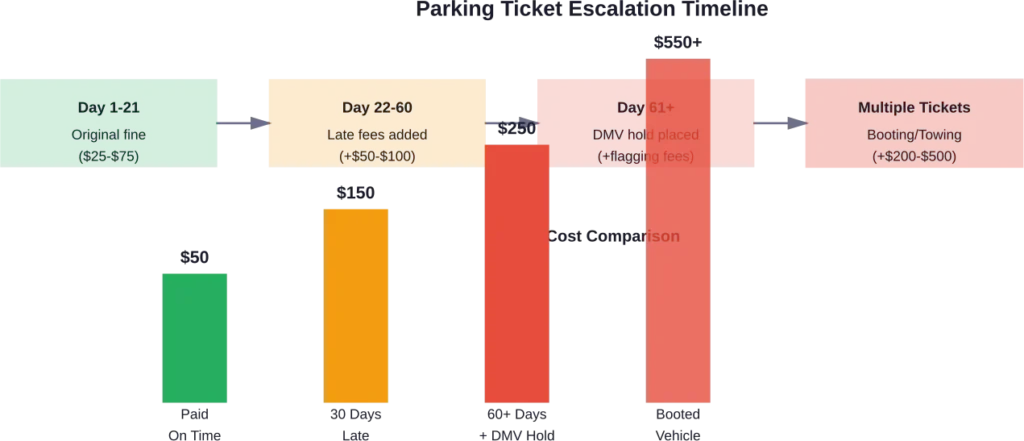
What starts as a $25 violation can snowball into hundreds of dollars in fees, a booted vehicle, or even a suspended registration. The consequences depend on where you received the ticket and how long you wait, but the trajectory is always the same—things get worse, not better.
The Immediate Consequences: Late Fees and Penalties
The first consequence hits fast. Most jurisdictions add late fees if you don’t pay within 21-30 days of the citation date.
According to the Contra Costa Superior Court, failure to clear a citation by the due date results in increased bail and/or a civil assessment fee up to $100. That $35 parking ticket? It just became $135.
Some cities structure penalties in stages. The original fine might double after 30 days, then accumulate additional administrative fees at 60 and 90 days. In many California jurisdictions, the DMV’s lien for parking violations expires three years from the date fees first became due, but that doesn’t mean the debt vanishes—it means enforcement actions accelerate.
Vehicle Booting: When Your Car Gets Locked Down
Now this is where it gets expensive and inconvenient.
Vehicle booting—attaching a mechanical device to your wheel that prevents driving—happens when unpaid tickets reach specific thresholds. In New York City, your vehicle can be booted if you owe $350 or more in parking or camera violation tickets that are in judgment.
The boot won’t come off until you pay. In San Francisco, boot-removal fees can be as high as $465, plus all outstanding ticket amounts. NYC requires payment of all outstanding judgment debt plus fees, which you can handle through their online system at www.nycbootpay.com or by calling Republic Immobilization Services at (646) 517-1000.
Some jurisdictions now use “Barnacles”—16-pound orange devices attached to windshields that prevent practical vehicle operation. Same concept, different method.
Registration Holds: Stuck at the DMV
Here’s where unpaid tickets really interfere with daily life.
According to California DMV regulations, registration renewal cannot be completed for a vehicle if the owner or lessee has unpaid parking or toll violations on record. All violations shown on the record must be cleared by the issuing agency or paid with the renewal fees before the renewal can be completed.
In Pennsylvania, if you are issued six or more tickets or citations from the Philadelphia Parking Authority and have failed to pay or defaulted in payment, your registration will be indefinitely suspended upon notification from Philadelphia Parking Authority. An additional suspension gets imposed if more parking tickets accumulate while the first suspension remains active.
The DC DMV implements similar policies—unpaid or unanswered parking and photo enforcement tickets can result in vehicle immobilization, and vehicles may be booted with just two or more outstanding tickets.
Collections and Credit Impact
Parking tickets can eventually hit your credit report, though the path varies by jurisdiction.
When tickets remain unpaid long enough, municipalities often send them to collections agencies. Once in collections, these debts can appear on credit reports and damage credit scores. Some jurisdictions have specific timeframes—California Vehicle Code §9800 allows three years from the date the fee(s) first became due for DMV’s lien for parking violations unless the lien is perfected through specific legal processes.
Real talk: most parking tickets won’t immediately tank your credit. But let them accumulate into judgments or collections, and the impact becomes real.
Payment Plans and Financial Hardship Options
Can’t afford to pay the full amount? Many jurisdictions offer alternatives.
NYC’s Department of Finance provides payment plans for parking and camera violation judgment debt. For judgment debt of $50 to $500, a minimum down payment of 50% is required with the remaining balance due in 30 days. For judgment debt of more than $500, a minimum down payment of 50% is required with a payment plan length of no more than 12 months, with a minimum monthly payment of $50.
California courts offer ability-to-pay determinations for traffic tickets. Courts may lower fines, provide more time to pay, set up payment plans, or allow community service instead of payment based on financial circumstances.
| Jurisdiction | Booting Threshold | Boot Removal Fee | Registration Hold |
|---|---|---|---|
| New York City | $350+ in judgment | Varies by violation total | After multiple unpaid |
| San Francisco | 5+ unpaid tickets | Up to $465 | Yes, at renewal |
| Washington DC | 2+ outstanding tickets | Payment of all violations | Yes, registration blocked |
| Philadelphia | 6+ unpaid citations | Varies | Indefinite suspension |
What to Do If You Have Unpaid Tickets
The best move? Handle it immediately.
Contact the issuing agency listed on the citation. Many jurisdictions offer online payment portals that show all outstanding violations. In California, when ownership transfers occur, parking violations on file prior to the transfer date are removed from the vehicle record—but that doesn’t help the original owner who still owes the debt.
If tickets seem erroneous, contest them quickly. California DMV procedures note that customers claiming citations aren’t theirs should contact the issuing agency directly. Documentation proving the vehicle was elsewhere or that citation details are incorrect can lead to dismissal.
Payment plans exist for those facing financial hardship. Don’t wait until enforcement actions begin—proactive contact with the collections unit often yields better outcomes than reactive scrambling after a boot appears.
Frequently Asked Questions
Generally speaking, parking tickets alone don’t result in arrest warrants. Parking violations are civil matters, not criminal. However, ignoring court summons related to unpaid tickets can potentially lead to contempt charges in some jurisdictions.
No. Parking violations don’t appear on driving records and don’t affect insurance premiums. Insurance companies base rates on moving violations and accidents, not parking infractions.
Most jurisdictions provide 21-30 days from the citation date to pay the original fine. After that window, late fees and penalties begin accumulating. Specific timeframes appear on the citation itself.
In California, parking violations on file prior to the transfer date are removed from the vehicle record when registered owner transfer occurs. However, the original owner remains legally responsible for paying those violations—they don’t disappear.
Some jurisdictions allow for reduced fines through ability-to-pay determinations or early payment discounts. Contesting tickets with valid evidence of errors can also result in dismissal. Negotiation options vary significantly by municipality.
Unpaid tickets typically affect vehicle registration, not driver’s license renewal. However, accumulated violations can lead to registration holds that prevent renewing vehicle registration until violations are cleared.
Most jurisdictions require proof of notification. Citations are typically photographed on the vehicle. If genuinely unaware of a ticket, contact the issuing agency immediately with documentation. Some areas allow appeals based on lack of proper notification.
The Bottom Line
Parking tickets seem minor until they’re not. That $35 citation becomes $500 in fines, fees, and boot removal costs faster than most people expect.
The consequences are real: late fees, registration holds, vehicle booting, and potential collections. But they’re also avoidable. Pay promptly, contest legitimate errors, and explore payment plans if finances are tight.
Check your local jurisdiction’s parking violation portal today if you have outstanding tickets. The longer you wait, the more expensive resolution becomes.