
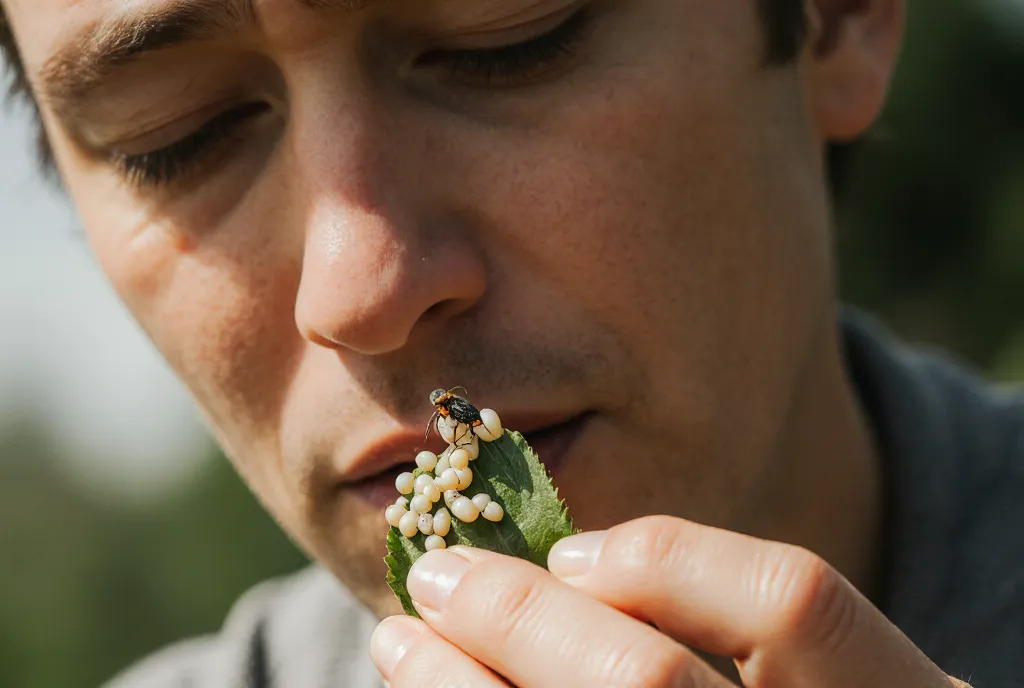
Quick Summary: Eating fly eggs accidentally is usually harmless because stomach acid kills most larvae before they develop. However, consuming large quantities of eggs or larvae from contaminated food can lead to bacterial poisoning or intestinal myiasis, a rare condition where larvae survive in the digestive tract. Most people experience no symptoms, but severe cases may cause abdominal pain, nausea, or diarrhea.
Finding a fly buzzing around your food is annoying. But what’s worse? Realizing you might’ve already eaten something that had fly eggs on it.
It happens more often than people think. Fruit flies lay eggs on produce. House flies contaminate leftovers. And before you know it, you’ve taken a bite of something that wasn’t exactly fly-free.
So what actually happens inside your body when you eat fly eggs? Is it dangerous, or is your stomach acid strong enough to handle it? Here’s what the science says.
What Are Fly Eggs and Where Do They Come From?
Flies are prolific breeders. An adult female housefly can lay up to 130 eggs at a time, usually depositing them on decaying organic matter, garbage, or food left exposed.
Fruit flies are even more persistent. These tiny insects can lay up to 500 eggs at once, typically on overripe or fermenting fruits and vegetables.
The eggs are microscopic—barely visible to the naked eye. They’re white or cream-colored and hatch into larvae (maggots) within 24 hours under the right conditions. That’s why a bowl of fruit left on the counter can suddenly seem infested overnight.
Common Fly Species That Contaminate Food
Not all flies pose the same risk. Here are the most common culprits:
| Fly Species | Where They Lay Eggs | Hatching Time |
|---|---|---|
| House fly (Musca domestica) | Garbage, feces, decaying food | 12-24 hours |
| Fruit fly (Drosophila) | Overripe fruit, fermenting liquids | 24-30 hours |
| Blow fly (Calliphoridae) | Meat, animal carcasses | 6-48 hours |
| Flesh fly (Sarcophagidae) | Meat, wounds, feces | Larvae deposited live |
What Happens When You Eat Fly Eggs?
Most of the time? Nothing.
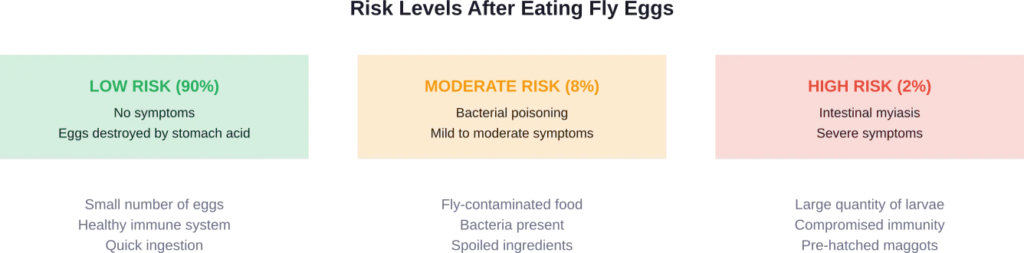
Your stomach is an incredibly hostile environment for foreign organisms. Gastric acid has a pH between 1.5 and 3.5, strong enough to break down proteins and kill most bacteria, parasites, and insect eggs.
When you accidentally consume a small number of fly eggs, they’re typically digested before they can hatch or cause harm. The eggs get destroyed by stomach acid, and you’ll never know they were there.
But here’s where it gets complicated. If you consume a large number of eggs or if the larvae have already hatched before ingestion, different outcomes become possible.
Scenario 1: No Symptoms at All
This is the most common outcome. Over 50 fly species have been reported to cause human myiasis, but actual cases remain rare given how often people accidentally consume fly eggs.
Most people who accidentally consume a small number of fly eggs experience no symptoms. Your immune system and digestive tract handle the intrusion without incident.
Scenario 2: Bacterial Poisoning
The bigger risk isn’t the eggs themselves—it’s the bacteria flies carry.
Flies land on garbage, feces, and rotting material. They pick up pathogens like Salmonella and E. coli, then transfer these bacteria to your food when they land or lay eggs.
Salmonella is one of the most common causes of foodborne illness. According to the FDA, symptoms typically appear within 12 to 72 hours after consuming contaminated food and include diarrhea, fever, and abdominal cramps. Illness usually lasts four to seven days.
E. coli infections can range from mild gastroenteritis to severe complications, particularly in children, elderly individuals, and those with weakened immune systems.

Scenario 3: Intestinal Myiasis
This is where things get unusual. Intestinal myiasis occurs when fly larvae survive in your digestive tract and continue developing there.
According to the CDC’s documentation on intestinal myiasis cases, this condition is recognized as pseudomyiasis or accidental myiasis. It happens when dipteran fly larvae are transmitted through contaminated food or water.
Research published in medical case reports describes intestinal myiasis patients experiencing abdominal pain, nausea, vomiting, and sometimes observing live larvae in their stool. One documented case involved a 12-month-old child whose mother observed “moving worms” in the child’s stool, though the child remained otherwise asymptomatic.
But here’s the thing: intestinal myiasis is extremely rare. Most larvae can’t survive stomach acid long enough to establish themselves in the intestines.
Of 28 cases reported in 1963, M. stabulans was responsible for 4 (14%), one of the flies capable of causing intestinal myiasis. The condition primarily affects immunocompromised individuals or those with underlying digestive conditions.
Symptoms to Watch For
If you’ve eaten contaminated food, watch for these warning signs within the next 72 hours:
- Abdominal cramps or pain
- Nausea and vomiting
- Diarrhea (sometimes bloody)
- Fever or chills
- Loss of appetite
- Bloating or abdominal distention
- Visible larvae in stool (rare but possible)
Most symptoms resolve within 4-7 days without medical intervention. However, severe dehydration from diarrhea or high fever requires medical attention.
When Should You See a Doctor?
Seek medical care if you experience:
- Severe abdominal pain that doesn’t improve
- High fever (above 101.5°F or 38.6°C)
- Bloody diarrhea lasting more than 24 hours
- Signs of dehydration (dizziness, decreased urination, extreme thirst)
- Symptoms lasting longer than a week
- Visible larvae in your stool
Children under five, pregnant women, elderly individuals, and those with weakened immune systems should seek medical evaluation sooner, as they’re at higher risk for complications.
How to Prevent Eating Fly Eggs
Prevention is straightforward. Flies need access to your food to lay eggs, so limiting their exposure is key.
Store Food Properly
Refrigerate perishable items immediately. Flies won’t lay eggs on cold food, and refrigeration slows bacterial growth.
Keep fruits and vegetables in sealed containers or the refrigerator, especially once they’re cut or peeled.
Clean Up Promptly
Don’t leave food sitting out. That bowl of fruit on the counter? It’s a fly magnet after a few hours.
Wipe down surfaces where food has been prepared. Crumbs and spills attract flies looking for places to lay eggs.
Use Physical Barriers
Window and door screens prevent flies from entering your home. According to the WHO, screens significantly reduce household exposure to disease-carrying insects.
Food covers and mesh domes protect dishes during outdoor meals or buffets.
Manage Waste Effectively
Take out garbage regularly. Flies breed in trash bins, especially those containing food waste.
Keep compost bins sealed and located away from living areas. Fruit flies and house flies thrive in decomposing organic matter.
Should You Throw Away Food After a Fly Lands on It?
It depends on the situation.
If a fly briefly lands on solid food and you immediately remove it, the risk is minimal. A quick rinse or removal of the affected portion is usually sufficient.
But if flies have been buzzing around food for hours, or if you see signs of eggs (tiny white specks) or larvae, throw it away. The bacterial contamination risk outweighs any waste concerns.
For fruit flies specifically, wash produce thoroughly under running water. Soaking fruit in a vinegar solution (1 part vinegar to 3 parts water) for a few minutes can help remove eggs from the surface.
Frequently Asked Questions
Yes, stomach acid is highly effective at killing fly eggs. The pH level of gastric acid (1.5-3.5) destroys most fly eggs before they can develop into larvae. This is why most people who accidentally consume fly eggs experience no symptoms.
House fly eggs typically hatch within 12-24 hours under optimal conditions. Fruit fly eggs typically hatch within 24-30 hours under optimal conditions. Temperature and humidity affect hatching time—warmer conditions accelerate development.
Intestinal myiasis can cause abdominal pain, cramping, nausea, and diarrhea. Some patients report a sensation of movement in their abdomen. In documented cases, live larvae may be visible in stool. However, many cases are asymptomatic, discovered only when larvae are passed.
Fruit fly eggs themselves aren’t directly toxic, but fruit flies can carry bacteria from rotting organic matter. The FDA acknowledges that some level of natural defects in food, including insect fragments, is unavoidable and presents no health hazard at minimal levels.
Discard the food immediately. Don’t try to remove the maggots and eat the rest—bacteria from the flies have likely contaminated the entire item. Clean the storage area thoroughly to prevent re-infestation.
Allergic reactions to fly eggs are rare but possible. Some individuals may experience allergic responses to proteins in fly saliva or larvae. Symptoms might include hives, itching, or gastrointestinal distress beyond typical food poisoning.
Bacterial food poisoning symptoms typically appear 12-72 hours after consuming contaminated food. Most symptoms develop within 24 hours and last 4-7 days. If larvae survive to cause intestinal myiasis, symptoms may take several days to manifest.
The Bottom Line
Eating fly eggs isn’t ideal, but it’s rarely dangerous for healthy adults.
Your digestive system handles the occasional accidental ingestion without issue. The greater concern is bacterial contamination from the flies themselves, which can cause food poisoning with uncomfortable but usually self-limiting symptoms.
Intestinal myiasis remains exceptionally rare and primarily affects vulnerable populations. Standard food safety practices—proper storage, prompt cleanup, and physical barriers against flies—prevent virtually all risks associated with fly contamination.
If you’ve eaten something that may have had fly eggs and feel fine, you’re probably fine. But if symptoms develop or worsen, especially severe abdominal pain or bloody diarrhea, don’t hesitate to seek medical attention.
When in doubt, throw it out. No meal is worth risking foodborne illness.