

Quick Summary: Eating small amounts of paper is generally not toxic and typically passes through the digestive system without harm. However, regular paper consumption can cause choking, intestinal blockages, or indicate an underlying condition called pica (specifically xylophagia). If you accidentally swallow paper, monitor for symptoms like abdominal pain or difficulty breathing.
Finding a tiny piece of paper in your mouth happens more often than you’d think. Maybe you absentmindedly chewed on a napkin corner, or a toddler got their hands on a magazine page. The immediate question: is this dangerous?
According to the Missouri Poison Center, eating small amounts of paper usually is not toxic. But there’s more to the story than that simple answer.
Is Paper Actually Edible?
Here’s the thing—paper is technically made from wood pulp, which is cellulose. Humans can’t digest cellulose because our bodies lack the necessary enzymes to break it down.
So while paper isn’t poisonous or chemically toxic in most cases, it’s not food either. It contains no nutritional value. Your digestive system will treat it like indigestible fiber, meaning it should pass through relatively unchanged.
That said, not all paper is created equal. Plain paper like napkins or printer paper differs significantly from treated papers.
What Happens When You Swallow Paper
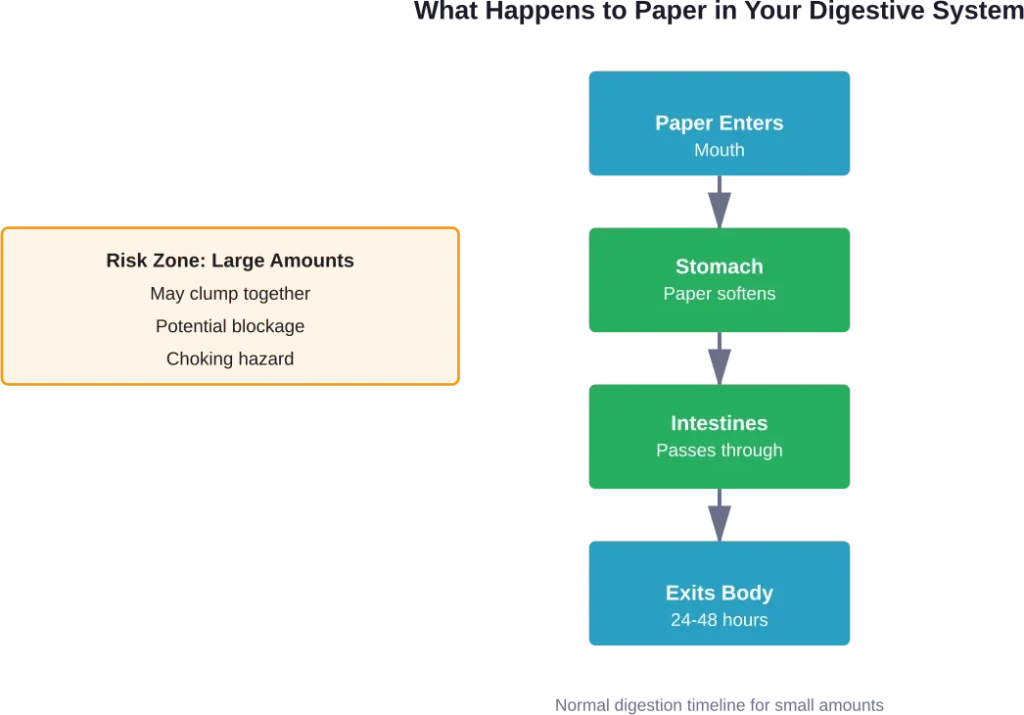
When paper enters your digestive system, it follows the same path as food—down the esophagus, into the stomach, through the intestines, and eventually out.
For small pieces, this journey typically completes without incident. The paper softens from moisture and moves through your system within 24 to 48 hours.
But larger amounts or pieces can create problems. The paper can clump together, potentially forming a mass that blocks the intestines. According to CDC data on foreign object ingestion, serious morbidity from swallowing non-food items occurs in less than 1% of ED cases, though complications can be severe when they do happen.
Potential Health Risks of Eating Paper
While accidental consumption of a small piece won’t harm you, there are legitimate concerns with repeated or large-quantity paper consumption.
Choking Hazard
Paper can stick to the throat or airways, especially in children. This represents the most immediate danger when someone puts paper in their mouth.
Intestinal Blockage
Large amounts of paper can accumulate and create an obstruction in the digestive tract. This requires medical intervention and, in severe cases, surgery to remove.
Chemical Exposure
Not all paper is plain. Printed papers contain inks, glossy magazines have coatings, and some papers undergo chemical bleaching. These additives can introduce toxins into your system.
Newspapers, for instance, may contain lead-based inks or other chemicals that pose health risks when ingested regularly.
Nutritional Deficiencies
If someone regularly eats paper instead of nutritious food, they’ll develop deficiencies. The behavior often correlates with existing deficiencies—particularly iron and zinc—that may drive the unusual cravings in the first place.
Xylophagia: When Paper Eating Becomes a Condition
Xylophagia is the medical term for compulsive paper consumption. It’s a specific form of pica, an eating disorder characterized by craving non-food substances.
Research published in medical journals describes xylophagia as a condition that has been documented for centuries. According to studies available through the National Institutes of Health, pica has been linked to iron deficiency, zinc deficiency, and conditions like mental retardation and schizophrenia.
The condition affects people across demographics—men and women of all ages and backgrounds. It’s not just a childhood phase; adults can develop xylophagia too.
Real talk: if someone craves paper regularly, it’s worth investigating underlying nutritional deficiencies or psychological factors with a healthcare provider.
| Type of Paper | Risk Level | Primary Concerns |
|---|---|---|
| Plain printer paper | Low | Choking, blockage if large amounts |
| Napkins, tissues | Low | Generally passes through safely |
| Newspaper | Moderate | Ink chemicals, lead exposure |
| Glossy magazines | Moderate to High | Chemical coatings, heavy inks |
| Cardboard | Moderate | Harder to digest, blockage risk |
| Thermal receipts | High | BPA and other hormone disruptors |
What to Do If You Accidentally Eat Paper
According to guidance from poison control centers, the recommended steps are straightforward.
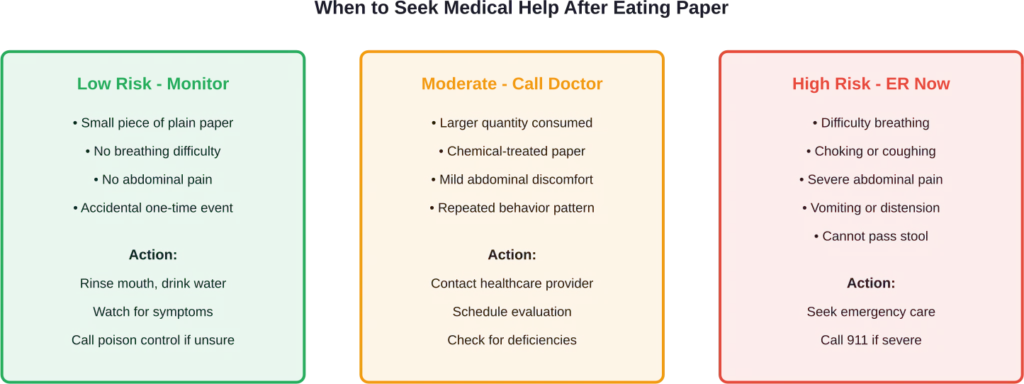
First, wipe or rinse out the mouth to remove any remaining pieces. Give the person a serving of water to drink, which helps move the paper through the digestive system.
Monitor for symptoms. Most people won’t experience any issues, but watch for signs of trouble like difficulty breathing, persistent coughing, abdominal pain, vomiting, or inability to pass stool.
The Missouri Poison Center notes that choking represents the primary immediate concern. If breathing difficulties occur, seek emergency help immediately.
For non-emergency questions about accidental ingestion, poison control hotlines (like 1-800-222-1222 in the United States) provide free, expert guidance.
When Paper Eating Requires Medical Attention
Most accidental paper consumption doesn’t warrant a doctor’s visit. But certain situations do.
Seek medical care if the person experiences persistent abdominal pain or distension, vomiting, inability to have bowel movements, signs of choking, or if they consumed paper with visible chemicals, inks, or coatings.
According to CDC data, foreign object ingestion resulted in approximately 80,000 ED visits in 2010, with the vast majority occurring in children. While serious complications are rare, they can include perforations of the gastrointestinal tract.
For those with repeated paper-eating behaviors, a medical evaluation can identify underlying causes. Blood tests can reveal nutritional deficiencies, and psychological assessment can diagnose pica or related conditions.
Frequently Asked Questions
Eating paper is extremely unlikely to be fatal. The primary life-threatening risk is choking if paper blocks the airway. Intestinal blockages from large amounts could theoretically become dangerous if untreated, but death from paper consumption itself is exceptionally rare.
Young children commonly put non-food items in their mouths as they explore their environment. Occasional paper-tasting is developmentally normal for babies and toddlers. However, persistent paper-eating beyond exploratory behavior warrants discussion with a pediatrician to rule out pica or nutritional deficiencies.
Regular paper consumption can lead to nutritional deficiencies since paper provides no vitamins, minerals, or calories. It may indicate pica, often associated with iron or zinc deficiency. Chronic consumption also increases risks of intestinal blockages and exposure to chemicals from inks and paper treatments.
Paper doesn’t dissolve in stomach acid the way food does. It may soften and break apart somewhat, but the cellulose fibers remain largely intact. The digestive system can’t break down cellulose, so paper passes through relatively unchanged and exits with waste.
Plain, unbleached paper like napkins or printer paper poses fewer risks than treated papers. Glossy magazines, newspapers with colored inks, thermal receipts containing BPA, and chemically-treated papers carry higher risks due to toxic additives. However, no paper is nutritionally beneficial or recommended for consumption.
Eating small amounts of notebook paper typically won’t make you sick. The main risks are choking and potential intestinal blockage with larger quantities. Some notebook paper contains chemicals from bleaching or ink that could cause stomach upset, but serious illness from accidentally consuming a bit of notebook paper is unlikely.
Paper generally takes the same time as food to move through the digestive tract—typically 24 to 48 hours from consumption to elimination. The timeline can vary based on individual digestive speed, hydration levels, and the amount of paper consumed.
The Bottom Line
Accidentally swallowing a small piece of paper isn’t a medical emergency for most people. The body treats it as indigestible fiber that passes through the system without causing harm.
But context matters. Large amounts, chemical-treated papers, or repeated consumption patterns present genuine health concerns ranging from choking to intestinal blockages to toxic chemical exposure.
If paper-eating becomes a recurring behavior rather than a one-time accident, it’s worth investigating. Underlying nutritional deficiencies or psychological conditions like pica often drive these unusual cravings, and both are treatable with proper medical care.
When in doubt about any ingestion incident, poison control centers offer free expert advice 24/7. For severe symptoms like breathing difficulty or intense abdominal pain, emergency medical care is always the right choice.