
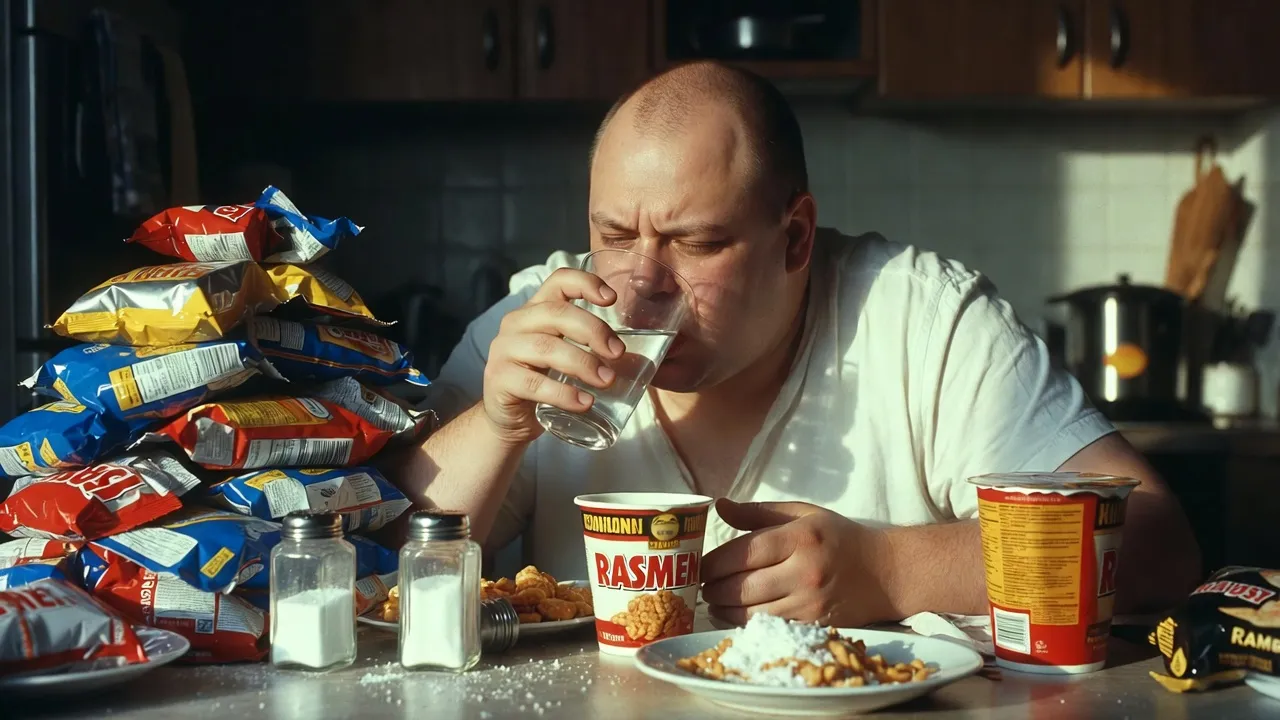
Quick Summary: Eating too much salt raises blood pressure and increases the risk of heart disease and stroke—the leading causes of death globally. Most Americans consume more than 3,300 mg of sodium per day, on average—well above the federal recommendation of less than 2,300 mg daily. Short-term effects include bloating and water retention, while long-term overconsumption can damage the heart, kidneys, and blood vessels.
Salt makes food taste better. No question about it.
But there’s a catch. Most people consume far more sodium than their bodies need, and the health consequences stack up quickly. According to the CDC, eating too much sodium increases blood pressure and the risk for heart disease and stroke—conditions that kill more Americans each year than any other cause.
The body does need some sodium to function properly. Sodium helps conduct nerve impulses, contract muscles, and maintain fluid balance. However, the amount required is small—much smaller than what the average diet provides.
How Much Sodium Is Too Much?
The American Heart Association recommends no more than 2,300 milligrams of sodium per day, with an ideal limit of 1,500 mg for most adults. Yet Americans consume more than 3,300 mg of sodium per day, on average—well above the federal recommendation of less than 2,300 mg daily.
For context, one teaspoon of table salt contains about 2,300 mg of sodium. That’s the entire daily limit in a single teaspoon.
Children need even less sodium based on their age:
| Age Group | Maximum Daily Sodium |
|---|---|
| Under 1 year | Less than 1g |
| 1 to 3 years | 2g (about 0.8 teaspoon) |
| 4 to 6 years | 3g (about 1.2 teaspoons) |
| 7 to 10 years | 5g (about 2 teaspoons) |
| 11 years and over | 6g (about 2.4 teaspoons) |
Here’s the problem: more than 70% of sodium intake comes from processed, packaged, and restaurant foods—not the salt shaker. Bread, breakfast cereals, processed meats, canned goods, and condiments pack hidden sodium that adds up fast.
Short-Term Effects of Eating Too Much Salt
Consuming excess salt doesn’t just affect long-term health. The body reacts immediately.
Water Retention and Bloating
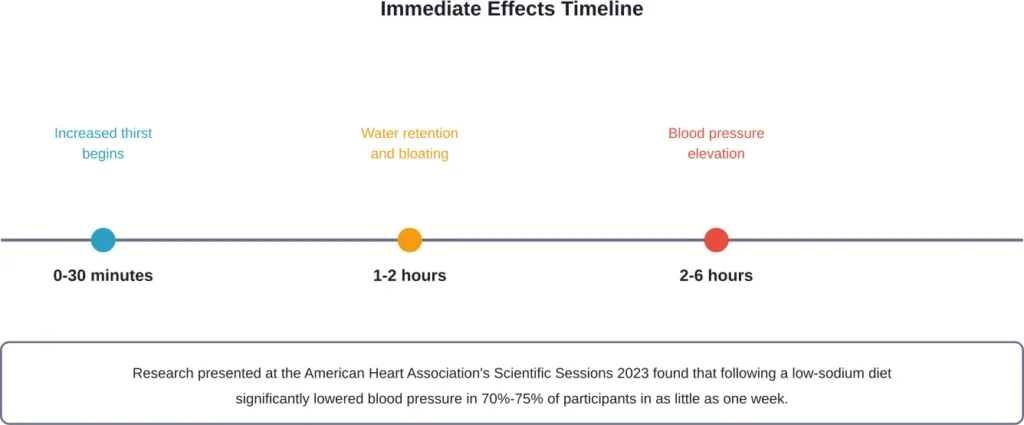
Sodium attracts water. When sodium levels spike in the bloodstream, the body holds onto extra fluid to dilute the concentration. This causes noticeable bloating, puffiness—especially in the face and extremities—and temporary weight gain from water retention.
Increased Thirst
High sodium levels trigger thirst as the body signals the need for more water to restore balance. That’s why salty foods leave people reaching for drinks.
Elevated Blood Pressure
Excess sodium pulls water into blood vessels, increasing the total blood volume. More blood flowing through vessels means higher pressure against vessel walls—similar to turning up water pressure in a garden hose. Research shows that a 4.4 g reduction in daily dietary salt intake decreases blood pressure by about 4.2/2.1 mm Hg.
Hypernatremia
In extreme cases, consuming massive amounts of salt in a short period causes hypernatremia—dangerously high blood sodium levels. Symptoms include confusion, seizures, and loss of consciousness. This condition requires immediate medical attention.
Long-Term Health Risks
Chronic excess sodium intake does serious damage over time.
Heart Disease and Stroke
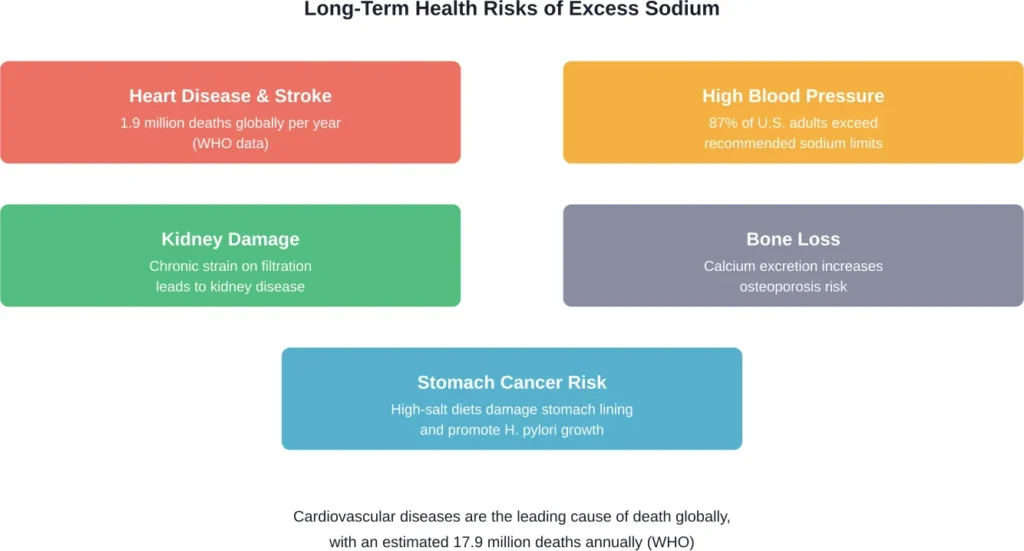
Consistently elevated blood pressure from high sodium intake strains the cardiovascular system. According to the CDC, heart disease and stroke together kill more Americans annually than any other cause. The World Health Organization reports that globally, 1.9 million deaths each year are attributable to high sodium intake.
High blood pressure forces the heart to work harder, thickening heart muscle walls and narrowing arteries. This increases the risk of heart attack, heart failure, and stroke.
Kidney Damage
The kidneys filter excess sodium from blood. Sustained high sodium levels overwork these organs, potentially leading to kidney disease or worsening existing kidney conditions. For individuals with end-stage kidney disease, managing an intricate balance between dietary sodium, medication and dialysis treatment is key to minimizing risk of further harm.
Osteoporosis
Excess sodium causes the body to excrete more calcium through urine. Over years, this calcium loss can weaken bones and increase osteoporosis risk, particularly in older adults.
Stomach Cancer
Research suggests that high-salt diets may increase stomach cancer risk by damaging the stomach lining and promoting the growth of Helicobacter pylori bacteria, which is linked to stomach cancer development.
Where Does All This Sodium Come From?
Table salt is only 40% sodium and 60% chloride, but that’s not where most dietary sodium originates.
The CDC reports that most sodium comes from processed and restaurant foods—not home cooking or the salt shaker. Bread contains approximately 250 mg per 100g. Processed meats like bacon pack around 1,500 mg per 100g. Condiments are even worse: soy sauce contains roughly 7,000 mg per 100g, while bouillon cubes reach 20,000 mg per 100g.
Canned goods, frozen meals, packaged snacks, pizza, sandwiches, and cold cuts all contribute significant hidden sodium. Even foods that don’t taste particularly salty often contain substantial amounts used for preservation and flavor enhancement.
How to Reduce Sodium Intake
Cutting back doesn’t require eliminating salt entirely. Small changes add up.
Read Nutrition Labels
Check sodium content on packaged foods. As a general guide, 5% Daily Value or less per serving is considered low sodium, while 20% or more is high. Look for terms like “sodium-free” (less than 5 mg per serving), “low sodium” (140 mg or less), or “reduced sodium” (at least 25% less than the regular product).
Choose Fresh Over Processed
Whole foods like fresh fruits, vegetables, lean meats, and whole grains naturally contain less sodium than processed alternatives. Cooking from scratch gives complete control over how much salt gets added.
Use Herbs and Spices
Flavor food with garlic, lemon juice, herbs, spices, and vinegar instead of relying on salt. These alternatives enhance taste without adding sodium.
Rinse Canned Foods
Draining and rinsing canned vegetables can reduce sodium content.
Request Low-Sodium at Restaurants
Ask for sauces and dressings on the side, and request that dishes be prepared without added salt. Restaurant meals typically contain far more sodium than home-cooked food.
Frequently Asked Questions
Yes, though it’s rare. Consuming extremely large amounts of salt in a short period can cause fatal hypernatremia. The lethal dose varies by body weight, but cases have been documented. Most salt-related deaths occur from chronic overconsumption leading to heart disease and stroke rather than acute poisoning.
The kidneys typically process and excrete excess sodium within 24-48 hours, assuming normal kidney function and adequate water intake. Drinking water helps flush sodium more quickly. However, the effects on blood pressure may persist longer.
Yes. Drinking water helps dilute sodium concentration in the blood and supports kidney function in filtering and excreting excess sodium. Staying hydrated is one of the quickest ways to counteract short-term sodium overconsumption.
Common signs include persistent thirst, frequent urination, swelling in hands and feet, bloating, headaches, and elevated blood pressure readings. Many people don’t notice symptoms until complications develop, which is why monitoring sodium intake matters.
Not significantly. Sea salt and table salt contain essentially the same amount of sodium by weight. Sea salt may contain trace minerals, but not in amounts that provide meaningful health benefits. Both raise blood pressure equally when consumed in excess.
Salt sensitivity—where blood pressure responds more dramatically to sodium intake—can develop with age, certain medical conditions, or genetic factors. African Americans, older adults, and people with diabetes or kidney disease are more likely to be salt-sensitive.
The body needs a small amount of sodium to work properly for functions including nerve signaling, muscle contraction, and fluid balance. This is far less than what most people consume.
The Bottom Line
Excess sodium intake creates both immediate discomfort and serious long-term health risks. While the body needs sodium to function, most people consume more than double the recommended limit—primarily from processed and restaurant foods rather than the salt shaker.
Reducing sodium doesn’t mean sacrificing flavor. Reading labels, choosing fresh ingredients, and using alternative seasonings can significantly lower intake without compromising taste. Even modest reductions improve blood pressure and decrease cardiovascular disease risk.
Start small. Cut back gradually, and taste preferences will adapt. The heart, kidneys, and blood vessels will thank you for it.