

Quick Summary: Eating raw weed won’t get you high because THC, the psychoactive compound, only activates with heat through decarboxylation. However, eating cannabis edibles that have been heated produces effects that take 30-60 minutes to appear, last longer than smoking, and can be more intense if dosage isn’t carefully managed.
The question of what happens when someone eats weed doesn’t have a simple answer. It depends entirely on whether the cannabis is raw or has been processed with heat.
This distinction matters more than most people realize. The experiences differ dramatically in terms of intensity, timing, and overall effects on the body.
Raw Weed vs. Activated Cannabis: Understanding the Difference
Here’s the thing—eating a raw cannabis bud won’t produce the high associated with smoking or vaping. Sound surprising?
According to the National Institute on Drug Abuse, cannabis contains delta-9-tetrahydrocannabinol (THC), the main psychoactive ingredient. But in raw plant material, THC exists primarily as THCA (tetrahydrocannabinolic acid), an inactive precursor compound.
THCA only becomes psychoactive THC through decarboxylation—a chemical process requiring heat. When cannabis is smoked, vaped, or baked into edibles, heat triggers this conversion. Without heat, the compounds remain inactive.
Research has demonstrated that THCA is unstable even in storage. After 10 days at 77°F (25°C), only 33% of THCA remained in ethanol. Losses occurred even after freezing, showing the compound’s fragile nature.
What Happens When You Eat Raw Cannabis
Eating raw weed won’t make a person feel intoxicated. The absence of decarboxylation means the psychoactive effects simply don’t occur.
That said, consuming raw cannabis isn’t dangerous. The plant material passes through the digestive system like any other vegetable matter. Some people incorporate raw cannabis leaves into smoothies or salads, though the taste can be quite bitter.
Raw cannabis does contain other cannabinoids like cannabidiol (CBD) and cannabigerol (CBG) in their acidic forms. These compounds may have therapeutic properties, though research remains limited.
The main takeaway? Raw weed consumption won’t produce impairment, altered perceptions, or the characteristic marijuana high.
What Happens When You Eat Cannabis Edibles
Now, this is where it gets interesting. Cannabis edibles—products where marijuana has been cooked or processed with heat—produce very different effects than raw plant material.
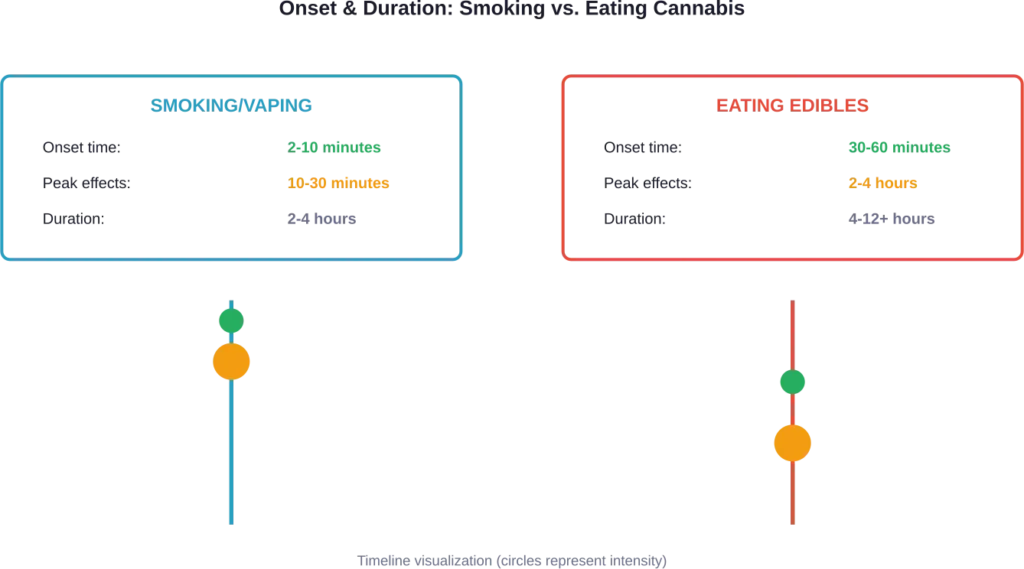
When a person consumes marijuana, according to the National Institute on Drug Abuse, the body absorbs the THC slowly, so the user may not feel the effects for 30-60 minutes, sometimes longer depending on gastric contents and metabolism.
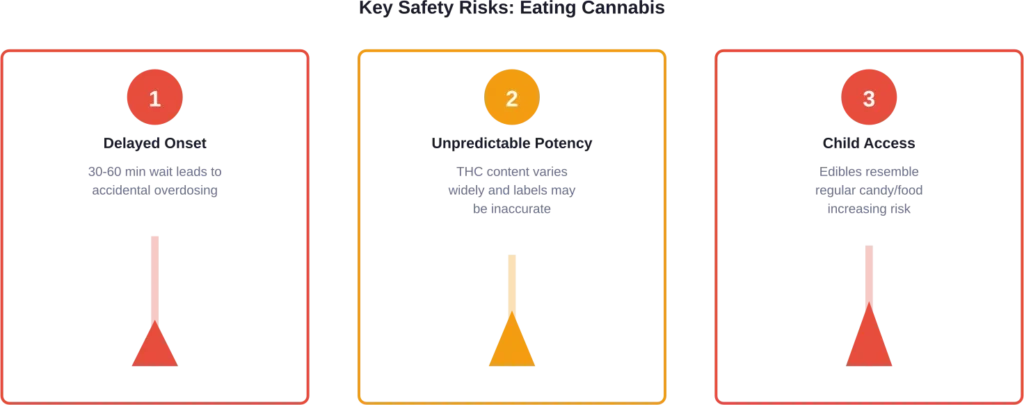
This delayed onset creates a common problem. Someone might take an edible, wait 20 minutes, feel nothing, and decide to take another one. Then they receive twice as much THC as needed and experience overwhelming intoxication.
How Long Do Edible Effects Last?
When cannabis is inhaled, cannabinoids like THC reach peak concentration in 2-10 minutes, declining rapidly for a period of 30 minutes. The entire experience typically lasts 2-4 hours.
Edibles work differently. Depending on dosage, a person can feel effects for 4-12 hours or even longer. The duration of euphoric effects tends to last significantly longer than inhaled marijuana.
This extended timeframe happens because THC must pass through the digestive system and liver before entering the bloodstream. The liver converts THC into 11-hydroxy-THC, a metabolite that’s more potent and longer-lasting than delta-9-THC.
Intensity and Unpredictability
The amount of THC in edibles is difficult to measure and often unknown or inaccurate on product labels. Between 1995 and 2022 the delta-9 THC potency (strength) in illegal cannabis products seized by law enforcement quadrupled from 3.96% to 16.14%. Cannabis flower and concentrates in dispensaries can have THC concentrations of more than 40%.
This variability creates serious safety concerns. Someone unfamiliar with edible pharmacokinetics may ingest multiple doses and become highly intoxicated, requiring emergency assistance.
In a documented case from Colorado in March 2014, a person consumed part of a marijuana cookie, then ate the remainder approximately one hour later. Approximately 3.5 hours after initial ingestion, and 2.5 hours after consuming the remainder of the cookie, the individual jumped off a fourth floor balcony and died from trauma. The autopsy found marijuana intoxication as a chief contributing factor.
Health Effects and Safety Concerns
Cannabis use may have a wide range of health effects on the body and brain, according to the CDC. The National Institute on Drug Abuse notes that cannabis products with THC can cause changes in mood, thoughts, and perceptions of reality.
Real talk: these products can also cause harmful health effects on the brain and other parts of the body.
Short-Term Effects
Immediate effects of cannabis consumption can include:
- Altered perception of time and space
- Impaired memory and concentration
- Changes in mood (euphoria, anxiety, or paranoia)
- Increased heart rate
- Impaired motor coordination
- Dry mouth and increased appetite
The developing brain is particularly vulnerable. In utero exposure during maternal cannabis use can produce long-term effects on offspring.
Accidental Ingestion Risks
Cannabis edibles are often sweet or savory products naturally attractive to young children. Research indicates that accidental intake by children increased emergency department visits, especially with the advent of edibles frequently packaged to appeal to children.
Serious and sometimes life-threatening side effects can occur in children who consume cannabis edibles. According to Poison Control, if a child eats cannabis edibles, immediate medical evaluation is critical.
Differences Between Occasional and Chronic Cannabis Use
There are clear differences in effects between occasional (less than daily) cannabis use and chronic frequent (daily) cannabis intake.
The endogenous cannabinoid neurotransmitter system is critical for appropriate functioning of survival functions including hunger, body temperature control, memory, and reproduction. When individuals use cannabis, they hijack the normal functioning of this system that attempts to maintain homeostasis.
Long-term consequences of chronic use can include:
- Impaired cognitive function and memory
- Increased risk of cannabis use disorder
- Respiratory problems (when smoked)
- Mental health concerns, including increased anxiety
- Changes in brain development (particularly in adolescents)
Cannabis use disorder develops when use becomes problematic. Research indicates that legalization reduced the perception of risk, leading to higher adolescent and adult cannabis intake.
What About CBD and Other Cannabinoids?
Not all cannabis products are designed to produce a high. Cannabidiol (CBD) is a non-psychoactive compound found in cannabis plants.
Most states allow the sale of CBD products containing 0.3% THC or less. These products won’t cause intoxication when consumed, whether in raw or heated form.
CBD and other cannabinoids like CBG may have therapeutic properties, though extensive research is still needed. The pharmacokinetics of these compounds differ from THC, and they don’t produce mind-altering effects.
Safer Consumption Practices
For those who choose to consume cannabis edibles in areas where it’s legal, certain precautions can reduce risks:
| Practice | Why It Matters |
|---|---|
| Start with low doses (2.5-5mg THC) | Prevents overwhelming intoxication |
| Wait at least 2 hours before additional consumption | Allows time for effects to fully manifest |
| Store products in locked, child-proof containers | Prevents accidental pediatric exposure |
| Check product labels and lab testing | Ensures accurate THC content knowledge |
| Avoid driving or operating machinery | Prevents impairment-related accidents |
| Consider gastric contents | Food in stomach affects absorption timing |
Keep all cannabis products locked up and well out of reach of children. Store cannabis in original packaging clearly labeled as containing marijuana.
When to Seek Medical Help
Certain situations require immediate medical attention. If someone experiences unwanted or unexpected symptoms after consuming cannabis products, contact poison control immediately.
Warning signs include:
- Severe anxiety or panic attacks
- Rapid or irregular heartbeat
- Chest pain
- Difficulty breathing
- Hallucinations or paranoia
- Loss of consciousness
- Seizures
For accidental pediatric ingestion, seek emergency care regardless of symptoms. Children metabolize THC differently than adults, and effects can be more severe.
The webPOISONCONTROL online tool provides immediate help, or contact poison control at 1-800-222-1222.
Frequently Asked Questions
No. Raw marijuana contains THCA, not psychoactive THC. THCA only converts to THC through decarboxylation, which requires heat. Eating raw cannabis buds won’t produce intoxication or mind-altering effects.
Cannabis edibles typically take 30-60 minutes to produce effects, though this can vary based on metabolism, gastric contents, and dosage. Some people may not feel effects for up to two hours, which is why waiting before consuming more is critical.
When cannabis is eaten, THC passes through the digestive system and liver, which converts it to 11-hydroxy-THC. This metabolite is more potent and longer-lasting than the THC absorbed through smoking. Edible effects can last 4-12 hours compared to 2-4 hours for smoking.
Yes. THC metabolites remain detectable in urine regardless of consumption method. Edibles produce the same metabolites as smoked cannabis, and standard drug tests cannot distinguish between consumption methods.
Stay calm and find a safe, comfortable place to wait out the effects. Drink water, avoid additional substances, and consider eating a light snack. Effects will diminish over time. If experiencing severe symptoms like chest pain, difficulty breathing, or extreme paranoia, seek medical attention immediately.
Yes. Cannabis is toxic to dogs and cats. Pets who consume edibles can experience serious symptoms including lethargy, loss of coordination, vomiting, and in severe cases, seizures. Contact a veterinarian immediately if a pet ingests cannabis products.
Both methods carry risks. Edibles eliminate respiratory concerns associated with smoking but create challenges with dosing, delayed onset, and prolonged effects. Neither method is universally “safer”—risks depend on dosage, frequency, individual health factors, and responsible use practices.
Conclusion
What happens when someone eats weed depends entirely on whether the cannabis is raw or has been heated. Raw marijuana won’t produce a high because it lacks activated THC. Edibles, however, create powerful and long-lasting effects that require careful dosing and patience.
The delayed onset and extended duration of edibles make them particularly challenging for those unfamiliar with cannabis pharmacokinetics. Unpredictable potency, risk of accidental pediatric exposure, and potential for overconsumption create legitimate safety concerns.
Anyone choosing to consume cannabis edibles should start with low doses, wait adequate time before considering additional consumption, and store products securely away from children. Understanding how eating cannabis differs from smoking helps prevent dangerous situations and promotes more responsible use.
If questions arise about cannabis consumption, poisoning concerns, or unexpected reactions, contact medical professionals or poison control immediately. When it comes to cannabis edibles, informed decision-making and caution remain the best approach.